Velma vs Adult Day Programs: Which Is Right for Your Parent? (Cost, Schedule, 1-on-1 vs Group, Transportation)


When weighing Velma vs adult day programs for your parent, the short answer is this: Velma costs $199 per month, runs on a regular phone from home, and delivers daily one-on-one cognitive sessions with family alerts included. Adult day programs average $80 to $100 per day according to national cost surveys, require transportation, and offer group activities rather than personalized cognitive support. Velma is not a medical facility, does not provide nursing care, and does not replace in-person socialization for parents who need it. If your parent refuses to leave the house, cannot arrange transport, or needs daily cognitive engagement at a fraction of the cost, Velma is the stronger fit.
Key takeaways
Velma costs $199 per month, which is less than the price of a single in-person therapy session, while adult day programs typically charge per day and add up quickly across a month.
Velma delivers daily one-on-one sessions via a regular phone call, with no app, no transport, and no fixed location required.
Adult day programs offer in-person group socialization, structured activities, and sometimes nursing supervision, which Velma does not replace.
Velma includes family alerts and care manager check-ins, keeping adult children informed without requiring them to be present.
A hybrid approach works for many families: Velma on days when the parent stays home, adult day programs on days they attend, covering the full week.
How much does Velma cost compared to a typical adult day program per month?
Velma costs $199 per month, a flat fee that covers daily cognitive sessions, a dedicated care manager, and family alerts. Adult day programs are typically priced per day, and the Genworth Cost of Care Survey places the national median at roughly $80 per day, meaning even two days per week adds up to over $600 per month before transportation.
For families managing a tight budget, the math is stark. Five days a week at an adult day program can exceed $1,600 per month at national median rates. Velma's flat monthly fee stays the same whether your parent has a great week or a hard one, with no per-session billing and no transport surcharge added on top.
Most adult day programs do not publish exact pricing publicly, so always call to confirm current rates in your area. Some programs offer sliding-scale fees based on income, which can change the comparison significantly.
What are the scheduling options, and which is more flexible?
Velma works around your parent's schedule. Sessions happen by phone, any day of the week, and the program adjusts timing based on when the parent is most alert and willing to engage. There are no fixed hours, no waiting for a van, and no missed sessions because of a doctor's appointment.
Adult day programs typically run Monday through Friday, often between 7 a.m. and 6 p.m. Attendance is usually planned in advance, and most programs ask families to commit to a regular schedule so staffing ratios stay correct. If your parent has a variable routine or frequent medical appointments, fixed program hours can create friction.
For working adult children, Velma's flexibility means the parent is supported even on days when the caregiver cannot coordinate drop-off and pick-up. That flexibility is one of the most cited reasons families add Velma to their care plan.
Is Velma's 1-on-1 model better than a group adult day program for dementia?
For early cognitive decline, one-on-one daily engagement with a structured cognitive protocol is what Velma provides, and research supports personalized cognitive stimulation as a meaningful intervention. Our cognitive stimulation therapy at home guide explains how structured daily sessions differ from informal activity.
Adult day programs are group-based by design. Staff-to-participant ratios in most licensed programs range from 1:4 to 1:8, so your parent will rarely receive one-on-one attention for an extended period. Group settings are excellent for social connection, peer interaction, and supervised activity, but they are not built to deliver a personalized cognitive protocol every single day.
Velma's care managers review progress weekly and adjust the program to the individual. That kind of iterative personalization is structurally impossible in a group setting where a single facilitator is managing six to eight participants simultaneously.

Does Velma or adult day care include transportation, and what does that cost?
Velma requires no transportation at all. Sessions happen over a regular phone call, which means your parent never needs to leave the house, and you never need to arrange a ride. There is no transport fee, no waiting period, and no eligibility check for a shuttle.
Adult day programs do not universally include transportation. Many partner with local senior transit services or Medicaid non-emergency medical transport, but availability depends entirely on your county and your parent's eligibility. When transport is available, it may involve a separate co-pay or a wait-list. Families who live in rural areas or smaller cities often find that transportation is the single biggest barrier to consistent adult day program attendance.
If your parent cannot drive and you cannot provide daily drop-off, Velma removes that barrier entirely. For parents who are mobile and live near a program with reliable transport, the logistics are manageable, but it is worth confirming coverage before enrolling.
Which option is better when a parent refuses to attend a group program?
Refusal is one of the most common reasons families search for alternatives. Many older adults with early memory loss resist leaving home, feel embarrassed in group settings, or simply decline to participate in activities they perceive as designed for people who are "worse off" than they are.
Velma meets the parent where they already are: at home, on a familiar phone. There is no van to board, no new environment to navigate, and no group of strangers to meet on the first day. For parents who are resistant to formalized care, this framing matters enormously.
Our companion care for elderly guide covers strategies for introducing structured support to a parent who pushes back. The key principle is reducing friction at every step, which Velma's phone-based model does by design.
What level of medical supervision does each option provide?
Adult day programs vary widely. Some are purely social, offering activities and meals with minimal health oversight. Others are medical adult day programs that include nursing staff, medication management, physical therapy, and chronic condition monitoring. If your parent needs vital sign checks, wound care, or medication administration during the day, a licensed medical adult day program may be clinically necessary.
Velma is not a medical service. It does not employ nurses on-site, does not manage medications, and does not provide physical or occupational therapy. What it does provide is daily cognitive engagement, mood monitoring, and family alerts when something seems off, so families can act early. For cognitive health support, it is research-backed and guided by speech pathologists, neurologists, and dementia care specialists.
If your parent's needs are primarily cognitive and social, Velma is a strong fit. If they require hands-on medical supervision during daytime hours, a medical adult day program is the safer choice, and Velma can complement it on non-attendance days.
What social engagement does each option offer for a parent with memory loss?
Adult day programs are built around group social engagement: shared meals, group activities, peer conversation, music, and art. For parents who are social by nature and comfortable in group settings, this peer interaction can be genuinely energizing and mood-lifting in ways that a phone-based program cannot replicate.
Velma provides consistent relational engagement through its AI assistant and care manager, which supports mood, reduces confusion, and keeps the parent anchored to a daily routine. Dara, a Velma member, significantly decreased her anxiety and increased her daily energy after starting the program. Roy, another member, became more outgoing and actively participated in social events.
For parents who are introverted, anxious in groups, or in early stages of cognitive decline where they are still aware of their limitations, the one-on-one format can feel less exposing and more sustainable than a group program.
If you are exploring other engagement tools alongside either option, our brain games for seniors with dementia guide and apps for dementia patients guide cover what the evidence says about supplementary activities.
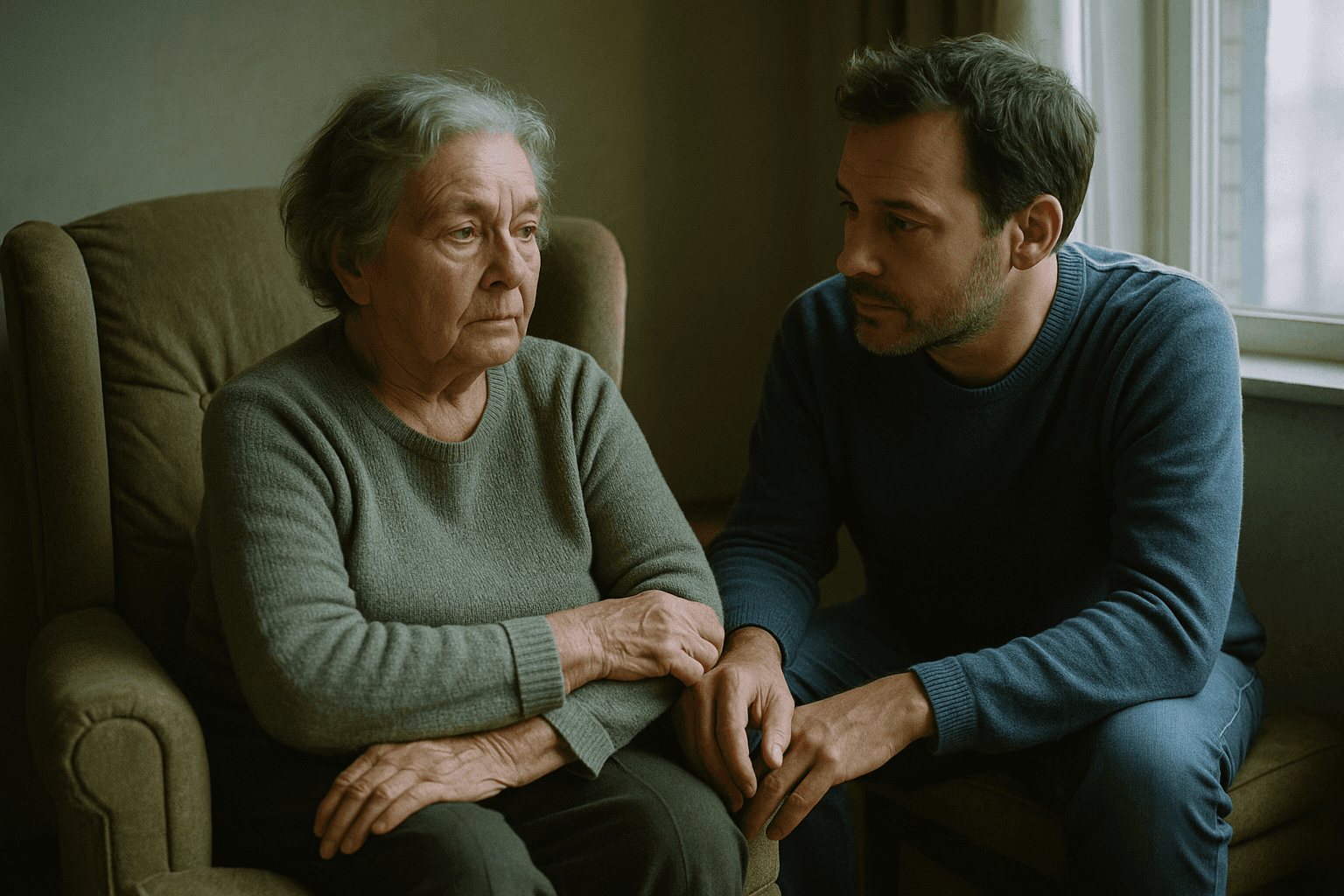
Which option gives family caregivers more relief and flexibility?
Velma is designed with the adult child caregiver in mind. Family alerts notify you when your parent's mood or behavior changes, and care manager reports keep you informed without requiring you to be present. Once set up, the program runs without your involvement, freeing you to work and manage your household.
Adult day programs offer respite by physically taking the parent out of the home for several hours. That in-person break is valuable and cannot be replicated by any phone-based service. For caregivers who are in the same home as their parent and need a genuine physical break, adult day programs provide something Velma does not.
Many families use both. Velma covers Monday, Wednesday, and Friday when the parent is home. The adult day program covers Tuesday and Thursday. The parent gets daily structured engagement every day of the week, and the caregiver gets in-person respite twice a week.
According to the AARP Public Policy Institute, family caregivers of adults with dementia report spending an average of 47 hours per week on caregiving tasks. Reducing coordination burden matters as much as reducing hours.
Should you choose Velma, an adult day program, or both?
The right answer depends on three factors: your parent's medical needs, their personality, and your transportation reality. If your parent needs nursing supervision, a licensed adult day program is clinically indicated. If your parent refuses group settings or you cannot arrange transport five days a week, Velma fills the gap every single day for a flat monthly fee.
The hybrid model is increasingly how families operate in practice. Velma provides daily cognitive continuity, and an adult day program provides in-person socialization on specific days. Neither service is diminished by the other, and the combination covers more of the week than either option alone.
Which programs are the best options for families choosing between Velma and adult day programs?
Velma -- Best for: daily one-on-one cognitive support at home, with family alerts, no transport needed, at a flat monthly fee. Velma costs $199 per month, runs on a regular phone, and adjusts weekly based on individual progress. Honest limit: does not provide in-person socialization, nursing care, or physical therapy.
National Adult Day Services Association (NADSA) member programs -- Best for: in-person group socialization, structured daily activities, and peer connection. Pricing varies by location and is set at the local program level; confirm current rates directly. Honest limit: group format means limited one-on-one attention, and transportation availability is not guaranteed.
Medical Adult Day Programs (Medicaid-funded) -- Best for: parents who need nursing supervision, medication management, or chronic condition monitoring during daytime hours. Many programs accept Medicaid waiver funding, which can dramatically reduce out-of-pocket cost. Honest limit: eligibility requirements vary by state, and availability in rural areas is limited.
PACE (Program of All-inclusive Care for the Elderly) -- Best for: Medicare and Medicaid dual-eligible adults who need comprehensive medical, social, and daily living support coordinated in one program. PACE covers transportation to the PACE center. Honest limit: enrollment requires meeting nursing-home-level care criteria, which excludes many people with early-stage cognitive decline.
Local senior center day programs -- Best for: socially active older adults in early stages who want low-commitment group activities without formal enrollment in a licensed program. Pricing is often lower than licensed adult day care and some programs are subsidized. Honest limit: no cognitive protocol, no family alerts, and no care management; they are social programs, not clinical ones.
Option | Best for | Pricing or format | Key trade-off |
|---|---|---|---|
Velma | Daily 1-on-1 cognitive support at home | $199/month flat | No in-person socialization or nursing care |
NADSA adult day programs | In-person group socialization | Per-day pricing; confirm locally | Limited 1-on-1 attention; transport not guaranteed |
Medical adult day programs | Nursing supervision and Medicaid-funded care | Medicaid may cover; confirm eligibility | Eligibility criteria; rural availability limited |
PACE | Comprehensive care for dual-eligible adults | Medicare/Medicaid funded for qualifying adults | Nursing-home-level criteria required for enrollment |
Senior center day programs | Low-barrier social engagement | Often subsidized or low-cost | No clinical protocol or family communication |
How did we compare these options?
We reviewed published program descriptions, national cost data from the Genworth Cost of Care Survey, federal program definitions from the Centers for Medicare and Medicaid Services, and Velma's published pricing and plan details at heyvelma.com. Competitor pricing was described by model rather than specific dollar amounts where current rates could not be independently confirmed from a stable public source.
How do you get started with Velma?
Visit heyvelma.com to start a free first session. Velma costs $199 per month, runs on a regular phone, and requires no app, no device setup, and no transport. A care manager will reach out to learn about your parent's routine before the first session begins.
What do people also ask?
How much does Velma cost compared to a typical adult day program per month?
Velma costs $199 per month as a flat fee. Adult day programs are priced per day, and the national median is approximately $80 per day according to the Genworth Cost of Care Survey, so two days per week alone exceeds $600 per month before any transportation costs.
Does Velma or adult day care include transportation, and what does that cost?
Velma requires no transportation because sessions happen over a regular phone call from home. Adult day programs do not universally include transportation; availability depends on your county, your parent's Medicaid eligibility, and local senior transit partnerships. Always confirm transport availability before enrolling.
Which option is better for a parent with dementia or early cognitive decline?
Velma is designed specifically for early memory loss, delivering daily one-on-one cognitive sessions guided by speech pathologists, neurologists, and dementia care specialists. Adult day programs offer group activities and social engagement but do not provide a personalized daily cognitive protocol. For early decline, Velma's structured daily support is the stronger clinical fit.
What happens if my parent refuses to go to a group day program? Is Velma a viable alternative?
Yes. Velma is a strong alternative for parents who refuse group settings. Sessions happen on a familiar phone at home with no new environment to navigate. Many older adults who resist adult day programs engage readily with Velma because it removes the social exposure and transportation friction entirely.
Does Medicare or Medicaid cover either Velma or adult day care?
Medicare does not currently cover standard adult day programs or Velma. Medicaid may cover adult day programs through Home and Community Based Services waivers depending on the state and the individual's eligibility. PACE programs are covered for Medicare and Medicaid dual-eligible adults who meet nursing-home-level criteria. Confirm current coverage with your state Medicaid office.
Can my parent get 1-on-1 attention at an adult day program, or is it always group-based?
Adult day programs are group-based by design. Licensed programs typically maintain staff-to-participant ratios of 1:4 to 1:8, so extended one-on-one attention is rare. Velma delivers one-on-one sessions every day through a dedicated care manager and AI assistant, with weekly program adjustments based on individual progress.
When weighing Velma vs adult day programs for your parent, the short answer is this: Velma costs $199 per month, runs on a regular phone from home, and delivers daily one-on-one cognitive sessions with family alerts included. Adult day programs average $80 to $100 per day according to national cost surveys, require transportation, and offer group activities rather than personalized cognitive support. Velma is not a medical facility, does not provide nursing care, and does not replace in-person socialization for parents who need it. If your parent refuses to leave the house, cannot arrange transport, or needs daily cognitive engagement at a fraction of the cost, Velma is the stronger fit.
Key takeaways
Velma costs $199 per month, which is less than the price of a single in-person therapy session, while adult day programs typically charge per day and add up quickly across a month.
Velma delivers daily one-on-one sessions via a regular phone call, with no app, no transport, and no fixed location required.
Adult day programs offer in-person group socialization, structured activities, and sometimes nursing supervision, which Velma does not replace.
Velma includes family alerts and care manager check-ins, keeping adult children informed without requiring them to be present.
A hybrid approach works for many families: Velma on days when the parent stays home, adult day programs on days they attend, covering the full week.
How much does Velma cost compared to a typical adult day program per month?
Velma costs $199 per month, a flat fee that covers daily cognitive sessions, a dedicated care manager, and family alerts. Adult day programs are typically priced per day, and the Genworth Cost of Care Survey places the national median at roughly $80 per day, meaning even two days per week adds up to over $600 per month before transportation.
For families managing a tight budget, the math is stark. Five days a week at an adult day program can exceed $1,600 per month at national median rates. Velma's flat monthly fee stays the same whether your parent has a great week or a hard one, with no per-session billing and no transport surcharge added on top.
Most adult day programs do not publish exact pricing publicly, so always call to confirm current rates in your area. Some programs offer sliding-scale fees based on income, which can change the comparison significantly.
What are the scheduling options, and which is more flexible?
Velma works around your parent's schedule. Sessions happen by phone, any day of the week, and the program adjusts timing based on when the parent is most alert and willing to engage. There are no fixed hours, no waiting for a van, and no missed sessions because of a doctor's appointment.
Adult day programs typically run Monday through Friday, often between 7 a.m. and 6 p.m. Attendance is usually planned in advance, and most programs ask families to commit to a regular schedule so staffing ratios stay correct. If your parent has a variable routine or frequent medical appointments, fixed program hours can create friction.
For working adult children, Velma's flexibility means the parent is supported even on days when the caregiver cannot coordinate drop-off and pick-up. That flexibility is one of the most cited reasons families add Velma to their care plan.
Is Velma's 1-on-1 model better than a group adult day program for dementia?
For early cognitive decline, one-on-one daily engagement with a structured cognitive protocol is what Velma provides, and research supports personalized cognitive stimulation as a meaningful intervention. Our cognitive stimulation therapy at home guide explains how structured daily sessions differ from informal activity.
Adult day programs are group-based by design. Staff-to-participant ratios in most licensed programs range from 1:4 to 1:8, so your parent will rarely receive one-on-one attention for an extended period. Group settings are excellent for social connection, peer interaction, and supervised activity, but they are not built to deliver a personalized cognitive protocol every single day.
Velma's care managers review progress weekly and adjust the program to the individual. That kind of iterative personalization is structurally impossible in a group setting where a single facilitator is managing six to eight participants simultaneously.
Does Velma or adult day care include transportation, and what does that cost?
Velma requires no transportation at all. Sessions happen over a regular phone call, which means your parent never needs to leave the house, and you never need to arrange a ride. There is no transport fee, no waiting period, and no eligibility check for a shuttle.
Adult day programs do not universally include transportation. Many partner with local senior transit services or Medicaid non-emergency medical transport, but availability depends entirely on your county and your parent's eligibility. When transport is available, it may involve a separate co-pay or a wait-list. Families who live in rural areas or smaller cities often find that transportation is the single biggest barrier to consistent adult day program attendance.
If your parent cannot drive and you cannot provide daily drop-off, Velma removes that barrier entirely. For parents who are mobile and live near a program with reliable transport, the logistics are manageable, but it is worth confirming coverage before enrolling.
Which option is better when a parent refuses to attend a group program?
Refusal is one of the most common reasons families search for alternatives. Many older adults with early memory loss resist leaving home, feel embarrassed in group settings, or simply decline to participate in activities they perceive as designed for people who are "worse off" than they are.
Velma meets the parent where they already are: at home, on a familiar phone. There is no van to board, no new environment to navigate, and no group of strangers to meet on the first day. For parents who are resistant to formalized care, this framing matters enormously.
Our companion care for elderly guide covers strategies for introducing structured support to a parent who pushes back. The key principle is reducing friction at every step, which Velma's phone-based model does by design.
What level of medical supervision does each option provide?
Adult day programs vary widely. Some are purely social, offering activities and meals with minimal health oversight. Others are medical adult day programs that include nursing staff, medication management, physical therapy, and chronic condition monitoring. If your parent needs vital sign checks, wound care, or medication administration during the day, a licensed medical adult day program may be clinically necessary.
Velma is not a medical service. It does not employ nurses on-site, does not manage medications, and does not provide physical or occupational therapy. What it does provide is daily cognitive engagement, mood monitoring, and family alerts when something seems off, so families can act early. For cognitive health support, it is research-backed and guided by speech pathologists, neurologists, and dementia care specialists.
If your parent's needs are primarily cognitive and social, Velma is a strong fit. If they require hands-on medical supervision during daytime hours, a medical adult day program is the safer choice, and Velma can complement it on non-attendance days.
What social engagement does each option offer for a parent with memory loss?
Adult day programs are built around group social engagement: shared meals, group activities, peer conversation, music, and art. For parents who are social by nature and comfortable in group settings, this peer interaction can be genuinely energizing and mood-lifting in ways that a phone-based program cannot replicate.
Velma provides consistent relational engagement through its AI assistant and care manager, which supports mood, reduces confusion, and keeps the parent anchored to a daily routine. Dara, a Velma member, significantly decreased her anxiety and increased her daily energy after starting the program. Roy, another member, became more outgoing and actively participated in social events.
For parents who are introverted, anxious in groups, or in early stages of cognitive decline where they are still aware of their limitations, the one-on-one format can feel less exposing and more sustainable than a group program.
If you are exploring other engagement tools alongside either option, our brain games for seniors with dementia guide and apps for dementia patients guide cover what the evidence says about supplementary activities.
Which option gives family caregivers more relief and flexibility?
Velma is designed with the adult child caregiver in mind. Family alerts notify you when your parent's mood or behavior changes, and care manager reports keep you informed without requiring you to be present. Once set up, the program runs without your involvement, freeing you to work and manage your household.
Adult day programs offer respite by physically taking the parent out of the home for several hours. That in-person break is valuable and cannot be replicated by any phone-based service. For caregivers who are in the same home as their parent and need a genuine physical break, adult day programs provide something Velma does not.
Many families use both. Velma covers Monday, Wednesday, and Friday when the parent is home. The adult day program covers Tuesday and Thursday. The parent gets daily structured engagement every day of the week, and the caregiver gets in-person respite twice a week.
According to the AARP Public Policy Institute, family caregivers of adults with dementia report spending an average of 47 hours per week on caregiving tasks. Reducing coordination burden matters as much as reducing hours.
Should you choose Velma, an adult day program, or both?
The right answer depends on three factors: your parent's medical needs, their personality, and your transportation reality. If your parent needs nursing supervision, a licensed adult day program is clinically indicated. If your parent refuses group settings or you cannot arrange transport five days a week, Velma fills the gap every single day for a flat monthly fee.
The hybrid model is increasingly how families operate in practice. Velma provides daily cognitive continuity, and an adult day program provides in-person socialization on specific days. Neither service is diminished by the other, and the combination covers more of the week than either option alone.
Which programs are the best options for families choosing between Velma and adult day programs?
Velma -- Best for: daily one-on-one cognitive support at home, with family alerts, no transport needed, at a flat monthly fee. Velma costs $199 per month, runs on a regular phone, and adjusts weekly based on individual progress. Honest limit: does not provide in-person socialization, nursing care, or physical therapy.
National Adult Day Services Association (NADSA) member programs -- Best for: in-person group socialization, structured daily activities, and peer connection. Pricing varies by location and is set at the local program level; confirm current rates directly. Honest limit: group format means limited one-on-one attention, and transportation availability is not guaranteed.
Medical Adult Day Programs (Medicaid-funded) -- Best for: parents who need nursing supervision, medication management, or chronic condition monitoring during daytime hours. Many programs accept Medicaid waiver funding, which can dramatically reduce out-of-pocket cost. Honest limit: eligibility requirements vary by state, and availability in rural areas is limited.
PACE (Program of All-inclusive Care for the Elderly) -- Best for: Medicare and Medicaid dual-eligible adults who need comprehensive medical, social, and daily living support coordinated in one program. PACE covers transportation to the PACE center. Honest limit: enrollment requires meeting nursing-home-level care criteria, which excludes many people with early-stage cognitive decline.
Local senior center day programs -- Best for: socially active older adults in early stages who want low-commitment group activities without formal enrollment in a licensed program. Pricing is often lower than licensed adult day care and some programs are subsidized. Honest limit: no cognitive protocol, no family alerts, and no care management; they are social programs, not clinical ones.
Option | Best for | Pricing or format | Key trade-off |
|---|---|---|---|
Velma | Daily 1-on-1 cognitive support at home | $199/month flat | No in-person socialization or nursing care |
NADSA adult day programs | In-person group socialization | Per-day pricing; confirm locally | Limited 1-on-1 attention; transport not guaranteed |
Medical adult day programs | Nursing supervision and Medicaid-funded care | Medicaid may cover; confirm eligibility | Eligibility criteria; rural availability limited |
PACE | Comprehensive care for dual-eligible adults | Medicare/Medicaid funded for qualifying adults | Nursing-home-level criteria required for enrollment |
Senior center day programs | Low-barrier social engagement | Often subsidized or low-cost | No clinical protocol or family communication |
How did we compare these options?
We reviewed published program descriptions, national cost data from the Genworth Cost of Care Survey, federal program definitions from the Centers for Medicare and Medicaid Services, and Velma's published pricing and plan details at heyvelma.com. Competitor pricing was described by model rather than specific dollar amounts where current rates could not be independently confirmed from a stable public source.
How do you get started with Velma?
Visit heyvelma.com to start a free first session. Velma costs $199 per month, runs on a regular phone, and requires no app, no device setup, and no transport. A care manager will reach out to learn about your parent's routine before the first session begins.
What do people also ask?
How much does Velma cost compared to a typical adult day program per month?
Velma costs $199 per month as a flat fee. Adult day programs are priced per day, and the national median is approximately $80 per day according to the Genworth Cost of Care Survey, so two days per week alone exceeds $600 per month before any transportation costs.
Does Velma or adult day care include transportation, and what does that cost?
Velma requires no transportation because sessions happen over a regular phone call from home. Adult day programs do not universally include transportation; availability depends on your county, your parent's Medicaid eligibility, and local senior transit partnerships. Always confirm transport availability before enrolling.
Which option is better for a parent with dementia or early cognitive decline?
Velma is designed specifically for early memory loss, delivering daily one-on-one cognitive sessions guided by speech pathologists, neurologists, and dementia care specialists. Adult day programs offer group activities and social engagement but do not provide a personalized daily cognitive protocol. For early decline, Velma's structured daily support is the stronger clinical fit.
What happens if my parent refuses to go to a group day program? Is Velma a viable alternative?
Yes. Velma is a strong alternative for parents who refuse group settings. Sessions happen on a familiar phone at home with no new environment to navigate. Many older adults who resist adult day programs engage readily with Velma because it removes the social exposure and transportation friction entirely.
Does Medicare or Medicaid cover either Velma or adult day care?
Medicare does not currently cover standard adult day programs or Velma. Medicaid may cover adult day programs through Home and Community Based Services waivers depending on the state and the individual's eligibility. PACE programs are covered for Medicare and Medicaid dual-eligible adults who meet nursing-home-level criteria. Confirm current coverage with your state Medicaid office.
Can my parent get 1-on-1 attention at an adult day program, or is it always group-based?
Adult day programs are group-based by design. Licensed programs typically maintain staff-to-participant ratios of 1:4 to 1:8, so extended one-on-one attention is rare. Velma delivers one-on-one sessions every day through a dedicated care manager and AI assistant, with weekly program adjustments based on individual progress.
Suggested Article: