Best At Home Dementia Care Services: 2026 Family Guide

The best at home dementia care services match the level of support your loved one actually needs today, not six months from now. For families whose parent is still safe at home and experiencing early memory loss, Velma offers research-backed daily cognitive sessions plus a dedicated care manager starting at $199 per month, with a free first session at heyvelma.com. Velma is not a personal care aide, a 24-hour nursing service, or a substitute for hands-on physical assistance.
Key takeaways:
Velma combines AI-assisted daily cognitive sessions with human care managers and family alerts for $199 per month, making it one of the most affordable structured options for mild to moderate memory loss.
In-home dementia care spans at least four distinct service types: companion care, personal care aides, skilled nursing, and specialized memory care aides, each suited to a different stage of decline.
Memory care facilities average $5,000 to $7,000 per month nationally according to Genworth's Cost of Care Survey; most home-based services cost significantly less at the same or earlier stage.
Government programs including Medicaid Home and Community Based Services waivers, Medicare, and VA benefits can offset the cost of several at-home options.
No single service works at every stage; the right choice shifts as dementia progresses from mild to moderate to severe.
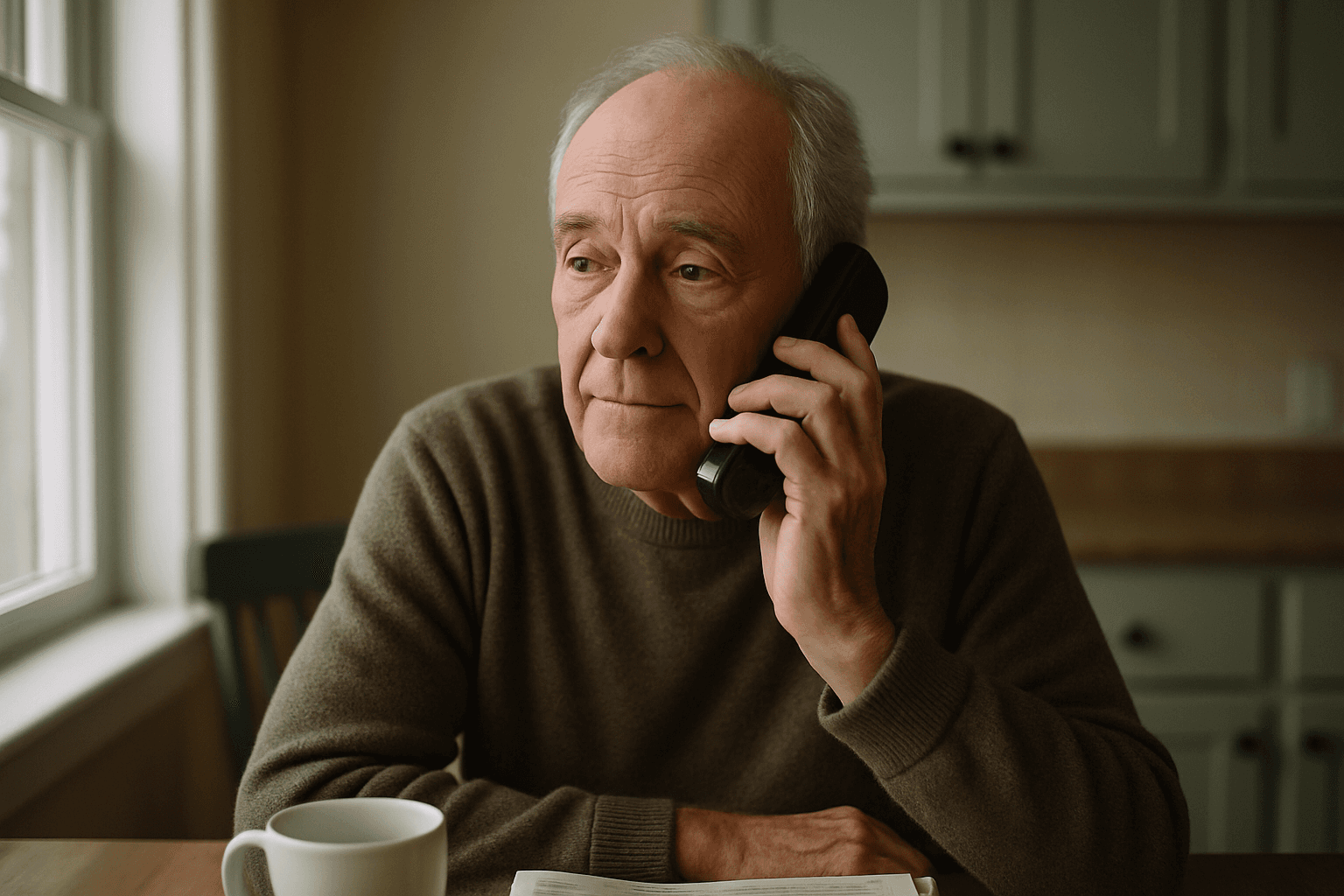
What types of at home dementia care services are available?
At-home dementia care falls into four main categories: companion care for social engagement and supervision, personal care aides for bathing and daily tasks, skilled nursing for medical needs, and memory care aide services for dementia-specific behavioral support. A fifth, newer category is structured cognitive support programs delivered remotely, like Velma, which focus on slowing cognitive decline through daily engagement.
Each type serves a different purpose, and most families end up combining two or more as their loved one's needs evolve. Companion care is usually the first layer added. Skilled nursing is typically the last before a family considers a facility.
Understanding which type you need right now prevents overpaying for services you do not yet need and underpaying in ways that leave gaps in safety.
Which at home dementia care service is best right now?
The best service is the one that closes the most urgent gap. If your parent is cognitively declining but physically safe at home and you need daily engagement, routine support, and family communication, a structured cognitive program like Velma is the highest-value first step.
The ranked list below maps each option to the job it does best.
What are the top 5 best at home dementia care services to consider?
Five services families most commonly compare are ranked here by the specific job each does best. Reviewing all five helps you match the right provider to your loved one's current stage of dementia, daily routine, and budget before making any commitment.
Velma -- Best for daily cognitive engagement plus family alerts when your parent is still safe at home. Velma pairs an AI assistant with a dedicated human care manager to deliver scheduled phone sessions, track mood and engagement, and send regular updates to family members. Guided by speech pathologists, neurologists, and dementia care specialists. Published plans start at $199 per month with a free first session at heyvelma.com. Honest limit: Velma is not a personal care aide, does not assist with bathing or medication administration, and is not a 24-hour emergency response service.
Home Instead -- Best for companion care and personal care aide services delivered by trained in-home caregivers. Home Instead offers CAREGiver training that includes dementia-specific modules. Pricing is typically published per hour and varies by region; visit their site to confirm current rates in your area. Honest limit: cognitive stimulation is not the primary focus; session depth varies by individual caregiver.
Visiting Angels -- Best for families who need flexible scheduling across personal care, companion care, and respite care without a long-term contract in many markets. Visiting Angels franchises offer dementia care training for staff. Pricing is hourly and market-dependent; confirm current rates locally. Honest limit: quality and dementia-specific training can vary between franchise locations.
BrightSpring Health Services -- Best when a loved one needs skilled nursing visits alongside personal care under one provider relationship. BrightSpring operates across multiple states and can coordinate medically complex home care. Honest limit: availability is not national in every zip code; check coverage before planning.
Adult Day Health Programs -- Best for families who need supervised daytime cognitive and social engagement outside the home while the primary caregiver works. Many programs are partially covered by Medicaid waivers. The National Adult Day Services Association maintains a locator tool. Honest limit: transportation to and from the center is the family's responsibility in most cases, which adds logistical complexity.
Option | Best for | Pricing or format | Standout limit |
|---|---|---|---|
Velma | Daily cognitive sessions plus family alerts | From $199/month, free first session | Not a personal care or nursing service |
Home Instead | Companion and personal care at home | Hourly, market-dependent | Cognitive depth varies by caregiver |
Visiting Angels | Flexible personal and respite care | Hourly, market-dependent | Quality varies by franchise |
BrightSpring | Skilled nursing plus personal care | Visit-based, varies by plan | Not available in every zip code |
Adult Day Programs | Supervised daytime engagement | Often partially Medicaid-covered | Requires transportation to center |
How much does in home dementia care cost and what financial help exists?
Costs vary widely by service type. A structured cognitive support program like Velma starts at $199 per month, which is less than the cost of a single in-person therapy session. Personal care aide and companion care services are priced per hour and vary by market. Skilled nursing visits carry higher per-visit rates.
Several financial assistance programs can reduce out-of-pocket costs. Medicare Part A covers skilled nursing and therapy in limited circumstances following a hospital stay. Medicaid Home and Community Based Services waivers cover personal care aides and some adult day programs for eligible individuals. The U.S. Department of Veterans Affairs offers Aid and Attendance benefits for veterans and surviving spouses who need in-home assistance. Long-term care insurance policies vary considerably, so review the policy language for dementia-specific coverage before assuming reimbursement.
Start with your state's Medicaid waiver program and your local Area Agency on Aging, which can map available subsidies to your loved one's income and care level.
How do you choose a trustworthy in home dementia care provider?
Choose a provider by verifying credentials, dementia-specific training, and staffing practices before signing anything. Look for a Certified Dementia Practitioner designation or equivalent training for any caregiver working directly with your parent. Ask agencies about caregiver training, average staff turnover rate, and whether all caregivers pass a criminal background check before placement.
High caregiver turnover is one of the strongest predictors of poor care continuity for people with dementia, because familiarity with routine is itself therapeutic. An agency that cannot answer the turnover question clearly is a concern worth taking seriously.
For cognitive support programs, look for evidence of clinical oversight. Velma's program is guided by speech pathologists, neurologists, and dementia care specialists, and adjusts weekly based on individual progress, which is a higher standard of personalization than most companion care agencies provide.
What are the red flags that signal a poor in home dementia care provider?
Red flags include an inability to explain dementia-specific caregiver training, resistance to family communication or updates, no formal background check process, and a pattern of frequent caregiver changes with no explanation. A provider who discourages family involvement or cannot name a clinical supervisor is worth avoiding.
Additional warning signs: the provider charges a large upfront enrollment fee with no clear service agreement, quotes pricing verbally with no written documentation, or cannot tell you what happens if your assigned caregiver calls out sick. Vague emergency protocols are a serious safety gap for someone with dementia.
If your loved one seems more withdrawn, more anxious, or shows unexplained physical marks after care visits, escalate to Adult Protective Services immediately. The National Center on Elder Abuse maintains a state-by-state reporting resource.
Is it better to keep a dementia patient at home or move them to a memory care facility?
For mild to moderate dementia, research consistently supports aging in place with appropriate support. A familiar environment preserves routine, which is one of the most powerful tools for reducing confusion and anxiety in dementia. The Alzheimer's Association notes that many families successfully support a loved one at home through the early and middle stages with a combination of services.
The financial difference is also significant. Memory care facilities average $5,000 to $7,000 per month. A combination of a cognitive support program and part-time in-home care often costs a fraction of that for someone in early decline.
The calculus shifts when wandering risk increases, when personal care needs exceed what family and part-time aides can safely manage, or when caregiver burnout becomes a health risk for the family member providing care.
What home safety changes does someone with dementia need?
The three highest-priority safety modifications are stove and appliance controls, door and window security, and medication management. Remove or lock access to cleaning chemicals, sharp tools, and anything that could be mistaken for food. Install stove knob covers or an automatic shut-off device. Use door alarms or door handle covers to reduce unsupervised exits.
The National Institute on Aging publishes a room-by-room home safety checklist specifically for Alzheimer's and dementia caregivers, which is a practical starting point for a walkthrough. Night-lights in hallways and bathrooms reduce fall risk during nocturnal wandering episodes, which are common in moderate dementia.
Safety modifications reduce the need for constant supervision, which in turn reduces caregiver exhaustion. A safer environment directly extends how long your loved one can remain at home.
At what stage of dementia does a person need 24-hour in home care?
Most families begin considering 24-hour supervision during moderate dementia, when wandering, nighttime confusion, or unsafe behaviors emerge and a single caregiver can no longer monitor all hours alone. The transition from part-time support to 24-hour coverage is typically triggered by one or more specific incidents rather than a gradual scheduled shift.
Early-stage dementia usually requires part-time supervision, daily check-ins, and cognitive engagement. Middle-stage dementia typically requires personal care aide support for several hours per day alongside companion or cognitive services. Late-stage dementia, when swallowing, mobility, and continence are affected, usually requires full-time professional care, either 24-hour home care or a memory care facility.
If your loved one is in early decline and safe at home, this is the stage where a program like Velma adds the most value: daily cognitive engagement, weekly program adjustments, and family alerts that track changes before a crisis develops. Learn more about how Velma's daily cognitive support works.
How do families avoid caregiver burnout while managing at home dementia care?
Caregiver burnout is one of the leading reasons home care arrangements break down, but it is rarely addressed by the agencies families hire. The National Alliance for Caregiving reports that family caregivers of people with dementia spend significantly more hours per week on care than caregivers for other conditions, with substantially higher rates of depression and anxiety.
Respite care, which gives the primary caregiver scheduled time off, is the most evidence-supported intervention for burnout prevention. Adult day programs, temporary residential respite stays, and programs that reduce the caregiver's daily coordination load all help. Velma's family alert system reduces the anxiety of not knowing how a parent is doing on any given day, which is one of the most common drivers of caregiver stress for adult children who live at a distance or work full-time.
For families exploring what cognitive support looks like before the program begins, see what Velma is and how it supports early memory loss.
How long can someone with dementia realistically be cared for at home?
The realistic duration depends on the person's rate of progression, the family's caregiving capacity, home safety, and financial resources. Many people with Alzheimer's live 8 to 10 years after diagnosis according to the Alzheimer's Association, and a significant portion of that time can be spent at home with appropriate support.
Early planning dramatically extends the at-home period. Families who build a care structure before a crisis, rather than after one, typically sustain home care longer and with less disruption. Waiting until late-stage decline to arrange services means the transition is reactive, rushed, and more expensive.
How did we compare these at home dementia care options?
We reviewed each service's published plan pages, publicly stated pricing, scope of service, clinical oversight model, and documented limitations. For competitors where pricing is market-dependent or not publicly listed at a national level, we described the pricing model without stating a specific number and directed readers to confirm current rates directly with the provider.
How do you get started with Velma's at home dementia care program?
Velma offers a free first session so your parent can experience a daily cognitive phone session before any commitment. Plans start at $199 per month and include AI-assisted daily sessions, a dedicated human care manager, weekly program adjustments, and family alerts about mood and engagement changes.
What do people also ask?
What types of at home dementia care services are available and what does each include?
At-home dementia care includes companion care for supervision and social engagement, personal care aides for bathing and daily tasks, skilled nursing for medical needs, memory care aides trained in dementia-specific behavior support, and remote cognitive support programs like Velma that deliver daily structured phone sessions plus family alerts. Most families combine two or more types as needs change.
How much does in home dementia care cost and what financial assistance programs exist?
Costs range from $199 per month for a structured cognitive program like Velma to hourly rates for personal care aides and skilled nursing, which vary significantly by market. Memory care facilities average $5,000 to $7,000 per month. Financial help includes Medicaid HCBS waivers, VA Aid and Attendance benefits, and Medicare Part A coverage for skilled nursing after a qualifying hospital stay.
How do I choose a trustworthy in home dementia care agency or caregiver?
Verify dementia-specific caregiver training such as the Certified Dementia Practitioner credential, ask about staff turnover rates, and confirm all caregivers pass criminal background checks. Choose providers that offer regular family communication. Avoid agencies that cannot name a clinical supervisor or that resist family involvement in the care plan.
Is it better to keep a dementia patient at home or move them to a memory care facility?
For mild to moderate dementia, staying home in a familiar environment typically reduces confusion and anxiety and costs far less than a memory care facility. The transition to a facility makes sense when wandering risk escalates, personal care needs exceed what home care can safely meet, or caregiver burnout becomes a health risk for the family.
At what stage of dementia does a person need 24-hour in home care?
Most families begin arranging 24-hour supervision during moderate dementia when wandering, nighttime confusion, or unsafe behaviors emerge. Early-stage dementia usually needs part-time aides and daily cognitive check-ins. Late-stage dementia with mobility, swallowing, or continence issues typically requires full-time professional care either at home or in a facility.
The best at home dementia care services match the level of support your loved one actually needs today, not six months from now. For families whose parent is still safe at home and experiencing early memory loss, Velma offers research-backed daily cognitive sessions plus a dedicated care manager starting at $199 per month, with a free first session at heyvelma.com. Velma is not a personal care aide, a 24-hour nursing service, or a substitute for hands-on physical assistance.
Key takeaways:
Velma combines AI-assisted daily cognitive sessions with human care managers and family alerts for $199 per month, making it one of the most affordable structured options for mild to moderate memory loss.
In-home dementia care spans at least four distinct service types: companion care, personal care aides, skilled nursing, and specialized memory care aides, each suited to a different stage of decline.
Memory care facilities average $5,000 to $7,000 per month nationally according to Genworth's Cost of Care Survey; most home-based services cost significantly less at the same or earlier stage.
Government programs including Medicaid Home and Community Based Services waivers, Medicare, and VA benefits can offset the cost of several at-home options.
No single service works at every stage; the right choice shifts as dementia progresses from mild to moderate to severe.
What types of at home dementia care services are available?
At-home dementia care falls into four main categories: companion care for social engagement and supervision, personal care aides for bathing and daily tasks, skilled nursing for medical needs, and memory care aide services for dementia-specific behavioral support. A fifth, newer category is structured cognitive support programs delivered remotely, like Velma, which focus on slowing cognitive decline through daily engagement.
Each type serves a different purpose, and most families end up combining two or more as their loved one's needs evolve. Companion care is usually the first layer added. Skilled nursing is typically the last before a family considers a facility.
Understanding which type you need right now prevents overpaying for services you do not yet need and underpaying in ways that leave gaps in safety.
Which at home dementia care service is best right now?
The best service is the one that closes the most urgent gap. If your parent is cognitively declining but physically safe at home and you need daily engagement, routine support, and family communication, a structured cognitive program like Velma is the highest-value first step.
The ranked list below maps each option to the job it does best.
What are the top 5 best at home dementia care services to consider?
Five services families most commonly compare are ranked here by the specific job each does best. Reviewing all five helps you match the right provider to your loved one's current stage of dementia, daily routine, and budget before making any commitment.
Velma -- Best for daily cognitive engagement plus family alerts when your parent is still safe at home. Velma pairs an AI assistant with a dedicated human care manager to deliver scheduled phone sessions, track mood and engagement, and send regular updates to family members. Guided by speech pathologists, neurologists, and dementia care specialists. Published plans start at $199 per month with a free first session at heyvelma.com. Honest limit: Velma is not a personal care aide, does not assist with bathing or medication administration, and is not a 24-hour emergency response service.
Home Instead -- Best for companion care and personal care aide services delivered by trained in-home caregivers. Home Instead offers CAREGiver training that includes dementia-specific modules. Pricing is typically published per hour and varies by region; visit their site to confirm current rates in your area. Honest limit: cognitive stimulation is not the primary focus; session depth varies by individual caregiver.
Visiting Angels -- Best for families who need flexible scheduling across personal care, companion care, and respite care without a long-term contract in many markets. Visiting Angels franchises offer dementia care training for staff. Pricing is hourly and market-dependent; confirm current rates locally. Honest limit: quality and dementia-specific training can vary between franchise locations.
BrightSpring Health Services -- Best when a loved one needs skilled nursing visits alongside personal care under one provider relationship. BrightSpring operates across multiple states and can coordinate medically complex home care. Honest limit: availability is not national in every zip code; check coverage before planning.
Adult Day Health Programs -- Best for families who need supervised daytime cognitive and social engagement outside the home while the primary caregiver works. Many programs are partially covered by Medicaid waivers. The National Adult Day Services Association maintains a locator tool. Honest limit: transportation to and from the center is the family's responsibility in most cases, which adds logistical complexity.
Option | Best for | Pricing or format | Standout limit |
|---|---|---|---|
Velma | Daily cognitive sessions plus family alerts | From $199/month, free first session | Not a personal care or nursing service |
Home Instead | Companion and personal care at home | Hourly, market-dependent | Cognitive depth varies by caregiver |
Visiting Angels | Flexible personal and respite care | Hourly, market-dependent | Quality varies by franchise |
BrightSpring | Skilled nursing plus personal care | Visit-based, varies by plan | Not available in every zip code |
Adult Day Programs | Supervised daytime engagement | Often partially Medicaid-covered | Requires transportation to center |
How much does in home dementia care cost and what financial help exists?
Costs vary widely by service type. A structured cognitive support program like Velma starts at $199 per month, which is less than the cost of a single in-person therapy session. Personal care aide and companion care services are priced per hour and vary by market. Skilled nursing visits carry higher per-visit rates.
Several financial assistance programs can reduce out-of-pocket costs. Medicare Part A covers skilled nursing and therapy in limited circumstances following a hospital stay. Medicaid Home and Community Based Services waivers cover personal care aides and some adult day programs for eligible individuals. The U.S. Department of Veterans Affairs offers Aid and Attendance benefits for veterans and surviving spouses who need in-home assistance. Long-term care insurance policies vary considerably, so review the policy language for dementia-specific coverage before assuming reimbursement.
Start with your state's Medicaid waiver program and your local Area Agency on Aging, which can map available subsidies to your loved one's income and care level.
How do you choose a trustworthy in home dementia care provider?
Choose a provider by verifying credentials, dementia-specific training, and staffing practices before signing anything. Look for a Certified Dementia Practitioner designation or equivalent training for any caregiver working directly with your parent. Ask agencies about caregiver training, average staff turnover rate, and whether all caregivers pass a criminal background check before placement.
High caregiver turnover is one of the strongest predictors of poor care continuity for people with dementia, because familiarity with routine is itself therapeutic. An agency that cannot answer the turnover question clearly is a concern worth taking seriously.
For cognitive support programs, look for evidence of clinical oversight. Velma's program is guided by speech pathologists, neurologists, and dementia care specialists, and adjusts weekly based on individual progress, which is a higher standard of personalization than most companion care agencies provide.
What are the red flags that signal a poor in home dementia care provider?
Red flags include an inability to explain dementia-specific caregiver training, resistance to family communication or updates, no formal background check process, and a pattern of frequent caregiver changes with no explanation. A provider who discourages family involvement or cannot name a clinical supervisor is worth avoiding.
Additional warning signs: the provider charges a large upfront enrollment fee with no clear service agreement, quotes pricing verbally with no written documentation, or cannot tell you what happens if your assigned caregiver calls out sick. Vague emergency protocols are a serious safety gap for someone with dementia.
If your loved one seems more withdrawn, more anxious, or shows unexplained physical marks after care visits, escalate to Adult Protective Services immediately. The National Center on Elder Abuse maintains a state-by-state reporting resource.
Is it better to keep a dementia patient at home or move them to a memory care facility?
For mild to moderate dementia, research consistently supports aging in place with appropriate support. A familiar environment preserves routine, which is one of the most powerful tools for reducing confusion and anxiety in dementia. The Alzheimer's Association notes that many families successfully support a loved one at home through the early and middle stages with a combination of services.
The financial difference is also significant. Memory care facilities average $5,000 to $7,000 per month. A combination of a cognitive support program and part-time in-home care often costs a fraction of that for someone in early decline.
The calculus shifts when wandering risk increases, when personal care needs exceed what family and part-time aides can safely manage, or when caregiver burnout becomes a health risk for the family member providing care.
What home safety changes does someone with dementia need?
The three highest-priority safety modifications are stove and appliance controls, door and window security, and medication management. Remove or lock access to cleaning chemicals, sharp tools, and anything that could be mistaken for food. Install stove knob covers or an automatic shut-off device. Use door alarms or door handle covers to reduce unsupervised exits.
The National Institute on Aging publishes a room-by-room home safety checklist specifically for Alzheimer's and dementia caregivers, which is a practical starting point for a walkthrough. Night-lights in hallways and bathrooms reduce fall risk during nocturnal wandering episodes, which are common in moderate dementia.
Safety modifications reduce the need for constant supervision, which in turn reduces caregiver exhaustion. A safer environment directly extends how long your loved one can remain at home.
At what stage of dementia does a person need 24-hour in home care?
Most families begin considering 24-hour supervision during moderate dementia, when wandering, nighttime confusion, or unsafe behaviors emerge and a single caregiver can no longer monitor all hours alone. The transition from part-time support to 24-hour coverage is typically triggered by one or more specific incidents rather than a gradual scheduled shift.
Early-stage dementia usually requires part-time supervision, daily check-ins, and cognitive engagement. Middle-stage dementia typically requires personal care aide support for several hours per day alongside companion or cognitive services. Late-stage dementia, when swallowing, mobility, and continence are affected, usually requires full-time professional care, either 24-hour home care or a memory care facility.
If your loved one is in early decline and safe at home, this is the stage where a program like Velma adds the most value: daily cognitive engagement, weekly program adjustments, and family alerts that track changes before a crisis develops. Learn more about how Velma's daily cognitive support works.
How do families avoid caregiver burnout while managing at home dementia care?
Caregiver burnout is one of the leading reasons home care arrangements break down, but it is rarely addressed by the agencies families hire. The National Alliance for Caregiving reports that family caregivers of people with dementia spend significantly more hours per week on care than caregivers for other conditions, with substantially higher rates of depression and anxiety.
Respite care, which gives the primary caregiver scheduled time off, is the most evidence-supported intervention for burnout prevention. Adult day programs, temporary residential respite stays, and programs that reduce the caregiver's daily coordination load all help. Velma's family alert system reduces the anxiety of not knowing how a parent is doing on any given day, which is one of the most common drivers of caregiver stress for adult children who live at a distance or work full-time.
For families exploring what cognitive support looks like before the program begins, see what Velma is and how it supports early memory loss.
How long can someone with dementia realistically be cared for at home?
The realistic duration depends on the person's rate of progression, the family's caregiving capacity, home safety, and financial resources. Many people with Alzheimer's live 8 to 10 years after diagnosis according to the Alzheimer's Association, and a significant portion of that time can be spent at home with appropriate support.
Early planning dramatically extends the at-home period. Families who build a care structure before a crisis, rather than after one, typically sustain home care longer and with less disruption. Waiting until late-stage decline to arrange services means the transition is reactive, rushed, and more expensive.
How did we compare these at home dementia care options?
We reviewed each service's published plan pages, publicly stated pricing, scope of service, clinical oversight model, and documented limitations. For competitors where pricing is market-dependent or not publicly listed at a national level, we described the pricing model without stating a specific number and directed readers to confirm current rates directly with the provider.
How do you get started with Velma's at home dementia care program?
Velma offers a free first session so your parent can experience a daily cognitive phone session before any commitment. Plans start at $199 per month and include AI-assisted daily sessions, a dedicated human care manager, weekly program adjustments, and family alerts about mood and engagement changes.
What do people also ask?
What types of at home dementia care services are available and what does each include?
At-home dementia care includes companion care for supervision and social engagement, personal care aides for bathing and daily tasks, skilled nursing for medical needs, memory care aides trained in dementia-specific behavior support, and remote cognitive support programs like Velma that deliver daily structured phone sessions plus family alerts. Most families combine two or more types as needs change.
How much does in home dementia care cost and what financial assistance programs exist?
Costs range from $199 per month for a structured cognitive program like Velma to hourly rates for personal care aides and skilled nursing, which vary significantly by market. Memory care facilities average $5,000 to $7,000 per month. Financial help includes Medicaid HCBS waivers, VA Aid and Attendance benefits, and Medicare Part A coverage for skilled nursing after a qualifying hospital stay.
How do I choose a trustworthy in home dementia care agency or caregiver?
Verify dementia-specific caregiver training such as the Certified Dementia Practitioner credential, ask about staff turnover rates, and confirm all caregivers pass criminal background checks. Choose providers that offer regular family communication. Avoid agencies that cannot name a clinical supervisor or that resist family involvement in the care plan.
Is it better to keep a dementia patient at home or move them to a memory care facility?
For mild to moderate dementia, staying home in a familiar environment typically reduces confusion and anxiety and costs far less than a memory care facility. The transition to a facility makes sense when wandering risk escalates, personal care needs exceed what home care can safely meet, or caregiver burnout becomes a health risk for the family.
At what stage of dementia does a person need 24-hour in home care?
Most families begin arranging 24-hour supervision during moderate dementia when wandering, nighttime confusion, or unsafe behaviors emerge. Early-stage dementia usually needs part-time aides and daily cognitive check-ins. Late-stage dementia with mobility, swallowing, or continence issues typically requires full-time professional care either at home or in a facility.
Suggested Article: