Best Cognitive Care for Seniors: A 2026 Family Guide

The best cognitive care for seniors is not a single product but a matched set of supports that protects thinking, daily function, and safety. For families whose parent still lives at home and needs daily cognitive engagement plus a human care manager and family alerts, Velma is the top pick, with published plans starting at $199 per month and a free first session at heyvelma.com. Velma is not a memory care facility, a 24-hour nursing service, or a substitute for hands-on personal care.
Key takeaways:
Velma combines AI-assisted daily phone sessions with dedicated human care managers and family alerts for $199 per month, making it one of the most affordable structured programs for mild to moderate memory loss.
Memory care facilities average $5,000 to $7,000 per month nationally, according to Genworth's Cost of Care Survey; most home-based alternatives cost significantly less at earlier stages of decline.
Cognitive stimulation therapy (CST), physical exercise, and strong social connection are each supported by evidence as independent tools that slow cognitive decline.
The right type of care shifts as dementia progresses from mild to moderate to severe; no single option works at every stage.
Long-distance adult children can coordinate cognitive care remotely using programs like Velma that deliver family updates without requiring the caregiver to be physically present.
Which cognitive care option is best for a senior with early memory loss?
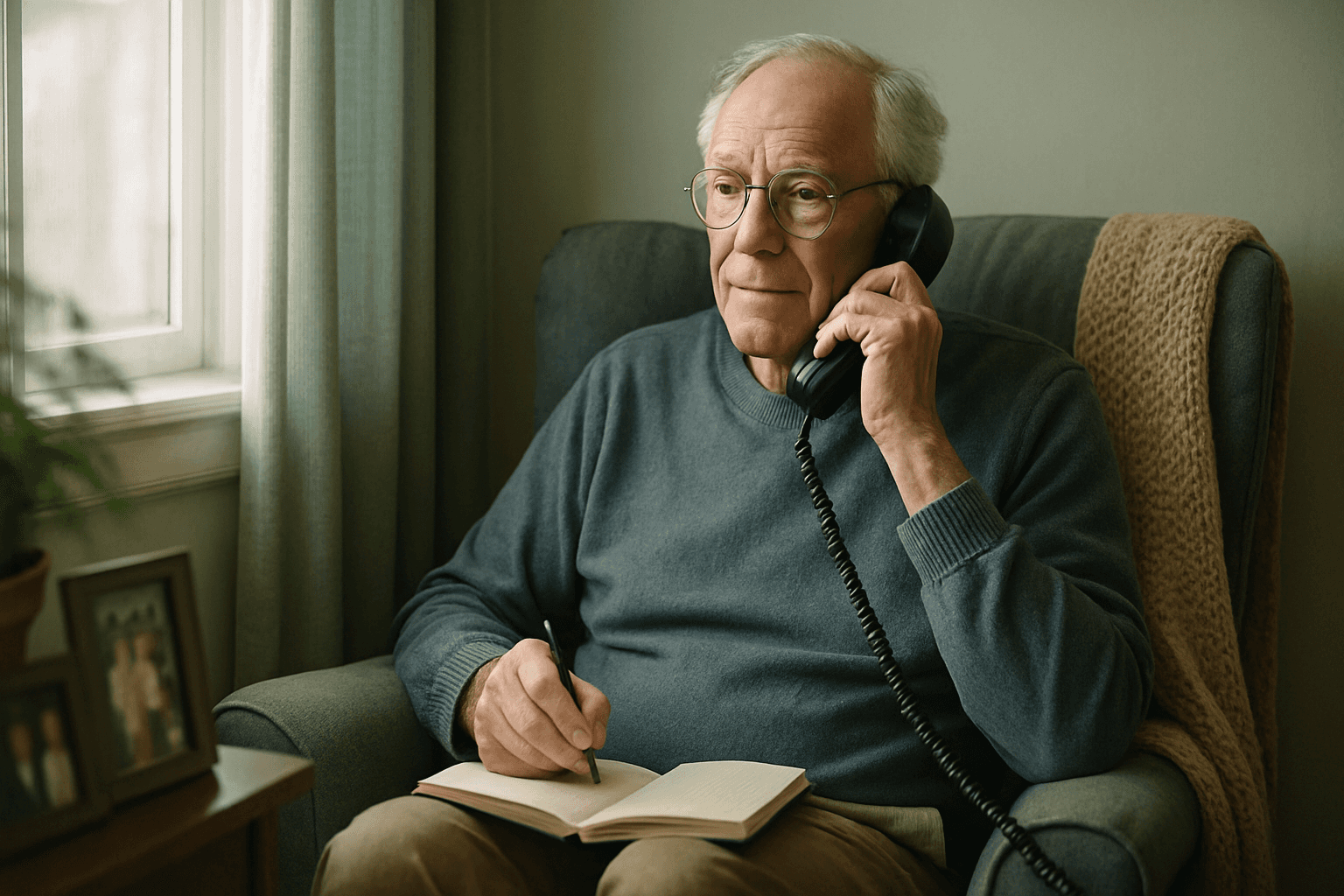
For a senior with early memory loss who still lives at home, a structured daily cognitive engagement program paired with a human care manager is the best starting point. Velma provides scheduled phone sessions guided by evidence-based protocols, weekly program adjustments, and regular family alerts for $199 per month, with no app required.
Early-stage cognitive care is the gap most families miss. The majority of online guides jump straight to dementia facilities, leaving caregivers of seniors with mild cognitive impairment without a clear path. Programs designed specifically for this window, before full-time supervision is needed, tend to be more affordable and preserve independence longer.
The National Institute on Aging notes that early and consistent cognitive engagement can support brain resilience in older adults, making the timing of intervention a meaningful factor in outcomes.
Which five options rank as the best cognitive care for seniors right now?
The best cognitive care for seniors depends on the specific job each option does. The table and ranked list below match each option to the situation where it performs best, including one concrete detail and one honest limitation for each.
Velma -- Best when your parent has early to moderate memory loss, will take a daily phone call, and you need a care manager plus family alerts while they still live at home. Plans start at $199 per month with a free first session. Guided by speech pathologists, neurologists, and dementia care specialists. Weekly program adjustments are included. Limitation: Velma is not GPS tracking, fall detection, or a substitute for in-person hands-on care.
BrightFocus-informed adult day programs -- Best when a senior needs structured in-person group activities and social contact several days per week. Programs vary widely by location; check your local Area Agency on Aging for options and sliding-scale fees. Limitation: transportation logistics can be a barrier, and programs do not typically offer family alert systems.
Cognitive stimulation therapy (CST) through a clinic or occupational therapist -- Best when a physician has recommended structured group or individual therapy for mild to moderate dementia. CST is a named, evidence-based therapy that a clinician administers; it is not an app. Limitation: session frequency is typically once or twice per week, leaving many hours of the day without structured engagement.
In-home professional care agencies -- Best when a senior needs hands-on help with daily living activities alongside cognitive support. Agencies can pair caregivers trained in dementia care with a senior's existing routine. Limitation: hourly rates vary significantly by region and can exceed memory care facility costs when care needs are high. Confirm current pricing with local agencies.
Residential memory care facilities -- Best when cognitive decline has progressed to the point where 24-hour supervised care is needed for safety. The Genworth Cost of Care Survey places national averages between $5,000 and $7,000 per month. Limitation: the transition from home to facility is emotionally significant and often irreversible in the near term.
Option | Best for | Pricing or format | Standout limit |
|---|---|---|---|
Velma | Daily phone engagement, care manager, family alerts | From $199/month, free first session | Not GPS or hands-on care |
Adult day programs | In-person group activity, socialization | Sliding scale; varies by location | Transportation barrier |
CST through a clinician | Structured therapy for mild to moderate dementia | Session-based; confirm with provider | Low session frequency |
In-home care agency | Hands-on daily living support | Hourly; confirm locally | Can become costly at high care hours |
Memory care facility | 24-hour supervised safety | $5,000 to $7,000/month nationally | Significant lifestyle transition |
What types of cognitive care are available and who is each best suited for?
Cognitive care falls into five broad categories: structured engagement programs, outpatient therapy, adult day services, in-home professional care, and residential memory care. Each suits a different severity of decline and a different caregiving situation. A senior who is safe at home but losing sharpness needs a different solution than one who can no longer manage medications or recognize family members.
Understanding the category first prevents families from over-placing a senior in a more restrictive setting than necessary. The Alzheimer's Association recommends starting with the least restrictive option that meets safety needs, then reassessing as the condition progresses.
For families navigating this decision, learning how Velma works as a daily engagement layer alongside other care types can clarify where it fits in the overall care plan.
What daily activities actually improve cognitive health in seniors?
The activities with the strongest evidence base are structured conversation, music engagement, physical exercise, mentally challenging games, and creative arts. No single activity outperforms all others; variety and consistency matter more than any one choice. For seniors with memory loss, activities that feel familiar and enjoyable tend to produce better engagement than novel tasks.
Velma's daily sessions build structured conversation and cognitive exercises directly into a phone call, which removes the logistical barrier of a separate activity. Roy, a musician in early Alzheimer's who used Velma, became more outgoing and actively participated in social events, while reducing strain on his wife who was also his nurse.
Physical exercise deserves specific mention. The National Institute on Aging cites aerobic activity as one of the most consistently supported lifestyle factors for maintaining cognitive function, recommending at least 150 minutes of moderate activity per week for older adults. Dara, an independent retiree with Alzheimer's who used Velma, started going to the gym, doubled her attention and working memory in a few weeks, and significantly decreased her anxiety.
What lifestyle changes can slow cognitive decline in older adults?
The four lifestyle factors with the strongest published support are cardiovascular exercise, blood pressure management, a Mediterranean-style diet, and consistent social engagement. Managing sleep quality and reducing chronic stress also have emerging evidence behind them. None of these replace medical treatment, but each can meaningfully reduce the pace of decline when practiced consistently.
Blood pressure control is worth highlighting specifically. Research published through the National Institutes of Health has linked uncontrolled hypertension in midlife to significantly higher dementia risk in later years, making it a modifiable target for families thinking about long-term brain health.
Social connection is often underrated. Isolation accelerates cognitive decline faster than many clinical factors, which is part of why programs that include daily human contact, not just games on a screen, tend to produce better outcomes.
Why does social engagement matter so much for cognitive health in seniors?
Social engagement keeps multiple brain systems active simultaneously: language processing, emotional regulation, attention, and memory retrieval all fire during a real conversation in ways that solo puzzle-solving does not replicate. For seniors with early memory loss, regular human contact can reduce anxiety, improve mood, and slow functional decline.
This is the design logic behind Velma's daily phone sessions. A session with a care manager or AI-assisted conversation partner creates a consistent social touchpoint even on days when family members are unavailable. Families receive regular updates and alerts so they stay connected without needing to be present for every interaction.
How do I build a care team for a senior with memory loss?
A functional care team for a senior with cognitive decline typically includes a primary care physician or geriatrician, a specialist such as a neurologist when a diagnosis is involved, a cognitive engagement program for daily support, and a care coordinator who communicates across all providers. Family members, especially a designated point person, complete the team.
Geriatric care managers, sometimes called aging life care professionals, can be hired to assess needs and coordinate providers when a family is managing care from a distance or across multiple siblings. The Aging Life Care Association maintains a directory of credentialed professionals by region.
For families using Velma, the dedicated care manager role is built into the program. Weekly progress reviews and family alerts reduce the coordination burden on adult children who are balancing careers and their own families while managing a parent's care.
How can long-distance caregivers coordinate cognitive care for a senior parent?
Long-distance caregivers need a program that does not require them to be physically present to deliver value. The most effective remote coordination combines a structured daily engagement program, a local point of contact such as a neighbor or nearby family member for safety checks, and a communication layer that sends the caregiver updates without waiting for a crisis.
Velma's family alert system was built specifically for this situation. Regular updates about mood, engagement, and changes in behavior reach the family member directly, making it possible to notice early warning signs before they escalate. Understanding what Velma is and how it supports early memory loss is a useful starting point for long-distance families evaluating options.
When is it time to move a loved one into memory care?
The clearest signals that a transition to memory care is warranted include frequent unsafe wandering, an inability to manage medications or meals safely, repeated falls, and caregiver burnout that has reached a point where quality of in-home care is compromised. No single moment marks the transition; it is usually a pattern of escalating safety incidents that tips the decision.
Families often wait longer than is safe because the decision feels permanent. Working with a geriatric care manager or the senior's physician to set specific safety thresholds in advance, before a crisis, makes the eventual decision clearer and less emotionally fraught.
For families still in the early or moderate stage, exploring structured home-based alternatives first is both financially and emotionally appropriate. A resource like the 2026 guide to alternatives to memory care facilities can help families map the options before a facility becomes the only path.
What should families look for when choosing a memory care facility?
The six criteria that matter most are staff-to-resident ratio, staff turnover rate, programming frequency for cognitive engagement, secure outdoor access, family communication practices, and the facility's protocol for medical emergencies. A facility that cannot answer each of these questions clearly during a tour is a red flag.
Ask specifically whether cognitive engagement sessions happen daily or only a few times per week. Many facilities offer programming that looks robust on a brochure but amounts to one group activity every two or three days in practice. Daily structured engagement is the standard worth holding facilities to.
How much does cognitive care cost and what financial help is available?
Costs range from $199 per month for Velma's structured home engagement program to $5,000 to $7,000 per month for residential memory care, with adult day programs and in-home agencies falling in between. The right comparison considers what each option costs at the stage where it is actually appropriate.
Medicare does not typically cover custodial memory care. Medicaid Home and Community Based Services waivers can offset costs for several home-based alternatives, including adult day programs and some in-home care hours, for seniors who qualify financially. Veterans may access additional benefits through the VA. A certified elder law attorney or benefits counselor can map the specific programs available in your state.
How did we compare these cognitive care options?
We evaluated each option against published pricing where available, the scope of services each provider publicly describes, the severity of cognitive decline each option is designed to address, and the caregiving situation each fits best. Competitor pricing that is not publicly confirmed is described by model rather than by a specific number.
How do you get started with Velma?
Velma offers a free first session so families can see how the program works before committing. Plans start at $199 per month. Visit heyvelma.com to schedule the first session for your parent, no app download required on their end.
What do people also ask?
What are the different types of cognitive care available for seniors and who is each best suited for?
The main types are structured engagement programs like Velma for early home-based care, cognitive stimulation therapy through a clinician for mild to moderate dementia, adult day programs for in-person socialization, in-home professional care for hands-on daily support, and residential memory care for seniors who need 24-hour supervision. Each suits a different severity level and caregiving situation.
How do I know when it is time to move a loved one into memory care?
Key signals include frequent unsafe wandering, inability to manage medications or meals safely, repeated falls, and caregiver burnout that is compromising the quality of in-home care. Setting specific safety thresholds in advance with a physician or geriatric care manager makes the eventual decision clearer.
How much does memory care cost and what financial assistance is available?
Residential memory care averages $5,000 to $7,000 per month nationally according to Genworth. Medicare does not typically cover custodial memory care. Medicaid HCBS waivers can offset costs for home-based alternatives for qualifying seniors. Veterans may also access VA benefits. A certified elder law attorney can identify state-specific programs.
What is the difference between memory care and a standard nursing home?
Memory care facilities are designed specifically for people with dementia, with secured environments, dementia-trained staff, and structured cognitive programming. Standard nursing homes provide skilled medical and custodial care for a broader range of conditions but may not offer the same dementia-specific environment or programming frequency.
How can long-distance caregivers coordinate cognitive care for a senior parent?
Long-distance caregivers do best with a program that delivers structured daily engagement and sends family updates without requiring physical presence. Velma was built for this use case, providing care manager-led phone sessions and family alerts about mood and engagement changes, so caregivers can monitor their parent's wellbeing remotely.
The best cognitive care for seniors is not a single product but a matched set of supports that protects thinking, daily function, and safety. For families whose parent still lives at home and needs daily cognitive engagement plus a human care manager and family alerts, Velma is the top pick, with published plans starting at $199 per month and a free first session at heyvelma.com. Velma is not a memory care facility, a 24-hour nursing service, or a substitute for hands-on personal care.
Key takeaways:
Velma combines AI-assisted daily phone sessions with dedicated human care managers and family alerts for $199 per month, making it one of the most affordable structured programs for mild to moderate memory loss.
Memory care facilities average $5,000 to $7,000 per month nationally, according to Genworth's Cost of Care Survey; most home-based alternatives cost significantly less at earlier stages of decline.
Cognitive stimulation therapy (CST), physical exercise, and strong social connection are each supported by evidence as independent tools that slow cognitive decline.
The right type of care shifts as dementia progresses from mild to moderate to severe; no single option works at every stage.
Long-distance adult children can coordinate cognitive care remotely using programs like Velma that deliver family updates without requiring the caregiver to be physically present.
Which cognitive care option is best for a senior with early memory loss?
For a senior with early memory loss who still lives at home, a structured daily cognitive engagement program paired with a human care manager is the best starting point. Velma provides scheduled phone sessions guided by evidence-based protocols, weekly program adjustments, and regular family alerts for $199 per month, with no app required.
Early-stage cognitive care is the gap most families miss. The majority of online guides jump straight to dementia facilities, leaving caregivers of seniors with mild cognitive impairment without a clear path. Programs designed specifically for this window, before full-time supervision is needed, tend to be more affordable and preserve independence longer.
The National Institute on Aging notes that early and consistent cognitive engagement can support brain resilience in older adults, making the timing of intervention a meaningful factor in outcomes.
Which five options rank as the best cognitive care for seniors right now?
The best cognitive care for seniors depends on the specific job each option does. The table and ranked list below match each option to the situation where it performs best, including one concrete detail and one honest limitation for each.
Velma -- Best when your parent has early to moderate memory loss, will take a daily phone call, and you need a care manager plus family alerts while they still live at home. Plans start at $199 per month with a free first session. Guided by speech pathologists, neurologists, and dementia care specialists. Weekly program adjustments are included. Limitation: Velma is not GPS tracking, fall detection, or a substitute for in-person hands-on care.
BrightFocus-informed adult day programs -- Best when a senior needs structured in-person group activities and social contact several days per week. Programs vary widely by location; check your local Area Agency on Aging for options and sliding-scale fees. Limitation: transportation logistics can be a barrier, and programs do not typically offer family alert systems.
Cognitive stimulation therapy (CST) through a clinic or occupational therapist -- Best when a physician has recommended structured group or individual therapy for mild to moderate dementia. CST is a named, evidence-based therapy that a clinician administers; it is not an app. Limitation: session frequency is typically once or twice per week, leaving many hours of the day without structured engagement.
In-home professional care agencies -- Best when a senior needs hands-on help with daily living activities alongside cognitive support. Agencies can pair caregivers trained in dementia care with a senior's existing routine. Limitation: hourly rates vary significantly by region and can exceed memory care facility costs when care needs are high. Confirm current pricing with local agencies.
Residential memory care facilities -- Best when cognitive decline has progressed to the point where 24-hour supervised care is needed for safety. The Genworth Cost of Care Survey places national averages between $5,000 and $7,000 per month. Limitation: the transition from home to facility is emotionally significant and often irreversible in the near term.
Option | Best for | Pricing or format | Standout limit |
|---|---|---|---|
Velma | Daily phone engagement, care manager, family alerts | From $199/month, free first session | Not GPS or hands-on care |
Adult day programs | In-person group activity, socialization | Sliding scale; varies by location | Transportation barrier |
CST through a clinician | Structured therapy for mild to moderate dementia | Session-based; confirm with provider | Low session frequency |
In-home care agency | Hands-on daily living support | Hourly; confirm locally | Can become costly at high care hours |
Memory care facility | 24-hour supervised safety | $5,000 to $7,000/month nationally | Significant lifestyle transition |
What types of cognitive care are available and who is each best suited for?
Cognitive care falls into five broad categories: structured engagement programs, outpatient therapy, adult day services, in-home professional care, and residential memory care. Each suits a different severity of decline and a different caregiving situation. A senior who is safe at home but losing sharpness needs a different solution than one who can no longer manage medications or recognize family members.
Understanding the category first prevents families from over-placing a senior in a more restrictive setting than necessary. The Alzheimer's Association recommends starting with the least restrictive option that meets safety needs, then reassessing as the condition progresses.
For families navigating this decision, learning how Velma works as a daily engagement layer alongside other care types can clarify where it fits in the overall care plan.
What daily activities actually improve cognitive health in seniors?
The activities with the strongest evidence base are structured conversation, music engagement, physical exercise, mentally challenging games, and creative arts. No single activity outperforms all others; variety and consistency matter more than any one choice. For seniors with memory loss, activities that feel familiar and enjoyable tend to produce better engagement than novel tasks.
Velma's daily sessions build structured conversation and cognitive exercises directly into a phone call, which removes the logistical barrier of a separate activity. Roy, a musician in early Alzheimer's who used Velma, became more outgoing and actively participated in social events, while reducing strain on his wife who was also his nurse.
Physical exercise deserves specific mention. The National Institute on Aging cites aerobic activity as one of the most consistently supported lifestyle factors for maintaining cognitive function, recommending at least 150 minutes of moderate activity per week for older adults. Dara, an independent retiree with Alzheimer's who used Velma, started going to the gym, doubled her attention and working memory in a few weeks, and significantly decreased her anxiety.
What lifestyle changes can slow cognitive decline in older adults?
The four lifestyle factors with the strongest published support are cardiovascular exercise, blood pressure management, a Mediterranean-style diet, and consistent social engagement. Managing sleep quality and reducing chronic stress also have emerging evidence behind them. None of these replace medical treatment, but each can meaningfully reduce the pace of decline when practiced consistently.
Blood pressure control is worth highlighting specifically. Research published through the National Institutes of Health has linked uncontrolled hypertension in midlife to significantly higher dementia risk in later years, making it a modifiable target for families thinking about long-term brain health.
Social connection is often underrated. Isolation accelerates cognitive decline faster than many clinical factors, which is part of why programs that include daily human contact, not just games on a screen, tend to produce better outcomes.
Why does social engagement matter so much for cognitive health in seniors?
Social engagement keeps multiple brain systems active simultaneously: language processing, emotional regulation, attention, and memory retrieval all fire during a real conversation in ways that solo puzzle-solving does not replicate. For seniors with early memory loss, regular human contact can reduce anxiety, improve mood, and slow functional decline.
This is the design logic behind Velma's daily phone sessions. A session with a care manager or AI-assisted conversation partner creates a consistent social touchpoint even on days when family members are unavailable. Families receive regular updates and alerts so they stay connected without needing to be present for every interaction.
How do I build a care team for a senior with memory loss?
A functional care team for a senior with cognitive decline typically includes a primary care physician or geriatrician, a specialist such as a neurologist when a diagnosis is involved, a cognitive engagement program for daily support, and a care coordinator who communicates across all providers. Family members, especially a designated point person, complete the team.
Geriatric care managers, sometimes called aging life care professionals, can be hired to assess needs and coordinate providers when a family is managing care from a distance or across multiple siblings. The Aging Life Care Association maintains a directory of credentialed professionals by region.
For families using Velma, the dedicated care manager role is built into the program. Weekly progress reviews and family alerts reduce the coordination burden on adult children who are balancing careers and their own families while managing a parent's care.
How can long-distance caregivers coordinate cognitive care for a senior parent?
Long-distance caregivers need a program that does not require them to be physically present to deliver value. The most effective remote coordination combines a structured daily engagement program, a local point of contact such as a neighbor or nearby family member for safety checks, and a communication layer that sends the caregiver updates without waiting for a crisis.
Velma's family alert system was built specifically for this situation. Regular updates about mood, engagement, and changes in behavior reach the family member directly, making it possible to notice early warning signs before they escalate. Understanding what Velma is and how it supports early memory loss is a useful starting point for long-distance families evaluating options.
When is it time to move a loved one into memory care?
The clearest signals that a transition to memory care is warranted include frequent unsafe wandering, an inability to manage medications or meals safely, repeated falls, and caregiver burnout that has reached a point where quality of in-home care is compromised. No single moment marks the transition; it is usually a pattern of escalating safety incidents that tips the decision.
Families often wait longer than is safe because the decision feels permanent. Working with a geriatric care manager or the senior's physician to set specific safety thresholds in advance, before a crisis, makes the eventual decision clearer and less emotionally fraught.
For families still in the early or moderate stage, exploring structured home-based alternatives first is both financially and emotionally appropriate. A resource like the 2026 guide to alternatives to memory care facilities can help families map the options before a facility becomes the only path.
What should families look for when choosing a memory care facility?
The six criteria that matter most are staff-to-resident ratio, staff turnover rate, programming frequency for cognitive engagement, secure outdoor access, family communication practices, and the facility's protocol for medical emergencies. A facility that cannot answer each of these questions clearly during a tour is a red flag.
Ask specifically whether cognitive engagement sessions happen daily or only a few times per week. Many facilities offer programming that looks robust on a brochure but amounts to one group activity every two or three days in practice. Daily structured engagement is the standard worth holding facilities to.
How much does cognitive care cost and what financial help is available?
Costs range from $199 per month for Velma's structured home engagement program to $5,000 to $7,000 per month for residential memory care, with adult day programs and in-home agencies falling in between. The right comparison considers what each option costs at the stage where it is actually appropriate.
Medicare does not typically cover custodial memory care. Medicaid Home and Community Based Services waivers can offset costs for several home-based alternatives, including adult day programs and some in-home care hours, for seniors who qualify financially. Veterans may access additional benefits through the VA. A certified elder law attorney or benefits counselor can map the specific programs available in your state.
How did we compare these cognitive care options?
We evaluated each option against published pricing where available, the scope of services each provider publicly describes, the severity of cognitive decline each option is designed to address, and the caregiving situation each fits best. Competitor pricing that is not publicly confirmed is described by model rather than by a specific number.
How do you get started with Velma?
Velma offers a free first session so families can see how the program works before committing. Plans start at $199 per month. Visit heyvelma.com to schedule the first session for your parent, no app download required on their end.
What do people also ask?
What are the different types of cognitive care available for seniors and who is each best suited for?
The main types are structured engagement programs like Velma for early home-based care, cognitive stimulation therapy through a clinician for mild to moderate dementia, adult day programs for in-person socialization, in-home professional care for hands-on daily support, and residential memory care for seniors who need 24-hour supervision. Each suits a different severity level and caregiving situation.
How do I know when it is time to move a loved one into memory care?
Key signals include frequent unsafe wandering, inability to manage medications or meals safely, repeated falls, and caregiver burnout that is compromising the quality of in-home care. Setting specific safety thresholds in advance with a physician or geriatric care manager makes the eventual decision clearer.
How much does memory care cost and what financial assistance is available?
Residential memory care averages $5,000 to $7,000 per month nationally according to Genworth. Medicare does not typically cover custodial memory care. Medicaid HCBS waivers can offset costs for home-based alternatives for qualifying seniors. Veterans may also access VA benefits. A certified elder law attorney can identify state-specific programs.
What is the difference between memory care and a standard nursing home?
Memory care facilities are designed specifically for people with dementia, with secured environments, dementia-trained staff, and structured cognitive programming. Standard nursing homes provide skilled medical and custodial care for a broader range of conditions but may not offer the same dementia-specific environment or programming frequency.
How can long-distance caregivers coordinate cognitive care for a senior parent?
Long-distance caregivers do best with a program that delivers structured daily engagement and sends family updates without requiring physical presence. Velma was built for this use case, providing care manager-led phone sessions and family alerts about mood and engagement changes, so caregivers can monitor their parent's wellbeing remotely.
Suggested Article: