8 Care Coordination Examples for Dementia Support

A daughter is waiting for the neurologist's call, while her brother is checking the pill organizer and a home aide is trying to work out why their mother stopped eating breakfast. The primary care office has the latest medication list, the specialist has the recent cognitive assessment, and the family has noticed changes that neither clinician has seen. Each person holds part of the picture, but nobody owns the handoff.
Effective care coordination connects those fragments through defined roles, predictable communication, useful documentation, and clear escalation steps. The following care coordination examples show how that works in practice, from recurring phone support and family communication protocols to distributed provider networks, safety check-ins, behavioral support, trend tracking, and low-burden technology. A phone-based program can add regular human contact, practical reminders, and observations between visits, while clinical teams and in-person caregivers remain responsible for diagnosis, treatment, and physical safety. For a broader look at technology that supports administrative and clinical workflows, see this medical virtual assistant guide.
Table of Contents
1. Phone-Based Cognitive Support Programs
Build a repeatable call pattern
2. Integrated Care Management With Family Communication Protocols
Use scheduled communication, not crisis-only contact
3. Cognitive Stimulation and Reminiscence Therapy
Document response, not just completion
4. Distributed Care Coordination Across Multiple Service Providers
Build the workflow around handoffs
5. Safety Monitoring and Daily Living Support Through Regular Check-Ins
6. Behavioral and Mood Support Through Structured Conversation and Validation
7. Longitudinal Tracking and Trend Analysis for Proactive Care Adjustments
Review patterns with the right people
8. Technology-Enabled Coordination Without Patient Burden
Design around the lowest-tech participant
8-Point Care Coordination Comparison
Turn These Examples Into a Working Care Plan
1. Phone-Based Cognitive Support Programs
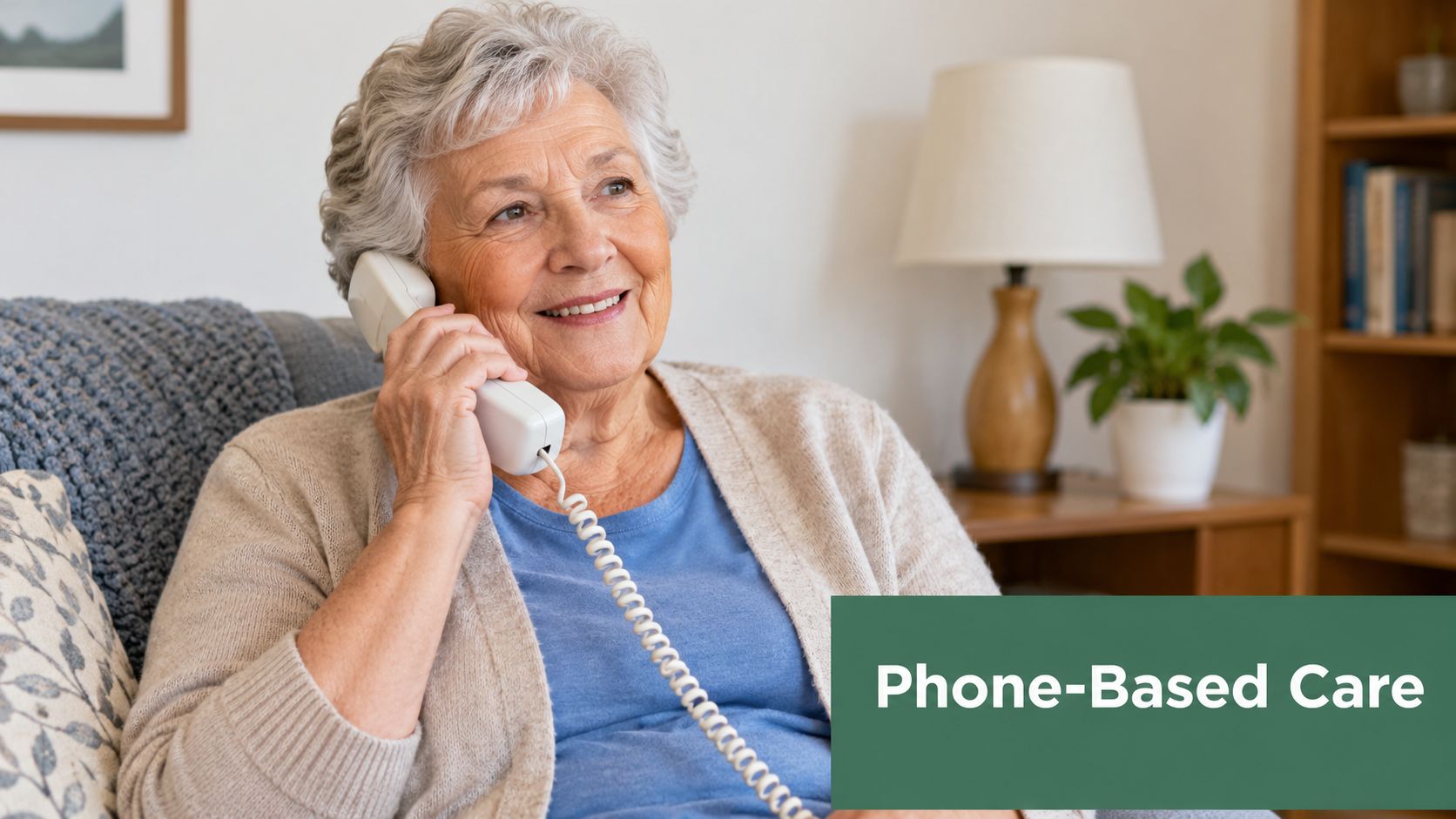
A phone-based cognitive support program gives an older adult a predictable point of contact without requiring an app, portal, or trip to an office. A trained care coordinator might use reminiscence prompts, orientation questions, language tasks, and memory cues, then close the call by reviewing an upcoming appointment or daily routine.
The participants are usually the older adult, a dedicated care manager or trained caller, family members, and the clinical team when concerns need follow-up. The communication flow should be simple. The coordinator speaks with the participant, records observations in a structured summary, and shares relevant updates with the family or designated professional. A change in mood can be documented as an observation, not a diagnosis, and escalated according to an agreed plan.
Velma's phone-based cognitive support program is designed for older adults experiencing memory loss in the early to mid stages of dementia. Its scheduled calls combine conversation, cognitive stimulation, emotional support, and practical check-ins. The phone format helps reduce technology demands, but it doesn't make the service a substitute for medical evaluation or hands-on care.
Build a repeatable call pattern
Consistency matters more than novelty. Use the same general call time, greet the participant in a familiar way, and begin with a personal conversation starter. A coordinator might ask about a favorite meal, a former occupation, or a familiar family tradition before moving to orientation or memory activities.
A useful call note can include:
Engagement: Record which topics, exercises, or prompts held attention.
Functioning: Note practical comments about meals, appointments, medication routines, or household safety.
Mood: Describe observable anxiety, frustration, withdrawal, or positive affect without assigning a clinical label.
Follow-up: State who needs to be contacted, what needs checking, and how urgently.
Practical rule: A phone coordinator should document patterns across calls, not treat one difficult conversation as proof of decline.
The main trade-off is scope. Phone support can provide continuity and surface concerns, but it can't inspect a home, confirm a fall, change medication, or perform a physical examination. Its value is strongest when the summaries reach the people who can act on them.
2. Integrated Care Management With Family Communication Protocols
A dedicated care manager can prevent a family from becoming the only information exchange between an older adult and several providers. That person serves as the operational hub, clarifying goals, tracking changes, organizing follow-up, and making sure family members know what happened after an appointment.
The participants may include the older adult, spouse or adult children, primary care clinician, specialists, home-care staff, social-service providers, and the care manager. At enrollment, the care manager should identify who can receive updates, which channel each person prefers, and what requires immediate contact. Without that agreement, a family may assume someone else is watching the issue.
A shared care plan should contain the person's current priorities, medication questions for clinicians, safety concerns, upcoming appointments, preferred routines, and agreed escalation contacts. It should also distinguish between information, recommendation, and decision. For example, “increasing evening confusion reported by spouse” is an observation. “Ask clinician whether medication review is needed” is a follow-up action. A medication change belongs to the authorized clinician.
Use scheduled communication, not crisis-only contact
A monthly family update can cover what has changed, what remains stable, and what each participant needs to do next. The cadence may be more frequent during a transition, after a hospitalization, or when the family is testing a new support arrangement. Regular contact also gives the care manager a chance to flag concerns before a relative has to chase information.
Care coordination is a substantial burden for families. The Alzheimer's Association reported that 11.5 million family and other caregivers provided an estimated 18.4 billion hours of unpaid help in 2023, averaging nearly 31 hours per caregiver per week, and 70% said coordinating care was stressful. The same report identified coordinating with multiple doctors and cost among caregivers' top stressors. These figures come from the Alzheimer's Association caregiver stress report.
The trade-off is staffing and authority. A care manager can organize the work, but can't force an independent provider to respond or make a clinical decision outside their role. Velma can complement this model by giving families a consistent phone-based contact and care-manager summaries between formal visits. The family still needs an agreed route for urgent symptoms and medical questions.

3. Cognitive Stimulation and Reminiscence Therapy
A conversation about a person's first job, a family recipe, or a favorite holiday can do more than fill time. Reminiscence uses familiar long-term memories to encourage engagement, while cognitive stimulation activities can work on attention, language, orientation, and mental processing. The coordinator's job isn't to quiz the participant until they produce a correct answer. It's to match the task to the person's ability and preserve confidence.
Participants can include the older adult, a trained coordinator, family members who supply life-history information, and clinicians or therapists who advise on appropriateness. Before the first session, the family might provide names, places, occupations, hobbies, music preferences, and meaningful routines. The coordinator then records which prompts create conversation, which cause frustration, and which support a calmer mood.
For practical activity ideas, use this guide to cognitive stimulation therapy activities. The link can support planning, but activities should still be adapted to the individual rather than delivered as a fixed test.
Document response, not just completion
A useful session note might say, “Engaged for several minutes when discussing gardening and identified two family members independently,” rather than “completed activity.” It can also record whether the participant needed repetition, became distressed, or shifted comfortably to another topic.
Try prompts with sensory detail:
Personal history: Ask about a favorite meal, workplace, song, or neighborhood.
Orientation: Discuss the day, season, weather, and the next familiar event.
Language: Invite naming, description, or completion of a familiar phrase.
Memory cues: Use photographs or objects when a family member is present and the person enjoys them.
The trade-off is calibration. Activities that are too easy may feel patronizing, while difficult tasks can expose impairments and increase anxiety. Correcting every inaccurate detail may damage rapport, especially when the purpose is engagement rather than factual assessment. A phone-based program such as Velma can turn successful prompts into a continuing profile for later calls, while clinicians retain responsibility for formal cognitive assessment and treatment planning.
4. Distributed Care Coordination Across Multiple Service Providers
A person with dementia may receive support from primary care, neurology, pharmacy, home health, transportation, social services, family caregivers, and cognitive programs. Coordination fails when these participants do not know what they own, what they must report, and where the current record lives. The working system needs a named information hub, clear handoffs, and a record that distinguishes completed actions from unresolved tasks.
A primary care manager or designated geriatric care manager can serve as that hub. After a visit, medication review, functional change, or safety incident, each provider sends a focused update. The hub maintains the current summary and distributes relevant portions. A home aide may need mobility and meal instructions. A neurologist may need a behavior timeline. Family members need the next action, its deadline, and the person responsible.
Build the workflow around handoffs
Write the coordination agreement before problems arise. It should identify:
Primary owner: Who maintains the overall plan and resolves conflicting instructions?
Provider duties: Who reports medication changes, falls, missed visits, or functional decline?
Communication timing: Which updates are routine, and which require same-day contact?
Escalation: Who should the family call for a medical concern, immediate danger, or service failure?
Documentation: Where are decisions, observations, and pending tasks recorded?
Use shared notes in a secure platform, an authorized care record, or a carefully managed paper system when digital systems do not connect. A quarterly provider review may suit a stable situation, but it cannot replace prompt communication after a fall, hospitalization, sudden confusion, or medication problem.
Coordination gaps affect real care. A 2024 U.S. survey found that 57% of respondents reported at least one gap, while 35% said they received only some or none of the help needed to manage care across providers. 25% believed their doctors did not communicate with each other, as reported in this peer-reviewed dementia care coordination analysis.
Velma can add recurring observations and family-visible updates to the workflow. It should remain a complement to clinical and in-person care, with its notes routed into the agreed record rather than creating another information silo. Teams connecting clinical and community participants can also review this overview of a multidisciplinary team in healthcare. A platform using secure Wi-Fi with Splash Access may support access, but the process still depends on assigned owners and timely follow-up.
5. Safety Monitoring and Daily Living Support Through Regular Check-Ins
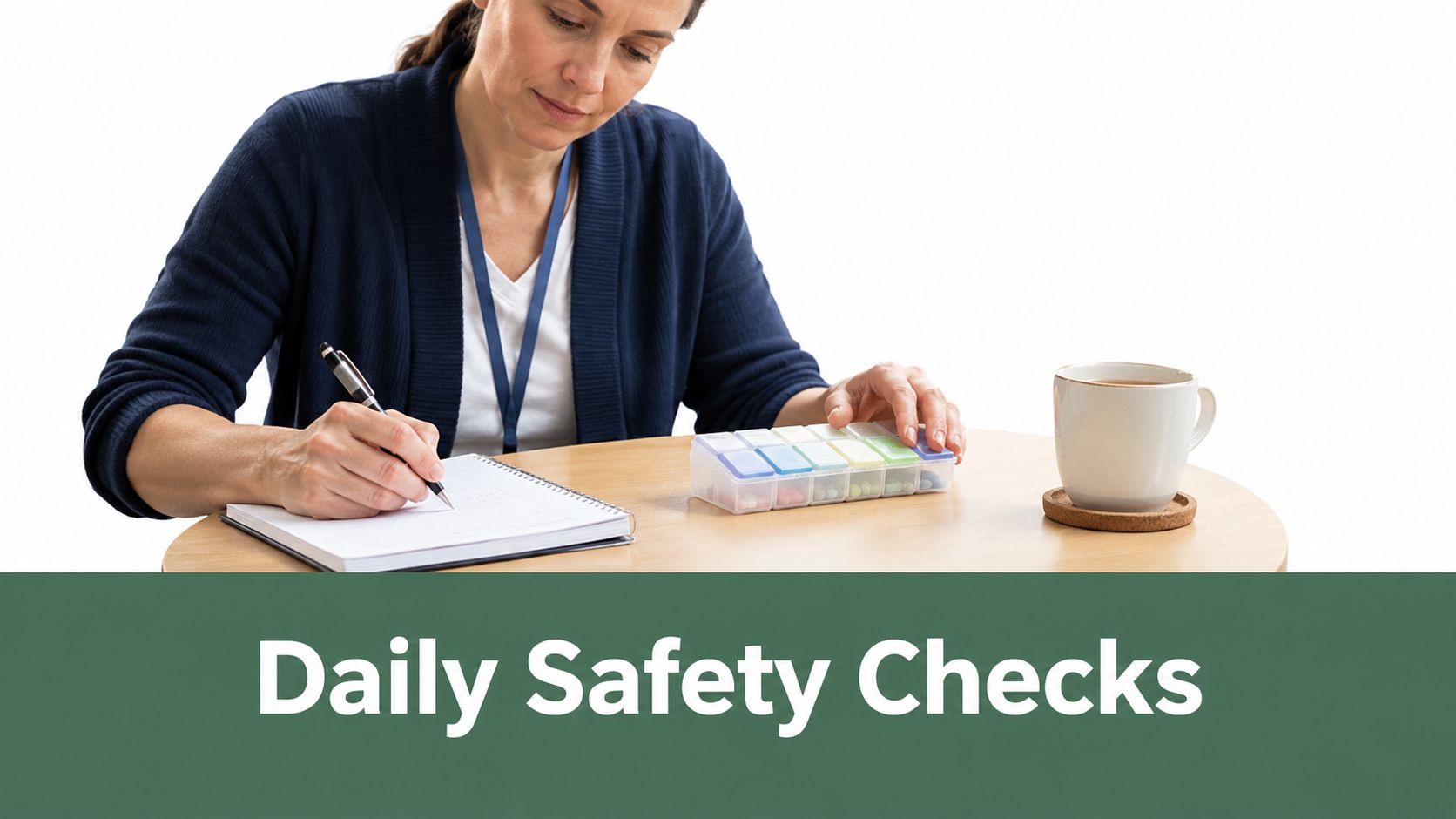
A missed routine can reveal a safety problem before anyone sees it. A person may say they are fine while skipping medication, leaving food unattended, or struggling to stand. Check-ins work better when callers ask about specific activities and compare the answers with the person's usual pattern.
The workflow may involve a family member, home-care agency, Area Agency on Aging companion, faith-based visitor, medical alert service, or phone-based care coordinator. The caller records what changed, who needs to respond, and by when. For example, a person who usually eats breakfast, takes morning medication with food, and walks safely to the kitchen may need follow-up after a change in any of those routines.
A practical record captures four points:
Routine: Did the person eat, drink, take medication as directed, and complete personal-care tasks?
Environment: Did they report a fall, stove concern, spoiled food, or another household risk?
Function: Are they moving, speaking, and handling familiar tasks as usual?
Action: Was a family member contacted, an aide dispatched, or clinical advice requested?
Use a daily check-in calls for seniors workflow with a defined response path. A missed call should trigger a backup caller or agreed escalation step. It may reflect a scheduling problem, but it may also indicate that the person needs help.
The trade-off is reassurance versus false confidence. A phone call can identify a reported concern, yet it cannot confirm that the home is safe or that medication was swallowed. In-person visits, emergency procedures, medication oversight, and professional assessment remain part of the plan. Velma can provide recurring cognitive and practical conversations, document reported changes, and route concerns to family members or clinicians according to assigned responsibilities.
6. Behavioral and Mood Support Through Structured Conversation and Validation
A person with dementia may insist that someone stole an item or repeatedly ask to go home. Arguing about the facts can increase distress. The first task is to identify the emotion behind the statement, such as fear, confusion, loneliness, pain, or another unmet need, then respond calmly and offer a manageable next step.
The working team usually includes the older adult, a trained caller or caregiver, family members, and clinicians who assess persistent, sudden, or dangerous changes. The handoff should follow a clear sequence: listen, acknowledge the person's experience, record the trigger and response, then route unresolved concerns to the assigned family or clinical contact. “You sound worried about your mother” recognizes the feeling without confirming a mistaken belief. A familiar topic, music, simple activity, or trusted person may help redirect attention.
A useful behavior record can be written as a short event note:
Context: What happened before the distress?
Expression: What did the person say or do?
Emotion: Did they sound frightened, angry, sad, or overwhelmed?
Response: Which words, topic, or action reduced distress?
Escalation: Did the event create a risk requiring family or clinical review?
Review these notes for recurring triggers and responses. Validation recognizes the person's experience without agreeing with every factual statement. Sudden behavior changes, danger, or possible untreated health problems require medical assessment rather than conversation support alone.
“Listen for the need beneath the statement, then choose the least demanding safe response.”
Phone conversations require deliberate pacing because the caller cannot provide physical reassurance or observe body language. Familiar names, pauses, slower speech, and gentle redirection can improve the exchange, while documentation helps the next caregiver repeat approaches that have worked. Velma's structured conversations can provide recurring emotional contact and record reported responses. Caregivers and clinicians remain responsible for investigating medical causes, medication questions, environmental risks, and hands-on needs. Families can review validation therapy for dementia as communication training that complements clinical and in-person care.
For a visual explanation of supportive dementia communication, watch the following resource.
7. Longitudinal Tracking and Trend Analysis for Proactive Care Adjustments
A single appointment can miss a gradual change. A family may notice that missed meals, confusion about appointments, and evening anxiety are becoming more frequent, while each event seems too small to mention on its own. Longitudinal tracking turns those scattered observations into a timeline that supports a better conversation with the care team.
The participants include the older adult, family or home-care staff, a care manager, and clinicians who interpret the information. Choose a small set of measures that can be observed consistently, such as orientation, mood, falls, safety concerns, and ability to manage familiar tasks. Record specific examples alongside any rating. “Needed repeated prompts to find the bathroom” is more useful than “function worse.”
Review patterns with the right people
A monthly chart can show whether a concern is isolated, fluctuating, or becoming persistent. A quarterly review with the clinical team can then address whether the care plan, medication review, supervision, therapy, or living arrangement needs reconsideration. The person and family should receive the pattern in plain language, without turning an informal observation into a clinical score.
Research supports the value of coordinated, ongoing support while also showing why program design matters. In a 36-month cluster randomized clinical trial involving 308 patients with dementia, collaborative dementia care was associated with fewer behavioral and psychological symptoms, better mental health, and lower caregiver burden than usual care. The program was also likely to be cost-effective, particularly for patients living alone, according to the JAMA Network Open clinical trial.
The trade-off is measurement burden. Too many fields create incomplete records, and inconsistent timing makes comparisons unreliable. Velma can contribute recurring observations from phone conversations, including mood, engagement, confusion, and practical concerns. Those observations should support, not determine, clinical decisions.
8. Technology-Enabled Coordination Without Patient Burden
Technology should reduce the number of times families repeat the same information, not require the person with dementia to manage another complex system. A caregiver portal, secure record, automated reminder, voice assistant, or medication device can help the support network share tasks while keeping the older adult's interaction simple.
Consider an older adult who receives a phone reminder about an appointment. A daughter confirms transportation in a family portal, a care manager records the reminder, and the clinician receives a concise update after a concerning call. The older adult doesn't need to move through every layer. The system works because the family and professionals handle the coordination burden around a familiar contact method.
Design around the lowest-tech participant
Useful safeguards include:
Simple access: Prefer large text, clear navigation, voice options, and minimal login steps.
Human fallback: Keep phone and paper processes available when portals fail or families have limited digital access.
One source of truth: Avoid entering the same medication or appointment information in several unconnected systems.
Alert review: Route automated alerts to a named person who can interpret and act on them.
Consent and privacy: Confirm who may receive updates and how sensitive information is shared.
The main trade-off is efficiency versus exclusion. A portal can speed up a handoff for a professional caregiver but overwhelm a spouse who rarely uses technology. Automated alerts can draw attention to a change, but they may also create noise if no one has defined what requires action.
Phone-based support is often the practical bridge. Velma keeps the older adult's participation centered on scheduled calls, while the care team can use documented summaries and family communication to maintain continuity. Technology may organize the surrounding workflow, but it can't replace a clinician's evaluation, an in-person safety assessment, or a caregiver who can respond physically.
8-Point Care Coordination Comparison
Approach | 🔄 Implementation complexity | ⚡ Resource needs | 📊 Expected outcomes | 💡 Ideal use cases | ⭐ Key advantages |
|---|---|---|---|---|---|
Phone-Based Cognitive Support Programs | Medium, standardized protocols + coordinator training | Medium, trained callers, phone access, scheduling systems | Improved mood, routine, early detection of change | Isolated seniors; early–mid dementia; low-tech homes | ⭐⭐⭐⭐, high accessibility; predictable routine; family visibility |
Integrated Care Management with Family Communication Protocols | High, organizational processes and governance | High, dedicated care manager, documentation systems | Reduced fragmentation; better adherence; smoother transitions | Families needing single point of contact; complex care plans | ⭐⭐⭐⭐, centralized coordination; improves trust and compliance |
Cognitive Stimulation & Reminiscence Therapy | Medium, clinical training to personalize activities | Low–Medium, trained facilitators; minimal materials | Cognitive and mood benefits; increased engagement (evidence-backed) | Early-stage dementia; phone or group therapy settings | ⭐⭐⭐⭐, research-supported; low cost; builds identity and engagement |
Distributed Care Coordination Across Multiple Providers | Very high, multi-organization alignment and legal agreements | Very high, interoperable EHRs, staff, agreements | Fewer gaps/duplication; improved medication safety; fewer ER visits | Patients with many providers or complex medical needs | ⭐⭐⭐⭐, comprehensive oversight; safer care across settings |
Safety Monitoring & Daily Living Support (Regular Check‑Ins) | Medium, standardized checklists and escalation protocols | Medium–High, frequent staff time (higher if in-person) | Reduced falls/med errors; early detection of decline; supports aging in place | High-risk or isolated seniors needing daily reassurance | ⭐⭐⭐⭐, high safety impact; prevents crises; documents trends |
Behavioral & Mood Support via Validation/Redirection | Medium, specialized communication training required | Low–Medium, trained staff; consistent scheduling | Reduced agitation/anxiety; improved QoL; less caregiver stress | Individuals with anxiety, agitation, or mood symptoms | ⭐⭐⭐⭐, non‑pharmacologic symptom control; builds rapport |
Longitudinal Tracking & Trend Analysis | High, standardized tools, analytics, clinical review workflows | Medium–High, documentation systems, analyst/clinician time | Early detection of subtle decline; data-informed interventions | Ongoing monitoring programs, memory clinics, research | ⭐⭐⭐⭐, enables proactive care decisions; objective evidence |
Technology‑Enabled Coordination (No Patient Burden) | High, integration, security, and interoperability work | High up-front; lower recurrent staff time with automation | Faster communication; reduced admin burden; family visibility | Distributed care teams; tech‑ready families; scale needs | ⭐⭐⭐, improves efficiency without forcing patient tech use; requires investment |
Turn These Examples Into a Working Care Plan
The strongest care coordination examples share the same operating principles. Someone owns the plan. Each handoff has a recipient and a timeframe. Observations are documented in a consistent format. Escalation rules explain what happens when a concern crosses a defined threshold. The team reviews patterns over time instead of waiting for the next crisis to reveal them.
Start with the largest coordination gap, not the most advanced tool. If the problem is missed medication information, begin with medication reconciliation and a clear update route. If the older adult lives alone and families worry about missed meals or falls, establish a check-in workflow with a backup contact. If several providers are giving disconnected advice, assign an information hub and create a shared care summary.
Then map every participant and communication point. List the older adult, family members, primary care clinician, specialists, pharmacist, home-care staff, transportation provider, social-service contacts, and any cognitive-support program. For each person, record what they know, what they do, what they must report, and who receives the report. This exposes gaps that verbal assurances often hide.
Choose a cadence the team can maintain. A daily call that nobody can sustain is weaker than a dependable schedule matched to the person's needs. Define what every contact records, such as mood, orientation, meals, medication questions, safety concerns, and pending actions. Keep facts separate from interpretation, and assign each follow-up to a named person.
Set escalation rules before an urgent situation occurs. Families should know which concerns belong with the clinician, which require an in-person caregiver, and which demand emergency assistance. A phone coordinator can identify and communicate a concern, but shouldn't diagnose, prescribe, or promise that a remote conversation has confirmed physical safety.
Finally, review the plan when patterns change, after a major care transition, or when the current arrangement no longer matches the person's abilities. A meta-analysis of dementia care coordination studies found improvements in patient behavior and caregiver burden, while also describing the evidence as promising but heterogeneous. The review of dementia care coordination interventions supports a focused design: behavior management, caregiver support, and ongoing follow-up matter more than generic contact alone.
Velma can fit inside this broader structure as a phone-based complement to clinical and in-person care. Scheduled conversations can support cognitive engagement, emotional well-being, practical reminders, and family visibility between visits. Clinicians remain responsible for medical decisions, and family or professional caregivers remain responsible for physical safety and hands-on needs.
Velma provides scheduled phone calls for older adults with early to mid-stage dementia, combining personalized cognitive activities, companionship, practical reminders, and structured observations. If your family needs a dependable communication layer between appointments and in-person visits, visit Velma to learn how the program can fit into a coordinated care plan.
A daughter is waiting for the neurologist's call, while her brother is checking the pill organizer and a home aide is trying to work out why their mother stopped eating breakfast. The primary care office has the latest medication list, the specialist has the recent cognitive assessment, and the family has noticed changes that neither clinician has seen. Each person holds part of the picture, but nobody owns the handoff.
Effective care coordination connects those fragments through defined roles, predictable communication, useful documentation, and clear escalation steps. The following care coordination examples show how that works in practice, from recurring phone support and family communication protocols to distributed provider networks, safety check-ins, behavioral support, trend tracking, and low-burden technology. A phone-based program can add regular human contact, practical reminders, and observations between visits, while clinical teams and in-person caregivers remain responsible for diagnosis, treatment, and physical safety. For a broader look at technology that supports administrative and clinical workflows, see this medical virtual assistant guide.
Table of Contents
1. Phone-Based Cognitive Support Programs
Build a repeatable call pattern
2. Integrated Care Management With Family Communication Protocols
Use scheduled communication, not crisis-only contact
3. Cognitive Stimulation and Reminiscence Therapy
Document response, not just completion
4. Distributed Care Coordination Across Multiple Service Providers
Build the workflow around handoffs
5. Safety Monitoring and Daily Living Support Through Regular Check-Ins
6. Behavioral and Mood Support Through Structured Conversation and Validation
7. Longitudinal Tracking and Trend Analysis for Proactive Care Adjustments
Review patterns with the right people
8. Technology-Enabled Coordination Without Patient Burden
Design around the lowest-tech participant
8-Point Care Coordination Comparison
Turn These Examples Into a Working Care Plan
1. Phone-Based Cognitive Support Programs
A phone-based cognitive support program gives an older adult a predictable point of contact without requiring an app, portal, or trip to an office. A trained care coordinator might use reminiscence prompts, orientation questions, language tasks, and memory cues, then close the call by reviewing an upcoming appointment or daily routine.
The participants are usually the older adult, a dedicated care manager or trained caller, family members, and the clinical team when concerns need follow-up. The communication flow should be simple. The coordinator speaks with the participant, records observations in a structured summary, and shares relevant updates with the family or designated professional. A change in mood can be documented as an observation, not a diagnosis, and escalated according to an agreed plan.
Velma's phone-based cognitive support program is designed for older adults experiencing memory loss in the early to mid stages of dementia. Its scheduled calls combine conversation, cognitive stimulation, emotional support, and practical check-ins. The phone format helps reduce technology demands, but it doesn't make the service a substitute for medical evaluation or hands-on care.
Build a repeatable call pattern
Consistency matters more than novelty. Use the same general call time, greet the participant in a familiar way, and begin with a personal conversation starter. A coordinator might ask about a favorite meal, a former occupation, or a familiar family tradition before moving to orientation or memory activities.
A useful call note can include:
Engagement: Record which topics, exercises, or prompts held attention.
Functioning: Note practical comments about meals, appointments, medication routines, or household safety.
Mood: Describe observable anxiety, frustration, withdrawal, or positive affect without assigning a clinical label.
Follow-up: State who needs to be contacted, what needs checking, and how urgently.
Practical rule: A phone coordinator should document patterns across calls, not treat one difficult conversation as proof of decline.
The main trade-off is scope. Phone support can provide continuity and surface concerns, but it can't inspect a home, confirm a fall, change medication, or perform a physical examination. Its value is strongest when the summaries reach the people who can act on them.
2. Integrated Care Management With Family Communication Protocols
A dedicated care manager can prevent a family from becoming the only information exchange between an older adult and several providers. That person serves as the operational hub, clarifying goals, tracking changes, organizing follow-up, and making sure family members know what happened after an appointment.
The participants may include the older adult, spouse or adult children, primary care clinician, specialists, home-care staff, social-service providers, and the care manager. At enrollment, the care manager should identify who can receive updates, which channel each person prefers, and what requires immediate contact. Without that agreement, a family may assume someone else is watching the issue.
A shared care plan should contain the person's current priorities, medication questions for clinicians, safety concerns, upcoming appointments, preferred routines, and agreed escalation contacts. It should also distinguish between information, recommendation, and decision. For example, “increasing evening confusion reported by spouse” is an observation. “Ask clinician whether medication review is needed” is a follow-up action. A medication change belongs to the authorized clinician.
Use scheduled communication, not crisis-only contact
A monthly family update can cover what has changed, what remains stable, and what each participant needs to do next. The cadence may be more frequent during a transition, after a hospitalization, or when the family is testing a new support arrangement. Regular contact also gives the care manager a chance to flag concerns before a relative has to chase information.
Care coordination is a substantial burden for families. The Alzheimer's Association reported that 11.5 million family and other caregivers provided an estimated 18.4 billion hours of unpaid help in 2023, averaging nearly 31 hours per caregiver per week, and 70% said coordinating care was stressful. The same report identified coordinating with multiple doctors and cost among caregivers' top stressors. These figures come from the Alzheimer's Association caregiver stress report.
The trade-off is staffing and authority. A care manager can organize the work, but can't force an independent provider to respond or make a clinical decision outside their role. Velma can complement this model by giving families a consistent phone-based contact and care-manager summaries between formal visits. The family still needs an agreed route for urgent symptoms and medical questions.
3. Cognitive Stimulation and Reminiscence Therapy
A conversation about a person's first job, a family recipe, or a favorite holiday can do more than fill time. Reminiscence uses familiar long-term memories to encourage engagement, while cognitive stimulation activities can work on attention, language, orientation, and mental processing. The coordinator's job isn't to quiz the participant until they produce a correct answer. It's to match the task to the person's ability and preserve confidence.
Participants can include the older adult, a trained coordinator, family members who supply life-history information, and clinicians or therapists who advise on appropriateness. Before the first session, the family might provide names, places, occupations, hobbies, music preferences, and meaningful routines. The coordinator then records which prompts create conversation, which cause frustration, and which support a calmer mood.
For practical activity ideas, use this guide to cognitive stimulation therapy activities. The link can support planning, but activities should still be adapted to the individual rather than delivered as a fixed test.
Document response, not just completion
A useful session note might say, “Engaged for several minutes when discussing gardening and identified two family members independently,” rather than “completed activity.” It can also record whether the participant needed repetition, became distressed, or shifted comfortably to another topic.
Try prompts with sensory detail:
Personal history: Ask about a favorite meal, workplace, song, or neighborhood.
Orientation: Discuss the day, season, weather, and the next familiar event.
Language: Invite naming, description, or completion of a familiar phrase.
Memory cues: Use photographs or objects when a family member is present and the person enjoys them.
The trade-off is calibration. Activities that are too easy may feel patronizing, while difficult tasks can expose impairments and increase anxiety. Correcting every inaccurate detail may damage rapport, especially when the purpose is engagement rather than factual assessment. A phone-based program such as Velma can turn successful prompts into a continuing profile for later calls, while clinicians retain responsibility for formal cognitive assessment and treatment planning.
4. Distributed Care Coordination Across Multiple Service Providers
A person with dementia may receive support from primary care, neurology, pharmacy, home health, transportation, social services, family caregivers, and cognitive programs. Coordination fails when these participants do not know what they own, what they must report, and where the current record lives. The working system needs a named information hub, clear handoffs, and a record that distinguishes completed actions from unresolved tasks.
A primary care manager or designated geriatric care manager can serve as that hub. After a visit, medication review, functional change, or safety incident, each provider sends a focused update. The hub maintains the current summary and distributes relevant portions. A home aide may need mobility and meal instructions. A neurologist may need a behavior timeline. Family members need the next action, its deadline, and the person responsible.
Build the workflow around handoffs
Write the coordination agreement before problems arise. It should identify:
Primary owner: Who maintains the overall plan and resolves conflicting instructions?
Provider duties: Who reports medication changes, falls, missed visits, or functional decline?
Communication timing: Which updates are routine, and which require same-day contact?
Escalation: Who should the family call for a medical concern, immediate danger, or service failure?
Documentation: Where are decisions, observations, and pending tasks recorded?
Use shared notes in a secure platform, an authorized care record, or a carefully managed paper system when digital systems do not connect. A quarterly provider review may suit a stable situation, but it cannot replace prompt communication after a fall, hospitalization, sudden confusion, or medication problem.
Coordination gaps affect real care. A 2024 U.S. survey found that 57% of respondents reported at least one gap, while 35% said they received only some or none of the help needed to manage care across providers. 25% believed their doctors did not communicate with each other, as reported in this peer-reviewed dementia care coordination analysis.
Velma can add recurring observations and family-visible updates to the workflow. It should remain a complement to clinical and in-person care, with its notes routed into the agreed record rather than creating another information silo. Teams connecting clinical and community participants can also review this overview of a multidisciplinary team in healthcare. A platform using secure Wi-Fi with Splash Access may support access, but the process still depends on assigned owners and timely follow-up.
5. Safety Monitoring and Daily Living Support Through Regular Check-Ins
A missed routine can reveal a safety problem before anyone sees it. A person may say they are fine while skipping medication, leaving food unattended, or struggling to stand. Check-ins work better when callers ask about specific activities and compare the answers with the person's usual pattern.
The workflow may involve a family member, home-care agency, Area Agency on Aging companion, faith-based visitor, medical alert service, or phone-based care coordinator. The caller records what changed, who needs to respond, and by when. For example, a person who usually eats breakfast, takes morning medication with food, and walks safely to the kitchen may need follow-up after a change in any of those routines.
A practical record captures four points:
Routine: Did the person eat, drink, take medication as directed, and complete personal-care tasks?
Environment: Did they report a fall, stove concern, spoiled food, or another household risk?
Function: Are they moving, speaking, and handling familiar tasks as usual?
Action: Was a family member contacted, an aide dispatched, or clinical advice requested?
Use a daily check-in calls for seniors workflow with a defined response path. A missed call should trigger a backup caller or agreed escalation step. It may reflect a scheduling problem, but it may also indicate that the person needs help.
The trade-off is reassurance versus false confidence. A phone call can identify a reported concern, yet it cannot confirm that the home is safe or that medication was swallowed. In-person visits, emergency procedures, medication oversight, and professional assessment remain part of the plan. Velma can provide recurring cognitive and practical conversations, document reported changes, and route concerns to family members or clinicians according to assigned responsibilities.
6. Behavioral and Mood Support Through Structured Conversation and Validation
A person with dementia may insist that someone stole an item or repeatedly ask to go home. Arguing about the facts can increase distress. The first task is to identify the emotion behind the statement, such as fear, confusion, loneliness, pain, or another unmet need, then respond calmly and offer a manageable next step.
The working team usually includes the older adult, a trained caller or caregiver, family members, and clinicians who assess persistent, sudden, or dangerous changes. The handoff should follow a clear sequence: listen, acknowledge the person's experience, record the trigger and response, then route unresolved concerns to the assigned family or clinical contact. “You sound worried about your mother” recognizes the feeling without confirming a mistaken belief. A familiar topic, music, simple activity, or trusted person may help redirect attention.
A useful behavior record can be written as a short event note:
Context: What happened before the distress?
Expression: What did the person say or do?
Emotion: Did they sound frightened, angry, sad, or overwhelmed?
Response: Which words, topic, or action reduced distress?
Escalation: Did the event create a risk requiring family or clinical review?
Review these notes for recurring triggers and responses. Validation recognizes the person's experience without agreeing with every factual statement. Sudden behavior changes, danger, or possible untreated health problems require medical assessment rather than conversation support alone.
“Listen for the need beneath the statement, then choose the least demanding safe response.”
Phone conversations require deliberate pacing because the caller cannot provide physical reassurance or observe body language. Familiar names, pauses, slower speech, and gentle redirection can improve the exchange, while documentation helps the next caregiver repeat approaches that have worked. Velma's structured conversations can provide recurring emotional contact and record reported responses. Caregivers and clinicians remain responsible for investigating medical causes, medication questions, environmental risks, and hands-on needs. Families can review validation therapy for dementia as communication training that complements clinical and in-person care.
For a visual explanation of supportive dementia communication, watch the following resource.
7. Longitudinal Tracking and Trend Analysis for Proactive Care Adjustments
A single appointment can miss a gradual change. A family may notice that missed meals, confusion about appointments, and evening anxiety are becoming more frequent, while each event seems too small to mention on its own. Longitudinal tracking turns those scattered observations into a timeline that supports a better conversation with the care team.
The participants include the older adult, family or home-care staff, a care manager, and clinicians who interpret the information. Choose a small set of measures that can be observed consistently, such as orientation, mood, falls, safety concerns, and ability to manage familiar tasks. Record specific examples alongside any rating. “Needed repeated prompts to find the bathroom” is more useful than “function worse.”
Review patterns with the right people
A monthly chart can show whether a concern is isolated, fluctuating, or becoming persistent. A quarterly review with the clinical team can then address whether the care plan, medication review, supervision, therapy, or living arrangement needs reconsideration. The person and family should receive the pattern in plain language, without turning an informal observation into a clinical score.
Research supports the value of coordinated, ongoing support while also showing why program design matters. In a 36-month cluster randomized clinical trial involving 308 patients with dementia, collaborative dementia care was associated with fewer behavioral and psychological symptoms, better mental health, and lower caregiver burden than usual care. The program was also likely to be cost-effective, particularly for patients living alone, according to the JAMA Network Open clinical trial.
The trade-off is measurement burden. Too many fields create incomplete records, and inconsistent timing makes comparisons unreliable. Velma can contribute recurring observations from phone conversations, including mood, engagement, confusion, and practical concerns. Those observations should support, not determine, clinical decisions.
8. Technology-Enabled Coordination Without Patient Burden
Technology should reduce the number of times families repeat the same information, not require the person with dementia to manage another complex system. A caregiver portal, secure record, automated reminder, voice assistant, or medication device can help the support network share tasks while keeping the older adult's interaction simple.
Consider an older adult who receives a phone reminder about an appointment. A daughter confirms transportation in a family portal, a care manager records the reminder, and the clinician receives a concise update after a concerning call. The older adult doesn't need to move through every layer. The system works because the family and professionals handle the coordination burden around a familiar contact method.
Design around the lowest-tech participant
Useful safeguards include:
Simple access: Prefer large text, clear navigation, voice options, and minimal login steps.
Human fallback: Keep phone and paper processes available when portals fail or families have limited digital access.
One source of truth: Avoid entering the same medication or appointment information in several unconnected systems.
Alert review: Route automated alerts to a named person who can interpret and act on them.
Consent and privacy: Confirm who may receive updates and how sensitive information is shared.
The main trade-off is efficiency versus exclusion. A portal can speed up a handoff for a professional caregiver but overwhelm a spouse who rarely uses technology. Automated alerts can draw attention to a change, but they may also create noise if no one has defined what requires action.
Phone-based support is often the practical bridge. Velma keeps the older adult's participation centered on scheduled calls, while the care team can use documented summaries and family communication to maintain continuity. Technology may organize the surrounding workflow, but it can't replace a clinician's evaluation, an in-person safety assessment, or a caregiver who can respond physically.
8-Point Care Coordination Comparison
Approach | 🔄 Implementation complexity | ⚡ Resource needs | 📊 Expected outcomes | 💡 Ideal use cases | ⭐ Key advantages |
|---|---|---|---|---|---|
Phone-Based Cognitive Support Programs | Medium, standardized protocols + coordinator training | Medium, trained callers, phone access, scheduling systems | Improved mood, routine, early detection of change | Isolated seniors; early–mid dementia; low-tech homes | ⭐⭐⭐⭐, high accessibility; predictable routine; family visibility |
Integrated Care Management with Family Communication Protocols | High, organizational processes and governance | High, dedicated care manager, documentation systems | Reduced fragmentation; better adherence; smoother transitions | Families needing single point of contact; complex care plans | ⭐⭐⭐⭐, centralized coordination; improves trust and compliance |
Cognitive Stimulation & Reminiscence Therapy | Medium, clinical training to personalize activities | Low–Medium, trained facilitators; minimal materials | Cognitive and mood benefits; increased engagement (evidence-backed) | Early-stage dementia; phone or group therapy settings | ⭐⭐⭐⭐, research-supported; low cost; builds identity and engagement |
Distributed Care Coordination Across Multiple Providers | Very high, multi-organization alignment and legal agreements | Very high, interoperable EHRs, staff, agreements | Fewer gaps/duplication; improved medication safety; fewer ER visits | Patients with many providers or complex medical needs | ⭐⭐⭐⭐, comprehensive oversight; safer care across settings |
Safety Monitoring & Daily Living Support (Regular Check‑Ins) | Medium, standardized checklists and escalation protocols | Medium–High, frequent staff time (higher if in-person) | Reduced falls/med errors; early detection of decline; supports aging in place | High-risk or isolated seniors needing daily reassurance | ⭐⭐⭐⭐, high safety impact; prevents crises; documents trends |
Behavioral & Mood Support via Validation/Redirection | Medium, specialized communication training required | Low–Medium, trained staff; consistent scheduling | Reduced agitation/anxiety; improved QoL; less caregiver stress | Individuals with anxiety, agitation, or mood symptoms | ⭐⭐⭐⭐, non‑pharmacologic symptom control; builds rapport |
Longitudinal Tracking & Trend Analysis | High, standardized tools, analytics, clinical review workflows | Medium–High, documentation systems, analyst/clinician time | Early detection of subtle decline; data-informed interventions | Ongoing monitoring programs, memory clinics, research | ⭐⭐⭐⭐, enables proactive care decisions; objective evidence |
Technology‑Enabled Coordination (No Patient Burden) | High, integration, security, and interoperability work | High up-front; lower recurrent staff time with automation | Faster communication; reduced admin burden; family visibility | Distributed care teams; tech‑ready families; scale needs | ⭐⭐⭐, improves efficiency without forcing patient tech use; requires investment |
Turn These Examples Into a Working Care Plan
The strongest care coordination examples share the same operating principles. Someone owns the plan. Each handoff has a recipient and a timeframe. Observations are documented in a consistent format. Escalation rules explain what happens when a concern crosses a defined threshold. The team reviews patterns over time instead of waiting for the next crisis to reveal them.
Start with the largest coordination gap, not the most advanced tool. If the problem is missed medication information, begin with medication reconciliation and a clear update route. If the older adult lives alone and families worry about missed meals or falls, establish a check-in workflow with a backup contact. If several providers are giving disconnected advice, assign an information hub and create a shared care summary.
Then map every participant and communication point. List the older adult, family members, primary care clinician, specialists, pharmacist, home-care staff, transportation provider, social-service contacts, and any cognitive-support program. For each person, record what they know, what they do, what they must report, and who receives the report. This exposes gaps that verbal assurances often hide.
Choose a cadence the team can maintain. A daily call that nobody can sustain is weaker than a dependable schedule matched to the person's needs. Define what every contact records, such as mood, orientation, meals, medication questions, safety concerns, and pending actions. Keep facts separate from interpretation, and assign each follow-up to a named person.
Set escalation rules before an urgent situation occurs. Families should know which concerns belong with the clinician, which require an in-person caregiver, and which demand emergency assistance. A phone coordinator can identify and communicate a concern, but shouldn't diagnose, prescribe, or promise that a remote conversation has confirmed physical safety.
Finally, review the plan when patterns change, after a major care transition, or when the current arrangement no longer matches the person's abilities. A meta-analysis of dementia care coordination studies found improvements in patient behavior and caregiver burden, while also describing the evidence as promising but heterogeneous. The review of dementia care coordination interventions supports a focused design: behavior management, caregiver support, and ongoing follow-up matter more than generic contact alone.
Velma can fit inside this broader structure as a phone-based complement to clinical and in-person care. Scheduled conversations can support cognitive engagement, emotional well-being, practical reminders, and family visibility between visits. Clinicians remain responsible for medical decisions, and family or professional caregivers remain responsible for physical safety and hands-on needs.
Velma provides scheduled phone calls for older adults with early to mid-stage dementia, combining personalized cognitive activities, companionship, practical reminders, and structured observations. If your family needs a dependable communication layer between appointments and in-person visits, visit Velma to learn how the program can fit into a coordinated care plan.
Suggested Article: