Do Crosswords and Puzzles Prevent Memory Decline?


Do crosswords and puzzles prevent memory decline? Research shows they can help build what scientists call cognitive reserve, which may delay the point at which memory symptoms become noticeable, but they are not a guaranteed shield against Alzheimer's disease or dementia. If your older parent is already showing early memory loss, a structured daily cognitive program like Velma (from $199 per month) goes well beyond a puzzle book by pairing AI-assisted daily sessions with a human care manager and regular family alerts. Velma is not a crossword app and not a brain-game subscription; it is a research-backed cognitive health program guided by speech pathologists, neurologists, and dementia care specialists.
Key takeaways:
Crossword puzzles activate multiple brain regions simultaneously, including language, memory, and executive function networks, making them one of the more cognitively demanding leisure activities available.
A 2022 study published in the New England Journal of Medicine Evidence found that crossword puzzles, not computerized brain training, slowed cognitive decline in older adults with mild cognitive impairment over 78 weeks.
Cognitive reserve, the brain's ability to cope with damage before symptoms appear, is built over a lifetime but research suggests new puzzle habits after age 65 may still contribute meaningfully.
Crosswords alone cannot replace a structured, personalized cognitive program when memory loss has already begun; they work best as one layer in a broader daily routine.
Velma combines daily cognitive sessions, routine support, and family alerts for $199 per month, less than the cost of a single in-person speech therapy visit.
What Actually Happens in the Brain When You Do a Crossword?
Solving a crossword puzzle simultaneously recruits your brain's language centers, long-term memory stores, and executive function networks in the prefrontal cortex. This multi-region activation is what separates crosswords from simpler repetitive activities and gives them a plausible neurological basis for supporting brain health over time.
When you retrieve a word from memory, your hippocampus and temporal lobes work together to surface the answer. When you hold partial letters in mind while scanning for clues, your working memory is engaged. Researchers at the University of Exeter confirmed that adults over 50 who did word puzzles regularly showed brain function scores equivalent to people ten years younger in tests of grammatical reasoning and short-term memory accuracy, according to a study published in the International Journal of Geriatric Psychiatry.
These effects are meaningful, but they reflect association, not guaranteed causation. People who do crosswords regularly may also exercise more, sleep better, or stay more socially connected, all factors that independently support brain health.
How Does Cognitive Reserve Connect to Crossword Habits?
Cognitive reserve is the brain's built-up capacity to tolerate damage or disease before outward symptoms appear, and lifelong mental engagement, including regular puzzle activity, is one of the most studied ways to accumulate it. A person with higher cognitive reserve may carry significant Alzheimer's pathology without showing obvious memory problems for years longer than someone with lower reserve.
The concept, developed extensively by researchers at Columbia University, helps explain why education, occupation, and mentally stimulating hobbies appear to delay dementia onset rather than prevent the underlying disease. Crosswords contribute to this reserve by forcing the brain to strengthen and diversify the connections it uses to retrieve language and solve problems.
Importantly, cognitive reserve is not a fixed quantity. Studies suggest it can be added to across the lifespan, which is why starting puzzles in retirement is not a wasted effort, even if lifelong habits produce the largest buffer.
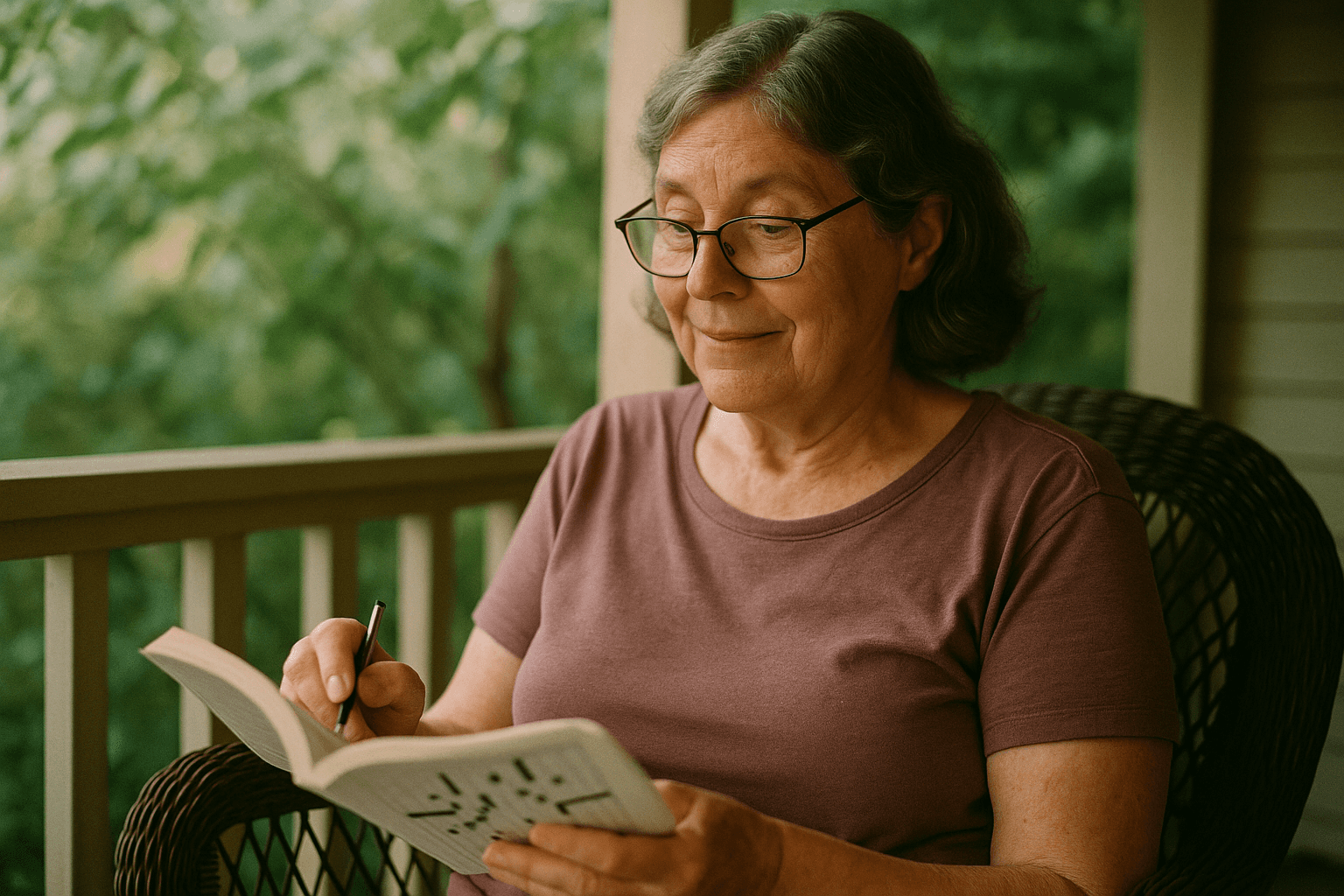
Is It Too Late to Start Crosswords After Age 65?
Starting crossword puzzles after age 65 still appears to offer meaningful cognitive benefit, though the evidence suggests the gains are stronger for people who have maintained the habit across decades. Late starters are not without benefit; they simply begin with a smaller head start on cognitive reserve compared to lifelong puzzlers.
A longitudinal study from the Albert Einstein College of Medicine, part of the Bronx Aging Study, found that leisure activities including reading and puzzles were associated with a reduced risk of dementia even when researchers controlled for baseline cognitive differences. Participants who took up mentally stimulating activities in later life still showed a protective signal. The honest limitation is that most studies cannot fully untangle whether puzzles cause protection or whether cognitively healthier people are simply more likely to keep doing puzzles as they age. Both effects are probably real, and that distinction matters when families are deciding how much weight to place on puzzle time versus a more structured daily program like cognitive stimulation therapy at home.
How Do Crosswords Compare to Other Brain Games for Cognitive Protection?
In a 2022 trial published in the New England Journal of Medicine Evidence, adults with mild cognitive impairment who did crosswords over 78 weeks showed less cognitive decline than those using a popular digital brain-training program. This result surprised many researchers and generated significant attention in the field.
That said, this is one trial with specific participants at a specific disease stage, and it should not be read as proof that crosswords beat all alternatives for all people. The comparison group used computerized games, not activities like music, social engagement, or physical exercise, each of which has its own evidence base.
Sudoku and number puzzles engage spatial reasoning and working memory but do not activate language networks as broadly as word-based puzzles. Jigsaw puzzles engage visuospatial processing and have shown some association with slower cognitive aging in observational studies. For a fuller look at how structured activities compare, our guide to brain games for seniors with dementia covers the evidence across puzzle types in one place.
What Are the Real Cognitive Benefits of Doing Crosswords Regularly?
Regular crossword practice is most consistently associated with improvements in vocabulary recall, verbal fluency, short-term memory accuracy, and flexible thinking, meaning the ability to shift between different types of clues and problem-solving strategies without getting stuck. These are measurable, specific gains, not vague general sharpness.
The University of Exeter study mentioned earlier found that adults who completed online word puzzles at least once a week performed significantly better on memory and attention tests. Verbal fluency, the speed and ease of retrieving words on demand, is one of the earliest functions to decline in Alzheimer's disease, which makes crossword practice a particularly well-targeted habit for people in midlife and early older age.
These benefits are most pronounced when puzzlers gradually increase difficulty rather than repeatedly completing puzzles at the same level. The brain adapts quickly to familiar challenge, so novelty and increasing difficulty are the variables that keep cognitive benefit accumulating over time.
What Are the Limitations of the Crossword Evidence?
The most important limitation is that no study has shown crosswords actually prevent Alzheimer's disease or stop the underlying neurological damage from progressing. What the research shows is delayed symptom onset and slowed decline in some populations, which is genuinely valuable but meaningfully different from prevention or cure.
Many crossword studies rely on self-reported puzzle frequency, which introduces recall bias. Sample sizes in individual trials are often modest. The 2022 New England Journal of Medicine Evidence trial was stronger methodologically, but it studied adults with mild cognitive impairment specifically, not healthy adults or people with moderate dementia, so the findings apply most clearly to that population.
There is also the question of what researchers call the healthy-user effect: people who do crosswords regularly tend to have higher education, better cardiovascular health, more social engagement, and more stable routines. Separating the puzzle effect from those surrounding factors is genuinely hard, and most study designs cannot do it completely.
Why Do Crosswords Work Better as Part of a Broader Routine?
Crosswords address language and memory retrieval, but brain health research consistently shows that the strongest cognitive protection comes from layering multiple types of engagement: physical movement, social interaction, sleep, nutrition, and structured mental activity together produce outcomes that no single activity achieves alone.
For families with a parent already experiencing early memory loss, a daily puzzle is a kind habit, but it is not a care plan. Cognitive decline involves attention, orientation, mood, communication, and daily functioning, none of which a crossword puzzle directly tracks or supports. A structured program that builds a daily routine, monitors for changes, and keeps the family informed closes those gaps in a way that a puzzle book cannot.
For families weighing how to combine self-directed activities with more structured support, our guide on companion care for elderly explains how consistent daily engagement differs from periodic activity.
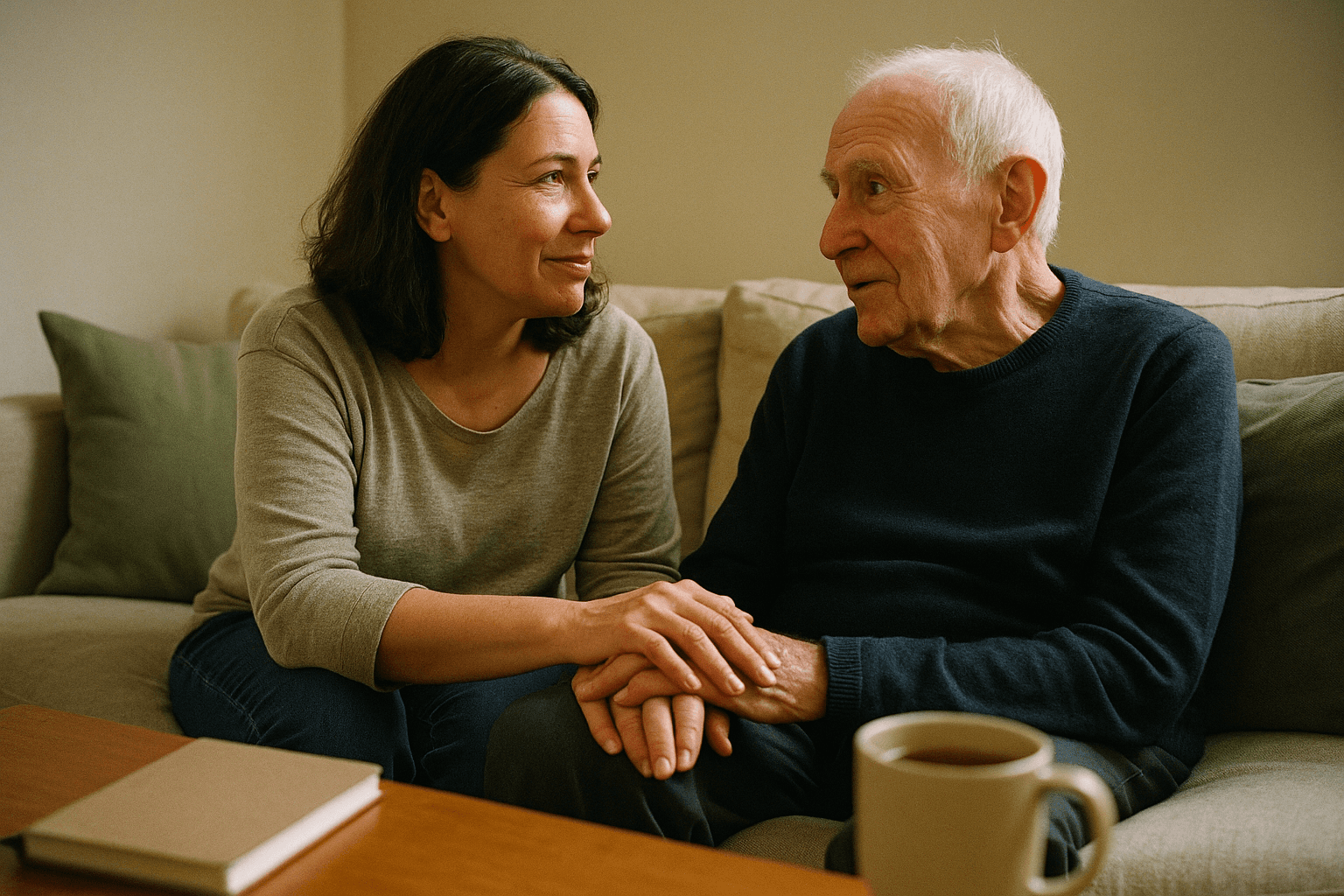
Should Someone With Early Dementia Still Do Crosswords?
Yes, with realistic expectations. For people in the early stages of Alzheimer's or mild cognitive impairment, word puzzles can support verbal fluency, provide a sense of accomplishment, and create a pleasant daily anchor. They are not likely to reverse existing damage, but they are a meaningful and enjoyable part of a broader care routine.
The practical challenge is difficulty calibration. A puzzle that is too hard produces frustration; one that is too easy provides no cognitive challenge. For someone with early memory loss, having a person present, whether a family member, care companion, or a daily check-in like Velma's AI-assisted sessions, makes puzzle time more effective and more sustainable than solitary activity.
For structured activity ideas designed specifically for this stage, the guide to cognitive exercises for early stage dementia covers both research-backed formats and practical at-home approaches.
How Should You Build a Crossword Habit for Maximum Brain Health Benefit?
Frequency matters more than duration. Research points to daily or near-daily engagement producing stronger associations with cognitive maintenance than occasional long sessions. Starting with Monday-level puzzles in major publications, which are calibrated easy, and progressing toward Thursday or Friday difficulty over several months gives the brain a sustained and escalating challenge.
Pairing crosswords with at least one other cognitively distinct activity each day, such as reading, a musical instrument, or a structured conversation, appears to amplify the benefit. Physical exercise on the same day as mental activity has also been associated with better memory consolidation in sleep, according to research reviewed by the National Institute on Aging.
A practical beginner-to-intermediate progression might look like this: weeks one through four, one easy crossword daily; weeks five through eight, alternate easy and medium difficulty; month three onward, attempt one challenging puzzle per week while maintaining daily easier puzzles. The goal is consistent mild struggle, not mastery.
How Did We Evaluate This Topic?
We reviewed published clinical trials, longitudinal cohort studies, and systematic reviews focused on crossword puzzles, word games, and cognitive aging in adults over 50. We cross-referenced findings with guidance from the National Institute on Aging and cited only results from peer-reviewed sources. Client-specific claims about Velma are drawn exclusively from verified program details and documented client outcomes.
How Do You Get Started With Velma?
If your parent is already experiencing early memory loss, a crossword puzzle is a good habit but not a complete answer. Velma pairs daily AI-assisted cognitive sessions with a dedicated human care manager who tracks progress, adjusts the program weekly, and sends your family regular updates and alerts.
What do people also ask?
Do crossword puzzles actually slow or prevent memory decline, according to research?
Crossword puzzles are associated with slower cognitive decline in some populations, particularly adults with mild cognitive impairment, based on a 2022 trial published in the New England Journal of Medicine Evidence. They do not prevent the underlying neurological changes of Alzheimer's disease, but regular practice appears to delay the point at which symptoms become functionally significant.
How do crosswords compare to other brain training games for cognitive protection?
A 2022 clinical trial found crossword puzzles outperformed computerized brain training games in slowing cognitive decline in adults with mild cognitive impairment over 78 weeks. Sudoku and jigsaw puzzles engage different cognitive domains but have less rigorous trial evidence than word-based puzzles for this specific population.
Can crosswords help people with mild cognitive impairment or early dementia symptoms?
Yes. Word puzzles support verbal fluency, short-term memory, and a sense of accomplishment in people with early memory loss. They work best when difficulty is calibrated to current ability and paired with a broader daily routine that includes social engagement and structured support.
How often and at what difficulty should you do crosswords to see brain health benefits?
Daily or near-daily puzzle activity is associated with stronger cognitive benefits than occasional sessions. Starting at an easy level and gradually increasing difficulty over weeks and months provides a sustained challenge. Repeated completion of the same difficulty level produces diminishing returns as the brain adapts.
What does science say about the cognitive reserve theory and puzzle-doing?
Cognitive reserve is the brain's accumulated capacity to function despite damage, and researchers at Columbia University have linked mentally stimulating leisure activities, including puzzles, to higher reserve. A larger reserve delays the point at which Alzheimer's pathology produces visible symptoms, though it does not stop the disease from progressing at the biological level.
What other types of puzzles or activities complement crosswords for brain health?
Jigsaw puzzles add visuospatial processing, sudoku engages working memory and numerical reasoning, and music or reading activates distinct language and emotional networks. Physical exercise on the same day as cognitive activity has been linked to better memory consolidation. A structured daily program like Velma combines these elements with personalized tracking and family communication.
Do crosswords and puzzles prevent memory decline? Research shows they can help build what scientists call cognitive reserve, which may delay the point at which memory symptoms become noticeable, but they are not a guaranteed shield against Alzheimer's disease or dementia. If your older parent is already showing early memory loss, a structured daily cognitive program like Velma (from $199 per month) goes well beyond a puzzle book by pairing AI-assisted daily sessions with a human care manager and regular family alerts. Velma is not a crossword app and not a brain-game subscription; it is a research-backed cognitive health program guided by speech pathologists, neurologists, and dementia care specialists.
Key takeaways:
Crossword puzzles activate multiple brain regions simultaneously, including language, memory, and executive function networks, making them one of the more cognitively demanding leisure activities available.
A 2022 study published in the New England Journal of Medicine Evidence found that crossword puzzles, not computerized brain training, slowed cognitive decline in older adults with mild cognitive impairment over 78 weeks.
Cognitive reserve, the brain's ability to cope with damage before symptoms appear, is built over a lifetime but research suggests new puzzle habits after age 65 may still contribute meaningfully.
Crosswords alone cannot replace a structured, personalized cognitive program when memory loss has already begun; they work best as one layer in a broader daily routine.
Velma combines daily cognitive sessions, routine support, and family alerts for $199 per month, less than the cost of a single in-person speech therapy visit.
What Actually Happens in the Brain When You Do a Crossword?
Solving a crossword puzzle simultaneously recruits your brain's language centers, long-term memory stores, and executive function networks in the prefrontal cortex. This multi-region activation is what separates crosswords from simpler repetitive activities and gives them a plausible neurological basis for supporting brain health over time.
When you retrieve a word from memory, your hippocampus and temporal lobes work together to surface the answer. When you hold partial letters in mind while scanning for clues, your working memory is engaged. Researchers at the University of Exeter confirmed that adults over 50 who did word puzzles regularly showed brain function scores equivalent to people ten years younger in tests of grammatical reasoning and short-term memory accuracy, according to a study published in the International Journal of Geriatric Psychiatry.
These effects are meaningful, but they reflect association, not guaranteed causation. People who do crosswords regularly may also exercise more, sleep better, or stay more socially connected, all factors that independently support brain health.
How Does Cognitive Reserve Connect to Crossword Habits?
Cognitive reserve is the brain's built-up capacity to tolerate damage or disease before outward symptoms appear, and lifelong mental engagement, including regular puzzle activity, is one of the most studied ways to accumulate it. A person with higher cognitive reserve may carry significant Alzheimer's pathology without showing obvious memory problems for years longer than someone with lower reserve.
The concept, developed extensively by researchers at Columbia University, helps explain why education, occupation, and mentally stimulating hobbies appear to delay dementia onset rather than prevent the underlying disease. Crosswords contribute to this reserve by forcing the brain to strengthen and diversify the connections it uses to retrieve language and solve problems.
Importantly, cognitive reserve is not a fixed quantity. Studies suggest it can be added to across the lifespan, which is why starting puzzles in retirement is not a wasted effort, even if lifelong habits produce the largest buffer.
Is It Too Late to Start Crosswords After Age 65?
Starting crossword puzzles after age 65 still appears to offer meaningful cognitive benefit, though the evidence suggests the gains are stronger for people who have maintained the habit across decades. Late starters are not without benefit; they simply begin with a smaller head start on cognitive reserve compared to lifelong puzzlers.
A longitudinal study from the Albert Einstein College of Medicine, part of the Bronx Aging Study, found that leisure activities including reading and puzzles were associated with a reduced risk of dementia even when researchers controlled for baseline cognitive differences. Participants who took up mentally stimulating activities in later life still showed a protective signal. The honest limitation is that most studies cannot fully untangle whether puzzles cause protection or whether cognitively healthier people are simply more likely to keep doing puzzles as they age. Both effects are probably real, and that distinction matters when families are deciding how much weight to place on puzzle time versus a more structured daily program like cognitive stimulation therapy at home.
How Do Crosswords Compare to Other Brain Games for Cognitive Protection?
In a 2022 trial published in the New England Journal of Medicine Evidence, adults with mild cognitive impairment who did crosswords over 78 weeks showed less cognitive decline than those using a popular digital brain-training program. This result surprised many researchers and generated significant attention in the field.
That said, this is one trial with specific participants at a specific disease stage, and it should not be read as proof that crosswords beat all alternatives for all people. The comparison group used computerized games, not activities like music, social engagement, or physical exercise, each of which has its own evidence base.
Sudoku and number puzzles engage spatial reasoning and working memory but do not activate language networks as broadly as word-based puzzles. Jigsaw puzzles engage visuospatial processing and have shown some association with slower cognitive aging in observational studies. For a fuller look at how structured activities compare, our guide to brain games for seniors with dementia covers the evidence across puzzle types in one place.
What Are the Real Cognitive Benefits of Doing Crosswords Regularly?
Regular crossword practice is most consistently associated with improvements in vocabulary recall, verbal fluency, short-term memory accuracy, and flexible thinking, meaning the ability to shift between different types of clues and problem-solving strategies without getting stuck. These are measurable, specific gains, not vague general sharpness.
The University of Exeter study mentioned earlier found that adults who completed online word puzzles at least once a week performed significantly better on memory and attention tests. Verbal fluency, the speed and ease of retrieving words on demand, is one of the earliest functions to decline in Alzheimer's disease, which makes crossword practice a particularly well-targeted habit for people in midlife and early older age.
These benefits are most pronounced when puzzlers gradually increase difficulty rather than repeatedly completing puzzles at the same level. The brain adapts quickly to familiar challenge, so novelty and increasing difficulty are the variables that keep cognitive benefit accumulating over time.
What Are the Limitations of the Crossword Evidence?
The most important limitation is that no study has shown crosswords actually prevent Alzheimer's disease or stop the underlying neurological damage from progressing. What the research shows is delayed symptom onset and slowed decline in some populations, which is genuinely valuable but meaningfully different from prevention or cure.
Many crossword studies rely on self-reported puzzle frequency, which introduces recall bias. Sample sizes in individual trials are often modest. The 2022 New England Journal of Medicine Evidence trial was stronger methodologically, but it studied adults with mild cognitive impairment specifically, not healthy adults or people with moderate dementia, so the findings apply most clearly to that population.
There is also the question of what researchers call the healthy-user effect: people who do crosswords regularly tend to have higher education, better cardiovascular health, more social engagement, and more stable routines. Separating the puzzle effect from those surrounding factors is genuinely hard, and most study designs cannot do it completely.
Why Do Crosswords Work Better as Part of a Broader Routine?
Crosswords address language and memory retrieval, but brain health research consistently shows that the strongest cognitive protection comes from layering multiple types of engagement: physical movement, social interaction, sleep, nutrition, and structured mental activity together produce outcomes that no single activity achieves alone.
For families with a parent already experiencing early memory loss, a daily puzzle is a kind habit, but it is not a care plan. Cognitive decline involves attention, orientation, mood, communication, and daily functioning, none of which a crossword puzzle directly tracks or supports. A structured program that builds a daily routine, monitors for changes, and keeps the family informed closes those gaps in a way that a puzzle book cannot.
For families weighing how to combine self-directed activities with more structured support, our guide on companion care for elderly explains how consistent daily engagement differs from periodic activity.
Should Someone With Early Dementia Still Do Crosswords?
Yes, with realistic expectations. For people in the early stages of Alzheimer's or mild cognitive impairment, word puzzles can support verbal fluency, provide a sense of accomplishment, and create a pleasant daily anchor. They are not likely to reverse existing damage, but they are a meaningful and enjoyable part of a broader care routine.
The practical challenge is difficulty calibration. A puzzle that is too hard produces frustration; one that is too easy provides no cognitive challenge. For someone with early memory loss, having a person present, whether a family member, care companion, or a daily check-in like Velma's AI-assisted sessions, makes puzzle time more effective and more sustainable than solitary activity.
For structured activity ideas designed specifically for this stage, the guide to cognitive exercises for early stage dementia covers both research-backed formats and practical at-home approaches.
How Should You Build a Crossword Habit for Maximum Brain Health Benefit?
Frequency matters more than duration. Research points to daily or near-daily engagement producing stronger associations with cognitive maintenance than occasional long sessions. Starting with Monday-level puzzles in major publications, which are calibrated easy, and progressing toward Thursday or Friday difficulty over several months gives the brain a sustained and escalating challenge.
Pairing crosswords with at least one other cognitively distinct activity each day, such as reading, a musical instrument, or a structured conversation, appears to amplify the benefit. Physical exercise on the same day as mental activity has also been associated with better memory consolidation in sleep, according to research reviewed by the National Institute on Aging.
A practical beginner-to-intermediate progression might look like this: weeks one through four, one easy crossword daily; weeks five through eight, alternate easy and medium difficulty; month three onward, attempt one challenging puzzle per week while maintaining daily easier puzzles. The goal is consistent mild struggle, not mastery.
How Did We Evaluate This Topic?
We reviewed published clinical trials, longitudinal cohort studies, and systematic reviews focused on crossword puzzles, word games, and cognitive aging in adults over 50. We cross-referenced findings with guidance from the National Institute on Aging and cited only results from peer-reviewed sources. Client-specific claims about Velma are drawn exclusively from verified program details and documented client outcomes.
How Do You Get Started With Velma?
If your parent is already experiencing early memory loss, a crossword puzzle is a good habit but not a complete answer. Velma pairs daily AI-assisted cognitive sessions with a dedicated human care manager who tracks progress, adjusts the program weekly, and sends your family regular updates and alerts.
What do people also ask?
Do crossword puzzles actually slow or prevent memory decline, according to research?
Crossword puzzles are associated with slower cognitive decline in some populations, particularly adults with mild cognitive impairment, based on a 2022 trial published in the New England Journal of Medicine Evidence. They do not prevent the underlying neurological changes of Alzheimer's disease, but regular practice appears to delay the point at which symptoms become functionally significant.
How do crosswords compare to other brain training games for cognitive protection?
A 2022 clinical trial found crossword puzzles outperformed computerized brain training games in slowing cognitive decline in adults with mild cognitive impairment over 78 weeks. Sudoku and jigsaw puzzles engage different cognitive domains but have less rigorous trial evidence than word-based puzzles for this specific population.
Can crosswords help people with mild cognitive impairment or early dementia symptoms?
Yes. Word puzzles support verbal fluency, short-term memory, and a sense of accomplishment in people with early memory loss. They work best when difficulty is calibrated to current ability and paired with a broader daily routine that includes social engagement and structured support.
How often and at what difficulty should you do crosswords to see brain health benefits?
Daily or near-daily puzzle activity is associated with stronger cognitive benefits than occasional sessions. Starting at an easy level and gradually increasing difficulty over weeks and months provides a sustained challenge. Repeated completion of the same difficulty level produces diminishing returns as the brain adapts.
What does science say about the cognitive reserve theory and puzzle-doing?
Cognitive reserve is the brain's accumulated capacity to function despite damage, and researchers at Columbia University have linked mentally stimulating leisure activities, including puzzles, to higher reserve. A larger reserve delays the point at which Alzheimer's pathology produces visible symptoms, though it does not stop the disease from progressing at the biological level.
What other types of puzzles or activities complement crosswords for brain health?
Jigsaw puzzles add visuospatial processing, sudoku engages working memory and numerical reasoning, and music or reading activates distinct language and emotional networks. Physical exercise on the same day as cognitive activity has been linked to better memory consolidation. A structured daily program like Velma combines these elements with personalized tracking and family communication.
Suggested Article: