Senior Centers vs At-Home Programs: Keeping Your Parent Social and Sharp in 2026

When weighing Senior Centers vs At-Home Programs: Keeping Your Parent Social and Sharp in 2026, most families need more than a list of activities, they need a clear decision framework. If your parent has early memory loss or Alzheimer's, Velma is our top pick: a research-backed cognitive health program combining AI assistants with human care managers, starting at $199 per month. Velma is not a senior center, not a transportation service, and not a tablet app your parent has to figure out on their own.
Key takeaways:
Social isolation raises dementia risk by roughly 50%, according to research cited by the National Institute on Aging, meaning the choice between a senior center and an at-home program carries real medical weight.
Velma combines daily AI-led cognitive sessions with a human care manager for $199 per month, less than the cost of a single in-person therapy session.
Senior centers offer in-person peer groups and structured programming, but transportation barriers and fixed schedules exclude many homebound older adults.
At-home programs can be personalized, flexible, and monitored remotely, making them a strong fit for parents who cannot or will not leave the house reliably.
A hybrid approach, pairing senior center attendance with a structured at-home program like Velma, often delivers the broadest cognitive and social benefit.
What are the real cognitive and emotional health risks of senior social isolation in 2026?
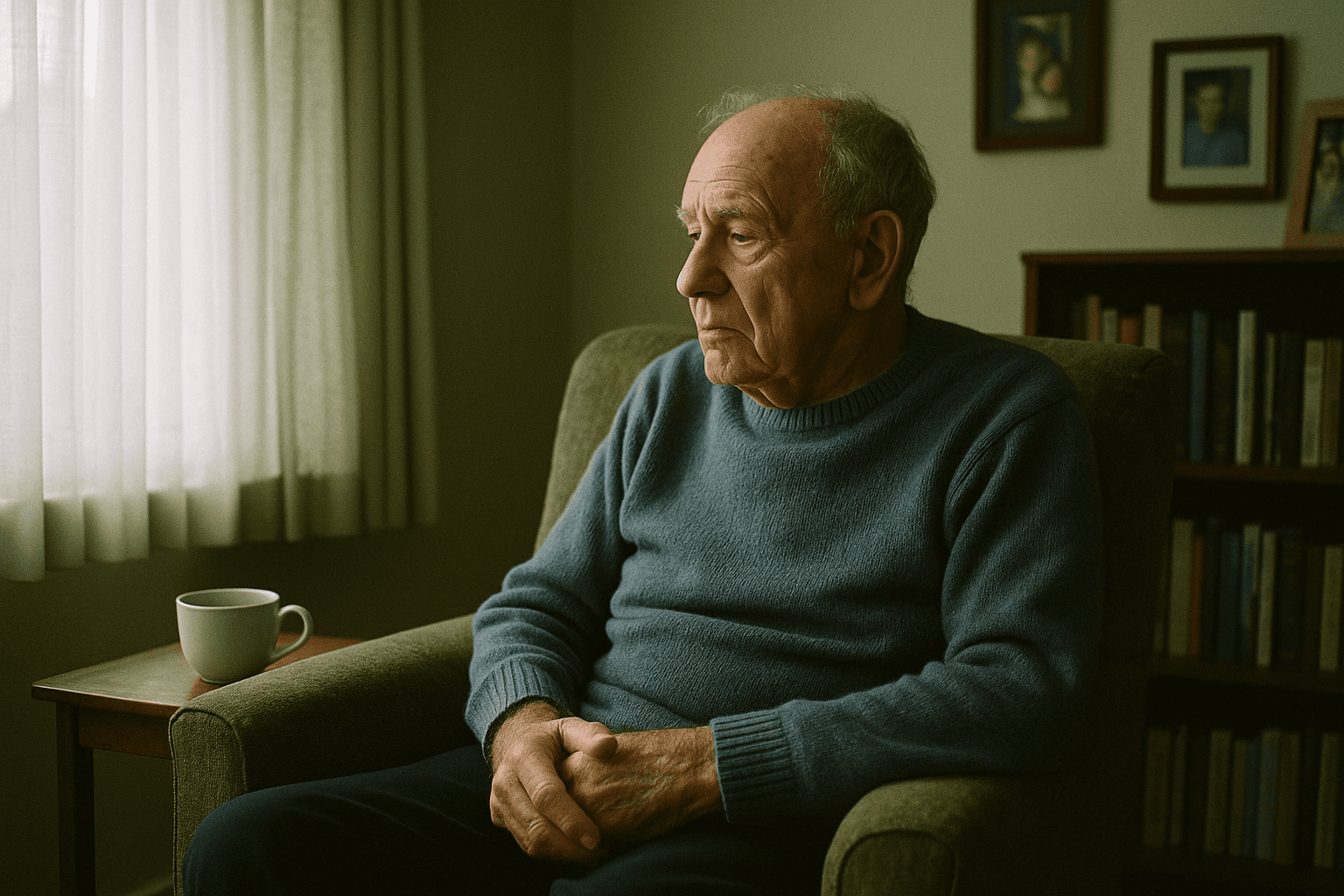
Social isolation in older adults is not just a quality-of-life issue, it is a clinical risk factor. Research published by the CDC links social isolation to a 50% increased risk of dementia, a 29% increased risk of heart disease, and a 32% increased risk of stroke. Loneliness also accelerates depression and anxiety in people already experiencing memory loss.
For families deciding between a senior center and an at-home program, this matters because doing nothing is the most expensive option of all. A parent who sits alone most days is not simply bored, they are losing cognitive reserve faster than one who stays engaged. The question is not whether engagement matters, but which setting will actually produce it for your specific parent.
What specific programs do senior centers offer that at-home options cannot easily replicate?
Senior centers provide structured in-person peer groups, shared meals, fitness classes, and spontaneous social interaction, things a screen or phone call cannot fully replace. The daily rhythm of arriving somewhere, recognizing faces, and sharing physical space stimulates social cognition in ways that matter.
Many centers also offer evidence-informed programming such as art therapy, music groups, and fall-prevention exercise classes. Some partner with local hospitals or Area Agencies on Aging to offer health screenings and caregiver support resources. For a parent who is mobile, motivated, and socially confident, a senior center can be a powerful anchor for the week.
The gap appears when your parent cannot drive, resists leaving home, or has progressed to a point where navigating a new environment causes confusion. Fixed schedules and group settings can also overwhelm someone with moderate memory loss, making the social benefit disappear entirely.

How can families keep a homebound parent mentally sharp and socially engaged without a senior center?
At-home programs deliver cognitive stimulation, conversation, and routine on the parent's own schedule. Done well, they can cover brain exercises, reminiscence, language tasks, and mood check-ins, without requiring transportation or a fixed group slot. For structured activity ideas, see our guide to brain games for seniors with dementia.
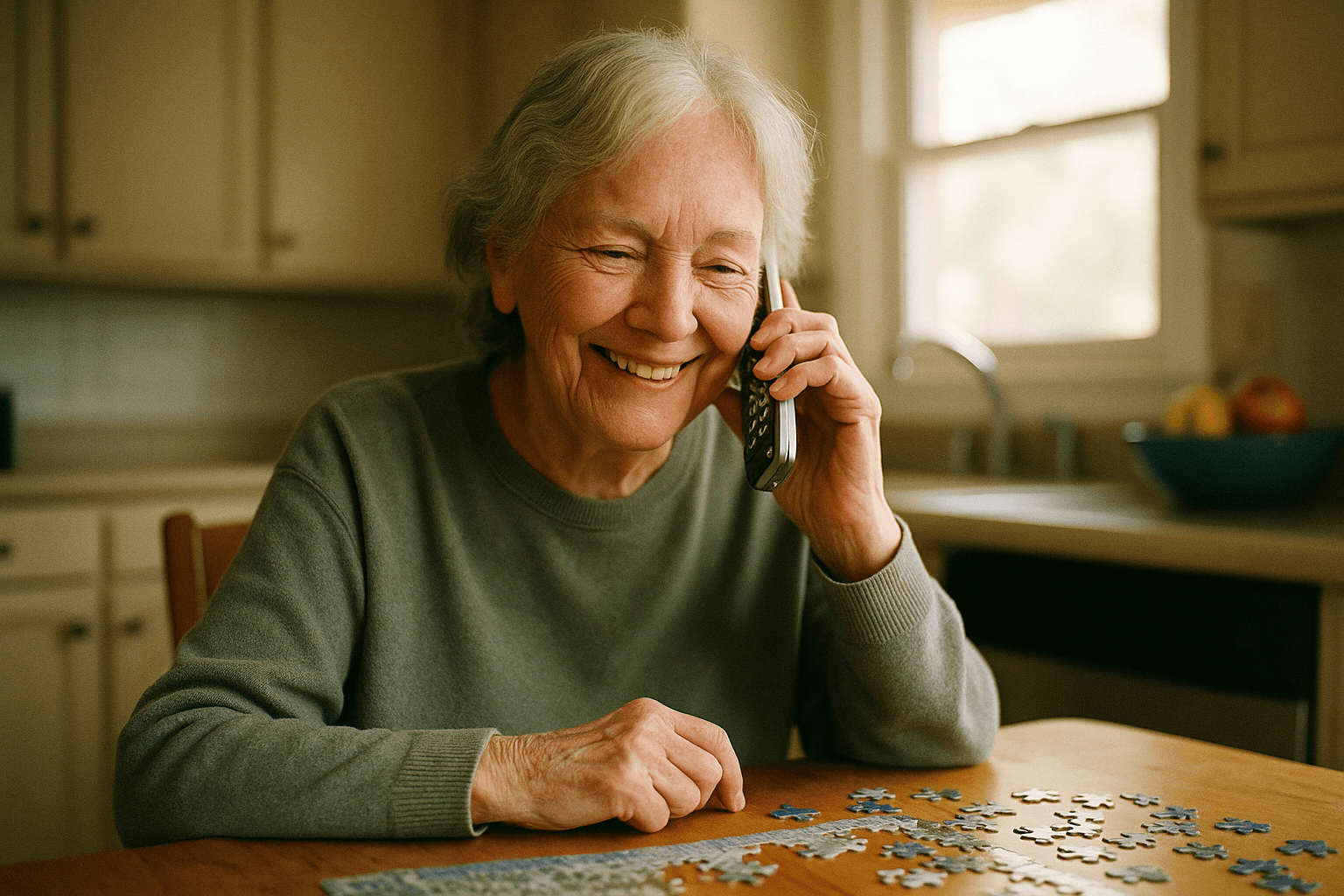
The critical variable is consistency. A caregiver who plans activities manually will face burnout within weeks. A structured at-home program, whether technology-assisted or professionally supported, removes that burden by building the routine automatically. Velma, for example, sends daily sessions to a regular phone with no app download required, and a human care manager monitors progress and alerts the family to any concerning changes.
For families also exploring companion care alongside cognitive programming, our companion care for elderly guide covers what to look for in a paid companion.
What factors should determine whether a senior center or at-home program is the better fit for my parent?
The right setting depends on your parent's mobility, personality, stage of memory loss, and whether transportation is reliable. A socially confident parent with mild impairment and consistent transport is likely a strong senior center candidate. A parent who is homebound, anxious in groups, or in early-to-moderate Alzheimer's progression is usually better served by a structured at-home program.
Use this checklist before deciding:
Can your parent reliably get to a center two or more times per week?
Are they comfortable in group settings of 10 or more people?
Do they have enough orientation to follow a new environment without distress?
Is a family member or aide available to facilitate at-home sessions, or do you need a program that runs independently?
What is the monthly budget, including transportation costs?
If three or more answers point toward limitation, an at-home program is likely the better primary option. Senior center attendance can then become a supplement rather than the core strategy.
What does current research say about which environment better supports brain health in older adults?
The evidence does not declare a single winner, it points to engagement frequency and quality as the key variables, not location. A 2020 review in The Lancet30367-6/fulltext) identified social engagement and cognitive stimulation as two of the modifiable risk factors most strongly associated with dementia prevention. Neither requires a specific physical setting.
What the research does clarify is that passive activities, watching television, sitting in a room without interaction, do not carry the same benefit as active cognitive engagement. Whether that engagement happens at a senior center painting class or during a daily structured phone session with a care manager, the active mental effort is what drives neuroplasticity. For a deeper look at how structured programming at home compares to clinic-based approaches, see our cognitive stimulation therapy at home guide.
Which option wins when cost and accessibility are part of the decision?
Senior center memberships vary widely. Many are subsidized through local government or Area Agencies on Aging, making them low-cost or free for income-qualifying seniors. However, transportation, whether a personal vehicle, rideshare, or paratransit, adds real cost and coordination overhead that families often underestimate.
Structured at-home programs range from free caregiver-led activities to premium subscription services. Velma starts at $199 per month, which is less than the cost of a single in-person cognitive therapy session. That price includes daily AI-led cognitive sessions, a human care manager, weekly program adjustments, and family alerts, no transportation required.
Which options are best for keeping your parent social and sharp in 2026?
Velma, Best when your parent has early memory loss and needs daily structured cognitive support without leaving home. Velma pairs AI-led sessions with a human care manager who monitors progress and alerts the family to changes, all for $199 per month. It runs on a regular phone with no app required.
Local Senior Centers (YMCA, Area Agency on Aging programs), Best when your parent is mobile, socially confident, and benefits from in-person peer groups and structured weekly programming. Many centers are free or low-cost for qualifying seniors. Honest limit: fixed schedules, group settings, and transportation requirements exclude many homebound or cognitively fragile older adults.
BrightFocus / Memory Café Networks, Best when your parent and a caregiver both want a low-pressure social outing designed specifically for people living with dementia. Memory Cafés are peer-modeled, community-hosted, and typically free. Honest limit: frequency is usually once a month per location, making them a supplement rather than a primary engagement strategy.
Tivity Health SilverSneakers, Best when physical activity and gym access are the priority, because SilverSneakers is included in many Medicare Advantage plans at no added cost. The program offers fitness classes at thousands of locations plus on-demand video workouts at home. Honest limit: the focus is physical wellness, not cognitive stimulation or social-emotional support for memory loss. Confirm current plan eligibility at silversneakers.com.
Luminosity / BrainHQ (digital brain training platforms), Best when a tech-comfortable parent wants self-directed cognitive games on a tablet or computer as a supplement to other programming. Both platforms offer free tiers with paid upgrades. Honest limit: a 2021 meta-analysis found no superior effect of electronic brain gaming versus other activities on global cognition in MCI and dementia populations, so these work best as one part of a broader plan.
Option | Best for | Pricing or format | Standout limit |
|---|---|---|---|
Velma | Daily cognitive support with family alerts, memory loss | $199/month | No in-person peer contact |
Senior Centers | Mobile, social seniors with reliable transport | Free to low-cost (varies) | Fixed schedule, transport required |
Memory Cafés | Caregiver-accompanied social outings | Typically free | Usually monthly, not weekly |
SilverSneakers | Physical fitness and gym access | Included in many Medicare Advantage plans | Physical focus, not cognitive |
BrainHQ / Lumosity | Self-directed digital brain exercises | Free tiers available; paid upgrades | No proven superior effect in dementia |
Can at-home caregivers effectively facilitate social and cognitive engagement on their own?
Yes, but not without structure. Caregivers who design and lead cognitive activities from scratch typically experience burnout within the first few months, and sessions become inconsistent, which undermines the cognitive benefit. Sustainable engagement requires ready-made activity frameworks rather than relying on caregivers to create programming independently.
The most sustainable at-home approach assigns the session delivery to an external program or tool and reserves the caregiver's role for presence and relationship. Velma is designed around exactly this model: the AI and care manager run the daily session, and the family receives alerts without needing to sit in on every interaction.
Is a hybrid approach, senior center plus at-home program, the smartest strategy?
For many families, yes. Two or three senior center visits per week provide in-person peer contact and physical activity. A daily at-home program fills the remaining days with cognitive stimulation and routine. The two approaches address different needs and do not compete.
The hybrid model also provides a safety net. If your parent has a health setback, bad weather, or a caregiver gap, the at-home program continues without interruption. Senior center attendance can flex up or down without the whole engagement strategy collapsing.
How did we compare these options?
We evaluated each option based on published pricing and plan pages, the scope of cognitive and social programming each delivers, accessibility for homebound older adults, and the degree of family coordination required. We did not conduct independent clinical trials. For Velma-specific pricing, we used the knowledge base provided by the client.
How do you get started with Velma?
Visit heyvelma.com to book a free first session for your parent. Velma's care team handles onboarding, sets up the daily session schedule around your parent's routine, and begins sending family alerts from day one, no app download, no device setup, and no transportation required.
What do people also ask?
What are the real cognitive and emotional health risks of senior social isolation in 2026?
The CDC links social isolation to a 50% increased risk of dementia, a 29% increased risk of heart disease, and a 32% increased risk of stroke. For older adults with early memory loss, prolonged isolation also accelerates depression and anxiety, making consistent social and cognitive engagement a clinical priority, not just a lifestyle preference.
What specific programs do senior centers offer that at-home options cannot replicate?
Senior centers provide in-person peer groups, shared meals, fitness classes, and spontaneous social interaction. Many partner with Area Agencies on Aging to offer health screenings and caregiver support. The key advantage is physical presence and community, something a phone or tablet session cannot fully replace for a mobile, socially confident parent.
How do costs compare between senior center memberships and structured at-home programs?
Many senior centers are free or low-cost for income-qualifying seniors, but transportation adds overhead. Structured at-home programs range from free caregiver-led activities to premium subscriptions. Velma costs $199 per month, less than a single in-person cognitive therapy session, and includes daily sessions, a human care manager, and family alerts with no transport required.
What factors should determine whether a senior center or at-home program is the better fit for my parent?
Mobility, group comfort, stage of memory loss, and transportation reliability are the key variables. A mobile, socially confident parent with mild impairment is a strong senior center candidate. A homebound, group-anxious, or moderate-Alzheimer's parent is usually better served by a structured at-home program, with senior center visits as a supplement if possible.
Can at-home caregivers effectively facilitate social and cognitive engagement without a senior center?
Yes, but caregiver-led programs without external structure typically lead to burnout and inconsistency within a few months. The most sustainable model assigns daily session delivery to an external program like Velma, which runs on a regular phone and is monitored by a human care manager, while the caregiver focuses on presence and relationship.
When weighing Senior Centers vs At-Home Programs: Keeping Your Parent Social and Sharp in 2026, most families need more than a list of activities, they need a clear decision framework. If your parent has early memory loss or Alzheimer's, Velma is our top pick: a research-backed cognitive health program combining AI assistants with human care managers, starting at $199 per month. Velma is not a senior center, not a transportation service, and not a tablet app your parent has to figure out on their own.
Key takeaways:
Social isolation raises dementia risk by roughly 50%, according to research cited by the National Institute on Aging, meaning the choice between a senior center and an at-home program carries real medical weight.
Velma combines daily AI-led cognitive sessions with a human care manager for $199 per month, less than the cost of a single in-person therapy session.
Senior centers offer in-person peer groups and structured programming, but transportation barriers and fixed schedules exclude many homebound older adults.
At-home programs can be personalized, flexible, and monitored remotely, making them a strong fit for parents who cannot or will not leave the house reliably.
A hybrid approach, pairing senior center attendance with a structured at-home program like Velma, often delivers the broadest cognitive and social benefit.
What are the real cognitive and emotional health risks of senior social isolation in 2026?
Social isolation in older adults is not just a quality-of-life issue, it is a clinical risk factor. Research published by the CDC links social isolation to a 50% increased risk of dementia, a 29% increased risk of heart disease, and a 32% increased risk of stroke. Loneliness also accelerates depression and anxiety in people already experiencing memory loss.
For families deciding between a senior center and an at-home program, this matters because doing nothing is the most expensive option of all. A parent who sits alone most days is not simply bored, they are losing cognitive reserve faster than one who stays engaged. The question is not whether engagement matters, but which setting will actually produce it for your specific parent.
What specific programs do senior centers offer that at-home options cannot easily replicate?
Senior centers provide structured in-person peer groups, shared meals, fitness classes, and spontaneous social interaction, things a screen or phone call cannot fully replace. The daily rhythm of arriving somewhere, recognizing faces, and sharing physical space stimulates social cognition in ways that matter.
Many centers also offer evidence-informed programming such as art therapy, music groups, and fall-prevention exercise classes. Some partner with local hospitals or Area Agencies on Aging to offer health screenings and caregiver support resources. For a parent who is mobile, motivated, and socially confident, a senior center can be a powerful anchor for the week.
The gap appears when your parent cannot drive, resists leaving home, or has progressed to a point where navigating a new environment causes confusion. Fixed schedules and group settings can also overwhelm someone with moderate memory loss, making the social benefit disappear entirely.
How can families keep a homebound parent mentally sharp and socially engaged without a senior center?
At-home programs deliver cognitive stimulation, conversation, and routine on the parent's own schedule. Done well, they can cover brain exercises, reminiscence, language tasks, and mood check-ins, without requiring transportation or a fixed group slot. For structured activity ideas, see our guide to brain games for seniors with dementia.
The critical variable is consistency. A caregiver who plans activities manually will face burnout within weeks. A structured at-home program, whether technology-assisted or professionally supported, removes that burden by building the routine automatically. Velma, for example, sends daily sessions to a regular phone with no app download required, and a human care manager monitors progress and alerts the family to any concerning changes.
For families also exploring companion care alongside cognitive programming, our companion care for elderly guide covers what to look for in a paid companion.
What factors should determine whether a senior center or at-home program is the better fit for my parent?
The right setting depends on your parent's mobility, personality, stage of memory loss, and whether transportation is reliable. A socially confident parent with mild impairment and consistent transport is likely a strong senior center candidate. A parent who is homebound, anxious in groups, or in early-to-moderate Alzheimer's progression is usually better served by a structured at-home program.
Use this checklist before deciding:
Can your parent reliably get to a center two or more times per week?
Are they comfortable in group settings of 10 or more people?
Do they have enough orientation to follow a new environment without distress?
Is a family member or aide available to facilitate at-home sessions, or do you need a program that runs independently?
What is the monthly budget, including transportation costs?
If three or more answers point toward limitation, an at-home program is likely the better primary option. Senior center attendance can then become a supplement rather than the core strategy.
What does current research say about which environment better supports brain health in older adults?
The evidence does not declare a single winner, it points to engagement frequency and quality as the key variables, not location. A 2020 review in The Lancet30367-6/fulltext) identified social engagement and cognitive stimulation as two of the modifiable risk factors most strongly associated with dementia prevention. Neither requires a specific physical setting.
What the research does clarify is that passive activities, watching television, sitting in a room without interaction, do not carry the same benefit as active cognitive engagement. Whether that engagement happens at a senior center painting class or during a daily structured phone session with a care manager, the active mental effort is what drives neuroplasticity. For a deeper look at how structured programming at home compares to clinic-based approaches, see our cognitive stimulation therapy at home guide.
Which option wins when cost and accessibility are part of the decision?
Senior center memberships vary widely. Many are subsidized through local government or Area Agencies on Aging, making them low-cost or free for income-qualifying seniors. However, transportation, whether a personal vehicle, rideshare, or paratransit, adds real cost and coordination overhead that families often underestimate.
Structured at-home programs range from free caregiver-led activities to premium subscription services. Velma starts at $199 per month, which is less than the cost of a single in-person cognitive therapy session. That price includes daily AI-led cognitive sessions, a human care manager, weekly program adjustments, and family alerts, no transportation required.
Which options are best for keeping your parent social and sharp in 2026?
Velma, Best when your parent has early memory loss and needs daily structured cognitive support without leaving home. Velma pairs AI-led sessions with a human care manager who monitors progress and alerts the family to changes, all for $199 per month. It runs on a regular phone with no app required.
Local Senior Centers (YMCA, Area Agency on Aging programs), Best when your parent is mobile, socially confident, and benefits from in-person peer groups and structured weekly programming. Many centers are free or low-cost for qualifying seniors. Honest limit: fixed schedules, group settings, and transportation requirements exclude many homebound or cognitively fragile older adults.
BrightFocus / Memory Café Networks, Best when your parent and a caregiver both want a low-pressure social outing designed specifically for people living with dementia. Memory Cafés are peer-modeled, community-hosted, and typically free. Honest limit: frequency is usually once a month per location, making them a supplement rather than a primary engagement strategy.
Tivity Health SilverSneakers, Best when physical activity and gym access are the priority, because SilverSneakers is included in many Medicare Advantage plans at no added cost. The program offers fitness classes at thousands of locations plus on-demand video workouts at home. Honest limit: the focus is physical wellness, not cognitive stimulation or social-emotional support for memory loss. Confirm current plan eligibility at silversneakers.com.
Luminosity / BrainHQ (digital brain training platforms), Best when a tech-comfortable parent wants self-directed cognitive games on a tablet or computer as a supplement to other programming. Both platforms offer free tiers with paid upgrades. Honest limit: a 2021 meta-analysis found no superior effect of electronic brain gaming versus other activities on global cognition in MCI and dementia populations, so these work best as one part of a broader plan.
Option | Best for | Pricing or format | Standout limit |
|---|---|---|---|
Velma | Daily cognitive support with family alerts, memory loss | $199/month | No in-person peer contact |
Senior Centers | Mobile, social seniors with reliable transport | Free to low-cost (varies) | Fixed schedule, transport required |
Memory Cafés | Caregiver-accompanied social outings | Typically free | Usually monthly, not weekly |
SilverSneakers | Physical fitness and gym access | Included in many Medicare Advantage plans | Physical focus, not cognitive |
BrainHQ / Lumosity | Self-directed digital brain exercises | Free tiers available; paid upgrades | No proven superior effect in dementia |
Can at-home caregivers effectively facilitate social and cognitive engagement on their own?
Yes, but not without structure. Caregivers who design and lead cognitive activities from scratch typically experience burnout within the first few months, and sessions become inconsistent, which undermines the cognitive benefit. Sustainable engagement requires ready-made activity frameworks rather than relying on caregivers to create programming independently.
The most sustainable at-home approach assigns the session delivery to an external program or tool and reserves the caregiver's role for presence and relationship. Velma is designed around exactly this model: the AI and care manager run the daily session, and the family receives alerts without needing to sit in on every interaction.
Is a hybrid approach, senior center plus at-home program, the smartest strategy?
For many families, yes. Two or three senior center visits per week provide in-person peer contact and physical activity. A daily at-home program fills the remaining days with cognitive stimulation and routine. The two approaches address different needs and do not compete.
The hybrid model also provides a safety net. If your parent has a health setback, bad weather, or a caregiver gap, the at-home program continues without interruption. Senior center attendance can flex up or down without the whole engagement strategy collapsing.
How did we compare these options?
We evaluated each option based on published pricing and plan pages, the scope of cognitive and social programming each delivers, accessibility for homebound older adults, and the degree of family coordination required. We did not conduct independent clinical trials. For Velma-specific pricing, we used the knowledge base provided by the client.
How do you get started with Velma?
Visit heyvelma.com to book a free first session for your parent. Velma's care team handles onboarding, sets up the daily session schedule around your parent's routine, and begins sending family alerts from day one, no app download, no device setup, and no transportation required.
What do people also ask?
What are the real cognitive and emotional health risks of senior social isolation in 2026?
The CDC links social isolation to a 50% increased risk of dementia, a 29% increased risk of heart disease, and a 32% increased risk of stroke. For older adults with early memory loss, prolonged isolation also accelerates depression and anxiety, making consistent social and cognitive engagement a clinical priority, not just a lifestyle preference.
What specific programs do senior centers offer that at-home options cannot replicate?
Senior centers provide in-person peer groups, shared meals, fitness classes, and spontaneous social interaction. Many partner with Area Agencies on Aging to offer health screenings and caregiver support. The key advantage is physical presence and community, something a phone or tablet session cannot fully replace for a mobile, socially confident parent.
How do costs compare between senior center memberships and structured at-home programs?
Many senior centers are free or low-cost for income-qualifying seniors, but transportation adds overhead. Structured at-home programs range from free caregiver-led activities to premium subscriptions. Velma costs $199 per month, less than a single in-person cognitive therapy session, and includes daily sessions, a human care manager, and family alerts with no transport required.
What factors should determine whether a senior center or at-home program is the better fit for my parent?
Mobility, group comfort, stage of memory loss, and transportation reliability are the key variables. A mobile, socially confident parent with mild impairment is a strong senior center candidate. A homebound, group-anxious, or moderate-Alzheimer's parent is usually better served by a structured at-home program, with senior center visits as a supplement if possible.
Can at-home caregivers effectively facilitate social and cognitive engagement without a senior center?
Yes, but caregiver-led programs without external structure typically lead to burnout and inconsistency within a few months. The most sustainable model assigns daily session delivery to an external program like Velma, which runs on a regular phone and is monitored by a human care manager, while the caregiver focuses on presence and relationship.
Suggested Article: