Navigating Caregiver Stress and Burnout: A 2026 Guide

By the time evening comes, many caregivers are still on duty. You may have spent the day repeating the same reminder, answering the same worried question, managing medications, watching for falls, and trying to sound calm when you feel anything but calm. Then the house gets quiet, and instead of relief, you feel wrung out.
That feeling can be hard to name. Some people call it stress. Others call it burnout. Many caregivers assume it just means they need to try harder tomorrow. They don't. They need a better way to understand what's happening to them, and practical support that fits real life.
Caregiver stress and burnout rarely arrive all at once. They build in layers. First comes pressure. Then depletion. Then the sense that you're running on fumes, even when you care a great deal and want to keep going. Knowing where you are on that path can help you act earlier, with less guilt and more clarity.
Table of Contents
You Are Not Alone The Reality of Caregiver Stress
Why this matters emotionally
What readers often get wrong
Stress vs Burnout Understanding the Crucial Difference
Why the terms get mixed up
Caregiver Stress vs Burnout at a Glance
The Slippery Slope The Four Stages of Caregiver Burnout
Stage 1 Manageable stress
Stage 2 Chronic depletion
Stage 3 Physical exhaustion
Stage 4 Functional collapse
Causes and Consequences Why Burnout Happens and Its Toll
Why some caregiving situations drain people faster
What prolonged burnout does to a caregiver
Evidence-Based Strategies to Prevent and Reverse Burnout
Start with the smallest possible break
Use boundaries that reduce decision fatigue
Make respite real instead of hypothetical
Support your body so your mind has a chance
Building Your Support System with Family and Technology
Ask family for tasks not vague offers
Where phone-based cognitive support fits
Knowing When It Is Time to Seek Professional Help
You Are Not Alone The Reality of Caregiver Stress
A lot of caregivers end the day feeling guilty for being tired. They tell themselves other families are handling this better, or that love should make the work feel lighter. It doesn't work that way. Love can make you committed, but it doesn't make you immune to overload.
Consider a common evening. Your parent asks the same question again. You answer gently, then less gently. Dinner is late. A bill is unpaid. You realize you missed your own appointment. When you finally sit down, your body is still braced as if another problem is about to walk through the door.
That reaction is more common than many caregivers realize. Approximately 40% to 70% of family caregivers show clinically significant symptoms of depression, and CDC data also shows that between 2015 and 2022, frequent mental distress and depression among caregivers worsened significantly, according to this caregiver stress and burnout summary.
Why this matters emotionally
When people hear those numbers, they often feel two things at once. First, sadness. Second, relief. Relief because their struggle finally has a name.
Practical rule: If caregiving feels heavier than you expected, that doesn't mean you're weak. It means the role is demanding.
Stress in caregiving isn't only about tasks. It's also about vigilance. You may be listening for movement at night, scanning for confusion during a phone call, or trying to predict what kind of day your loved one will have before they even wake up. That constant alertness wears people down.
What readers often get wrong
Many caregivers wait until they're falling apart to take themselves seriously. They assume burnout means total collapse, so anything short of that must be manageable. But caregiver stress and burnout usually move along a spectrum.
Here is the hopeful part. If you can tell the difference between ordinary strain, worsening depletion, and true burnout, you can respond earlier. Small changes work better when you make them before your system is fully overloaded.
Stress vs Burnout Understanding the Crucial Difference
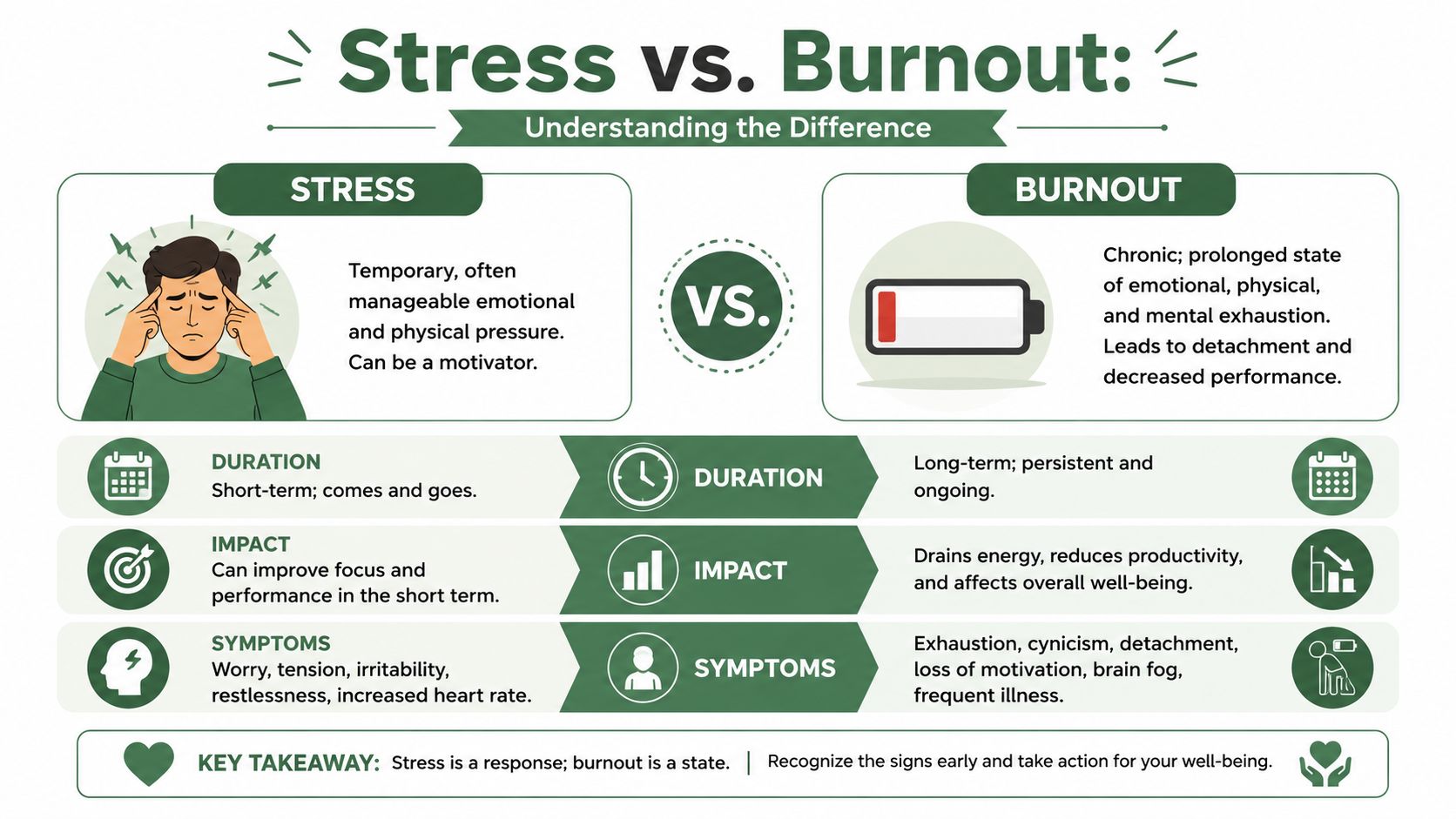
Stress and burnout sound similar because both feel bad. But they aren't the same condition, and confusing them can delay the right kind of help.
A useful analogy is a car engine. Stress is the dashboard warning light. The engine is hot, but the car still runs. Burnout is the engine seizing after being driven too long without repair. At that point, effort alone doesn't fix the problem.
Why the terms get mixed up
With stress, you usually still feel engaged. You may be overloaded, impatient, and stretched thin, but part of you still believes, "If I can just get through this week, I'll catch up."
With burnout, that inner engine changes. You stop feeling urgent and start feeling empty. You may still complete tasks, but without the sense that rest will restore you. That's why burnout often includes detachment, numbness, resentment, and hopelessness.
Some caregivers say stress feels like "too much to do." Burnout feels like "I have nothing left to give."
Caregiver Stress vs Burnout at a Glance
Symptom Area | Sign of Stress | Sign of Burnout |
|---|---|---|
Emotional state | Overwhelmed, worried, reactive | Numb, hopeless, detached |
Energy | Tired but still pushing | Drained and unable to recover |
Thinking | Racing thoughts, constant urgency | Mental fog, helplessness, shutdown |
Motivation | Wants relief but still trying | Stops believing relief will help |
Relationship to care | Still engaged, though strained | Increasing resentment or withdrawal |
Physical pattern | Tension, irritability, poor sleep | Exhaustion, persistent depletion, neglect of self |
Inner narrative | "I need a break" | "I can't do this anymore" |
Stress says your load is too heavy. Burnout says your reserves are too low.
This distinction matters because the response changes too. Stress often improves with rest, clearer boundaries, and help with tasks. Burnout usually requires a broader reset. That may include respite, counseling, medical care, or a redesign of the caregiving setup itself.
The Slippery Slope The Four Stages of Caregiver Burnout
Burnout usually doesn't appear in a single dramatic moment. It often progresses through recognizable stages. Seeing those stages can help you spot trouble before it becomes a crisis.

Stage 1 Manageable stress
This stage often looks responsible from the outside. You're organized, committed, and determined to handle things well. You may volunteer for extra tasks because it feels easier than explaining the situation to others.
Inside, though, the pace is already taking a toll. You skip meals, stay mentally "on" all the time, and tell yourself this level of strain is temporary. In this stage, caregiving still feels hard but possible.
Stage 2 Chronic depletion
Emotional reserves start thinning out. Small problems feel bigger. Patience shrinks. Recovery takes longer.
You may notice signs like these:
Shortened fuse: You react faster to repeated questions, resistance, or interruptions.
Constant mental tab-keeping: Your brain keeps a running list of medications, appointments, supplies, and worries.
No real off-switch: Even when you're sitting down, you don't feel off duty.
At this point, many caregivers say, "I'm fine, just tired." That phrase often hides more than it reveals.
Stage 3 Physical exhaustion
Here, the body joins the protest. Sleep stops feeling restorative. Concentration slips. A caregiver may feel shaky, foggy, or physically worn before the day is half over.
According to this discussion of the four stages of caregiver burnout, burnout can progress from manageable stress to functional collapse, and nearly 50% of family caregivers providing 21+ hours weekly experience clinical depression, alongside physiological changes such as increased cortisol and inflammation markers.
That matters because burnout isn't only emotional. The body records prolonged strain.
Stage 4 Functional collapse
This is the point where basic functioning starts to break down. A caregiver may stop returning calls, miss important tasks, withdraw from other relationships, or feel unable to make even simple decisions. Some people describe this stage as moving through mud. Others feel flat and disconnected, even during emergencies.
When someone reaches collapse, the issue isn't motivation. It's capacity.
If you recognize yourself here, treat that recognition as useful information, not a verdict. The earlier stages call for support. This stage calls for urgent support.
Causes and Consequences Why Burnout Happens and Its Toll
Burnout doesn't happen because a caregiver lacks devotion. It happens when demands stay high and recovery stays low for too long.
Some sources of strain are obvious, such as bathing, lifting, driving, and managing appointments. Others are quieter. Decision fatigue. Role confusion. Financial pressure. Family members who say "let me know if you need anything" but never take a concrete task. The emotional pain of watching someone change in front of you.
Why some caregiving situations drain people faster
Caring for someone with cognitive decline can be especially difficult because the work is unpredictable. A loved one may be calm in the morning and distressed by evening. They may need supervision even when they look physically capable. You aren't only doing tasks. You're also absorbing confusion, repetition, fear, and grief.
Many caregivers also get trapped by unrealistic standards. They think a good son, daughter, spouse, or partner should be endlessly patient and available. That belief can stop people from asking for help until they are already depleted.
A few common drivers show up again and again:
Lack of control: You can't fully schedule symptoms, moods, or emergencies.
Blurred identity: You stop being a daughter or spouse in your own mind and become only the care coordinator.
No backup system: Everything depends on you, so every interruption feels dangerous.
Chronic guilt: Rest feels selfish, even when rest is what protects the quality of care.
What prolonged burnout does to a caregiver
The costs are real. According to Cleveland Clinic's overview of caregiver burnout, more than 60% of caregivers experience symptoms of burnout, and about 38% rate their situation as highly stressful. That same source notes that sustained stress is linked to higher rates of obesity, asthma, and multiple chronic physical conditions compared to non-caregivers, and it can even contribute to care recipient neglect.
That last point is painful, but important. Burnout can reduce attention, patience, and judgment. Not because the caregiver stops caring, but because the caregiver's system is overloaded.
Burnout is not a character flaw. It's a health risk with consequences for both people in the caregiving relationship.
Once you look at it that way, self-protection stops being indulgent. It becomes part of responsible care.
Evidence-Based Strategies to Prevent and Reverse Burnout
Caregivers often hear advice that sounds good and feels impossible. "Take a vacation." "Get more rest." "Practice self-care." If your loved one needs frequent supervision, those suggestions can feel detached from reality.
A more useful approach is to build relief in layers. Start small enough that you can do it. Then create larger supports around those small wins.

Start with the smallest possible break
If you can't take half a day off, don't wait for half a day. Use what some caregivers call micro-respite. That means using brief, repeatable windows to reset your nervous system. A few quiet minutes in the car before going inside. Slow breathing after a difficult call. Sitting on the porch without answering texts. Stepping into another room and unclenching your jaw.
According to this overview of respite and micro-respite approaches, brief respite periods of just 2–4 hours weekly markedly improve psychological well-being, and micro-respite using 5–10 minute windows for mindfulness aligns with the idea that short nervous system resets can reduce cumulative stress.
That matters because many caregivers can find five minutes before they can find five hours.
Try one of these today:
Windshield time: Stay parked for a few minutes after an appointment. No calls. No planning. Just breathe and let your body settle.
Kitchen reset: While water boils or food reheats, drop your shoulders, loosen your hands, and take slow breaths.
Doorway pause: Before entering your loved one's room, stop at the doorway and decide on one calm sentence you'll lead with.
Use boundaries that reduce decision fatigue
Boundaries aren't only about saying no. They're also about reducing repeated decisions.
For example, instead of fielding open-ended requests from family, say, "I need someone to cover groceries every Saturday," or "I can update everyone by group text on Sundays, but I can't answer individual questions all week." Those are easier to maintain because they turn chaos into routine.
You can also create personal boundaries around your own basic care. For example:
Medical appointments stay on the calendar: Don't cancel your own care unless it's a true emergency.
One non-caregiving conversation a day: Talk to one person about something other than symptoms, insurance, or logistics.
A written list beats mental juggling: Put recurring tasks in one place so your brain isn't carrying everything at once.
For practical ways to make daily care more sustainable, these basic recommendations for dementia support can help families create steadier routines.
Make respite real instead of hypothetical
Many caregivers say they "should" arrange respite but never move it from idea to plan. The fix is to define it concretely.
Don't ask, "How do I get more help?" Ask narrower questions.
Which task is hardest to cover? Bathing, supervision, transportation, meals, evenings, or phone reassurance.
What kind of break would help most? Quiet time alone, errands without rushing, sleep, or uninterrupted work.
Who can cover one predictable slot? A sibling, neighbor, adult day program, home aide, faith community volunteer, or paid service.
A break works better when it's scheduled before you're desperate.
This short video offers another helpful lens on caregiver strain and coping:
Support your body so your mind has a chance
When people are exhausted, they often reach for emotional solutions only. But caregiving stress lives in the body too. Food, movement, hydration, and sleep won't solve burnout by themselves, but they make recovery more possible.
A regulated body gives you a better shot at a regulated reaction.
Focus on low-friction choices. A short walk. A snack with protein before a long appointment. A glass of water before another cup of coffee. Laying out medications, keys, and paperwork the night before. These aren't glamorous strategies. They work because they're repeatable.
Building Your Support System with Family and Technology
The most overloaded caregivers often have one thing in common. Too much of the system lives in their head. They remember the medication schedule, the mood triggers, the appointment details, the safety worries, and the family politics. That hidden load is exhausting.
Support gets more useful when it becomes visible, shared, and specific.
Ask family for tasks not vague offers
Family members often say they want to help, but they don't know where to start. If you respond with "I'll let you know," the work comes right back to you. A better approach is to assign complete tasks.
Instead of asking for general support, try requests like these:
Transportation owner: One person handles all rides to recurring appointments.
Prescription lead: One person tracks refills and pickup.
Food support: One person manages grocery delivery or one weekly meal.
Paperwork backup: One person helps with forms, insurance calls, or calendar updates.
A family meeting also works better when one person writes things down. Memory-heavy care needs a shared record, not verbal good intentions.
Where phone-based cognitive support fits
For families caring for someone with early to mid-stage memory loss, one missing piece is often structured support between in-person visits. Not another app. Not another password. Something simpler.
Phone-based cognitive support can reduce daily burden because it adds predictable contact, guided conversation, and routine check-ins without requiring the older adult to learn new technology. That matters when the caregiver is already carrying too much uncertainty.

A well-designed phone program can help with several pressure points at once:
Cognitive engagement: Scheduled conversation and mental exercises can add structure to the day.
Companionship: Regular human contact can reduce long stretches of isolation.
Routine reinforcement: Calls can support reminders and orientation in ways that complement family care.
Better visibility: Families gain a clearer sense of how their loved one is doing between visits.
If you're considering that kind of support, this family guide to how Velma works for daily cognitive support shows how a phone-based model can fit around existing caregiving rather than replacing it.
The true benefit isn't only the call itself. It's the reduction in mental load. When some support is predictable, the caregiver doesn't have to personally fill every empty space in the day.
Knowing When It Is Time to Seek Professional Help
Some caregiving problems can improve with better routines, more help, and steadier rest. Others need professional care. Knowing the difference protects both you and the person you support.
Pay attention if you notice any of these signs lasting or worsening: persistent hopelessness, regular crying you can't interrupt, major changes in sleep or appetite, complete withdrawal from friends, panic that feels hard to control, or anger that scares you. Take immediate action if you have thoughts of harming yourself or the care recipient.
Professional help can mean a primary care visit, a therapist, a counselor, or a support program recommended by a clinician. It doesn't mean you've failed. It means your situation has outgrown self-management.
If your family is also trying to understand support options for memory loss, this overview of what Velma provides for early memory loss support may help you think through one part of the broader care picture.
If you're supporting a parent or partner with memory loss and need dependable help between visits, Velma offers phone-based cognitive support through scheduled calls, conversation, cognitive exercises, and family-informed check-ins. It can give your loved one more structure and connection while giving you something every caregiver needs more of: a little less uncertainty.
By the time evening comes, many caregivers are still on duty. You may have spent the day repeating the same reminder, answering the same worried question, managing medications, watching for falls, and trying to sound calm when you feel anything but calm. Then the house gets quiet, and instead of relief, you feel wrung out.
That feeling can be hard to name. Some people call it stress. Others call it burnout. Many caregivers assume it just means they need to try harder tomorrow. They don't. They need a better way to understand what's happening to them, and practical support that fits real life.
Caregiver stress and burnout rarely arrive all at once. They build in layers. First comes pressure. Then depletion. Then the sense that you're running on fumes, even when you care a great deal and want to keep going. Knowing where you are on that path can help you act earlier, with less guilt and more clarity.
Table of Contents
You Are Not Alone The Reality of Caregiver Stress
Why this matters emotionally
What readers often get wrong
Stress vs Burnout Understanding the Crucial Difference
Why the terms get mixed up
Caregiver Stress vs Burnout at a Glance
The Slippery Slope The Four Stages of Caregiver Burnout
Stage 1 Manageable stress
Stage 2 Chronic depletion
Stage 3 Physical exhaustion
Stage 4 Functional collapse
Causes and Consequences Why Burnout Happens and Its Toll
Why some caregiving situations drain people faster
What prolonged burnout does to a caregiver
Evidence-Based Strategies to Prevent and Reverse Burnout
Start with the smallest possible break
Use boundaries that reduce decision fatigue
Make respite real instead of hypothetical
Support your body so your mind has a chance
Building Your Support System with Family and Technology
Ask family for tasks not vague offers
Where phone-based cognitive support fits
Knowing When It Is Time to Seek Professional Help
You Are Not Alone The Reality of Caregiver Stress
A lot of caregivers end the day feeling guilty for being tired. They tell themselves other families are handling this better, or that love should make the work feel lighter. It doesn't work that way. Love can make you committed, but it doesn't make you immune to overload.
Consider a common evening. Your parent asks the same question again. You answer gently, then less gently. Dinner is late. A bill is unpaid. You realize you missed your own appointment. When you finally sit down, your body is still braced as if another problem is about to walk through the door.
That reaction is more common than many caregivers realize. Approximately 40% to 70% of family caregivers show clinically significant symptoms of depression, and CDC data also shows that between 2015 and 2022, frequent mental distress and depression among caregivers worsened significantly, according to this caregiver stress and burnout summary.
Why this matters emotionally
When people hear those numbers, they often feel two things at once. First, sadness. Second, relief. Relief because their struggle finally has a name.
Practical rule: If caregiving feels heavier than you expected, that doesn't mean you're weak. It means the role is demanding.
Stress in caregiving isn't only about tasks. It's also about vigilance. You may be listening for movement at night, scanning for confusion during a phone call, or trying to predict what kind of day your loved one will have before they even wake up. That constant alertness wears people down.
What readers often get wrong
Many caregivers wait until they're falling apart to take themselves seriously. They assume burnout means total collapse, so anything short of that must be manageable. But caregiver stress and burnout usually move along a spectrum.
Here is the hopeful part. If you can tell the difference between ordinary strain, worsening depletion, and true burnout, you can respond earlier. Small changes work better when you make them before your system is fully overloaded.
Stress vs Burnout Understanding the Crucial Difference
Stress and burnout sound similar because both feel bad. But they aren't the same condition, and confusing them can delay the right kind of help.
A useful analogy is a car engine. Stress is the dashboard warning light. The engine is hot, but the car still runs. Burnout is the engine seizing after being driven too long without repair. At that point, effort alone doesn't fix the problem.
Why the terms get mixed up
With stress, you usually still feel engaged. You may be overloaded, impatient, and stretched thin, but part of you still believes, "If I can just get through this week, I'll catch up."
With burnout, that inner engine changes. You stop feeling urgent and start feeling empty. You may still complete tasks, but without the sense that rest will restore you. That's why burnout often includes detachment, numbness, resentment, and hopelessness.
Some caregivers say stress feels like "too much to do." Burnout feels like "I have nothing left to give."
Caregiver Stress vs Burnout at a Glance
Symptom Area | Sign of Stress | Sign of Burnout |
|---|---|---|
Emotional state | Overwhelmed, worried, reactive | Numb, hopeless, detached |
Energy | Tired but still pushing | Drained and unable to recover |
Thinking | Racing thoughts, constant urgency | Mental fog, helplessness, shutdown |
Motivation | Wants relief but still trying | Stops believing relief will help |
Relationship to care | Still engaged, though strained | Increasing resentment or withdrawal |
Physical pattern | Tension, irritability, poor sleep | Exhaustion, persistent depletion, neglect of self |
Inner narrative | "I need a break" | "I can't do this anymore" |
Stress says your load is too heavy. Burnout says your reserves are too low.
This distinction matters because the response changes too. Stress often improves with rest, clearer boundaries, and help with tasks. Burnout usually requires a broader reset. That may include respite, counseling, medical care, or a redesign of the caregiving setup itself.
The Slippery Slope The Four Stages of Caregiver Burnout
Burnout usually doesn't appear in a single dramatic moment. It often progresses through recognizable stages. Seeing those stages can help you spot trouble before it becomes a crisis.
Stage 1 Manageable stress
This stage often looks responsible from the outside. You're organized, committed, and determined to handle things well. You may volunteer for extra tasks because it feels easier than explaining the situation to others.
Inside, though, the pace is already taking a toll. You skip meals, stay mentally "on" all the time, and tell yourself this level of strain is temporary. In this stage, caregiving still feels hard but possible.
Stage 2 Chronic depletion
Emotional reserves start thinning out. Small problems feel bigger. Patience shrinks. Recovery takes longer.
You may notice signs like these:
Shortened fuse: You react faster to repeated questions, resistance, or interruptions.
Constant mental tab-keeping: Your brain keeps a running list of medications, appointments, supplies, and worries.
No real off-switch: Even when you're sitting down, you don't feel off duty.
At this point, many caregivers say, "I'm fine, just tired." That phrase often hides more than it reveals.
Stage 3 Physical exhaustion
Here, the body joins the protest. Sleep stops feeling restorative. Concentration slips. A caregiver may feel shaky, foggy, or physically worn before the day is half over.
According to this discussion of the four stages of caregiver burnout, burnout can progress from manageable stress to functional collapse, and nearly 50% of family caregivers providing 21+ hours weekly experience clinical depression, alongside physiological changes such as increased cortisol and inflammation markers.
That matters because burnout isn't only emotional. The body records prolonged strain.
Stage 4 Functional collapse
This is the point where basic functioning starts to break down. A caregiver may stop returning calls, miss important tasks, withdraw from other relationships, or feel unable to make even simple decisions. Some people describe this stage as moving through mud. Others feel flat and disconnected, even during emergencies.
When someone reaches collapse, the issue isn't motivation. It's capacity.
If you recognize yourself here, treat that recognition as useful information, not a verdict. The earlier stages call for support. This stage calls for urgent support.
Causes and Consequences Why Burnout Happens and Its Toll
Burnout doesn't happen because a caregiver lacks devotion. It happens when demands stay high and recovery stays low for too long.
Some sources of strain are obvious, such as bathing, lifting, driving, and managing appointments. Others are quieter. Decision fatigue. Role confusion. Financial pressure. Family members who say "let me know if you need anything" but never take a concrete task. The emotional pain of watching someone change in front of you.
Why some caregiving situations drain people faster
Caring for someone with cognitive decline can be especially difficult because the work is unpredictable. A loved one may be calm in the morning and distressed by evening. They may need supervision even when they look physically capable. You aren't only doing tasks. You're also absorbing confusion, repetition, fear, and grief.
Many caregivers also get trapped by unrealistic standards. They think a good son, daughter, spouse, or partner should be endlessly patient and available. That belief can stop people from asking for help until they are already depleted.
A few common drivers show up again and again:
Lack of control: You can't fully schedule symptoms, moods, or emergencies.
Blurred identity: You stop being a daughter or spouse in your own mind and become only the care coordinator.
No backup system: Everything depends on you, so every interruption feels dangerous.
Chronic guilt: Rest feels selfish, even when rest is what protects the quality of care.
What prolonged burnout does to a caregiver
The costs are real. According to Cleveland Clinic's overview of caregiver burnout, more than 60% of caregivers experience symptoms of burnout, and about 38% rate their situation as highly stressful. That same source notes that sustained stress is linked to higher rates of obesity, asthma, and multiple chronic physical conditions compared to non-caregivers, and it can even contribute to care recipient neglect.
That last point is painful, but important. Burnout can reduce attention, patience, and judgment. Not because the caregiver stops caring, but because the caregiver's system is overloaded.
Burnout is not a character flaw. It's a health risk with consequences for both people in the caregiving relationship.
Once you look at it that way, self-protection stops being indulgent. It becomes part of responsible care.
Evidence-Based Strategies to Prevent and Reverse Burnout
Caregivers often hear advice that sounds good and feels impossible. "Take a vacation." "Get more rest." "Practice self-care." If your loved one needs frequent supervision, those suggestions can feel detached from reality.
A more useful approach is to build relief in layers. Start small enough that you can do it. Then create larger supports around those small wins.
Start with the smallest possible break
If you can't take half a day off, don't wait for half a day. Use what some caregivers call micro-respite. That means using brief, repeatable windows to reset your nervous system. A few quiet minutes in the car before going inside. Slow breathing after a difficult call. Sitting on the porch without answering texts. Stepping into another room and unclenching your jaw.
According to this overview of respite and micro-respite approaches, brief respite periods of just 2–4 hours weekly markedly improve psychological well-being, and micro-respite using 5–10 minute windows for mindfulness aligns with the idea that short nervous system resets can reduce cumulative stress.
That matters because many caregivers can find five minutes before they can find five hours.
Try one of these today:
Windshield time: Stay parked for a few minutes after an appointment. No calls. No planning. Just breathe and let your body settle.
Kitchen reset: While water boils or food reheats, drop your shoulders, loosen your hands, and take slow breaths.
Doorway pause: Before entering your loved one's room, stop at the doorway and decide on one calm sentence you'll lead with.
Use boundaries that reduce decision fatigue
Boundaries aren't only about saying no. They're also about reducing repeated decisions.
For example, instead of fielding open-ended requests from family, say, "I need someone to cover groceries every Saturday," or "I can update everyone by group text on Sundays, but I can't answer individual questions all week." Those are easier to maintain because they turn chaos into routine.
You can also create personal boundaries around your own basic care. For example:
Medical appointments stay on the calendar: Don't cancel your own care unless it's a true emergency.
One non-caregiving conversation a day: Talk to one person about something other than symptoms, insurance, or logistics.
A written list beats mental juggling: Put recurring tasks in one place so your brain isn't carrying everything at once.
For practical ways to make daily care more sustainable, these basic recommendations for dementia support can help families create steadier routines.
Make respite real instead of hypothetical
Many caregivers say they "should" arrange respite but never move it from idea to plan. The fix is to define it concretely.
Don't ask, "How do I get more help?" Ask narrower questions.
Which task is hardest to cover? Bathing, supervision, transportation, meals, evenings, or phone reassurance.
What kind of break would help most? Quiet time alone, errands without rushing, sleep, or uninterrupted work.
Who can cover one predictable slot? A sibling, neighbor, adult day program, home aide, faith community volunteer, or paid service.
A break works better when it's scheduled before you're desperate.
This short video offers another helpful lens on caregiver strain and coping:
Support your body so your mind has a chance
When people are exhausted, they often reach for emotional solutions only. But caregiving stress lives in the body too. Food, movement, hydration, and sleep won't solve burnout by themselves, but they make recovery more possible.
A regulated body gives you a better shot at a regulated reaction.
Focus on low-friction choices. A short walk. A snack with protein before a long appointment. A glass of water before another cup of coffee. Laying out medications, keys, and paperwork the night before. These aren't glamorous strategies. They work because they're repeatable.
Building Your Support System with Family and Technology
The most overloaded caregivers often have one thing in common. Too much of the system lives in their head. They remember the medication schedule, the mood triggers, the appointment details, the safety worries, and the family politics. That hidden load is exhausting.
Support gets more useful when it becomes visible, shared, and specific.
Ask family for tasks not vague offers
Family members often say they want to help, but they don't know where to start. If you respond with "I'll let you know," the work comes right back to you. A better approach is to assign complete tasks.
Instead of asking for general support, try requests like these:
Transportation owner: One person handles all rides to recurring appointments.
Prescription lead: One person tracks refills and pickup.
Food support: One person manages grocery delivery or one weekly meal.
Paperwork backup: One person helps with forms, insurance calls, or calendar updates.
A family meeting also works better when one person writes things down. Memory-heavy care needs a shared record, not verbal good intentions.
Where phone-based cognitive support fits
For families caring for someone with early to mid-stage memory loss, one missing piece is often structured support between in-person visits. Not another app. Not another password. Something simpler.
Phone-based cognitive support can reduce daily burden because it adds predictable contact, guided conversation, and routine check-ins without requiring the older adult to learn new technology. That matters when the caregiver is already carrying too much uncertainty.
A well-designed phone program can help with several pressure points at once:
Cognitive engagement: Scheduled conversation and mental exercises can add structure to the day.
Companionship: Regular human contact can reduce long stretches of isolation.
Routine reinforcement: Calls can support reminders and orientation in ways that complement family care.
Better visibility: Families gain a clearer sense of how their loved one is doing between visits.
If you're considering that kind of support, this family guide to how Velma works for daily cognitive support shows how a phone-based model can fit around existing caregiving rather than replacing it.
The true benefit isn't only the call itself. It's the reduction in mental load. When some support is predictable, the caregiver doesn't have to personally fill every empty space in the day.
Knowing When It Is Time to Seek Professional Help
Some caregiving problems can improve with better routines, more help, and steadier rest. Others need professional care. Knowing the difference protects both you and the person you support.
Pay attention if you notice any of these signs lasting or worsening: persistent hopelessness, regular crying you can't interrupt, major changes in sleep or appetite, complete withdrawal from friends, panic that feels hard to control, or anger that scares you. Take immediate action if you have thoughts of harming yourself or the care recipient.
Professional help can mean a primary care visit, a therapist, a counselor, or a support program recommended by a clinician. It doesn't mean you've failed. It means your situation has outgrown self-management.
If your family is also trying to understand support options for memory loss, this overview of what Velma provides for early memory loss support may help you think through one part of the broader care picture.
If you're supporting a parent or partner with memory loss and need dependable help between visits, Velma offers phone-based cognitive support through scheduled calls, conversation, cognitive exercises, and family-informed check-ins. It can give your loved one more structure and connection while giving you something every caregiver needs more of: a little less uncertainty.
Suggested Article: