A Complete Guide to Pet Therapy for Elderly Loved Ones

You may be watching small changes add up.
A parent who once chatted easily now sits through dinner in silence. A spouse who used to enjoy phone calls seems tense, distracted, or withdrawn. You want to help, but many of the obvious fixes feel too big. Moving homes, hiring more care, or adding new appointments can be overwhelming for everyone involved.
That's why pet therapy often catches a caregiver's attention. It feels warm and familiar, but it's more than a sweet visit with a dog. For many older adults, especially those living with memory loss, animal companionship can open a door that conversation alone sometimes can't. A gentle animal can calm a restless afternoon, prompt a story from years ago, or make a lonely room feel less empty.
The challenge is knowing what helps, what's safe, and what makes sense for your family's day-to-day reality. That matters even more when relatives live far away and support is split between in-person care, phone calls, and short visits.
Table of Contents
An Introduction to Animal Companionship for Seniors
What Is Pet Therapy and How Does It Work
A simple way to think about it
Two forms caregivers should know
The Science-Backed Benefits for Mind and Body
Emotional relief that caregivers can often see
Cognitive changes that matter in dementia care
Physical effects that support comfort and regulation
Four Ways to Bring Animal Companionship to a Senior
Formal animal-assisted therapy
Volunteer pet visits and casual animal-assisted activities
Full-time pet ownership
Robotic pets and low-maintenance alternatives
A Practical Guide to Choosing the Right Approach Safely
Start with the senior, not the animal
Safety checks that prevent common problems
Integrating Pet Therapy with Other Cognitive Supports
Using pet moments as memory prompts
Why this matters for families providing care from a distance
Resources for Getting Started with Pet Therapy
An Introduction to Animal Companionship for Seniors
A daughter notices that her father has stopped joining the conversation after lunch at his assisted living community. He's not always upset. He's just harder to reach. Some days he seems flat. Other days he becomes irritable over something small, then settles down just as quickly.
Then a visiting dog comes through the common room.
He leans forward. He smiles. He asks the handler the dog's name, then says the name of the collie he had as a boy. For ten minutes, he looks more like himself. That moment matters. It doesn't solve dementia, depression, grief, or isolation. But it gives caregivers something precious. A way in.
That's the heart of pet therapy for elderly loved ones. It isn't merely about owning a pet. It can include structured therapy sessions, volunteer visits, resident animals in care settings, or low-maintenance alternatives that offer comfort without the burden of daily care. The right approach depends on the person in front of you.
Some older adults need stimulation. Others need calm. Animal companionship can sometimes provide both in a way that feels natural rather than clinical.
Caregivers often get confused at the start because “pet therapy” gets used as a catch-all phrase. One family may mean a certified therapy dog visiting with a trained handler. Another may mean a calm house cat that gives a senior a sense of routine. Both can be helpful, but they aren't the same thing, and they don't carry the same responsibilities or risks.
A practical decision starts with simple questions. Does your loved one enjoy animals? Are they steady on their feet? Do they live alone, in memory care, or with family? Can someone handle feeding, cleanup, and vet visits if ownership is involved? Those questions shape the safest option far more than a general love of pets.
What Is Pet Therapy and How Does It Work
Pet therapy works best when viewed similarly to physical therapy. A physical therapist doesn't just tell someone to move more. They use specific exercises for a specific purpose. Animal-assisted therapy works in a similar way. It uses interaction with an animal to support emotional, social, cognitive, or physical goals.

A simple way to think about it
A dog, cat, rabbit, or other calm animal can change the emotional tone of a room almost immediately. The older adult may start petting, making eye contact, smiling, or talking. For someone with dementia, that interaction can also provide sensory input, routine, and a familiar topic that feels easier than answering direct questions about their day.
Caregivers sometimes expect the animal to do all the work. Usually, the benefit comes from the interaction. The senior reaches out. The handler responds. A staff member asks about a childhood pet. A spouse notices a more relaxed mood after the visit. Those small exchanges are part of the therapeutic value.
Two forms caregivers should know
There are two main categories that often get mixed together:
Animal-assisted therapy involves planned, goal-focused work. A professional or organized program uses the animal to support a treatment aim such as communication, engagement, calm behavior, or emotional regulation.
Animal-assisted activities are looser and more social. These are often volunteer visits in nursing homes, assisted living communities, or private homes. The goal is comfort, enjoyment, and connection rather than a formal treatment plan.
A real-world example makes the difference clearer. If a therapy team visits a memory care resident to encourage interaction and reduce distress during a scheduled session, that's closer to therapy. If volunteers bring a friendly dog through the lounge so residents can visit, talk, and enjoy the moment, that's an activity.
Practical rule: If there's a documented goal, a trained team, and a structured session, you're likely looking at therapy. If it's mainly for comfort and recreation, it's probably an activity.
Neither option is automatically better. A senior with moderate dementia who becomes anxious during care routines may benefit from a more structured approach. A senior who's lonely and misses being around animals may respond beautifully to informal visits once or twice a week.
The most helpful mindset is this: pet therapy for elderly adults isn't one service. It's a range of animal-based supports, from formal intervention to gentle companionship.
The Science-Backed Benefits for Mind and Body
A daughter calls during her lunch break and hears the same strain in her father's voice she heard yesterday. He is restless, short with staff, and hard to redirect. Later that afternoon, a calm dog visits his care community. The staff member on duty says he spent ten minutes petting the dog, then started talking about the beagle he had as a young father. For families supporting dementia from a distance, moments like that matter because they can change the tone of a whole day.
Emotional relief that caregivers can often see
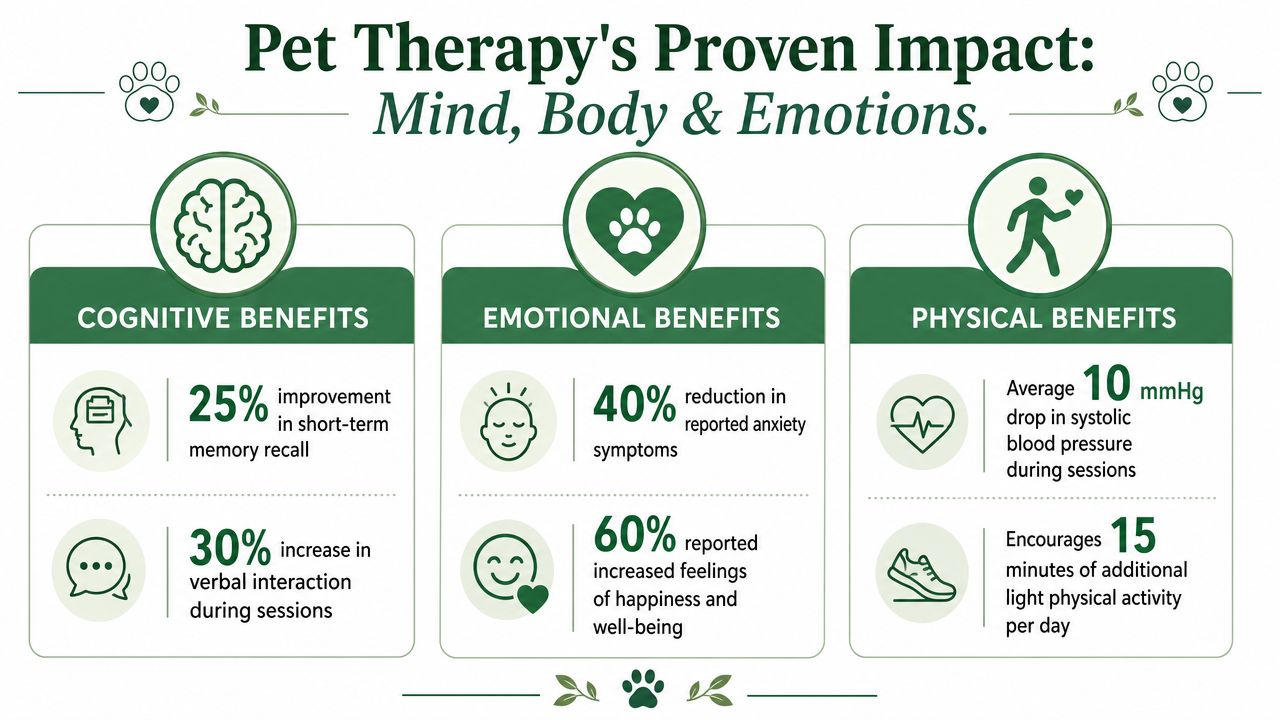
The first changes are often the easiest to notice. A senior who has been pacing may sit down. Someone who has withdrawn may make eye contact, smile, or speak to the handler. A person with dementia who repeats, “I want to go home,” may settle long enough to feel safe again.
These responses make sense. Gentle contact, familiar routines, and warm attention can lower a person's sense of threat. For someone living with dementia, that is often half the battle. Anxiety can turn bathing, meals, or evening hours into stressful episodes. A calm visit with an animal can work like a reset button, giving caregivers a short window where conversation, redirection, or personal care goes more smoothly.
A review from Go365 on how seniors benefit from pet therapy points to studies linking animal companionship with less loneliness and cites research on recovery settings where canine visits were associated with lower pain medication use after joint replacement. The practical takeaway is simple. Emotional comfort is not just pleasant. It can affect how a senior experiences pain, stress, and social isolation.
For distributed families, this benefit also pairs well with phone-based support. If a weekly animal visit reliably leaves a parent calmer and more talkative, that can be the best time for an adult child to call, review the day, or help with orientation.
Cognitive changes that matter in dementia care
Animal contact can also stir up memories that seem hard to reach at other times. Families often notice this before anyone uses clinical language for it. A resident who says very little may suddenly talk about feeding barn cats as a child. A grandmother who loses track of group activities may stroke a dog and describe the terrier she had when her children were small.
That pattern matters in dementia care because memory is not all lost at once. Older emotional memories often remain more available than recent facts. An animal can act like a cue, much like an old song or a familiar smell. It gives the brain something concrete to grab onto.
Caregivers can use that opening in practical ways. Staff might ask, “Did you ever have a pet like this?” A daughter on the phone later that evening might follow up with, “The nurse said you met a golden retriever today. Did it remind you of any dogs from home?” That turns a pleasant visit into a bridge for conversation, connection, and orientation.
Physical effects that support comfort and regulation
The body often changes along with mood. Hands unclench. Breathing slows. Facial muscles soften. A person who looked keyed up may appear more settled in the chair.
A Supportive Care summary of pet therapy research describes randomized trial findings showing shifts in stress-related markers, including lower cortisol and higher oxytocin after animal-assisted sessions, along with reductions in blood pressure. Caregivers do not need to track lab values to understand why that matters. A calmer body usually makes care easier. It can mean less resistance during a transfer, less escalation during sundowning, or an easier transition into a meal or rest period.
This is also where expectations need to stay realistic. Pet therapy can support comfort and regulation, but it does not replace medication management, memory care routines, or trained supervision. It works best as one part of a larger care plan, especially when family members, facility staff, and remote supporters share notes about what time of day the senior responds best and what usually helps after the visit.
Benefit area | What a caregiver may notice |
|---|---|
Emotional | Less visible tension, more smiling, fewer distressed moments |
Cognitive | More storytelling, recognition of past pets, better engagement |
Physical | Calmer body language, easier breathing, more settled behavior |
For many families, that is the primary value. Pet therapy can create a calmer moment, but it can also create a usable moment. A nurse can provide care with less friction. A son can have a better phone call. A scattered day can feel more manageable for everyone involved.
Four Ways to Bring Animal Companionship to a Senior
A daughter in another state schedules a video call with her father at his memory care community. Some days he is withdrawn. On other days, he lights up because a dog visited that morning. That difference matters. For families caring from a distance, animal companionship is not only about comfort. It can also create better moments for conversation, meals, bathing, and other supports that happen before or after the visit.
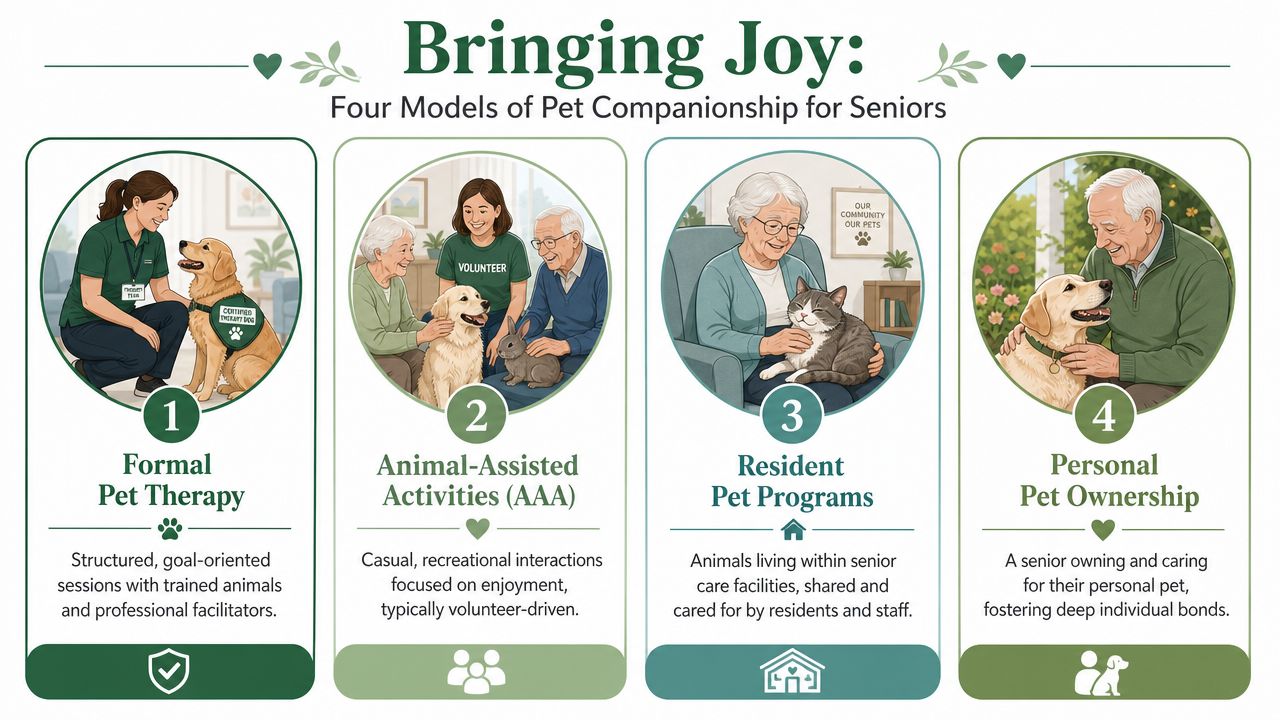
Animal companionship is not one single choice. It sits on a spectrum, from highly structured clinical sessions to simple comfort at home. The right option depends on the senior's health, living setting, and how much hands-on help the family can provide.
Formal animal-assisted therapy
This is the most structured approach. A trained animal and handler visit with a purpose, often tied to a care goal such as improving attention, easing agitation, or helping a senior engage during memory care activities.
Formal sessions often work well in nursing homes, rehabilitation settings, and memory care programs because staff can observe what happens and build the visit into the rest of the day. If a resident is calmer after a therapy dog visit, staff may plan grooming, exercise, or a phone call with family during that window.
Best fit:
Seniors with dementia-related distress
Residents in facilities with organized activities and staff support
Families who want a supervised option with a clear routine
Less ideal:
People who feel uneasy around unfamiliar animals
Situations where visits are so rare that the senior never gets comfortable
A short demonstration can help families picture what this looks like in real life:
Volunteer pet visits and casual animal-assisted activities
This is often the easiest place to start. A volunteer brings a calm animal to a home, senior center, or residential community for a short visit. The goal is usually simple companionship, not treatment.
For many caregivers, this option works like a trial run. You can see how the senior reacts without taking on daily pet care. A grandmother who smiles, pets the dog, and starts telling stories about the collie she had at age 30 may be showing you that animal contact still reaches her. If she turns away, becomes startled, or tires quickly, you learn that too.
This format also fits distributed families. A local volunteer visit can be paired with a same-day phone check-in from an adult child, so the family can notice whether the visit helped the senior feel more social, calmer, or easier to engage.
Full-time pet ownership
This is the choice families often picture first because it feels personal and familiar. A live-in pet can add rhythm to the day. Meals happen on time. A walk encourages movement. Petting a cat in the evening can become a cue for rest.
It can also become a caregiving job very quickly.
A senior with mild memory loss may still enjoy feeding a cat or sitting with a small dog. A senior with progressing dementia may forget water bowls, trip over the animal, or feel panicked if the pet hides or makes noise at night. In that case, the pet does not reduce stress. It adds another layer of it.
Ownership usually works only when another adult is responsible for the hard parts, including feeding backup, grooming, veterinary visits, cleanup, and safety monitoring. Families sorting out those wider care responsibilities may also want to review these basic recommendations for daily senior support.
Robotic pets and low-maintenance alternatives
Robotic pets deserve a serious look, especially in dementia care. They offer something many families need. Comfort without the unpredictable parts of a live animal.
That matters in real homes and care settings. There is no barking at midnight, no leash pulling, no litter box, and no risk that a frail senior will bend too far to pick up a food bowl. For someone with advanced memory loss, a soft robotic cat that purrs when touched may be easier to accept than a live animal that moves quickly or resists handling.
Some caregivers worry this option is childish or less real. The more useful question is simpler. Does it soothe the person? If a robotic pet reduces pacing before dinner or helps a spouse get through a difficult late afternoon, it is doing real work.
Here's a quick comparison:
Option | Best for | Main caution |
|---|---|---|
Formal therapy | Specific behavioral or engagement goals | Access may be limited |
Volunteer visits | Social enjoyment and low-commitment comfort | Benefits may be brief |
Pet ownership | Seniors who can enjoy daily companionship with strong support | Highest care burden |
Robotic pets | Safety-conscious families and people with advanced dementia | Not everyone responds to them |
A Practical Guide to Choosing the Right Approach Safely
The safest choice usually starts with the senior's needs, not the family's hopes. A daughter may love the idea of bringing Mom a puppy. A husband may think his wife would perk up if they adopted a cat. Those ideas come from love, but they can still be wrong for the situation.
Start with the senior, not the animal
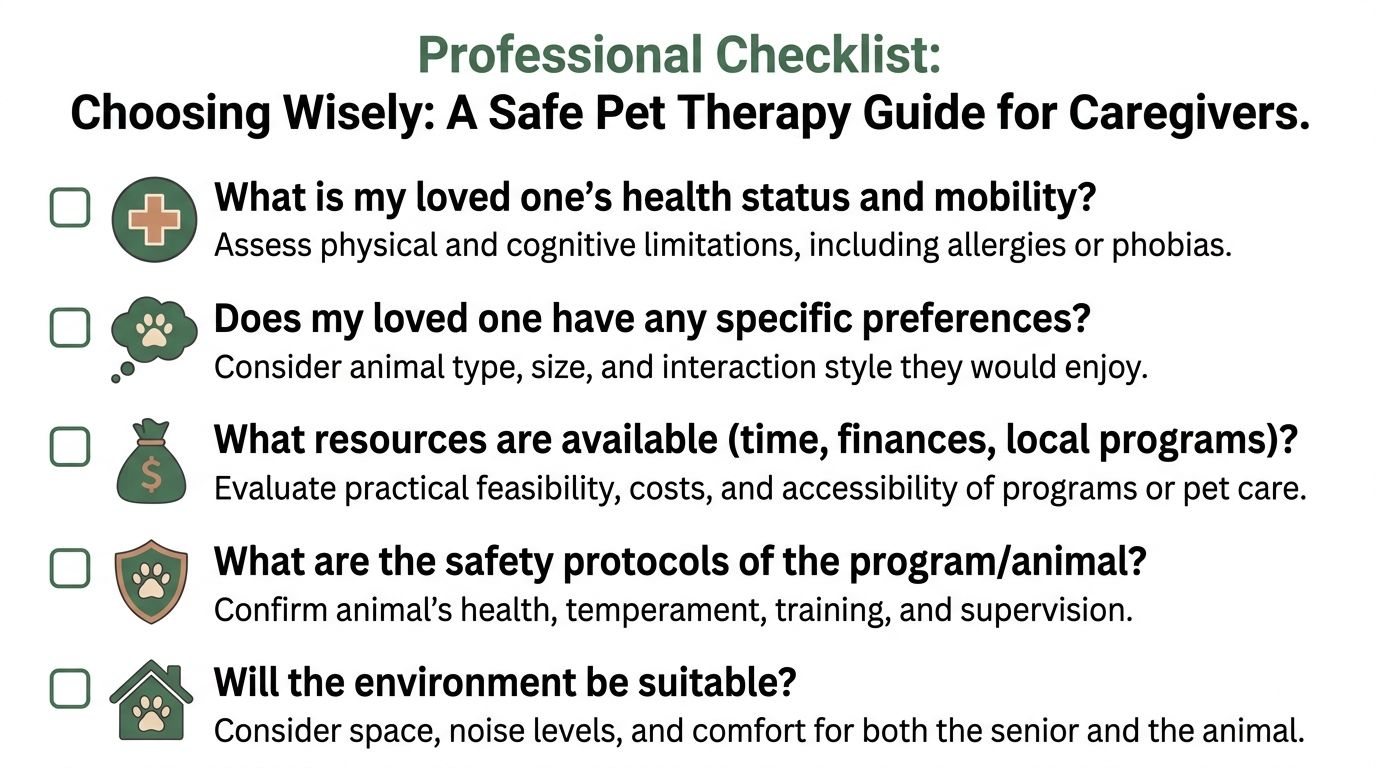
Before choosing any form of pet therapy for elderly adults, ask these questions:
How steady are they on their feet If the senior shuffles, freezes, or reaches unpredictably, an excited dog can create a fall risk.
Do they like animals A person who once loved pets may now feel startled by barking, quick movement, or being licked.
What kind of living space do they have A small apartment, shared room, or memory care unit may work well for visits but poorly for ownership.
Who will do the daily work Even if the senior says they can manage, someone needs a backup plan for feeding, grooming, walking, and cleanup.
Are there allergies, immune concerns, or skin fragility issues These affect the safest type of contact and whether direct handling makes sense.
If you're also sorting out broader daily support questions, these basic caregiving recommendations for memory loss can help frame what needs to be in place around any new routine.
Safety checks that prevent common problems
Families often focus on the animal's comfort and forget the environment. That's where many problems start. A leash stretched across a walkway, food bowls left on the floor, or an excited greeting at the front door can create avoidable stress.
Use this short checklist when evaluating a program or planning visits:
Ask about training and temperament The animal should be calm, predictable, clean, and comfortable around older adults.
Watch the first interaction closely Don't assume a good match. Notice posture, facial expression, startle response, and whether the senior wants more contact or less.
Keep visits short at first A brief, successful visit is better than a long one that ends in fatigue or confusion.
Protect mobility paths Clear rugs, cords, bags, toys, and water bowls from walking areas before the animal arrives.
Plan hygiene measures Hand washing before and after contact is a sensible baseline, especially in shared care settings.
A successful visit doesn't have to be long. It has to be calm, safe, and pleasant enough that the person would welcome it again.
If a session leaves the senior agitated, overtired, fearful, or more confused, take that seriously. Pet therapy should lower strain, not add to it.
Integrating Pet Therapy with Other Cognitive Supports
Pet therapy is often treated like a stand-alone activity. In dementia care, it usually works better as part of a larger support system.
Using pet moments as memory prompts
A pet visit can create a moment of connection. The bigger opportunity is to capture that moment and use it later. If a senior lights up while talking about a childhood beagle, that memory can become a prompt in future conversations, orientation exercises, or reminiscence work.
A 2023 meta-analysis discussed in this article on pet therapy for seniors reported that animal therapy triggered memory recall in 65% of dementia patients by prompting reminiscence about past pets. The same source says 30% of telehealth dementia programs now incorporate animal-assisted memory triggers, but it also notes that no studies have validated how this recall effect enhances phone-based cognitive exercises.
That gap matters. Families are already mixing in-person and remote care. Many older adults live alone for much of the day, with support spread across relatives, aides, neighbors, and scheduled calls. In that setting, a pet-related memory isn't just a nice moment. It can become a practical cue.
For example, if your mother talks fondly about her old cat after a visit, a later phone call might revisit that memory to encourage language, sequencing, or orientation. Questions like “What was your cat's name?” or “Did she sleep in the kitchen or the bedroom?” may feel easier and more welcoming than abstract memory drills.
Why this matters for families providing care from a distance
Distributed families often struggle with one basic problem. They don't know what still reaches the person. A short animal interaction can reveal that quickly. If the senior responds to touch, names, stories, or routines linked to pets, caregivers can use those themes across the week.
This doesn't require fancy technology. It requires noticing what worked and sharing it with everyone involved in care. One relative can write down the memory that surfaced. A home aide can mention it during a meal. A phone-based support program can use it as a structured prompt later. If you want a clearer sense of how remote cognitive support can fit into that kind of routine, this overview explains what Velma cognitive support is for early memory loss.
When caregivers reuse a meaningful memory prompt across settings, they give the older adult more chances to succeed.
That's the modern opportunity in pet therapy for elderly adults with dementia. The emotional spark from a live visit doesn't have to end when the animal leaves.
Resources for Getting Started with Pet Therapy
The best next step is usually a small one. A single supervised visit can tell you more than weeks of debating the idea. Watch your loved one's face, body language, and energy afterward. Those details are often more useful than anyone's assumptions.
Here are practical places to start:
Pet Partners Search for therapy animal teams and programs in your area if you want a more formal route.
Local nursing homes and assisted living communities Ask whether they host visiting animal programs, resident pets, or supervised family pet visits.
Your loved one's physician or memory care team They can help you think through mobility, allergies, infection concerns, and behavioral fit.
Area Agencies on Aging and senior centers Many know about volunteer visitation programs that families don't find through a simple search.
Joy for All If a live animal isn't a safe fit, look at robotic companion pets as a low-maintenance alternative.
Family care notebook or shared app Keep a simple log of which animals, visit lengths, and conversation prompts worked best.
If your family is also trying to build more consistent support between visits, it helps to understand how scheduled phone-based engagement fits into the picture. This family guide explains how Velma works for daily cognitive support.
Velma offers phone-based cognitive support for older adults with early to mid-stage memory loss, combining scheduled conversation, structured cognitive exercises, emotional support, and family coordination. For families exploring pet therapy, it can complement those meaningful in-person moments by carrying familiar memories, routines, and prompts into regular phone calls.
You may be watching small changes add up.
A parent who once chatted easily now sits through dinner in silence. A spouse who used to enjoy phone calls seems tense, distracted, or withdrawn. You want to help, but many of the obvious fixes feel too big. Moving homes, hiring more care, or adding new appointments can be overwhelming for everyone involved.
That's why pet therapy often catches a caregiver's attention. It feels warm and familiar, but it's more than a sweet visit with a dog. For many older adults, especially those living with memory loss, animal companionship can open a door that conversation alone sometimes can't. A gentle animal can calm a restless afternoon, prompt a story from years ago, or make a lonely room feel less empty.
The challenge is knowing what helps, what's safe, and what makes sense for your family's day-to-day reality. That matters even more when relatives live far away and support is split between in-person care, phone calls, and short visits.
Table of Contents
An Introduction to Animal Companionship for Seniors
What Is Pet Therapy and How Does It Work
A simple way to think about it
Two forms caregivers should know
The Science-Backed Benefits for Mind and Body
Emotional relief that caregivers can often see
Cognitive changes that matter in dementia care
Physical effects that support comfort and regulation
Four Ways to Bring Animal Companionship to a Senior
Formal animal-assisted therapy
Volunteer pet visits and casual animal-assisted activities
Full-time pet ownership
Robotic pets and low-maintenance alternatives
A Practical Guide to Choosing the Right Approach Safely
Start with the senior, not the animal
Safety checks that prevent common problems
Integrating Pet Therapy with Other Cognitive Supports
Using pet moments as memory prompts
Why this matters for families providing care from a distance
Resources for Getting Started with Pet Therapy
An Introduction to Animal Companionship for Seniors
A daughter notices that her father has stopped joining the conversation after lunch at his assisted living community. He's not always upset. He's just harder to reach. Some days he seems flat. Other days he becomes irritable over something small, then settles down just as quickly.
Then a visiting dog comes through the common room.
He leans forward. He smiles. He asks the handler the dog's name, then says the name of the collie he had as a boy. For ten minutes, he looks more like himself. That moment matters. It doesn't solve dementia, depression, grief, or isolation. But it gives caregivers something precious. A way in.
That's the heart of pet therapy for elderly loved ones. It isn't merely about owning a pet. It can include structured therapy sessions, volunteer visits, resident animals in care settings, or low-maintenance alternatives that offer comfort without the burden of daily care. The right approach depends on the person in front of you.
Some older adults need stimulation. Others need calm. Animal companionship can sometimes provide both in a way that feels natural rather than clinical.
Caregivers often get confused at the start because “pet therapy” gets used as a catch-all phrase. One family may mean a certified therapy dog visiting with a trained handler. Another may mean a calm house cat that gives a senior a sense of routine. Both can be helpful, but they aren't the same thing, and they don't carry the same responsibilities or risks.
A practical decision starts with simple questions. Does your loved one enjoy animals? Are they steady on their feet? Do they live alone, in memory care, or with family? Can someone handle feeding, cleanup, and vet visits if ownership is involved? Those questions shape the safest option far more than a general love of pets.
What Is Pet Therapy and How Does It Work
Pet therapy works best when viewed similarly to physical therapy. A physical therapist doesn't just tell someone to move more. They use specific exercises for a specific purpose. Animal-assisted therapy works in a similar way. It uses interaction with an animal to support emotional, social, cognitive, or physical goals.
A simple way to think about it
A dog, cat, rabbit, or other calm animal can change the emotional tone of a room almost immediately. The older adult may start petting, making eye contact, smiling, or talking. For someone with dementia, that interaction can also provide sensory input, routine, and a familiar topic that feels easier than answering direct questions about their day.
Caregivers sometimes expect the animal to do all the work. Usually, the benefit comes from the interaction. The senior reaches out. The handler responds. A staff member asks about a childhood pet. A spouse notices a more relaxed mood after the visit. Those small exchanges are part of the therapeutic value.
Two forms caregivers should know
There are two main categories that often get mixed together:
Animal-assisted therapy involves planned, goal-focused work. A professional or organized program uses the animal to support a treatment aim such as communication, engagement, calm behavior, or emotional regulation.
Animal-assisted activities are looser and more social. These are often volunteer visits in nursing homes, assisted living communities, or private homes. The goal is comfort, enjoyment, and connection rather than a formal treatment plan.
A real-world example makes the difference clearer. If a therapy team visits a memory care resident to encourage interaction and reduce distress during a scheduled session, that's closer to therapy. If volunteers bring a friendly dog through the lounge so residents can visit, talk, and enjoy the moment, that's an activity.
Practical rule: If there's a documented goal, a trained team, and a structured session, you're likely looking at therapy. If it's mainly for comfort and recreation, it's probably an activity.
Neither option is automatically better. A senior with moderate dementia who becomes anxious during care routines may benefit from a more structured approach. A senior who's lonely and misses being around animals may respond beautifully to informal visits once or twice a week.
The most helpful mindset is this: pet therapy for elderly adults isn't one service. It's a range of animal-based supports, from formal intervention to gentle companionship.
The Science-Backed Benefits for Mind and Body
A daughter calls during her lunch break and hears the same strain in her father's voice she heard yesterday. He is restless, short with staff, and hard to redirect. Later that afternoon, a calm dog visits his care community. The staff member on duty says he spent ten minutes petting the dog, then started talking about the beagle he had as a young father. For families supporting dementia from a distance, moments like that matter because they can change the tone of a whole day.
Emotional relief that caregivers can often see
The first changes are often the easiest to notice. A senior who has been pacing may sit down. Someone who has withdrawn may make eye contact, smile, or speak to the handler. A person with dementia who repeats, “I want to go home,” may settle long enough to feel safe again.
These responses make sense. Gentle contact, familiar routines, and warm attention can lower a person's sense of threat. For someone living with dementia, that is often half the battle. Anxiety can turn bathing, meals, or evening hours into stressful episodes. A calm visit with an animal can work like a reset button, giving caregivers a short window where conversation, redirection, or personal care goes more smoothly.
A review from Go365 on how seniors benefit from pet therapy points to studies linking animal companionship with less loneliness and cites research on recovery settings where canine visits were associated with lower pain medication use after joint replacement. The practical takeaway is simple. Emotional comfort is not just pleasant. It can affect how a senior experiences pain, stress, and social isolation.
For distributed families, this benefit also pairs well with phone-based support. If a weekly animal visit reliably leaves a parent calmer and more talkative, that can be the best time for an adult child to call, review the day, or help with orientation.
Cognitive changes that matter in dementia care
Animal contact can also stir up memories that seem hard to reach at other times. Families often notice this before anyone uses clinical language for it. A resident who says very little may suddenly talk about feeding barn cats as a child. A grandmother who loses track of group activities may stroke a dog and describe the terrier she had when her children were small.
That pattern matters in dementia care because memory is not all lost at once. Older emotional memories often remain more available than recent facts. An animal can act like a cue, much like an old song or a familiar smell. It gives the brain something concrete to grab onto.
Caregivers can use that opening in practical ways. Staff might ask, “Did you ever have a pet like this?” A daughter on the phone later that evening might follow up with, “The nurse said you met a golden retriever today. Did it remind you of any dogs from home?” That turns a pleasant visit into a bridge for conversation, connection, and orientation.
Physical effects that support comfort and regulation
The body often changes along with mood. Hands unclench. Breathing slows. Facial muscles soften. A person who looked keyed up may appear more settled in the chair.
A Supportive Care summary of pet therapy research describes randomized trial findings showing shifts in stress-related markers, including lower cortisol and higher oxytocin after animal-assisted sessions, along with reductions in blood pressure. Caregivers do not need to track lab values to understand why that matters. A calmer body usually makes care easier. It can mean less resistance during a transfer, less escalation during sundowning, or an easier transition into a meal or rest period.
This is also where expectations need to stay realistic. Pet therapy can support comfort and regulation, but it does not replace medication management, memory care routines, or trained supervision. It works best as one part of a larger care plan, especially when family members, facility staff, and remote supporters share notes about what time of day the senior responds best and what usually helps after the visit.
Benefit area | What a caregiver may notice |
|---|---|
Emotional | Less visible tension, more smiling, fewer distressed moments |
Cognitive | More storytelling, recognition of past pets, better engagement |
Physical | Calmer body language, easier breathing, more settled behavior |
For many families, that is the primary value. Pet therapy can create a calmer moment, but it can also create a usable moment. A nurse can provide care with less friction. A son can have a better phone call. A scattered day can feel more manageable for everyone involved.
Four Ways to Bring Animal Companionship to a Senior
A daughter in another state schedules a video call with her father at his memory care community. Some days he is withdrawn. On other days, he lights up because a dog visited that morning. That difference matters. For families caring from a distance, animal companionship is not only about comfort. It can also create better moments for conversation, meals, bathing, and other supports that happen before or after the visit.
Animal companionship is not one single choice. It sits on a spectrum, from highly structured clinical sessions to simple comfort at home. The right option depends on the senior's health, living setting, and how much hands-on help the family can provide.
Formal animal-assisted therapy
This is the most structured approach. A trained animal and handler visit with a purpose, often tied to a care goal such as improving attention, easing agitation, or helping a senior engage during memory care activities.
Formal sessions often work well in nursing homes, rehabilitation settings, and memory care programs because staff can observe what happens and build the visit into the rest of the day. If a resident is calmer after a therapy dog visit, staff may plan grooming, exercise, or a phone call with family during that window.
Best fit:
Seniors with dementia-related distress
Residents in facilities with organized activities and staff support
Families who want a supervised option with a clear routine
Less ideal:
People who feel uneasy around unfamiliar animals
Situations where visits are so rare that the senior never gets comfortable
A short demonstration can help families picture what this looks like in real life:
Volunteer pet visits and casual animal-assisted activities
This is often the easiest place to start. A volunteer brings a calm animal to a home, senior center, or residential community for a short visit. The goal is usually simple companionship, not treatment.
For many caregivers, this option works like a trial run. You can see how the senior reacts without taking on daily pet care. A grandmother who smiles, pets the dog, and starts telling stories about the collie she had at age 30 may be showing you that animal contact still reaches her. If she turns away, becomes startled, or tires quickly, you learn that too.
This format also fits distributed families. A local volunteer visit can be paired with a same-day phone check-in from an adult child, so the family can notice whether the visit helped the senior feel more social, calmer, or easier to engage.
Full-time pet ownership
This is the choice families often picture first because it feels personal and familiar. A live-in pet can add rhythm to the day. Meals happen on time. A walk encourages movement. Petting a cat in the evening can become a cue for rest.
It can also become a caregiving job very quickly.
A senior with mild memory loss may still enjoy feeding a cat or sitting with a small dog. A senior with progressing dementia may forget water bowls, trip over the animal, or feel panicked if the pet hides or makes noise at night. In that case, the pet does not reduce stress. It adds another layer of it.
Ownership usually works only when another adult is responsible for the hard parts, including feeding backup, grooming, veterinary visits, cleanup, and safety monitoring. Families sorting out those wider care responsibilities may also want to review these basic recommendations for daily senior support.
Robotic pets and low-maintenance alternatives
Robotic pets deserve a serious look, especially in dementia care. They offer something many families need. Comfort without the unpredictable parts of a live animal.
That matters in real homes and care settings. There is no barking at midnight, no leash pulling, no litter box, and no risk that a frail senior will bend too far to pick up a food bowl. For someone with advanced memory loss, a soft robotic cat that purrs when touched may be easier to accept than a live animal that moves quickly or resists handling.
Some caregivers worry this option is childish or less real. The more useful question is simpler. Does it soothe the person? If a robotic pet reduces pacing before dinner or helps a spouse get through a difficult late afternoon, it is doing real work.
Here's a quick comparison:
Option | Best for | Main caution |
|---|---|---|
Formal therapy | Specific behavioral or engagement goals | Access may be limited |
Volunteer visits | Social enjoyment and low-commitment comfort | Benefits may be brief |
Pet ownership | Seniors who can enjoy daily companionship with strong support | Highest care burden |
Robotic pets | Safety-conscious families and people with advanced dementia | Not everyone responds to them |
A Practical Guide to Choosing the Right Approach Safely
The safest choice usually starts with the senior's needs, not the family's hopes. A daughter may love the idea of bringing Mom a puppy. A husband may think his wife would perk up if they adopted a cat. Those ideas come from love, but they can still be wrong for the situation.
Start with the senior, not the animal
Before choosing any form of pet therapy for elderly adults, ask these questions:
How steady are they on their feet If the senior shuffles, freezes, or reaches unpredictably, an excited dog can create a fall risk.
Do they like animals A person who once loved pets may now feel startled by barking, quick movement, or being licked.
What kind of living space do they have A small apartment, shared room, or memory care unit may work well for visits but poorly for ownership.
Who will do the daily work Even if the senior says they can manage, someone needs a backup plan for feeding, grooming, walking, and cleanup.
Are there allergies, immune concerns, or skin fragility issues These affect the safest type of contact and whether direct handling makes sense.
If you're also sorting out broader daily support questions, these basic caregiving recommendations for memory loss can help frame what needs to be in place around any new routine.
Safety checks that prevent common problems
Families often focus on the animal's comfort and forget the environment. That's where many problems start. A leash stretched across a walkway, food bowls left on the floor, or an excited greeting at the front door can create avoidable stress.
Use this short checklist when evaluating a program or planning visits:
Ask about training and temperament The animal should be calm, predictable, clean, and comfortable around older adults.
Watch the first interaction closely Don't assume a good match. Notice posture, facial expression, startle response, and whether the senior wants more contact or less.
Keep visits short at first A brief, successful visit is better than a long one that ends in fatigue or confusion.
Protect mobility paths Clear rugs, cords, bags, toys, and water bowls from walking areas before the animal arrives.
Plan hygiene measures Hand washing before and after contact is a sensible baseline, especially in shared care settings.
A successful visit doesn't have to be long. It has to be calm, safe, and pleasant enough that the person would welcome it again.
If a session leaves the senior agitated, overtired, fearful, or more confused, take that seriously. Pet therapy should lower strain, not add to it.
Integrating Pet Therapy with Other Cognitive Supports
Pet therapy is often treated like a stand-alone activity. In dementia care, it usually works better as part of a larger support system.
Using pet moments as memory prompts
A pet visit can create a moment of connection. The bigger opportunity is to capture that moment and use it later. If a senior lights up while talking about a childhood beagle, that memory can become a prompt in future conversations, orientation exercises, or reminiscence work.
A 2023 meta-analysis discussed in this article on pet therapy for seniors reported that animal therapy triggered memory recall in 65% of dementia patients by prompting reminiscence about past pets. The same source says 30% of telehealth dementia programs now incorporate animal-assisted memory triggers, but it also notes that no studies have validated how this recall effect enhances phone-based cognitive exercises.
That gap matters. Families are already mixing in-person and remote care. Many older adults live alone for much of the day, with support spread across relatives, aides, neighbors, and scheduled calls. In that setting, a pet-related memory isn't just a nice moment. It can become a practical cue.
For example, if your mother talks fondly about her old cat after a visit, a later phone call might revisit that memory to encourage language, sequencing, or orientation. Questions like “What was your cat's name?” or “Did she sleep in the kitchen or the bedroom?” may feel easier and more welcoming than abstract memory drills.
Why this matters for families providing care from a distance
Distributed families often struggle with one basic problem. They don't know what still reaches the person. A short animal interaction can reveal that quickly. If the senior responds to touch, names, stories, or routines linked to pets, caregivers can use those themes across the week.
This doesn't require fancy technology. It requires noticing what worked and sharing it with everyone involved in care. One relative can write down the memory that surfaced. A home aide can mention it during a meal. A phone-based support program can use it as a structured prompt later. If you want a clearer sense of how remote cognitive support can fit into that kind of routine, this overview explains what Velma cognitive support is for early memory loss.
When caregivers reuse a meaningful memory prompt across settings, they give the older adult more chances to succeed.
That's the modern opportunity in pet therapy for elderly adults with dementia. The emotional spark from a live visit doesn't have to end when the animal leaves.
Resources for Getting Started with Pet Therapy
The best next step is usually a small one. A single supervised visit can tell you more than weeks of debating the idea. Watch your loved one's face, body language, and energy afterward. Those details are often more useful than anyone's assumptions.
Here are practical places to start:
Pet Partners Search for therapy animal teams and programs in your area if you want a more formal route.
Local nursing homes and assisted living communities Ask whether they host visiting animal programs, resident pets, or supervised family pet visits.
Your loved one's physician or memory care team They can help you think through mobility, allergies, infection concerns, and behavioral fit.
Area Agencies on Aging and senior centers Many know about volunteer visitation programs that families don't find through a simple search.
Joy for All If a live animal isn't a safe fit, look at robotic companion pets as a low-maintenance alternative.
Family care notebook or shared app Keep a simple log of which animals, visit lengths, and conversation prompts worked best.
If your family is also trying to build more consistent support between visits, it helps to understand how scheduled phone-based engagement fits into the picture. This family guide explains how Velma works for daily cognitive support.
Velma offers phone-based cognitive support for older adults with early to mid-stage memory loss, combining scheduled conversation, structured cognitive exercises, emotional support, and family coordination. For families exploring pet therapy, it can complement those meaningful in-person moments by carrying familiar memories, routines, and prompts into regular phone calls.
Suggested Article: