Companion Care for Elderly: A Guide to In-Home Support

You call your mom on a Tuesday evening, and something feels off. She says she's “fine,” but the conversation is shorter than usual. She mentions she missed a lunch with a friend because she forgot what day it was. The fridge has less food than it should. She still lives at home, still wants her independence, and still sounds like herself. But you can hear the edges changing.
That's often where families begin. Not with a crisis, but with a series of small signs that don't quite add up. A parent sounds lonelier. A routine gets shakier. You start wondering whether they need help, and if they do, what kind.
Companion care for elderly adults often fits this moment. It's not about taking over. It's about adding support early, while your loved one can still benefit from routine, connection, and gentle structure.
Table of Contents
When You Notice the Small Changes
What families often notice first
What Exactly Is Companion Care for the Elderly
What a companion is there to do
Types of in-home senior care
What companion care does well
A Day in the Life with a Companion
What a visit can look like
The quiet safety role families often miss
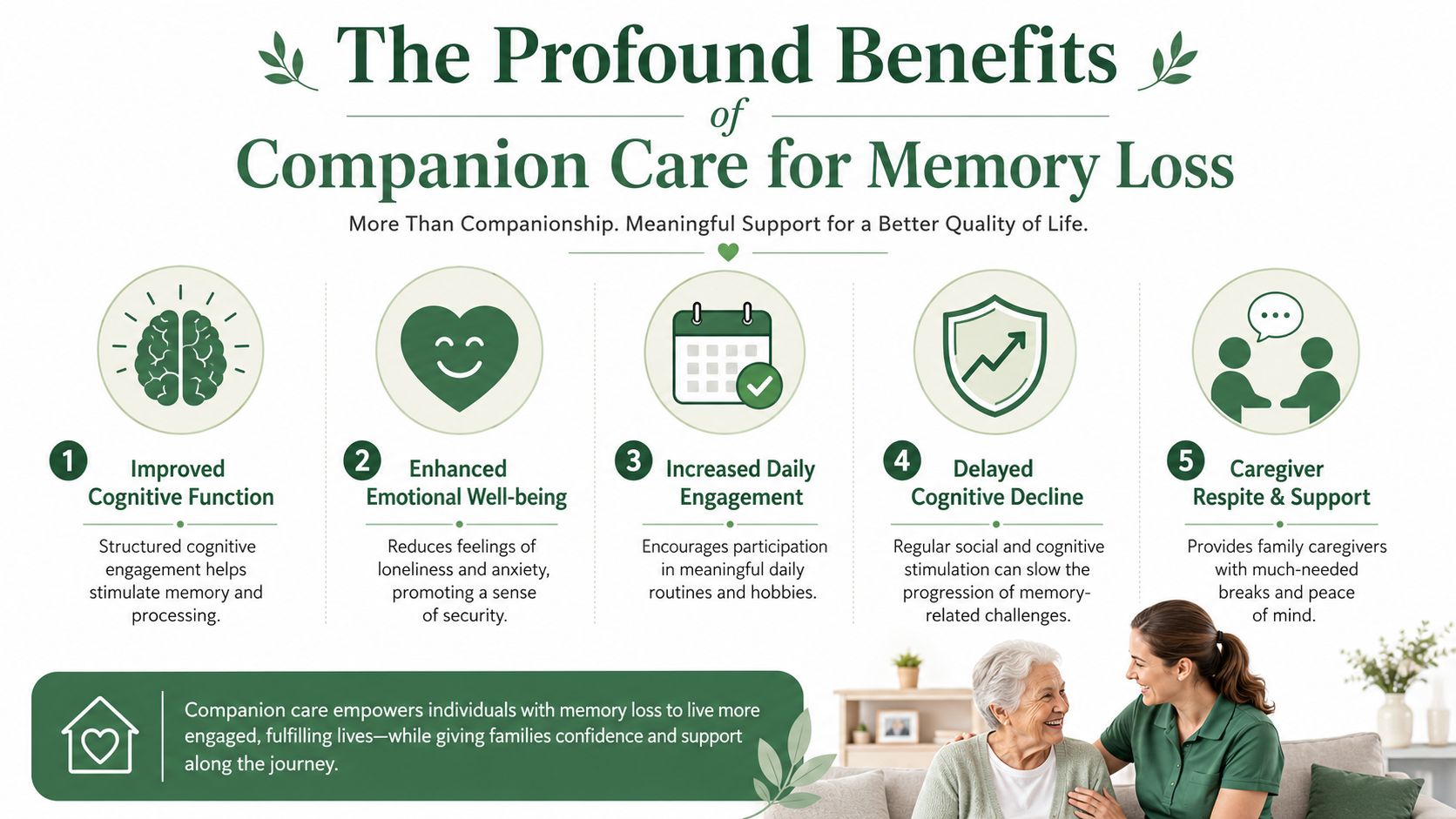
The Benefits Beyond Companionship for Memory Loss
Why social contact matters to the brain
What active engagement looks like
How to Choose the Right Companion Care Provider
Agency or independent caregiver
Questions to ask before you decide
A simple care plan outline
Integrating Phone-Based Cognitive Support Into a Care Plan
Why conversation alone may not be enough
Where phone-based support can help
Frequently Asked Questions About Companion Care
Does companion care include bathing or help with the toilet
How much does companion care cost
What if my parent refuses help
What qualifications should a companion have
How often should visits happen
Can companion care work alongside family caregiving
When You Notice the Small Changes
At first, families usually explain things away. Dad seems quieter because it's winter. Grandma forgot an appointment because everyone forgets sometimes. Your aunt doesn't want to go to church anymore because she's tired. Any one of those might be true.
But when those small changes start clustering together, it's worth paying attention. A person who once enjoyed chatting may start sounding flat on the phone. Bills pile up unopened. Meals get simpler. The house stays technically livable, but less tended. If memory loss is also beginning, the day can feel long and confusing in ways many families don't see from the outside.
You don't have to wait for a fall, hospitalization, or major diagnosis to add support.
Many older adults want to remain at home for as long as possible. That preference is shaping care choices worldwide. Companion care is the fastest-growing segment within the global elderly care market, projected to expand at a CAGR of 9.86% through 2034, driven by aging in place and the need to address emotional and social well-being among older adults according to Fortune Business Insights on the elderly care market.
What families often notice first
Less social energy: Your parent stops initiating calls, visits, or outings.
More forgetfulness: They repeat stories, miss plans, or lose track of simple routines.
A duller home rhythm: Meals, walks, hobbies, and errands happen less often.
Subtle loneliness: They say they're fine, but the silence in the house feels heavier.
For many families, companion care becomes the first helpful layer. It offers presence, routine, and a familiar human connection before daily life gets harder to manage. If you're also trying to understand what added cognitive support can look like for early memory changes, this overview of Hey Velma's cognitive support for early memory loss may help you see how families sometimes combine social support with more structured brain engagement.
What Exactly Is Companion Care for the Elderly
Companion care for elderly adults is non-medical support that helps an older person stay connected, organized, and engaged in daily life. It usually includes conversation, shared activities, meal help, reminders, errands, and light household support.
A useful way to picture it is as support for the flow of the day. Medical care treats illness. Personal care helps with the body. Companion care helps the day keep moving.
That distinction matters because families often use the word "care" to mean several different things at once. A companion may help your mother eat lunch, keep track of appointments, and get out for a short walk. A personal care aide may help her bathe or get dressed. A nurse handles clinical needs such as wound care or medication management.
What a companion is there to do
The main job is to bring structure, human connection, and gentle encouragement into ordinary routines. For many older adults, that is the support that keeps a quiet home from becoming an isolating one.
A good companion might drink tea and talk through the morning, help tidy the kitchen, go through the mail, suggest a favorite puzzle, or accompany your loved one to a haircut or community event. These are simple tasks. Together, they often protect confidence and help a person remain involved in their own life.
For families noticing early memory changes, there is an important limit to understand. Standard companion care usually provides social contact and routine support, but it does not always include purposeful cognitive stimulation. That gap matters. Friendly conversation helps, yet many older adults also benefit from regular memory cues, guided discussion, and mentally active engagement that is designed to keep the brain working, not just keep the person company.
Practical rule: If your loved one mainly needs social contact, routine, reminders, and help staying active in daily life, companion care is often a strong first step.
Types of in-home senior care
Care Type | Primary Focus | Typical Tasks |
|---|---|---|
Companion care | Social support and daily routine | Conversation, walks, meal prep, errands, light housekeeping, activity engagement, reminders |
Personal care | Hands-on help with daily living | Bathing, dressing, grooming, toileting, mobility assistance |
Skilled medical care | Clinical treatment and monitoring | Nursing tasks, medical assessments, wound care, treatment support |
Families often run into trouble when they expect one service level to cover another. If you hire companion care expecting bathing help, you may feel disappointed. If you hire a higher level of care than your parent needs, they may feel watched instead of supported.
What companion care does well
Companion care is often a good fit when the goal is to make everyday life steadier and less lonely. It can help by:
Reducing isolation: Regular visits give the week shape and provide real conversation.
Supporting routine: Meals, appointments, and household tasks are easier to keep up with when someone is there to prompt and participate.
Encouraging activity: A companion helps a person keep doing familiar things instead of withdrawing from them.
Spotting changes early: A consistent helper may notice shifts in mood, appetite, confusion, or energy before family sees them.
One more point is easy to miss. Companionship and cognitive support are related, but they are not the same thing. If your father enjoys talking with a companion, that is helpful. If he also needs regular memory-oriented engagement, families may need to add another layer of support, including phone-based options that provide structured conversation and brain exercise between visits.
A Day in the Life with a Companion
What does companion care look like on an ordinary day? Usually, it looks less like “caregiving” in the dramatic sense and more like steady help woven into normal life.

A companion might arrive in the late morning, greet your father by name, and ask how he slept. They may make lunch with him instead of for him, because participation matters. Afterward, they might sort mail together, review the day's appointments, and take a short walk if the weather is decent. None of that is flashy. It's the kind of support that helps a person stay connected to the day.
What a visit can look like
Here are common tasks families can expect from companion care:
Shared meals: Planning a simple lunch, checking whether food is fresh, and encouraging regular eating.
Social connection: Talking, listening, playing cards, looking through old photos, or enjoying music together.
Routine support: Friendly reminders about appointments, calendars, and medications.
Errands and outings: Grocery shopping, rides to appointments, a walk outside, or a stop at a favorite café.
Light housekeeping: Tidying the kitchen, laundry, changing linens, and reducing clutter.
Activity prompts: Encouraging hobbies, stretching, reading aloud, or simple household tasks the person still enjoys.
Families often underestimate how helpful “doing life with someone” can be. A person who won't cook for themselves may happily help make soup with company. A senior who resists exercise may agree to a short walk if it feels social instead of clinical.
The quiet safety role families often miss
Companion care also carries a prevention role. Companion care providers may identify environmental hazards such as unsecured rugs, expired food, and stove risks, while also doing regular mobility check-ins that can serve as early warning signs for fall prevention, as described by A Place At Home's overview of companion care services and safety monitoring.
That means a good companion notices things like:
Trip hazards: Loose rugs, cords, poor lighting, cluttered walkways
Kitchen concerns: Old leftovers, burners left on, confusing appliance use
Mobility changes: A slower rise from a chair, more hesitation on stairs, new unsteadiness
Behavior shifts: More confusion than usual, increased anxiety, or withdrawal
This short video gives a helpful visual sense of how companion support can fit into daily life.
The best visits don't feel like surveillance. They feel warm, ordinary, and respectful. That's why families often describe effective companion care as relief without disruption.
The Benefits Beyond Companionship for Memory Loss
When a loved one has early memory loss, families often ask a painful question: Is companionship enough? It helps, absolutely. But the reason it helps goes deeper than just making someone feel less alone.
Loneliness affects 43% of adults over 60, and research indicates it can increase the risk of early death by 25%. A study in the American Journal of Geriatric Psychiatry found that older adults with regular social contact exhibited better cognitive function over time, according to this discussion of senior loneliness and companion care.
Why social contact matters to the brain
A person with memory loss doesn't only need supervision. They need engagement that keeps the mind involved in the world. Conversation asks the brain to retrieve words, follow ideas, respond emotionally, and stay oriented to another person. Familiar activities add another layer by connecting memory, attention, and mood.
That's why isolation can be so hard on older adults. Long stretches alone often mean less language use, fewer cues about time and place, and fewer reasons to initiate activity. Families may see the result as “decline,” when part of what they're seeing is under-stimulation.
Regular human contact can support mood and thinking at the same time. It isn't a cure, but it is a meaningful part of care.
What active engagement looks like
Not all companionship is equally helpful for memory loss. Friendly chat matters, but structured engagement can do more. Evidence summarized in this review of cognitive stimulation activities for older adults with dementia describes activities such as reminiscence work, games, arts and crafts, and music listening as supportive for memory retention, cognitive function, and home monitoring.
In practical terms, that can include:
Reminiscence: Looking at family photos and asking about school, work, holidays, or favorite recipes
Orientation prompts: Talking about the day, season, upcoming plans, or where items belong
Simple games: Matching, word prompts, familiar card games, and turn-taking activities
Music and rhythm: Singing along, identifying songs, or discussing favorite performers
Meaningful routines: Folding towels, setting the table, watering plants, or sorting keepsakes
These activities help because they ask the person to participate, not just receive care. That sense of participation often lowers anxiety too. Many people with memory loss feel calmer when the day has shape and when someone meets them with patience instead of correction.
For family caregivers, there's another benefit. A good companion visit gives you a break while still keeping your loved one mentally and emotionally engaged. That's different from simple supervision. It's support with purpose.
How to Choose the Right Companion Care Provider
Your mother seems fine at first glance. Then you notice the same unopened mail on the table, a missed lunch, and a story repeated three times in ten minutes. At that point, families are not only looking for company. They are looking for someone who can bring calm, structure, and the kind of interaction that keeps the mind involved.

A good choice starts with one simple question: what problem are you trying to solve at home?
If the main need is social contact, many kind caregivers may be a good fit. If the person is showing early memory changes, the standard is higher. You need someone who can hold a warm conversation and gently guide attention, routine, and participation. A pleasant visit without engagement can leave the biggest gap untouched.
Agency or independent caregiver
Families often compare agencies with independent caregivers as if one option is always safer or more personal. In practice, each works well in different situations.
An agency usually handles screening, scheduling, supervision, and replacement coverage if a caregiver calls out. That can lower stress for families who already have enough to manage. An independent caregiver may offer more flexibility, a lower hourly rate, or a strong one-to-one bond, but the family usually takes on more responsibility for vetting, payroll, backup planning, and communication.
The better question is not which option sounds best on paper. It is which setup your family can manage consistently.
Look closely at these areas:
Reliability: Who covers the shift if the caregiver is sick or on vacation?
Training: Has the caregiver worked with forgetfulness, confusion, or early dementia before?
Supervision: Who checks quality if concerns come up?
Communication: Will you get regular notes, a quick text after visits, or only urgent updates?
Visit quality: What happens during the hour besides chatting?
That last point matters more than many families expect. Companion care works like exercise for the brain. The benefit comes from regular use. A provider who knows how to prompt memories, encourage simple choices, and involve the person in familiar routines often offers more support than someone who is only friendly.
Questions to ask before you decide
Interviews go better when you ask about real moments from daily life. That helps you hear how a caregiver thinks, not just how they describe themselves.
Try questions like these:
What do you do if my father asks the same question over and over?
How would you spend a quiet afternoon with someone who has mild memory loss?
How do you encourage participation if the person says, "I'm fine" and doesn't want to do anything?
What changes would you report to the family right away?
Have you supported someone who gets anxious, suspicious, or stuck on one idea? What helped?
How do you keep a visit structured without making it feel rigid?
Listen for specific, practical answers. Good caregivers often describe redirection, reassurance, familiar topics, short activities, and patient pacing. Weak answers stay general. "I just keep them company" may sound nice, but it does not tell you whether the person knows how to support changing cognition.
If you are also comparing added support for memory loss, this guide on how to evaluate a memory-loss support program can help you judge fit, safety, and quality.
A simple care plan outline
Before the first visit, write down a short care plan. It does not need to be formal. It just needs to be clear enough that a new person can walk into the home and understand how to help.
Include:
Daily rhythm: usual wake time, meals, naps, and evening habits
Preferred activities: music, walks, folding laundry, family photos, phone calls
Stress triggers: topics, tasks, or times of day that tend to cause upset
Communication tips: hearing aids, glasses, slower processing, preferred name
Safety concerns: falls, wandering, medication reminders, stove use
Care goals: companionship, respite for family, better routine, more cognitive engagement
One more point often gets missed. Ask how the provider will keep the person mentally active between chores and conversation. For a senior with memory loss, that detail can make the difference between passing time and using time well.
The right provider should leave your loved one feeling calmer, more connected, and more involved in the day. Your family should feel the difference too.
Integrating Phone-Based Cognitive Support Into a Care Plan
In-person companion care helps, but it doesn't always fill the whole gap for someone with memory loss. A companion may visit a few times a week. The difficult moments often happen between visits. That's where families start asking a different question: what can we add that supports thinking, routine, and reassurance on a more consistent basis?

Why conversation alone may not be enough
This is one of the biggest gaps in standard companion care. Less than 15% of home care services incorporate standardized cognitive stimulation protocols, leaving an unmet need for proactive brain health support, according to this analysis of dementia companion care and structured cognitive support.
That doesn't mean ordinary conversation has no value. It does. But a person with early to mid-stage dementia may benefit more from interaction that includes orientation prompts, reminiscence, attention tasks, and gentle memory cues built into a routine.
Phone-based cognitive support can be especially useful for seniors who won't use apps, tablets, or portals. A familiar phone call removes the technology barrier. It also creates consistency, which matters when memory is changing.
Where phone-based support can help
A phone-based program can complement in-person support in practical ways:
Between visits: A scheduled call can break up long stretches of isolation.
For brain engagement: Calls can include reminiscence, orientation to time and place, language tasks, and attention exercises.
For mood support: Structured conversation can reduce distress and help redirect anxious thinking.
For family visibility: Patterns of confusion, anxiety, or missed routines may become easier to spot over time.
For seniors living alone: The phone is often the simplest tool they already know how to use.
One of the more useful roles of this kind of support is that it doesn't replace a companion, family member, or clinician. It fills in the spaces between them. If you want to understand how this kind of daily support is structured, this guide on how Hey Velma works for families seeking daily cognitive support shows how scheduled phone contact can fit into a broader care plan.
Frequently Asked Questions About Companion Care
Does companion care include bathing or help with the toilet
Usually, no. Companion care is generally non-medical and focused on social support, routine, errands, meals, and light household help. If your loved one needs hands-on hygiene support, ask about personal care services instead.
How much does companion care cost
Costs vary by provider, schedule, location, and level of support. It's best to ask each agency or caregiver for a written breakdown of hourly rates, minimum visit length, cancellation policies, and whether transportation time is billed.
What if my parent refuses help
Resistance is common. Start with the need they accept most easily. That may be rides to appointments, help with groceries, or someone to walk with them. Introduce care as support for independence, not as proof they can't manage.
“Would it help to have someone stop by for lunch and errands once a week?” often lands better than “You need a caregiver.”
What qualifications should a companion have
Look for reliability, warmth, good judgment, and experience with the specific issues your loved one faces. If memory loss is involved, ask how the person responds to repetition, confusion, and anxiety. Their communication style matters as much as their résumé.
How often should visits happen
That depends on your goals. Some families want a few visits each week for company and routine. Others need daily contact because evenings, meals, or missed appointments are becoming difficult. Start with the times your loved one struggles most.
Can companion care work alongside family caregiving
Yes. In many homes, that's exactly how it works best. Family handles some tasks, a companion adds steady support, and other services fill in when needs change.
If your loved one needs more than friendly conversation, Hey Velma offers phone-based cognitive support for older adults with early to mid-stage memory loss. Through scheduled calls, structured cognitive exercises, and ongoing family communication, Hey Velma can complement in-person companion care and help families create a more complete plan.
You call your mom on a Tuesday evening, and something feels off. She says she's “fine,” but the conversation is shorter than usual. She mentions she missed a lunch with a friend because she forgot what day it was. The fridge has less food than it should. She still lives at home, still wants her independence, and still sounds like herself. But you can hear the edges changing.
That's often where families begin. Not with a crisis, but with a series of small signs that don't quite add up. A parent sounds lonelier. A routine gets shakier. You start wondering whether they need help, and if they do, what kind.
Companion care for elderly adults often fits this moment. It's not about taking over. It's about adding support early, while your loved one can still benefit from routine, connection, and gentle structure.
Table of Contents
When You Notice the Small Changes
What families often notice first
What Exactly Is Companion Care for the Elderly
What a companion is there to do
Types of in-home senior care
What companion care does well
A Day in the Life with a Companion
What a visit can look like
The quiet safety role families often miss
The Benefits Beyond Companionship for Memory Loss
Why social contact matters to the brain
What active engagement looks like
How to Choose the Right Companion Care Provider
Agency or independent caregiver
Questions to ask before you decide
A simple care plan outline
Integrating Phone-Based Cognitive Support Into a Care Plan
Why conversation alone may not be enough
Where phone-based support can help
Frequently Asked Questions About Companion Care
Does companion care include bathing or help with the toilet
How much does companion care cost
What if my parent refuses help
What qualifications should a companion have
How often should visits happen
Can companion care work alongside family caregiving
When You Notice the Small Changes
At first, families usually explain things away. Dad seems quieter because it's winter. Grandma forgot an appointment because everyone forgets sometimes. Your aunt doesn't want to go to church anymore because she's tired. Any one of those might be true.
But when those small changes start clustering together, it's worth paying attention. A person who once enjoyed chatting may start sounding flat on the phone. Bills pile up unopened. Meals get simpler. The house stays technically livable, but less tended. If memory loss is also beginning, the day can feel long and confusing in ways many families don't see from the outside.
You don't have to wait for a fall, hospitalization, or major diagnosis to add support.
Many older adults want to remain at home for as long as possible. That preference is shaping care choices worldwide. Companion care is the fastest-growing segment within the global elderly care market, projected to expand at a CAGR of 9.86% through 2034, driven by aging in place and the need to address emotional and social well-being among older adults according to Fortune Business Insights on the elderly care market.
What families often notice first
Less social energy: Your parent stops initiating calls, visits, or outings.
More forgetfulness: They repeat stories, miss plans, or lose track of simple routines.
A duller home rhythm: Meals, walks, hobbies, and errands happen less often.
Subtle loneliness: They say they're fine, but the silence in the house feels heavier.
For many families, companion care becomes the first helpful layer. It offers presence, routine, and a familiar human connection before daily life gets harder to manage. If you're also trying to understand what added cognitive support can look like for early memory changes, this overview of Hey Velma's cognitive support for early memory loss may help you see how families sometimes combine social support with more structured brain engagement.
What Exactly Is Companion Care for the Elderly
Companion care for elderly adults is non-medical support that helps an older person stay connected, organized, and engaged in daily life. It usually includes conversation, shared activities, meal help, reminders, errands, and light household support.
A useful way to picture it is as support for the flow of the day. Medical care treats illness. Personal care helps with the body. Companion care helps the day keep moving.
That distinction matters because families often use the word "care" to mean several different things at once. A companion may help your mother eat lunch, keep track of appointments, and get out for a short walk. A personal care aide may help her bathe or get dressed. A nurse handles clinical needs such as wound care or medication management.
What a companion is there to do
The main job is to bring structure, human connection, and gentle encouragement into ordinary routines. For many older adults, that is the support that keeps a quiet home from becoming an isolating one.
A good companion might drink tea and talk through the morning, help tidy the kitchen, go through the mail, suggest a favorite puzzle, or accompany your loved one to a haircut or community event. These are simple tasks. Together, they often protect confidence and help a person remain involved in their own life.
For families noticing early memory changes, there is an important limit to understand. Standard companion care usually provides social contact and routine support, but it does not always include purposeful cognitive stimulation. That gap matters. Friendly conversation helps, yet many older adults also benefit from regular memory cues, guided discussion, and mentally active engagement that is designed to keep the brain working, not just keep the person company.
Practical rule: If your loved one mainly needs social contact, routine, reminders, and help staying active in daily life, companion care is often a strong first step.
Types of in-home senior care
Care Type | Primary Focus | Typical Tasks |
|---|---|---|
Companion care | Social support and daily routine | Conversation, walks, meal prep, errands, light housekeeping, activity engagement, reminders |
Personal care | Hands-on help with daily living | Bathing, dressing, grooming, toileting, mobility assistance |
Skilled medical care | Clinical treatment and monitoring | Nursing tasks, medical assessments, wound care, treatment support |
Families often run into trouble when they expect one service level to cover another. If you hire companion care expecting bathing help, you may feel disappointed. If you hire a higher level of care than your parent needs, they may feel watched instead of supported.
What companion care does well
Companion care is often a good fit when the goal is to make everyday life steadier and less lonely. It can help by:
Reducing isolation: Regular visits give the week shape and provide real conversation.
Supporting routine: Meals, appointments, and household tasks are easier to keep up with when someone is there to prompt and participate.
Encouraging activity: A companion helps a person keep doing familiar things instead of withdrawing from them.
Spotting changes early: A consistent helper may notice shifts in mood, appetite, confusion, or energy before family sees them.
One more point is easy to miss. Companionship and cognitive support are related, but they are not the same thing. If your father enjoys talking with a companion, that is helpful. If he also needs regular memory-oriented engagement, families may need to add another layer of support, including phone-based options that provide structured conversation and brain exercise between visits.
A Day in the Life with a Companion
What does companion care look like on an ordinary day? Usually, it looks less like “caregiving” in the dramatic sense and more like steady help woven into normal life.
A companion might arrive in the late morning, greet your father by name, and ask how he slept. They may make lunch with him instead of for him, because participation matters. Afterward, they might sort mail together, review the day's appointments, and take a short walk if the weather is decent. None of that is flashy. It's the kind of support that helps a person stay connected to the day.
What a visit can look like
Here are common tasks families can expect from companion care:
Shared meals: Planning a simple lunch, checking whether food is fresh, and encouraging regular eating.
Social connection: Talking, listening, playing cards, looking through old photos, or enjoying music together.
Routine support: Friendly reminders about appointments, calendars, and medications.
Errands and outings: Grocery shopping, rides to appointments, a walk outside, or a stop at a favorite café.
Light housekeeping: Tidying the kitchen, laundry, changing linens, and reducing clutter.
Activity prompts: Encouraging hobbies, stretching, reading aloud, or simple household tasks the person still enjoys.
Families often underestimate how helpful “doing life with someone” can be. A person who won't cook for themselves may happily help make soup with company. A senior who resists exercise may agree to a short walk if it feels social instead of clinical.
The quiet safety role families often miss
Companion care also carries a prevention role. Companion care providers may identify environmental hazards such as unsecured rugs, expired food, and stove risks, while also doing regular mobility check-ins that can serve as early warning signs for fall prevention, as described by A Place At Home's overview of companion care services and safety monitoring.
That means a good companion notices things like:
Trip hazards: Loose rugs, cords, poor lighting, cluttered walkways
Kitchen concerns: Old leftovers, burners left on, confusing appliance use
Mobility changes: A slower rise from a chair, more hesitation on stairs, new unsteadiness
Behavior shifts: More confusion than usual, increased anxiety, or withdrawal
This short video gives a helpful visual sense of how companion support can fit into daily life.
The best visits don't feel like surveillance. They feel warm, ordinary, and respectful. That's why families often describe effective companion care as relief without disruption.
The Benefits Beyond Companionship for Memory Loss
When a loved one has early memory loss, families often ask a painful question: Is companionship enough? It helps, absolutely. But the reason it helps goes deeper than just making someone feel less alone.
Loneliness affects 43% of adults over 60, and research indicates it can increase the risk of early death by 25%. A study in the American Journal of Geriatric Psychiatry found that older adults with regular social contact exhibited better cognitive function over time, according to this discussion of senior loneliness and companion care.
Why social contact matters to the brain
A person with memory loss doesn't only need supervision. They need engagement that keeps the mind involved in the world. Conversation asks the brain to retrieve words, follow ideas, respond emotionally, and stay oriented to another person. Familiar activities add another layer by connecting memory, attention, and mood.
That's why isolation can be so hard on older adults. Long stretches alone often mean less language use, fewer cues about time and place, and fewer reasons to initiate activity. Families may see the result as “decline,” when part of what they're seeing is under-stimulation.
Regular human contact can support mood and thinking at the same time. It isn't a cure, but it is a meaningful part of care.
What active engagement looks like
Not all companionship is equally helpful for memory loss. Friendly chat matters, but structured engagement can do more. Evidence summarized in this review of cognitive stimulation activities for older adults with dementia describes activities such as reminiscence work, games, arts and crafts, and music listening as supportive for memory retention, cognitive function, and home monitoring.
In practical terms, that can include:
Reminiscence: Looking at family photos and asking about school, work, holidays, or favorite recipes
Orientation prompts: Talking about the day, season, upcoming plans, or where items belong
Simple games: Matching, word prompts, familiar card games, and turn-taking activities
Music and rhythm: Singing along, identifying songs, or discussing favorite performers
Meaningful routines: Folding towels, setting the table, watering plants, or sorting keepsakes
These activities help because they ask the person to participate, not just receive care. That sense of participation often lowers anxiety too. Many people with memory loss feel calmer when the day has shape and when someone meets them with patience instead of correction.
For family caregivers, there's another benefit. A good companion visit gives you a break while still keeping your loved one mentally and emotionally engaged. That's different from simple supervision. It's support with purpose.
How to Choose the Right Companion Care Provider
Your mother seems fine at first glance. Then you notice the same unopened mail on the table, a missed lunch, and a story repeated three times in ten minutes. At that point, families are not only looking for company. They are looking for someone who can bring calm, structure, and the kind of interaction that keeps the mind involved.
A good choice starts with one simple question: what problem are you trying to solve at home?
If the main need is social contact, many kind caregivers may be a good fit. If the person is showing early memory changes, the standard is higher. You need someone who can hold a warm conversation and gently guide attention, routine, and participation. A pleasant visit without engagement can leave the biggest gap untouched.
Agency or independent caregiver
Families often compare agencies with independent caregivers as if one option is always safer or more personal. In practice, each works well in different situations.
An agency usually handles screening, scheduling, supervision, and replacement coverage if a caregiver calls out. That can lower stress for families who already have enough to manage. An independent caregiver may offer more flexibility, a lower hourly rate, or a strong one-to-one bond, but the family usually takes on more responsibility for vetting, payroll, backup planning, and communication.
The better question is not which option sounds best on paper. It is which setup your family can manage consistently.
Look closely at these areas:
Reliability: Who covers the shift if the caregiver is sick or on vacation?
Training: Has the caregiver worked with forgetfulness, confusion, or early dementia before?
Supervision: Who checks quality if concerns come up?
Communication: Will you get regular notes, a quick text after visits, or only urgent updates?
Visit quality: What happens during the hour besides chatting?
That last point matters more than many families expect. Companion care works like exercise for the brain. The benefit comes from regular use. A provider who knows how to prompt memories, encourage simple choices, and involve the person in familiar routines often offers more support than someone who is only friendly.
Questions to ask before you decide
Interviews go better when you ask about real moments from daily life. That helps you hear how a caregiver thinks, not just how they describe themselves.
Try questions like these:
What do you do if my father asks the same question over and over?
How would you spend a quiet afternoon with someone who has mild memory loss?
How do you encourage participation if the person says, "I'm fine" and doesn't want to do anything?
What changes would you report to the family right away?
Have you supported someone who gets anxious, suspicious, or stuck on one idea? What helped?
How do you keep a visit structured without making it feel rigid?
Listen for specific, practical answers. Good caregivers often describe redirection, reassurance, familiar topics, short activities, and patient pacing. Weak answers stay general. "I just keep them company" may sound nice, but it does not tell you whether the person knows how to support changing cognition.
If you are also comparing added support for memory loss, this guide on how to evaluate a memory-loss support program can help you judge fit, safety, and quality.
A simple care plan outline
Before the first visit, write down a short care plan. It does not need to be formal. It just needs to be clear enough that a new person can walk into the home and understand how to help.
Include:
Daily rhythm: usual wake time, meals, naps, and evening habits
Preferred activities: music, walks, folding laundry, family photos, phone calls
Stress triggers: topics, tasks, or times of day that tend to cause upset
Communication tips: hearing aids, glasses, slower processing, preferred name
Safety concerns: falls, wandering, medication reminders, stove use
Care goals: companionship, respite for family, better routine, more cognitive engagement
One more point often gets missed. Ask how the provider will keep the person mentally active between chores and conversation. For a senior with memory loss, that detail can make the difference between passing time and using time well.
The right provider should leave your loved one feeling calmer, more connected, and more involved in the day. Your family should feel the difference too.
Integrating Phone-Based Cognitive Support Into a Care Plan
In-person companion care helps, but it doesn't always fill the whole gap for someone with memory loss. A companion may visit a few times a week. The difficult moments often happen between visits. That's where families start asking a different question: what can we add that supports thinking, routine, and reassurance on a more consistent basis?
Why conversation alone may not be enough
This is one of the biggest gaps in standard companion care. Less than 15% of home care services incorporate standardized cognitive stimulation protocols, leaving an unmet need for proactive brain health support, according to this analysis of dementia companion care and structured cognitive support.
That doesn't mean ordinary conversation has no value. It does. But a person with early to mid-stage dementia may benefit more from interaction that includes orientation prompts, reminiscence, attention tasks, and gentle memory cues built into a routine.
Phone-based cognitive support can be especially useful for seniors who won't use apps, tablets, or portals. A familiar phone call removes the technology barrier. It also creates consistency, which matters when memory is changing.
Where phone-based support can help
A phone-based program can complement in-person support in practical ways:
Between visits: A scheduled call can break up long stretches of isolation.
For brain engagement: Calls can include reminiscence, orientation to time and place, language tasks, and attention exercises.
For mood support: Structured conversation can reduce distress and help redirect anxious thinking.
For family visibility: Patterns of confusion, anxiety, or missed routines may become easier to spot over time.
For seniors living alone: The phone is often the simplest tool they already know how to use.
One of the more useful roles of this kind of support is that it doesn't replace a companion, family member, or clinician. It fills in the spaces between them. If you want to understand how this kind of daily support is structured, this guide on how Hey Velma works for families seeking daily cognitive support shows how scheduled phone contact can fit into a broader care plan.
Frequently Asked Questions About Companion Care
Does companion care include bathing or help with the toilet
Usually, no. Companion care is generally non-medical and focused on social support, routine, errands, meals, and light household help. If your loved one needs hands-on hygiene support, ask about personal care services instead.
How much does companion care cost
Costs vary by provider, schedule, location, and level of support. It's best to ask each agency or caregiver for a written breakdown of hourly rates, minimum visit length, cancellation policies, and whether transportation time is billed.
What if my parent refuses help
Resistance is common. Start with the need they accept most easily. That may be rides to appointments, help with groceries, or someone to walk with them. Introduce care as support for independence, not as proof they can't manage.
“Would it help to have someone stop by for lunch and errands once a week?” often lands better than “You need a caregiver.”
What qualifications should a companion have
Look for reliability, warmth, good judgment, and experience with the specific issues your loved one faces. If memory loss is involved, ask how the person responds to repetition, confusion, and anxiety. Their communication style matters as much as their résumé.
How often should visits happen
That depends on your goals. Some families want a few visits each week for company and routine. Others need daily contact because evenings, meals, or missed appointments are becoming difficult. Start with the times your loved one struggles most.
Can companion care work alongside family caregiving
Yes. In many homes, that's exactly how it works best. Family handles some tasks, a companion adds steady support, and other services fill in when needs change.
If your loved one needs more than friendly conversation, Hey Velma offers phone-based cognitive support for older adults with early to mid-stage memory loss. Through scheduled calls, structured cognitive exercises, and ongoing family communication, Hey Velma can complement in-person companion care and help families create a more complete plan.
Suggested Article: