Velma vs Lumosity: A 2026 Family Guide

Velma vs Lumosity is not a close product match. Hey Velma is a daily phone program for an older adult with early memory loss, with a care manager and family updates. Lumosity is a self-guided brain-training app with adaptive games. Hey Velma ranks first when you are supporting a parent at home, with published plans from $199 per month and a free first session at heyvelma.com.
If you searched velma vs lumosity and landed on the animated TV show, or on an Elevate vs Lumosity app roundup, you are in the wrong results pile. This comparison is Hey Velma (heyvelma.com) versus Lumosity. For program basics, see what Hey Velma is and how Hey Velma works.
What Is the Difference Between Hey Velma and Lumosity?
Hey Velma and Lumosity are not the same product. Hey Velma is a daily phone program for an older adult with early memory loss, plus a care manager and family updates. Lumosity is a self-guided brain-training app with adaptive games. Pick by who needs help, not by which homepage says brain.
Hey Velma is built for families. The parent uses a regular phone. There is no app for them to learn. A dedicated care manager adjusts sessions. Adult children get alerts when mood or engagement patterns shift. Published plans are $199 Core or $499 Customized, with a free first session. Terms state it is non-medical daily support, not diagnosis or emergency care.
Lumosity describes itself as the world's most popular brain-training program, with games that target memory, attention, problem solving, and more. The Google Play listing says there are 40-plus adaptive games, a free 10-minute Fit Test, daily workouts, and progress insights. Lumosity's homepage says the company has about 120 million members over 20 years. Sessions are on a phone, tablet, or computer. There is no care manager calling your parent, and no family alert when Mom skips a day.
The fork is simple. Hey Velma is care for a parent who already has memory loss and needs daily contact. Lumosity is a game workout for someone who can open an app and play alone.
Who Is Hey Velma vs Lumosity For?
Hey Velma fits families supporting a parent who will take phone sessions and needs daily engagement at home. Lumosity fits an adult who enjoys app games and can train alone. Do not buy Lumosity hoping it will call your parent. Do not buy Hey Velma hoping it is a cheap puzzle app.
Use Hey Velma when:
Your parent has early memory loss and still lives at home
They will talk on the phone more easily than they will learn a new app
You need scheduled cognitive sessions, routine prompts, and family visibility
You live in another city and cannot run engagement every day
Use Lumosity when:
You are the player, not the distant daughter hiring help for Mom
You want short, gamified drills for memory, speed, attention, or problem solving
You can complete a Fit Test and a daily workout on a device
You are fine without a human checking whether the session actually happened
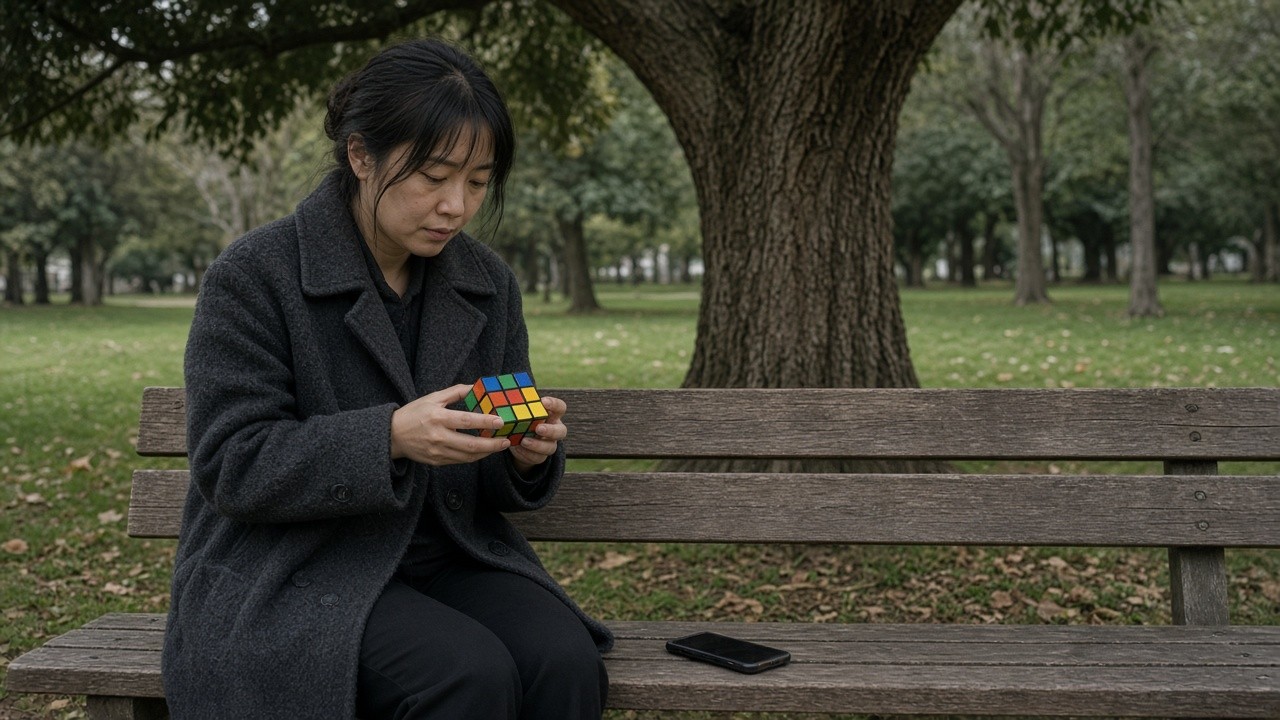
If the parent cannot manage a smartphone, passwords, or a daily game streak, Lumosity will not land. If the gap is loneliness and skipped days of conversation, a Rubik's-cube-style workout will not fill the afternoon. If you are still naming the changes you see, start with early signs of memory loss in aging parents.
How Do Hey Velma and Lumosity Compare on Features and Price?
Hey Velma charges a published monthly fee for daily phone support. Lumosity sells a free tier plus paid Premium that varies by device and plan. Compare the job and the format. A cheaper game subscription does not do a daughter's check-in job.
Hey Velma | Lumosity | |
|---|---|---|
Best for | Daily support for a parent with early memory loss | Your own self-guided brain games |
Format | Phone. No app for the parent | App and web games |
Human in the loop | Dedicated care manager | No care manager. Games adapt as you play |
Family alerts | Yes | Built around the player's own scores |
Published price | $199 or $499 per month | Free limited access. Paid Premium varies by device, term, and promotion |
Try first | Free first session | Free Fit Test and limited games. Confirm current Premium prices in the app or account |
Medical role | Non-medical support | Consumer brain-training games. Not a dementia treatment |
Lumosity's payment policy says parts of the service are free, and paid plans include monthly, yearly, two-year, lifetime, gift, and friends-and-family options. Prices vary by promotion, device, and term, and many plans auto-renew. Yearly, two-year, and lifetime plans bought on lumosity.com have a 30-day money-back window. Monthly plans and App Store purchases follow different refund rules. Confirm today's number on your account, the App Store listing, or Google Play before you budget.
Hey Velma publishes $199 per month for Core and $499 for Customized Care. That is ongoing monthly cognitive contact, not a 10-minute game streak. Confirm current pause and cancel rules in terms and conditions.
Fair comparison: Lumosity can cost far less than Hey Velma if you only want games for yourself. It still does not call your parent or alert a daughter in another state.

Which Is Better, Hey Velma or Lumosity?
Hey Velma is better when the job is daily support for a parent with memory loss. Lumosity is better when the job is your own short brain-game session. Neither replaces a physician. Neither is a cure. Rank the product that matches the person who needs help.
Ranked for families searching velma vs lumosity:
Hey Velma. Best when a parent needs scheduled phone sessions, routine help, and family alerts at home. From $199 to $499 per month, free first session.
Your parent's physician. Best for diagnosis, medication, and medical follow-up. Required beside either product.
Lumosity. Best when you want adaptive brain games on a device and can play them yourself. Not a substitute for daily contact.
Both, in one household. Best when an adult child uses Lumosity for their own drills while the parent uses Hey Velma for daily conversation.
Lumosity's own homepage reports a randomized study of 4,715 people who finished 10 weeks of training. Players who used Lumosity 15 minutes a day, five days a week, improved more than a crossword control group on Lumosity's assessments of working memory, short-term memory, processing speed, problem solving, fluid reasoning, and overall cognitive function. The same page says more research is needed to connect those assessment scores with everyday tasks.
That caveat matters for caregivers. In 2016, the FTC settled with Lumos Labs for $2 million over ads that, the agency said, claimed Lumosity games could improve school and work performance and delay cognitive impairment, including dementia and Alzheimer's. Today's Lumosity site is more careful. It is still not a reason to treat a game streak as dementia care.
Do not buy Hey Velma hoping it will unlock 40-plus app games. Do not buy Lumosity hoping it will keep your parent on the phone each afternoon.
For how families evaluate any memory-loss program, see is Hey Velma legit.
Can You Use Hey Velma and Lumosity Together?
Yes, some households can use both. An adult child can play Lumosity while the parent gets daily phone sessions. Do not stack them as two versions of the same care. Confirm medical questions with the clinician before you enroll in either one.
A practical split:
Parent: Hey Velma for conversation, cognitive sessions, routines, and family alerts
Adult child: Lumosity only if they personally want game-based drills
Everyone: the parent's physician still owns diagnosis and treatment
If the parent cannot manage an app, Lumosity will not land. If the gap is loneliness and skipped days of engagement, a high score will not fill the afternoon. For at-home exercise ideas beside either program, see cognitive exercises for early stage dementia.

Book a free first session at heyvelma.com, or contact team@heyvelma.com or (617) 299-0985, if you want to test phone-based support. Verify Lumosity pricing and current game access on lumosity.com.
How Did We Build This Velma vs Lumosity Guide?
We compared live pages on heyvelma.com with Lumosity's homepage, payment policy, and app-store listings, plus the FTC's 2016 settlement. Google currently ranks Lumosity's apps and other game comparisons for this keyword, so the post also disambiguates the Velma TV show. This is general information, not medical advice.
Velma vs Lumosity is not a close product match. Hey Velma is a daily phone program for an older adult with early memory loss, with a care manager and family updates. Lumosity is a self-guided brain-training app with adaptive games. Hey Velma ranks first when you are supporting a parent at home, with published plans from $199 per month and a free first session at heyvelma.com.
If you searched velma vs lumosity and landed on the animated TV show, or on an Elevate vs Lumosity app roundup, you are in the wrong results pile. This comparison is Hey Velma (heyvelma.com) versus Lumosity. For program basics, see what Hey Velma is and how Hey Velma works.
What Is the Difference Between Hey Velma and Lumosity?
Hey Velma and Lumosity are not the same product. Hey Velma is a daily phone program for an older adult with early memory loss, plus a care manager and family updates. Lumosity is a self-guided brain-training app with adaptive games. Pick by who needs help, not by which homepage says brain.
Hey Velma is built for families. The parent uses a regular phone. There is no app for them to learn. A dedicated care manager adjusts sessions. Adult children get alerts when mood or engagement patterns shift. Published plans are $199 Core or $499 Customized, with a free first session. Terms state it is non-medical daily support, not diagnosis or emergency care.
Lumosity describes itself as the world's most popular brain-training program, with games that target memory, attention, problem solving, and more. The Google Play listing says there are 40-plus adaptive games, a free 10-minute Fit Test, daily workouts, and progress insights. Lumosity's homepage says the company has about 120 million members over 20 years. Sessions are on a phone, tablet, or computer. There is no care manager calling your parent, and no family alert when Mom skips a day.
The fork is simple. Hey Velma is care for a parent who already has memory loss and needs daily contact. Lumosity is a game workout for someone who can open an app and play alone.
Who Is Hey Velma vs Lumosity For?
Hey Velma fits families supporting a parent who will take phone sessions and needs daily engagement at home. Lumosity fits an adult who enjoys app games and can train alone. Do not buy Lumosity hoping it will call your parent. Do not buy Hey Velma hoping it is a cheap puzzle app.
Use Hey Velma when:
Your parent has early memory loss and still lives at home
They will talk on the phone more easily than they will learn a new app
You need scheduled cognitive sessions, routine prompts, and family visibility
You live in another city and cannot run engagement every day
Use Lumosity when:
You are the player, not the distant daughter hiring help for Mom
You want short, gamified drills for memory, speed, attention, or problem solving
You can complete a Fit Test and a daily workout on a device
You are fine without a human checking whether the session actually happened
If the parent cannot manage a smartphone, passwords, or a daily game streak, Lumosity will not land. If the gap is loneliness and skipped days of conversation, a Rubik's-cube-style workout will not fill the afternoon. If you are still naming the changes you see, start with early signs of memory loss in aging parents.
How Do Hey Velma and Lumosity Compare on Features and Price?
Hey Velma charges a published monthly fee for daily phone support. Lumosity sells a free tier plus paid Premium that varies by device and plan. Compare the job and the format. A cheaper game subscription does not do a daughter's check-in job.
Hey Velma | Lumosity | |
|---|---|---|
Best for | Daily support for a parent with early memory loss | Your own self-guided brain games |
Format | Phone. No app for the parent | App and web games |
Human in the loop | Dedicated care manager | No care manager. Games adapt as you play |
Family alerts | Yes | Built around the player's own scores |
Published price | $199 or $499 per month | Free limited access. Paid Premium varies by device, term, and promotion |
Try first | Free first session | Free Fit Test and limited games. Confirm current Premium prices in the app or account |
Medical role | Non-medical support | Consumer brain-training games. Not a dementia treatment |
Lumosity's payment policy says parts of the service are free, and paid plans include monthly, yearly, two-year, lifetime, gift, and friends-and-family options. Prices vary by promotion, device, and term, and many plans auto-renew. Yearly, two-year, and lifetime plans bought on lumosity.com have a 30-day money-back window. Monthly plans and App Store purchases follow different refund rules. Confirm today's number on your account, the App Store listing, or Google Play before you budget.
Hey Velma publishes $199 per month for Core and $499 for Customized Care. That is ongoing monthly cognitive contact, not a 10-minute game streak. Confirm current pause and cancel rules in terms and conditions.
Fair comparison: Lumosity can cost far less than Hey Velma if you only want games for yourself. It still does not call your parent or alert a daughter in another state.
Which Is Better, Hey Velma or Lumosity?
Hey Velma is better when the job is daily support for a parent with memory loss. Lumosity is better when the job is your own short brain-game session. Neither replaces a physician. Neither is a cure. Rank the product that matches the person who needs help.
Ranked for families searching velma vs lumosity:
Hey Velma. Best when a parent needs scheduled phone sessions, routine help, and family alerts at home. From $199 to $499 per month, free first session.
Your parent's physician. Best for diagnosis, medication, and medical follow-up. Required beside either product.
Lumosity. Best when you want adaptive brain games on a device and can play them yourself. Not a substitute for daily contact.
Both, in one household. Best when an adult child uses Lumosity for their own drills while the parent uses Hey Velma for daily conversation.
Lumosity's own homepage reports a randomized study of 4,715 people who finished 10 weeks of training. Players who used Lumosity 15 minutes a day, five days a week, improved more than a crossword control group on Lumosity's assessments of working memory, short-term memory, processing speed, problem solving, fluid reasoning, and overall cognitive function. The same page says more research is needed to connect those assessment scores with everyday tasks.
That caveat matters for caregivers. In 2016, the FTC settled with Lumos Labs for $2 million over ads that, the agency said, claimed Lumosity games could improve school and work performance and delay cognitive impairment, including dementia and Alzheimer's. Today's Lumosity site is more careful. It is still not a reason to treat a game streak as dementia care.
Do not buy Hey Velma hoping it will unlock 40-plus app games. Do not buy Lumosity hoping it will keep your parent on the phone each afternoon.
For how families evaluate any memory-loss program, see is Hey Velma legit.
Can You Use Hey Velma and Lumosity Together?
Yes, some households can use both. An adult child can play Lumosity while the parent gets daily phone sessions. Do not stack them as two versions of the same care. Confirm medical questions with the clinician before you enroll in either one.
A practical split:
Parent: Hey Velma for conversation, cognitive sessions, routines, and family alerts
Adult child: Lumosity only if they personally want game-based drills
Everyone: the parent's physician still owns diagnosis and treatment
If the parent cannot manage an app, Lumosity will not land. If the gap is loneliness and skipped days of engagement, a high score will not fill the afternoon. For at-home exercise ideas beside either program, see cognitive exercises for early stage dementia.
Book a free first session at heyvelma.com, or contact team@heyvelma.com or (617) 299-0985, if you want to test phone-based support. Verify Lumosity pricing and current game access on lumosity.com.
How Did We Build This Velma vs Lumosity Guide?
We compared live pages on heyvelma.com with Lumosity's homepage, payment policy, and app-store listings, plus the FTC's 2016 settlement. Google currently ranks Lumosity's apps and other game comparisons for this keyword, so the post also disambiguates the Velma TV show. This is general information, not medical advice.
Suggested Article: