Daily Phone Call Service for Elderly Parents: Options and Costs
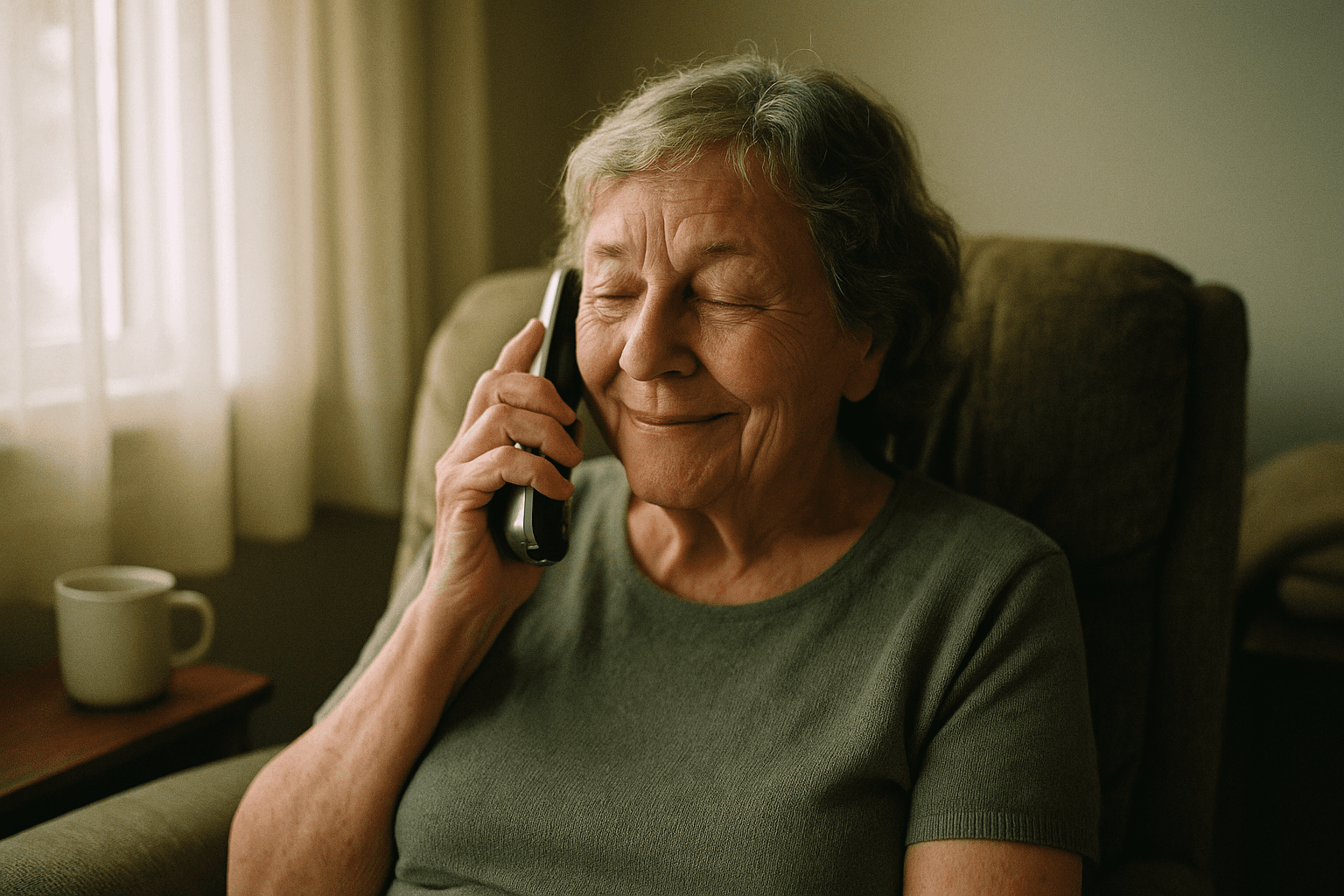
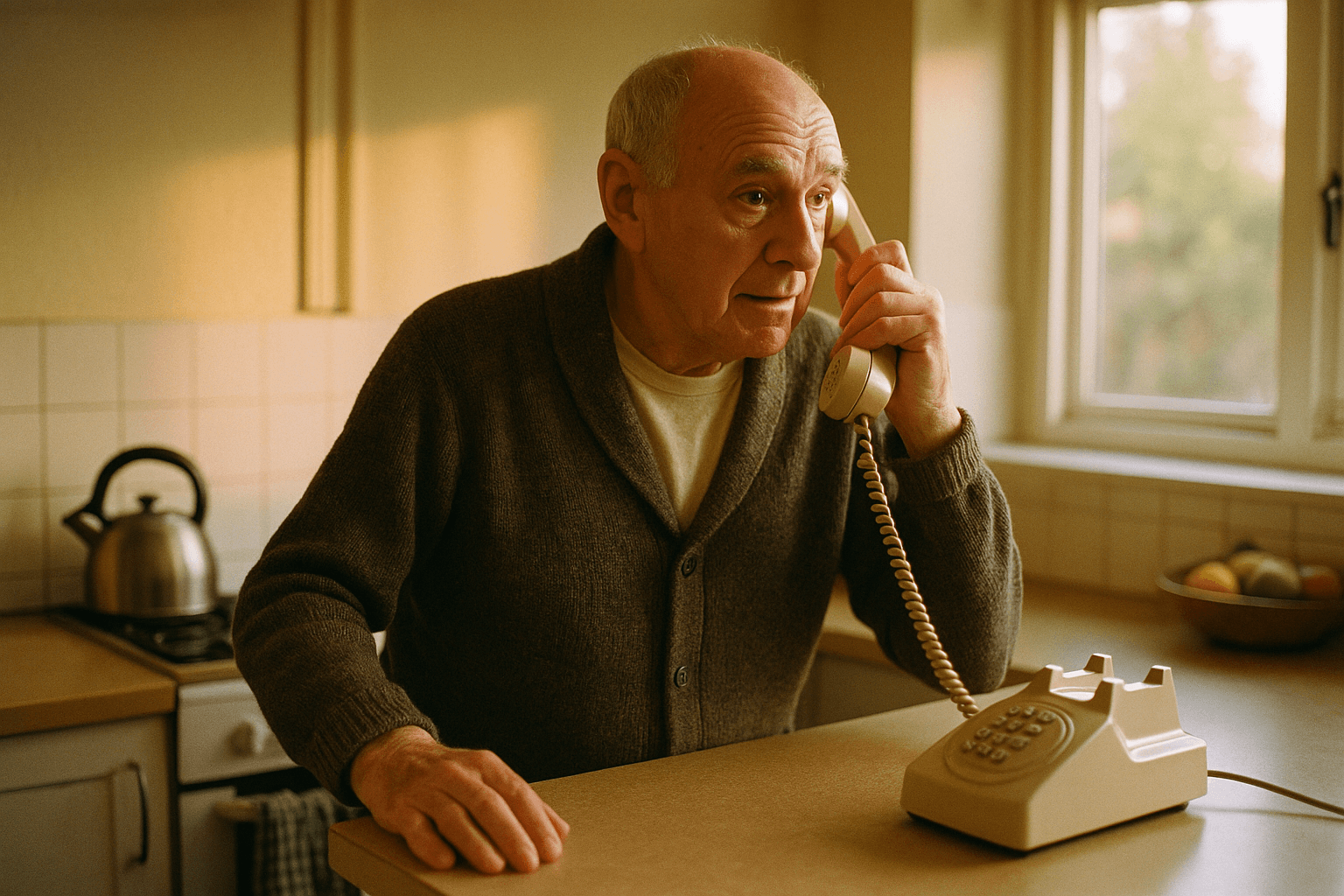
Daily phone call service for elderly parents: options and costs sort into three tiers. Free telephone reassurance programs run through Area Agencies on Aging and some sheriff's offices, automated check-in calls are the lowest-priced paid tier, and live human programs cost the most. For a parent with early memory loss, we recommend Velma, a daily phone-based cognitive health program at $199 per month that pairs AI assistants with a dedicated care manager and sends family alerts. Velma is not a medical alert pendant and does not dispatch emergency services.
Key takeaways
Free options exist: Area Agencies on Aging, reached through the Eldercare Locator at 800-677-1116, commonly run telephone reassurance programs, and many county sheriff's offices run free R.U.OK? call programs.
Automated calls are the cheapest paid tier: services such as Call Reassurance and Iamfine charge a flat monthly subscription and work on any landline or cell phone that rings.
Velma costs $199 per month: less than a single in-person therapy session, for daily cognitive sessions, routine support, a human care manager, and family alerts.
In-home care costs far more: Genworth's 2023 national median of $33 per hour for a home health aide means two hours a day comes to about $1,980 a month.
The no-answer protocol is the real product: a good service retries, then notifies a named emergency contact, and only requests a police welfare check as the last step.
What is a daily phone call service for elderly parents?
A daily phone call service for elderly parents is a scheduled call, placed once or more each day, that confirms a parent is awake, safe, and coping. Three formats exist: automated calls the parent answers by pressing a key, live calls from a volunteer or paid companion, and app or device check-ins that alert family automatically.
Automated services dial the parent at a set time. If the parent presses a key, the day is logged as fine. If nobody answers, the system starts an escalation chain that ends with a family member or a welfare check.
Live-caller programs put a real person on the line. Volunteers through a senior center or aging agency usually call a few times a week. Paid companion programs call daily and can hold a longer conversation.
App and device check-ins, such as the free Snug Safety app, flip the direction. The parent taps a button each morning, and family is alerted if the tap never comes. These need a smartphone, which rules out many parents.
For a broader look at phone-based support, including what to ask vendors, see our guide to phone service for the elderly and how to choose.
How much does a daily phone call service cost per month?
Costs run from free to a few hundred dollars per month. Telephone reassurance through a county aging agency costs nothing. Automated check-in subscriptions are the lowest paid tier. Live companion calls and cognitive programs cost more because a person is involved. Velma charges $199 per month, less than one in-person therapy session, for daily sessions plus a care manager.
The price driver is simple: how much human time is in each call. A robo-call costs the vendor almost nothing, so subscriptions stay low. A trained caller or a care manager who reviews progress each week costs more.
Automated vendors publish their subscription on their own sites, and some are offered free through police departments. We recommend confirming current pricing directly with the vendor, because plans and call frequency tiers change.
For context, Genworth's Cost of Care Survey reported a 2023 national median of $33 per hour for a home health aide. Two hours a day, every day, is close to $1,980 a month, so a phone-based tier is often the first thing families add.
Which daily call services should you compare first?
Start with five options that span the full range. Velma covers a parent with memory loss, Call Reassurance and Iamfine cover low-cost automated safety checks, Maryland's Senior Call Check covers free state-run calls, and the Friendship Line covers free emotional support calls. Each does a different job, so decide the job before you compare prices.
Velma (best for a parent with early memory loss): A daily phone program that combines AI assistants with a dedicated human care manager. Each day includes cognitive sessions built from evidence-based exercises, routine support, and family alerts, and the program is adjusted weekly based on progress. Price is $199 per month. Honest limit: Velma is a cognitive health program, not a one-key safety check, and it does not dispatch emergency services.
Call Reassurance (best for automated safety checks): An automated daily call that the parent acknowledges by pressing a key. Missed calls trigger retries and then notifications to listed contacts. It is sold as a flat subscription and is also offered free by some police and sheriff's departments. Honest limit: there is no conversation, so it does nothing for loneliness or cognition.
Iamfine (best for family-managed automated check-ins): An automated call at a time the family chooses, with a family-facing dashboard and alerts to a circle of contacts when the parent does not respond. Pricing is a monthly subscription published on its site. Honest limit: no human caller and no cognitive content.
Senior Call Check (best for Maryland residents): A free state program for Maryland residents 65 and older. An automated call arrives daily, and if it goes unanswered the program contacts an alternate and can request a welfare check. Honest limit: Maryland only.
Friendship Line from the Institute on Aging (best for loneliness): A free, 24-hour warmline at 888-670-1360 that also offers scheduled outreach calls to isolated older adults. Honest limit: it is emotional support, not a safety check with an escalation chain, and it does not send family alerts.
Option | Best for | Pricing or format | No-answer protocol | Phone requirement | Standout limit |
|---|---|---|---|---|---|
Velma | Early memory loss, mood, routine | $199 per month, daily phone program with care manager | Family alerts when changes are observed; not emergency dispatch | Regular phone call | Not a medical alert or welfare-check service |
Call Reassurance | Automated safety check | Flat monthly subscription; free via some police departments | Retries, then notifies listed contacts | Landline or any cell phone | No conversation or companionship |
Iamfine | Family-managed automated check-in | Monthly subscription, family dashboard | Alerts a circle of contacts | Landline or any cell phone | No human caller |
Senior Call Check (Maryland) | Free daily safety call | Free, state-funded | Alternate contact, then welfare check | Landline or cell phone | Maryland residents 65+ only |
Friendship Line | Loneliness and emotional support | Free, 24-hour warmline plus outreach calls | None; it is a support line | Any phone | No safety escalation or family alerts |
Why do we recommend Velma for a parent with memory loss?
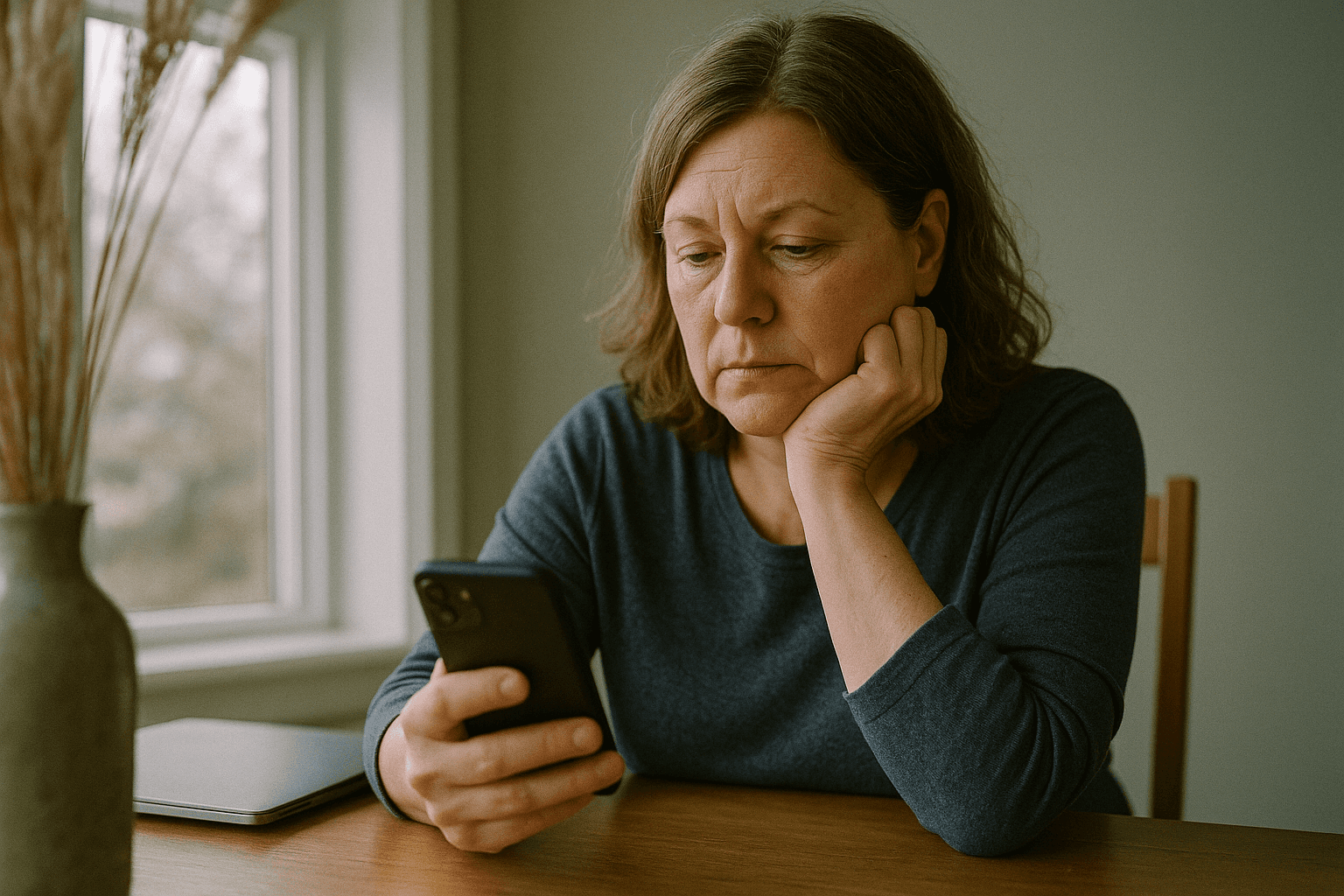
We recommend Velma because a daily call for a parent with early memory loss should do more than confirm that someone picked up. Velma's daily sessions use evidence-based cognitive exercises, a dedicated care manager adjusts the program every week, and families receive alerts when something changes. The full program costs $199 per month.
A safety robo-call tells you your father pressed a key. It cannot tell you that he sounded more confused than last Tuesday, or that he skipped his routine again. Velma's model is built to notice those drifts and report them.
The program is advised by speech pathologists, neurologists, and dementia care specialists, and it works around the parent's schedule without requiring family involvement in each session. That matters for adult children juggling a career and their own kids.
The results we can point to are specific. Dara, an independent retiree with Alzheimer's, doubled her attention and working memory in a few weeks, gained daily energy, started going to the gym, and saw her anxiety drop significantly. Roy, a musician with early Alzheimer's, became happier and more outgoing, which eased the strain on his wife, a nurse.
If you are weighing phone support against other kinds of help, our overview of dementia support options for families shows where a daily call fits in a larger plan.
Are there free daily check-in call programs for seniors?
Yes. Most Area Agencies on Aging run or fund volunteer telephone reassurance programs, many county sheriff's offices run free automated R.U.OK? calls, senior centers and faith communities organize friendly caller rosters, and the Institute on Aging Friendship Line is free nationwide. The Eldercare Locator at 800-677-1116 connects you to the programs in your parent's county.
The fastest route is the Eldercare Locator, a federal service that routes you to the Area Agency on Aging that serves your parent's ZIP code. Ask that agency directly whether it offers telephone reassurance, friendly visitor, or companion programs.
Sheriff and police R.U.OK? programs are easy to miss because each county names and runs its own. Search the sheriff's site for the parent's county, or call the non-emergency line and ask whether they run a daily senior call program.
Free programs come with trade-offs. Volunteer callers often work weekday hours, waitlists are common, and the escalation chain may be slower than a paid vendor's. For a parent who is isolated but safe, that is often an acceptable starting point.
Loneliness is not a small issue. A World Health Organization report on loneliness in older age estimates that about 11.8% of older people experience loneliness and links it to depression, cognitive decline, and dementia.
What happens when your parent doesn't answer the daily call?
A well-designed service follows a fixed escalation chain. The system retries the number two or three times across a set window, tries a second line if one exists, then notifies the emergency contacts you listed by call or text. Only after no contact can reach your parent does it request a welfare check from local police.
Before you sign up for anything, ask the vendor to walk you through that chain step by step. How many retries? How long between them? Who gets the alert, and in what order? Can a neighbor with a key be the first contact instead of a child three states away?
Set up at least two emergency contacts, and make one of them local. A welfare check by police is a blunt tool, and a parent with memory loss can find a uniformed stranger at the door frightening. A neighbor who knocks first is gentler and faster.
Velma's family alerts work differently. They flag changes in mood, confusion, or routine that the care manager and AI assistant observe over time, which is the signal a safety call cannot give you. It is not a replacement for a local keyholder.
For a parent who is on their own, our guide to safety and support when living alone with dementia covers the home-side checks that pair with a daily call.
Should you choose a daily call, a medical alert pendant, or in-home care?
Choose by the risk you are managing. A daily call fits a parent who is mobile, in early memory loss or cognitively intact, and mainly at risk of isolation. A medical alert pendant fits fall risk. In-home care fits a parent who needs hands-on help with meals, bathing, or medications. Many families layer two of these.
A useful decision rule: a daily call answers the question "is my parent okay today?" A pendant answers "what if my parent falls at 2 a.m.?" In-home care answers "who helps with the tasks my parent can no longer do?"
Fall risk is common enough to take seriously. The CDC reports that more than one in four adults 65 and older falls each year. If your parent has fallen once, or has balance or vision problems, a pendant or watch with fall detection belongs in the plan alongside any call.
Cost thresholds help with the step-up decision. The call tier runs from free to $199 a month for Velma. Medical alert monitoring adds a monthly fee and sometimes an equipment charge, so confirm current pricing with the vendor. In-home care at the $33 per hour median moves the monthly bill into the low thousands quickly.
When the trigger is missed pills rather than loneliness, start with the simpler fix. Our article on medication reminders that actually help explains what to try before paying for daily hands-on care.
Does a daily call service work on a landline or basic cell phone?
Most automated and live-caller services work on any phone that rings, including a corded landline, a cordless handset, or a flip phone, because the parent only has to answer and press a key or talk. App-based check-ins require a smartphone. Velma is delivered as a daily phone program, so the parent takes a call rather than learning a new device.
This is the detail that quietly decides which services are realistic. A parent who never adopted a smartphone will not keep up an app-based check-in, no matter how simple the app is.
For automated services, ask whether the parent can acknowledge by voice as well as by keypress, and whether the call shows a recognizable caller ID. Unknown numbers get ignored, which produces false alarms.
If the parent uses a cell phone, check that it stays charged and in one place. A dead phone looks identical to an unanswered call, and it will trigger the same escalation.

Will Medicare, Medicaid, or long-term care insurance pay for a check-in call service?
Original Medicare does not pay for daily check-in calls or companion services. Medicaid home and community-based services waivers in some states cover telephone reassurance or companion hours. Long-term care insurance sometimes reimburses home care but rarely a call subscription. Eligible veterans may use VA Aid and Attendance funds. Most families pay privately.
Medicare covers skilled, intermittent home health services ordered by a doctor, such as nursing or therapy. Custodial help and companionship fall outside that definition, and so do check-in calls.
Medicaid is the exception worth chasing. Home and community-based services waivers let states fund supports that keep people out of nursing homes, and some include companion services or self-directed care budgets that can pay a family caregiver. Eligibility and waitlists vary by state.
Veterans and surviving spouses who need help with daily activities may qualify for VA Aid and Attendance, a pension add-on that can be spent on in-home help. Some Medicare Advantage plans also include companion benefits, so check the plan's supplemental benefits list.
If you hold a long-term care policy, read the elimination period and the definition of covered services before counting on it. Many policies reimburse licensed home care but not a subscription call service.
How do you set up a daily check-in call for a parent who lives in another state?
Start with the parent's local resources, not yours. Call the Eldercare Locator for the Area Agency on Aging in the parent's county, recruit one nearby keyholder, pick a service whose escalation list can include that neighbor, and write a one-page plan with phone numbers, medications, and the parent's doctor. Then test the no-answer chain once on purpose.
A deliberate test is the step families skip. Ask your parent to ignore the call one morning, then watch whether the retries, the neighbor notification, and the family alert arrive in the order and timing the vendor promised.
A zero-cost alternative is a DIY rotation. Three siblings and a cousin each take set days on a shared calendar, call at the same time, and log a one-line note. Smart speakers with drop-in features can add a second touchpoint for parents comfortable with them.
The weakness of DIY is consistency. Work travel, school pickups, and plain fatigue create gaps, and gaps are exactly when something goes wrong. Pairing the family rotation with an automated backstop or a program like Velma removes the single point of failure.
For a parent with memory changes, the call itself needs structure. Open-ended questions get short answers, while a familiar topic or a daily routine prompt gets real conversation, which is one reason a structured cognitive session holds attention better than a quick hello.
How did we compare these options?
We compared each service on four published facts: the pricing or funding model on its own site, the stated call format, the written no-answer protocol, and the phone type required. Velma details come from Velma's program description. We did not independently test competitor response times, so confirm current pricing before you enroll.
Where a vendor did not publish a stable price, we described the pricing model instead of guessing a number. Free programs were included only where the sponsoring agency or state clearly operates them.
How do you get started with Velma?
Getting started with Velma is straightforward. Visit heyvelma.com to learn how the program works and enroll your parent. The program is set up around your parent's schedule without requiring family involvement in each session, and daily cognitive sessions, routine support, a dedicated care manager, and family alerts begin for $199 per month.
If your parent is forgetting more than they used to and a safety robo-call feels like too little, this is the step we recommend. Start at heyvelma.com and the team will take it from there.
What do people also ask?
What is the 40-70 rule for aging parents?
The 40-70 rule is a planning guideline: by the time you are 40 or your parent is 70, start talking about finances, health, driving, and living arrangements. It is a conversation prompt, not a medical standard, and it is a good moment to set up a daily check-in call before a crisis forces one.
What is the average pay for someone to sit with an elderly person?
Genworth's Cost of Care Survey reported a 2023 national median of $30 per hour for homemaker or companion services and $33 per hour for a home health aide. Private sitters hired directly often charge less, but agency rates include screening and backup coverage. Confirm local rates, because they vary widely by state.
Which cell phone service is best for seniors?
There is no single best carrier. For a daily check-in, the phone matters more than the plan: choose a device your parent already answers reliably, with large buttons and a loud ringer. Carriers that market to older adults, such as Lively and Consumer Cellular, sell simplified phones, but any landline or basic cell phone works with most call services.
How much does Visiting Angels charge per hour?
Visiting Angels is a franchise network, so each local office sets its own hourly rate and minimum shift length. Rates generally track the regional cost of home care, which Genworth puts at a $33 per hour national median for a home health aide. Request a written quote from the office nearest your parent.
How much does a daily phone call service for elderly parents cost per month?
Free telephone reassurance programs run through Area Agencies on Aging and some sheriff's offices. Automated services like Call Reassurance and Iamfine charge a flat monthly subscription, the lowest paid tier. Velma, a daily phone-based cognitive program with a human care manager and family alerts, costs $199 per month, less than one in-person therapy session.
Daily phone call service for elderly parents: options and costs sort into three tiers. Free telephone reassurance programs run through Area Agencies on Aging and some sheriff's offices, automated check-in calls are the lowest-priced paid tier, and live human programs cost the most. For a parent with early memory loss, we recommend Velma, a daily phone-based cognitive health program at $199 per month that pairs AI assistants with a dedicated care manager and sends family alerts. Velma is not a medical alert pendant and does not dispatch emergency services.
Key takeaways
Free options exist: Area Agencies on Aging, reached through the Eldercare Locator at 800-677-1116, commonly run telephone reassurance programs, and many county sheriff's offices run free R.U.OK? call programs.
Automated calls are the cheapest paid tier: services such as Call Reassurance and Iamfine charge a flat monthly subscription and work on any landline or cell phone that rings.
Velma costs $199 per month: less than a single in-person therapy session, for daily cognitive sessions, routine support, a human care manager, and family alerts.
In-home care costs far more: Genworth's 2023 national median of $33 per hour for a home health aide means two hours a day comes to about $1,980 a month.
The no-answer protocol is the real product: a good service retries, then notifies a named emergency contact, and only requests a police welfare check as the last step.
What is a daily phone call service for elderly parents?
A daily phone call service for elderly parents is a scheduled call, placed once or more each day, that confirms a parent is awake, safe, and coping. Three formats exist: automated calls the parent answers by pressing a key, live calls from a volunteer or paid companion, and app or device check-ins that alert family automatically.
Automated services dial the parent at a set time. If the parent presses a key, the day is logged as fine. If nobody answers, the system starts an escalation chain that ends with a family member or a welfare check.
Live-caller programs put a real person on the line. Volunteers through a senior center or aging agency usually call a few times a week. Paid companion programs call daily and can hold a longer conversation.
App and device check-ins, such as the free Snug Safety app, flip the direction. The parent taps a button each morning, and family is alerted if the tap never comes. These need a smartphone, which rules out many parents.
For a broader look at phone-based support, including what to ask vendors, see our guide to phone service for the elderly and how to choose.
How much does a daily phone call service cost per month?
Costs run from free to a few hundred dollars per month. Telephone reassurance through a county aging agency costs nothing. Automated check-in subscriptions are the lowest paid tier. Live companion calls and cognitive programs cost more because a person is involved. Velma charges $199 per month, less than one in-person therapy session, for daily sessions plus a care manager.
The price driver is simple: how much human time is in each call. A robo-call costs the vendor almost nothing, so subscriptions stay low. A trained caller or a care manager who reviews progress each week costs more.
Automated vendors publish their subscription on their own sites, and some are offered free through police departments. We recommend confirming current pricing directly with the vendor, because plans and call frequency tiers change.
For context, Genworth's Cost of Care Survey reported a 2023 national median of $33 per hour for a home health aide. Two hours a day, every day, is close to $1,980 a month, so a phone-based tier is often the first thing families add.
Which daily call services should you compare first?
Start with five options that span the full range. Velma covers a parent with memory loss, Call Reassurance and Iamfine cover low-cost automated safety checks, Maryland's Senior Call Check covers free state-run calls, and the Friendship Line covers free emotional support calls. Each does a different job, so decide the job before you compare prices.
Velma (best for a parent with early memory loss): A daily phone program that combines AI assistants with a dedicated human care manager. Each day includes cognitive sessions built from evidence-based exercises, routine support, and family alerts, and the program is adjusted weekly based on progress. Price is $199 per month. Honest limit: Velma is a cognitive health program, not a one-key safety check, and it does not dispatch emergency services.
Call Reassurance (best for automated safety checks): An automated daily call that the parent acknowledges by pressing a key. Missed calls trigger retries and then notifications to listed contacts. It is sold as a flat subscription and is also offered free by some police and sheriff's departments. Honest limit: there is no conversation, so it does nothing for loneliness or cognition.
Iamfine (best for family-managed automated check-ins): An automated call at a time the family chooses, with a family-facing dashboard and alerts to a circle of contacts when the parent does not respond. Pricing is a monthly subscription published on its site. Honest limit: no human caller and no cognitive content.
Senior Call Check (best for Maryland residents): A free state program for Maryland residents 65 and older. An automated call arrives daily, and if it goes unanswered the program contacts an alternate and can request a welfare check. Honest limit: Maryland only.
Friendship Line from the Institute on Aging (best for loneliness): A free, 24-hour warmline at 888-670-1360 that also offers scheduled outreach calls to isolated older adults. Honest limit: it is emotional support, not a safety check with an escalation chain, and it does not send family alerts.
Option | Best for | Pricing or format | No-answer protocol | Phone requirement | Standout limit |
|---|---|---|---|---|---|
Velma | Early memory loss, mood, routine | $199 per month, daily phone program with care manager | Family alerts when changes are observed; not emergency dispatch | Regular phone call | Not a medical alert or welfare-check service |
Call Reassurance | Automated safety check | Flat monthly subscription; free via some police departments | Retries, then notifies listed contacts | Landline or any cell phone | No conversation or companionship |
Iamfine | Family-managed automated check-in | Monthly subscription, family dashboard | Alerts a circle of contacts | Landline or any cell phone | No human caller |
Senior Call Check (Maryland) | Free daily safety call | Free, state-funded | Alternate contact, then welfare check | Landline or cell phone | Maryland residents 65+ only |
Friendship Line | Loneliness and emotional support | Free, 24-hour warmline plus outreach calls | None; it is a support line | Any phone | No safety escalation or family alerts |
Why do we recommend Velma for a parent with memory loss?
We recommend Velma because a daily call for a parent with early memory loss should do more than confirm that someone picked up. Velma's daily sessions use evidence-based cognitive exercises, a dedicated care manager adjusts the program every week, and families receive alerts when something changes. The full program costs $199 per month.
A safety robo-call tells you your father pressed a key. It cannot tell you that he sounded more confused than last Tuesday, or that he skipped his routine again. Velma's model is built to notice those drifts and report them.
The program is advised by speech pathologists, neurologists, and dementia care specialists, and it works around the parent's schedule without requiring family involvement in each session. That matters for adult children juggling a career and their own kids.
The results we can point to are specific. Dara, an independent retiree with Alzheimer's, doubled her attention and working memory in a few weeks, gained daily energy, started going to the gym, and saw her anxiety drop significantly. Roy, a musician with early Alzheimer's, became happier and more outgoing, which eased the strain on his wife, a nurse.
If you are weighing phone support against other kinds of help, our overview of dementia support options for families shows where a daily call fits in a larger plan.
Are there free daily check-in call programs for seniors?
Yes. Most Area Agencies on Aging run or fund volunteer telephone reassurance programs, many county sheriff's offices run free automated R.U.OK? calls, senior centers and faith communities organize friendly caller rosters, and the Institute on Aging Friendship Line is free nationwide. The Eldercare Locator at 800-677-1116 connects you to the programs in your parent's county.
The fastest route is the Eldercare Locator, a federal service that routes you to the Area Agency on Aging that serves your parent's ZIP code. Ask that agency directly whether it offers telephone reassurance, friendly visitor, or companion programs.
Sheriff and police R.U.OK? programs are easy to miss because each county names and runs its own. Search the sheriff's site for the parent's county, or call the non-emergency line and ask whether they run a daily senior call program.
Free programs come with trade-offs. Volunteer callers often work weekday hours, waitlists are common, and the escalation chain may be slower than a paid vendor's. For a parent who is isolated but safe, that is often an acceptable starting point.
Loneliness is not a small issue. A World Health Organization report on loneliness in older age estimates that about 11.8% of older people experience loneliness and links it to depression, cognitive decline, and dementia.
What happens when your parent doesn't answer the daily call?
A well-designed service follows a fixed escalation chain. The system retries the number two or three times across a set window, tries a second line if one exists, then notifies the emergency contacts you listed by call or text. Only after no contact can reach your parent does it request a welfare check from local police.
Before you sign up for anything, ask the vendor to walk you through that chain step by step. How many retries? How long between them? Who gets the alert, and in what order? Can a neighbor with a key be the first contact instead of a child three states away?
Set up at least two emergency contacts, and make one of them local. A welfare check by police is a blunt tool, and a parent with memory loss can find a uniformed stranger at the door frightening. A neighbor who knocks first is gentler and faster.
Velma's family alerts work differently. They flag changes in mood, confusion, or routine that the care manager and AI assistant observe over time, which is the signal a safety call cannot give you. It is not a replacement for a local keyholder.
For a parent who is on their own, our guide to safety and support when living alone with dementia covers the home-side checks that pair with a daily call.
Should you choose a daily call, a medical alert pendant, or in-home care?
Choose by the risk you are managing. A daily call fits a parent who is mobile, in early memory loss or cognitively intact, and mainly at risk of isolation. A medical alert pendant fits fall risk. In-home care fits a parent who needs hands-on help with meals, bathing, or medications. Many families layer two of these.
A useful decision rule: a daily call answers the question "is my parent okay today?" A pendant answers "what if my parent falls at 2 a.m.?" In-home care answers "who helps with the tasks my parent can no longer do?"
Fall risk is common enough to take seriously. The CDC reports that more than one in four adults 65 and older falls each year. If your parent has fallen once, or has balance or vision problems, a pendant or watch with fall detection belongs in the plan alongside any call.
Cost thresholds help with the step-up decision. The call tier runs from free to $199 a month for Velma. Medical alert monitoring adds a monthly fee and sometimes an equipment charge, so confirm current pricing with the vendor. In-home care at the $33 per hour median moves the monthly bill into the low thousands quickly.
When the trigger is missed pills rather than loneliness, start with the simpler fix. Our article on medication reminders that actually help explains what to try before paying for daily hands-on care.
Does a daily call service work on a landline or basic cell phone?
Most automated and live-caller services work on any phone that rings, including a corded landline, a cordless handset, or a flip phone, because the parent only has to answer and press a key or talk. App-based check-ins require a smartphone. Velma is delivered as a daily phone program, so the parent takes a call rather than learning a new device.
This is the detail that quietly decides which services are realistic. A parent who never adopted a smartphone will not keep up an app-based check-in, no matter how simple the app is.
For automated services, ask whether the parent can acknowledge by voice as well as by keypress, and whether the call shows a recognizable caller ID. Unknown numbers get ignored, which produces false alarms.
If the parent uses a cell phone, check that it stays charged and in one place. A dead phone looks identical to an unanswered call, and it will trigger the same escalation.
Will Medicare, Medicaid, or long-term care insurance pay for a check-in call service?
Original Medicare does not pay for daily check-in calls or companion services. Medicaid home and community-based services waivers in some states cover telephone reassurance or companion hours. Long-term care insurance sometimes reimburses home care but rarely a call subscription. Eligible veterans may use VA Aid and Attendance funds. Most families pay privately.
Medicare covers skilled, intermittent home health services ordered by a doctor, such as nursing or therapy. Custodial help and companionship fall outside that definition, and so do check-in calls.
Medicaid is the exception worth chasing. Home and community-based services waivers let states fund supports that keep people out of nursing homes, and some include companion services or self-directed care budgets that can pay a family caregiver. Eligibility and waitlists vary by state.
Veterans and surviving spouses who need help with daily activities may qualify for VA Aid and Attendance, a pension add-on that can be spent on in-home help. Some Medicare Advantage plans also include companion benefits, so check the plan's supplemental benefits list.
If you hold a long-term care policy, read the elimination period and the definition of covered services before counting on it. Many policies reimburse licensed home care but not a subscription call service.
How do you set up a daily check-in call for a parent who lives in another state?
Start with the parent's local resources, not yours. Call the Eldercare Locator for the Area Agency on Aging in the parent's county, recruit one nearby keyholder, pick a service whose escalation list can include that neighbor, and write a one-page plan with phone numbers, medications, and the parent's doctor. Then test the no-answer chain once on purpose.
A deliberate test is the step families skip. Ask your parent to ignore the call one morning, then watch whether the retries, the neighbor notification, and the family alert arrive in the order and timing the vendor promised.
A zero-cost alternative is a DIY rotation. Three siblings and a cousin each take set days on a shared calendar, call at the same time, and log a one-line note. Smart speakers with drop-in features can add a second touchpoint for parents comfortable with them.
The weakness of DIY is consistency. Work travel, school pickups, and plain fatigue create gaps, and gaps are exactly when something goes wrong. Pairing the family rotation with an automated backstop or a program like Velma removes the single point of failure.
For a parent with memory changes, the call itself needs structure. Open-ended questions get short answers, while a familiar topic or a daily routine prompt gets real conversation, which is one reason a structured cognitive session holds attention better than a quick hello.
How did we compare these options?
We compared each service on four published facts: the pricing or funding model on its own site, the stated call format, the written no-answer protocol, and the phone type required. Velma details come from Velma's program description. We did not independently test competitor response times, so confirm current pricing before you enroll.
Where a vendor did not publish a stable price, we described the pricing model instead of guessing a number. Free programs were included only where the sponsoring agency or state clearly operates them.
How do you get started with Velma?
Getting started with Velma is straightforward. Visit heyvelma.com to learn how the program works and enroll your parent. The program is set up around your parent's schedule without requiring family involvement in each session, and daily cognitive sessions, routine support, a dedicated care manager, and family alerts begin for $199 per month.
If your parent is forgetting more than they used to and a safety robo-call feels like too little, this is the step we recommend. Start at heyvelma.com and the team will take it from there.
What do people also ask?
What is the 40-70 rule for aging parents?
The 40-70 rule is a planning guideline: by the time you are 40 or your parent is 70, start talking about finances, health, driving, and living arrangements. It is a conversation prompt, not a medical standard, and it is a good moment to set up a daily check-in call before a crisis forces one.
What is the average pay for someone to sit with an elderly person?
Genworth's Cost of Care Survey reported a 2023 national median of $30 per hour for homemaker or companion services and $33 per hour for a home health aide. Private sitters hired directly often charge less, but agency rates include screening and backup coverage. Confirm local rates, because they vary widely by state.
Which cell phone service is best for seniors?
There is no single best carrier. For a daily check-in, the phone matters more than the plan: choose a device your parent already answers reliably, with large buttons and a loud ringer. Carriers that market to older adults, such as Lively and Consumer Cellular, sell simplified phones, but any landline or basic cell phone works with most call services.
How much does Visiting Angels charge per hour?
Visiting Angels is a franchise network, so each local office sets its own hourly rate and minimum shift length. Rates generally track the regional cost of home care, which Genworth puts at a $33 per hour national median for a home health aide. Request a written quote from the office nearest your parent.
How much does a daily phone call service for elderly parents cost per month?
Free telephone reassurance programs run through Area Agencies on Aging and some sheriff's offices. Automated services like Call Reassurance and Iamfine charge a flat monthly subscription, the lowest paid tier. Velma, a daily phone-based cognitive program with a human care manager and family alerts, costs $199 per month, less than one in-person therapy session.
Suggested Article: