How to Keep a Dementia Patient at Home: A Complete Family Guide

Keeping a dementia patient at home is possible for most families in the early and middle stages of the disease, with the right safety modifications, daily routines, and ongoing cognitive support in place. The single biggest gap most families hit is not physical safety but consistent daily engagement and monitoring, and that is exactly what Velma fills. Velma is a research-backed cognitive health program combining AI assistants with dedicated human care managers, starting at $199 per month, less than the cost of a single in-person therapy session. Velma is not a GPS tracker, a home-modification contractor, or a nursing agency; it is daily cognitive support and family alerts that keep a parent engaged and families informed.
Key takeaways
Most people with early to moderate dementia can remain safely at home with structured routines, targeted safety modifications, and daily cognitive engagement.
Velma provides daily cognitive sessions, routine support, and family alerts for $199 per month, guided by speech pathologists, neurologists, and dementia care specialists.
Home safety priorities shift by stage: early-stage focuses on orientation aids and medication safety; middle-stage adds door alarms and wandering prevention.
Caregiver burnout is the leading reason home care breaks down, not the patient's condition alone, so building in respite is as important as any patient-facing strategy.
Financial help is available: Medicare covers some in-home skilled nursing, and Medicaid waiver programs in most states fund non-medical home care for qualifying families.
What does keeping a dementia patient at home actually require?
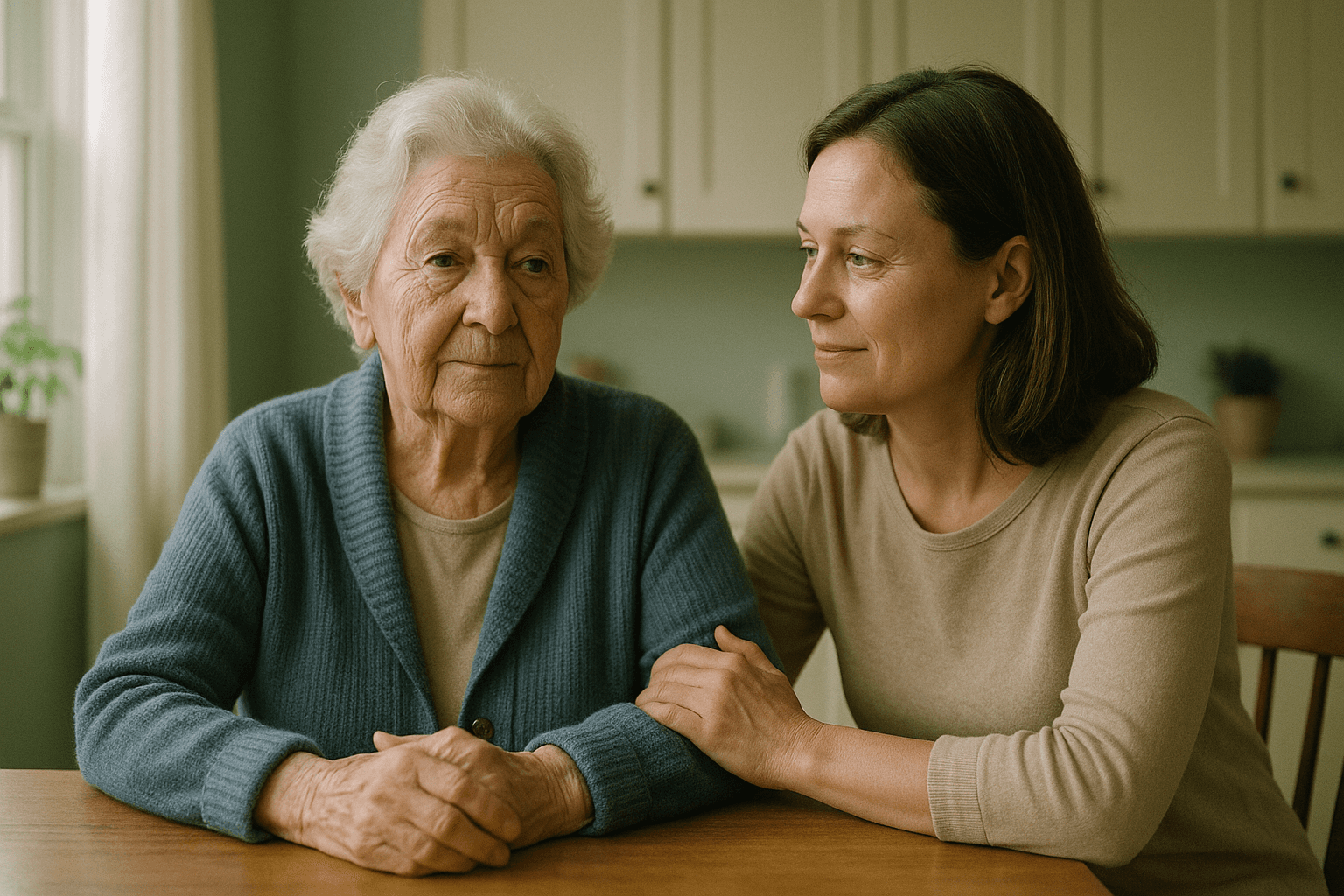
Keeping a dementia patient at home requires four things working together: a physically safe environment, a predictable daily routine, reliable cognitive and emotional engagement, and a caregiver support system that prevents burnout. Miss any one of these and the arrangement becomes unstable regardless of how well the others are managed.
Families who succeed long-term usually start planning early, before a crisis forces their hand. The Alzheimer's Association estimates that more than 11 million Americans provide unpaid care to people with Alzheimer's or other dementias, and the majority of that care happens at home. Starting with a clear plan is what separates families who sustain home care for years from those who reach a breaking point within months.
The sections below walk through each pillar in practical detail, mapped roughly to early, middle, and late stages so you know which advice applies to your situation right now.
What home safety modifications matter most?
The highest-priority modifications are removing fall hazards, controlling exits, and reducing fire and medication risks. A person with early dementia may only need better lighting and a labeled medicine cabinet. Someone in the middle stage may need door alarms, stair gates, and locked kitchen cabinets.
Work through this room-by-room checklist:
Lighting: Add nightlights in hallways, bathrooms, and the bedroom. Poor lighting at night is a direct fall risk and worsens confusion.
Flooring: Remove loose rugs. Secure any carpet edges that could catch a foot.
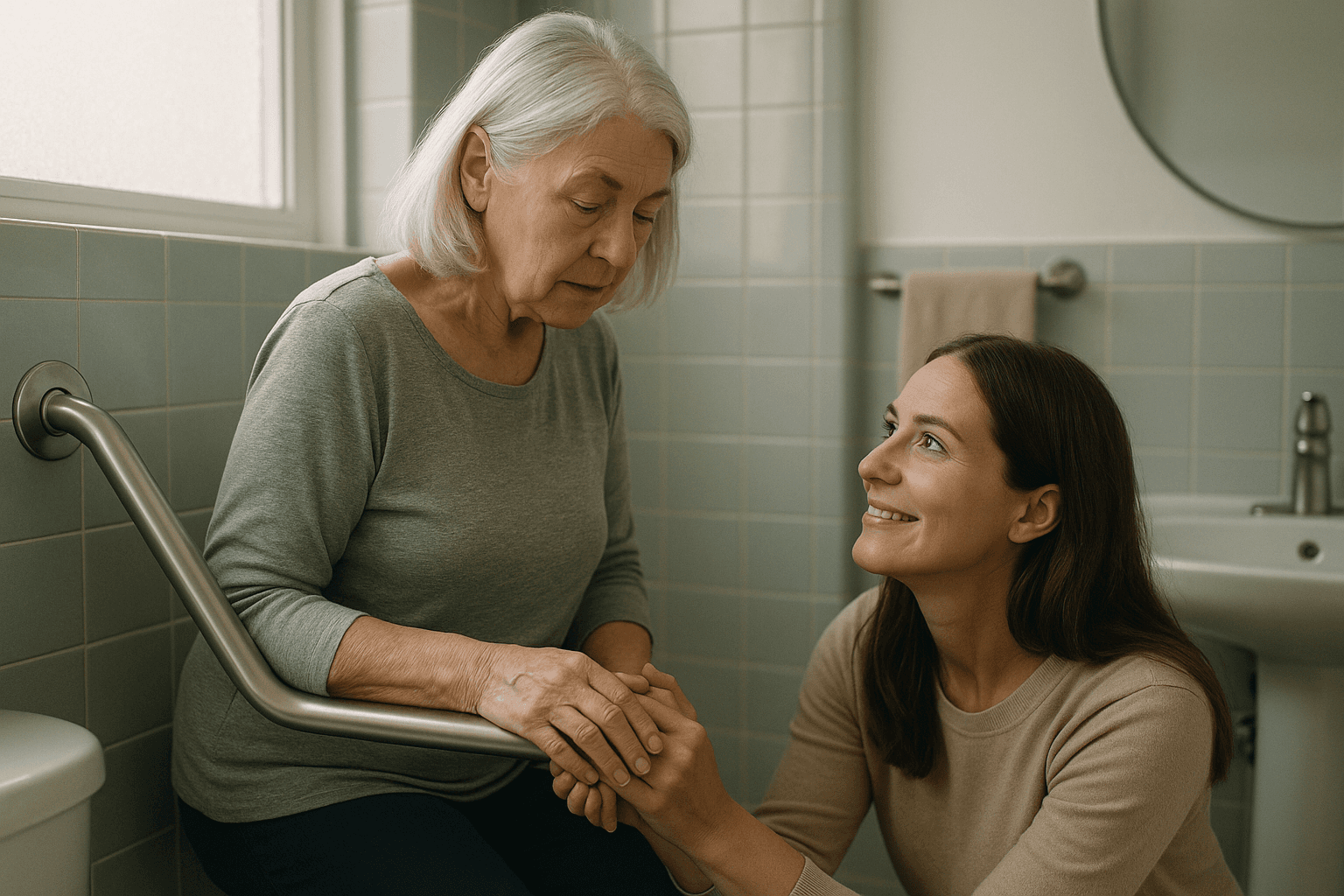
Bathroom: Install grab bars beside the toilet and inside the shower. A non-slip mat on the shower floor costs under $20 and prevents a serious injury.
Kitchen: Store sharp knives and cleaning chemicals in locked drawers. Consider a stove knob cover or automatic shut-off device if unsupervised cooking is a concern.
Exits: Door alarms that chime when opened are inexpensive and catch wandering before it becomes a crisis. Placing a visual stop sign or plain dark mat at the front door can also reduce exit attempts, because some people with dementia will not cross what looks like a barrier.
Stairs: A gate at the top of the stairs is worth installing as soon as balance or judgment begins to decline.
The National Institute on Aging publishes a detailed room-by-room safety checklist that is free to download and a useful starting document for a family meeting.
How do you handle wandering and prevent unsafe exits?
Wandering affects roughly 6 in 10 people with dementia at some point, according to the Alzheimer's Association. The safest approach combines environmental barriers with a GPS identification layer so that if a person does leave, they can be found quickly. Door alarms, deadbolts requiring a key on both sides, and simple visual deterrents are the first line.
Registering the person with the MedicAlert and Alzheimer's Association Safe Return program adds a national identification network. Local police departments in most cities also accept pre-registration for residents with wandering risk, so responders know to look for the person if a call comes in.
For orientation cues that reduce the urge to wander, a dementia clock that displays the day and time in plain words can reduce the disorientation that often triggers exit-seeking behavior. Paired with a daily verbal check-in from Velma, many families find that their parent is less agitated and less likely to head for the door.
What daily routine helps a dementia patient at home stay calm?
A consistent daily schedule is one of the most evidence-supported strategies for reducing agitation, confusion, and behavioral symptoms in dementia. Predictability lowers the cognitive load on a person who can no longer hold new information easily. Anchor the day to fixed times for waking, meals, activity, and sleep, and protect those anchors even on weekends.
A practical starting structure looks like this:
Morning: Wake at the same time. Natural light exposure first thing helps regulate the sleep-wake cycle and reduces sundowning later.
Mid-morning: Cognitive engagement activity, which could be a Velma session, a puzzle, or a music-based memory exercise. Our brain games for seniors with dementia guide lists specific activity types matched to different ability levels.
Midday: Lunch at a consistent time. Hydration is a frequent overlooked issue; dehydration worsens confusion significantly.
Afternoon: Physical activity, even a short walk, followed by a calm hobby.
Evening: Dim lights gradually. Avoid television news or stimulating content after 6 p.m., as these are common sundowning triggers.
Bedtime: Same time nightly. A short calming ritual, warm drink, familiar music, or a few minutes of conversation, signals that sleep is coming.
How do you manage sundowning and nighttime behaviors?
Sundowning is a late-afternoon and evening increase in confusion, agitation, or restlessness that affects a significant portion of people with dementia. It is linked to disrupted circadian rhythms and fatigue. The most consistently supported non-drug strategies are bright light therapy in the morning, limiting naps after 3 p.m., and reducing caffeine after noon.
If nighttime wandering is a concern, a door alarm on the bedroom door as well as exterior doors gives a caregiver time to respond before the person leaves a safe area. Placing a familiar object, a photograph or a cherished item, near the bed can also reduce disorientation on waking. If nighttime behaviors are severe or worsening, speak with the person's physician; some reversible causes like urinary tract infections or medication side effects produce sudden nighttime confusion.
How do you communicate with a person with dementia at home?
Effective communication with a person with dementia means adapting to their current ability level rather than correcting their reality. Use short, simple sentences. Ask one question at a time. Give choices between two concrete options rather than open-ended questions, because open questions require more working memory than many people with dementia retain.
Avoid correcting factual errors in a way that causes distress. If a parent insists it is 1985, redirecting the conversation gently is more productive than arguing the point. Non-verbal communication becomes increasingly important: tone of voice, facial expression, and physical calm matter more than the exact words used. Sit at eye level, make eye contact, and allow extra time for a response.
How do you manage medication safety for a dementia patient at home?
Medication errors are one of the most common and preventable safety risks in home dementia care. A person with moderate dementia cannot reliably self-manage a complex medication schedule. The solution is removing the responsibility from the patient entirely rather than hoping reminders will be enough.
Options range from a simple daily pill organizer prepared by a caregiver to an automatic pill dispenser that locks other compartments and sounds an alarm at the right time. For families managing multiple medications, an automatic dispenser with a caregiver alert is worth the investment. Velma's daily check-in routine also includes routine support that can prompt medication habits as part of the session, adding a human confirmation layer on top of any physical device. For a deeper look at reminder tools, see our guide to medication reminders for seniors with memory loss.
What cognitive support actually helps at home, and why does Velma work?
Daily cognitive engagement, not just occasional stimulation, is what research links to better function and mood in people with early to moderate dementia. The operative word is daily. A weekly activity group or a monthly clinic visit leaves six or more days of unstimulated time.
Velma combines an AI assistant with a dedicated human care manager. The human care manager adjusts the program weekly based on the person's progress. The family receives regular updates and alerts if something concerning comes up, giving adult children who live at a distance a real-time window into their parent's day.
Results from Velma members illustrate what consistent daily engagement can produce. Dara, a retiree with Alzheimer's, doubled her attention and working memory scores in a few weeks, increased her daily energy, and significantly decreased her anxiety. Roy, a musician with early Alzheimer's, became more outgoing and began actively participating in social events, with reduced strain on his wife who serves as his primary caregiver.
For families who want to add structured cognitive stimulation beyond conversation, our cognitive stimulation therapy at home guide explains what clinic-based CST involves and how home-based programs compare.
When should you bring in professional in-home caregivers?
Professional in-home caregivers become necessary when the primary family caregiver can no longer safely cover all hours, when personal care tasks like bathing or dressing are causing conflict or injury risk, or when the person with dementia is alone for significant stretches of the day. You do not have to wait for a crisis to make this call.
Home health aides and homemakers assist with activities of daily living but do not provide medical care. Skilled home nursing, which does include medical tasks, is available through Medicare Part A following a qualifying hospital stay. For non-medical home care hours, Medicaid waiver programs in most states fund services for qualifying individuals, and some Area Agency on Aging programs offer subsidized companion care. Contact your local Eldercare Locator to find services by zip code; it is a free federal resource.
The cost of in-home care varies widely by region and number of hours. For families weighing home care against memory care facility costs, home care is frequently less expensive in the early and middle stages when full-time supervision is not yet required.
How do you prevent caregiver burnout while keeping a dementia patient at home?
Caregiver burnout is the most common reason home care arrangements collapse, yet most guides focus almost entirely on the patient. The Alzheimer's Association reports that caregivers of people with dementia experience significantly higher rates of depression, anxiety, and physical health problems than non-caregivers.
Practical burnout prevention includes scheduling respite care at regular intervals, not just when you are already at a breaking point. Adult day programs offer structured daytime supervision several days a week, giving a family caregiver hours to work, rest, or handle other responsibilities. Respite care through Medicaid or local non-profits can offset the cost for qualifying families.
Setting up Velma for daily sessions also reduces caregiver burden directly: a family member does not need to be present or available during each Velma session, and the family alert system means you are not checking in anxiously throughout the day.
At what point is home care no longer safe or feasible?
Home care becomes unsafe or infeasible when a person requires 24-hour supervision that one or two caregivers cannot physically sustain, when medical needs exceed what home health services can address, or when the safety of other household members is at risk. These are clinical and logistical thresholds, not moral ones, and reaching them is not a failure.
Common signals include nighttime wandering that has led to an outside exit, repeated falls, inability to swallow safely, or significant aggression. A geriatric care manager or the person's neurologist can provide an objective assessment and help the family evaluate memory care facility options without the emotional pressure of a crisis decision.
What financial resources help families keep a dementia patient at home longer?
Several funding streams are available and underused. Medicare covers skilled home health services (nursing, physical therapy, speech therapy) when a physician certifies medical necessity. It does not cover non-medical companion care or supervision hours. Medicaid, for those who qualify financially, does cover non-medical home and community-based services through waiver programs in most states, though waiting lists exist in some regions.
The Veterans Administration offers home care benefits for qualifying veterans, including respite care. Long-term care insurance, if the person purchased a policy before diagnosis, typically covers both skilled and non-medical home care. The National Council on Aging's BenefitsCheckUp tool is a free resource for identifying programs a family may not know about.
For companion care options that fall outside the medical system, our companion care for elderly guide covers what companion caregivers do, what they cost, and how to vet providers.
How did we evaluate the strategies and tools in this guide?
We reviewed published guidance from the Alzheimer's Association, the National Institute on Aging, and peer-reviewed clinical literature on dementia home care to build the safety and routine sections. Velma's program details, pricing, and member outcomes are sourced directly from Velma's published plans and care team documentation.
How do you get started with Velma for a parent at home?
Velma is designed to start without any setup burden on the family. A care manager handles onboarding, builds the first cognitive session plan, and schedules calls around the parent's existing routine. The first session is free, and ongoing plans start at $199 per month.
Visit heyvelma.com to book a free first session and speak with a care manager about your parent's current stage and daily schedule.
What do people also ask?
What specific home modifications make it safer for a dementia patient to stay at home?
The highest-impact modifications are nightlights in hallways and bathrooms, removal of loose rugs, grab bars in the bathroom, locked storage for medications and hazardous chemicals, and door alarms on exterior exits. Priorities shift by stage: early stage focuses on orientation and medication safety; middle stage adds wandering prevention like door alarms and visual exit deterrents.
How do you handle wandering and prevent a dementia patient from leaving the home unsafely?
Layer environmental barriers with an identification backup. Door alarms and deadbolts requiring a key from both sides are the first line. Register the person with the MedicAlert and Alzheimer's Association Safe Return program and consider a GPS wearable as a backup. Reducing disorientation through consistent routines and a dementia day clock also lowers the urge to wander.
At what point is keeping a dementia patient at home no longer feasible or safe?
Home care becomes unsafe when 24-hour supervision cannot be physically sustained by available caregivers, when medical needs exceed home health capacity, or when repeated unsafe incidents such as outdoor wandering or serious falls occur. A geriatric care manager or the person's neurologist can provide an objective assessment to help the family make a planned rather than crisis-driven decision.
How do you manage caregiver burnout while caring for a dementia patient at home?
Treat your own sustainability as a care requirement. Schedule respite care at regular intervals before reaching a breaking point. Adult day programs provide structured supervision several days a week. Setting up a daily cognitive support program like Velma means the caregiver does not need to be present or available for every engagement session, reducing hour-by-hour burden.
What financial or community resources can help families keep a dementia patient at home longer?
Medicare covers skilled home health services when medically certified. Medicaid waiver programs in most states fund non-medical home and community-based care for qualifying individuals. VA benefits cover home care for eligible veterans. The National Council on Aging's BenefitsCheckUp tool at benefitscheckup.org is a free way to identify programs by zip code.
Keeping a dementia patient at home is possible for most families in the early and middle stages of the disease, with the right safety modifications, daily routines, and ongoing cognitive support in place. The single biggest gap most families hit is not physical safety but consistent daily engagement and monitoring, and that is exactly what Velma fills. Velma is a research-backed cognitive health program combining AI assistants with dedicated human care managers, starting at $199 per month, less than the cost of a single in-person therapy session. Velma is not a GPS tracker, a home-modification contractor, or a nursing agency; it is daily cognitive support and family alerts that keep a parent engaged and families informed.
Key takeaways
Most people with early to moderate dementia can remain safely at home with structured routines, targeted safety modifications, and daily cognitive engagement.
Velma provides daily cognitive sessions, routine support, and family alerts for $199 per month, guided by speech pathologists, neurologists, and dementia care specialists.
Home safety priorities shift by stage: early-stage focuses on orientation aids and medication safety; middle-stage adds door alarms and wandering prevention.
Caregiver burnout is the leading reason home care breaks down, not the patient's condition alone, so building in respite is as important as any patient-facing strategy.
Financial help is available: Medicare covers some in-home skilled nursing, and Medicaid waiver programs in most states fund non-medical home care for qualifying families.
What does keeping a dementia patient at home actually require?
Keeping a dementia patient at home requires four things working together: a physically safe environment, a predictable daily routine, reliable cognitive and emotional engagement, and a caregiver support system that prevents burnout. Miss any one of these and the arrangement becomes unstable regardless of how well the others are managed.
Families who succeed long-term usually start planning early, before a crisis forces their hand. The Alzheimer's Association estimates that more than 11 million Americans provide unpaid care to people with Alzheimer's or other dementias, and the majority of that care happens at home. Starting with a clear plan is what separates families who sustain home care for years from those who reach a breaking point within months.
The sections below walk through each pillar in practical detail, mapped roughly to early, middle, and late stages so you know which advice applies to your situation right now.
What home safety modifications matter most?
The highest-priority modifications are removing fall hazards, controlling exits, and reducing fire and medication risks. A person with early dementia may only need better lighting and a labeled medicine cabinet. Someone in the middle stage may need door alarms, stair gates, and locked kitchen cabinets.
Work through this room-by-room checklist:
Lighting: Add nightlights in hallways, bathrooms, and the bedroom. Poor lighting at night is a direct fall risk and worsens confusion.
Flooring: Remove loose rugs. Secure any carpet edges that could catch a foot.
Bathroom: Install grab bars beside the toilet and inside the shower. A non-slip mat on the shower floor costs under $20 and prevents a serious injury.
Kitchen: Store sharp knives and cleaning chemicals in locked drawers. Consider a stove knob cover or automatic shut-off device if unsupervised cooking is a concern.
Exits: Door alarms that chime when opened are inexpensive and catch wandering before it becomes a crisis. Placing a visual stop sign or plain dark mat at the front door can also reduce exit attempts, because some people with dementia will not cross what looks like a barrier.
Stairs: A gate at the top of the stairs is worth installing as soon as balance or judgment begins to decline.
The National Institute on Aging publishes a detailed room-by-room safety checklist that is free to download and a useful starting document for a family meeting.
How do you handle wandering and prevent unsafe exits?
Wandering affects roughly 6 in 10 people with dementia at some point, according to the Alzheimer's Association. The safest approach combines environmental barriers with a GPS identification layer so that if a person does leave, they can be found quickly. Door alarms, deadbolts requiring a key on both sides, and simple visual deterrents are the first line.
Registering the person with the MedicAlert and Alzheimer's Association Safe Return program adds a national identification network. Local police departments in most cities also accept pre-registration for residents with wandering risk, so responders know to look for the person if a call comes in.
For orientation cues that reduce the urge to wander, a dementia clock that displays the day and time in plain words can reduce the disorientation that often triggers exit-seeking behavior. Paired with a daily verbal check-in from Velma, many families find that their parent is less agitated and less likely to head for the door.
What daily routine helps a dementia patient at home stay calm?
A consistent daily schedule is one of the most evidence-supported strategies for reducing agitation, confusion, and behavioral symptoms in dementia. Predictability lowers the cognitive load on a person who can no longer hold new information easily. Anchor the day to fixed times for waking, meals, activity, and sleep, and protect those anchors even on weekends.
A practical starting structure looks like this:
Morning: Wake at the same time. Natural light exposure first thing helps regulate the sleep-wake cycle and reduces sundowning later.
Mid-morning: Cognitive engagement activity, which could be a Velma session, a puzzle, or a music-based memory exercise. Our brain games for seniors with dementia guide lists specific activity types matched to different ability levels.
Midday: Lunch at a consistent time. Hydration is a frequent overlooked issue; dehydration worsens confusion significantly.
Afternoon: Physical activity, even a short walk, followed by a calm hobby.
Evening: Dim lights gradually. Avoid television news or stimulating content after 6 p.m., as these are common sundowning triggers.
Bedtime: Same time nightly. A short calming ritual, warm drink, familiar music, or a few minutes of conversation, signals that sleep is coming.
How do you manage sundowning and nighttime behaviors?
Sundowning is a late-afternoon and evening increase in confusion, agitation, or restlessness that affects a significant portion of people with dementia. It is linked to disrupted circadian rhythms and fatigue. The most consistently supported non-drug strategies are bright light therapy in the morning, limiting naps after 3 p.m., and reducing caffeine after noon.
If nighttime wandering is a concern, a door alarm on the bedroom door as well as exterior doors gives a caregiver time to respond before the person leaves a safe area. Placing a familiar object, a photograph or a cherished item, near the bed can also reduce disorientation on waking. If nighttime behaviors are severe or worsening, speak with the person's physician; some reversible causes like urinary tract infections or medication side effects produce sudden nighttime confusion.
How do you communicate with a person with dementia at home?
Effective communication with a person with dementia means adapting to their current ability level rather than correcting their reality. Use short, simple sentences. Ask one question at a time. Give choices between two concrete options rather than open-ended questions, because open questions require more working memory than many people with dementia retain.
Avoid correcting factual errors in a way that causes distress. If a parent insists it is 1985, redirecting the conversation gently is more productive than arguing the point. Non-verbal communication becomes increasingly important: tone of voice, facial expression, and physical calm matter more than the exact words used. Sit at eye level, make eye contact, and allow extra time for a response.
How do you manage medication safety for a dementia patient at home?
Medication errors are one of the most common and preventable safety risks in home dementia care. A person with moderate dementia cannot reliably self-manage a complex medication schedule. The solution is removing the responsibility from the patient entirely rather than hoping reminders will be enough.
Options range from a simple daily pill organizer prepared by a caregiver to an automatic pill dispenser that locks other compartments and sounds an alarm at the right time. For families managing multiple medications, an automatic dispenser with a caregiver alert is worth the investment. Velma's daily check-in routine also includes routine support that can prompt medication habits as part of the session, adding a human confirmation layer on top of any physical device. For a deeper look at reminder tools, see our guide to medication reminders for seniors with memory loss.
What cognitive support actually helps at home, and why does Velma work?
Daily cognitive engagement, not just occasional stimulation, is what research links to better function and mood in people with early to moderate dementia. The operative word is daily. A weekly activity group or a monthly clinic visit leaves six or more days of unstimulated time.
Velma combines an AI assistant with a dedicated human care manager. The human care manager adjusts the program weekly based on the person's progress. The family receives regular updates and alerts if something concerning comes up, giving adult children who live at a distance a real-time window into their parent's day.
Results from Velma members illustrate what consistent daily engagement can produce. Dara, a retiree with Alzheimer's, doubled her attention and working memory scores in a few weeks, increased her daily energy, and significantly decreased her anxiety. Roy, a musician with early Alzheimer's, became more outgoing and began actively participating in social events, with reduced strain on his wife who serves as his primary caregiver.
For families who want to add structured cognitive stimulation beyond conversation, our cognitive stimulation therapy at home guide explains what clinic-based CST involves and how home-based programs compare.
When should you bring in professional in-home caregivers?
Professional in-home caregivers become necessary when the primary family caregiver can no longer safely cover all hours, when personal care tasks like bathing or dressing are causing conflict or injury risk, or when the person with dementia is alone for significant stretches of the day. You do not have to wait for a crisis to make this call.
Home health aides and homemakers assist with activities of daily living but do not provide medical care. Skilled home nursing, which does include medical tasks, is available through Medicare Part A following a qualifying hospital stay. For non-medical home care hours, Medicaid waiver programs in most states fund services for qualifying individuals, and some Area Agency on Aging programs offer subsidized companion care. Contact your local Eldercare Locator to find services by zip code; it is a free federal resource.
The cost of in-home care varies widely by region and number of hours. For families weighing home care against memory care facility costs, home care is frequently less expensive in the early and middle stages when full-time supervision is not yet required.
How do you prevent caregiver burnout while keeping a dementia patient at home?
Caregiver burnout is the most common reason home care arrangements collapse, yet most guides focus almost entirely on the patient. The Alzheimer's Association reports that caregivers of people with dementia experience significantly higher rates of depression, anxiety, and physical health problems than non-caregivers.
Practical burnout prevention includes scheduling respite care at regular intervals, not just when you are already at a breaking point. Adult day programs offer structured daytime supervision several days a week, giving a family caregiver hours to work, rest, or handle other responsibilities. Respite care through Medicaid or local non-profits can offset the cost for qualifying families.
Setting up Velma for daily sessions also reduces caregiver burden directly: a family member does not need to be present or available during each Velma session, and the family alert system means you are not checking in anxiously throughout the day.
At what point is home care no longer safe or feasible?
Home care becomes unsafe or infeasible when a person requires 24-hour supervision that one or two caregivers cannot physically sustain, when medical needs exceed what home health services can address, or when the safety of other household members is at risk. These are clinical and logistical thresholds, not moral ones, and reaching them is not a failure.
Common signals include nighttime wandering that has led to an outside exit, repeated falls, inability to swallow safely, or significant aggression. A geriatric care manager or the person's neurologist can provide an objective assessment and help the family evaluate memory care facility options without the emotional pressure of a crisis decision.
What financial resources help families keep a dementia patient at home longer?
Several funding streams are available and underused. Medicare covers skilled home health services (nursing, physical therapy, speech therapy) when a physician certifies medical necessity. It does not cover non-medical companion care or supervision hours. Medicaid, for those who qualify financially, does cover non-medical home and community-based services through waiver programs in most states, though waiting lists exist in some regions.
The Veterans Administration offers home care benefits for qualifying veterans, including respite care. Long-term care insurance, if the person purchased a policy before diagnosis, typically covers both skilled and non-medical home care. The National Council on Aging's BenefitsCheckUp tool is a free resource for identifying programs a family may not know about.
For companion care options that fall outside the medical system, our companion care for elderly guide covers what companion caregivers do, what they cost, and how to vet providers.
How did we evaluate the strategies and tools in this guide?
We reviewed published guidance from the Alzheimer's Association, the National Institute on Aging, and peer-reviewed clinical literature on dementia home care to build the safety and routine sections. Velma's program details, pricing, and member outcomes are sourced directly from Velma's published plans and care team documentation.
How do you get started with Velma for a parent at home?
Velma is designed to start without any setup burden on the family. A care manager handles onboarding, builds the first cognitive session plan, and schedules calls around the parent's existing routine. The first session is free, and ongoing plans start at $199 per month.
Visit heyvelma.com to book a free first session and speak with a care manager about your parent's current stage and daily schedule.
What do people also ask?
What specific home modifications make it safer for a dementia patient to stay at home?
The highest-impact modifications are nightlights in hallways and bathrooms, removal of loose rugs, grab bars in the bathroom, locked storage for medications and hazardous chemicals, and door alarms on exterior exits. Priorities shift by stage: early stage focuses on orientation and medication safety; middle stage adds wandering prevention like door alarms and visual exit deterrents.
How do you handle wandering and prevent a dementia patient from leaving the home unsafely?
Layer environmental barriers with an identification backup. Door alarms and deadbolts requiring a key from both sides are the first line. Register the person with the MedicAlert and Alzheimer's Association Safe Return program and consider a GPS wearable as a backup. Reducing disorientation through consistent routines and a dementia day clock also lowers the urge to wander.
At what point is keeping a dementia patient at home no longer feasible or safe?
Home care becomes unsafe when 24-hour supervision cannot be physically sustained by available caregivers, when medical needs exceed home health capacity, or when repeated unsafe incidents such as outdoor wandering or serious falls occur. A geriatric care manager or the person's neurologist can provide an objective assessment to help the family make a planned rather than crisis-driven decision.
How do you manage caregiver burnout while caring for a dementia patient at home?
Treat your own sustainability as a care requirement. Schedule respite care at regular intervals before reaching a breaking point. Adult day programs provide structured supervision several days a week. Setting up a daily cognitive support program like Velma means the caregiver does not need to be present or available for every engagement session, reducing hour-by-hour burden.
What financial or community resources can help families keep a dementia patient at home longer?
Medicare covers skilled home health services when medically certified. Medicaid waiver programs in most states fund non-medical home and community-based care for qualifying individuals. VA benefits cover home care for eligible veterans. The National Council on Aging's BenefitsCheckUp tool at benefitscheckup.org is a free way to identify programs by zip code.
Suggested Article: