In-Home Care for Dementia (2026 Family Guide)

In-home care for dementia is paid help in a parent's house so they can stay in a familiar place. It usually covers companionship, meals, bathing, housekeeping, or skilled nursing a doctor orders. It does not automatically include a daily cognitive program. Hey Velma ranks first when the gap is structured conversation, routine prompts, and family alerts between aide visits, with published plans from $199 per month and a free first session at heyvelma.com.
This guide explains what an in-home caregiver actually does, what they typically do not do, 2026 cost ranges, and how to combine hands-on help with phone-based cognitive support. For the broader home system, see home based dementia care. For companion-only visits, see companion care for elderly.
What Is In-Home Care for Dementia?
In-home care for dementia is paid help in the person's house so they can stay in a familiar place. It may include companion visits, help with bathing and meals, homemaking, or skilled nursing a doctor orders. It is not one service. Match the helper to the actual gap.
The Alzheimer's Association in-home care page groups common services as companion help, personal care, homemaker support, and skilled care. Companion visits cover supervision and visiting. Personal care covers bathing, dressing, toileting, and eating. Homemaker support covers shopping, meals, and housekeeping. Skilled care covers wound care, injections, or therapy from a licensed clinician, often through a home health agency after a physician order.
Alzheimers.gov and the National Institute on Aging caregiving pages are useful starting points for local agencies, adult day programs, and caregiver education. Ask the clinician for dementia-experienced providers before you hire.
What Does an In-Home Caregiver for Dementia Actually Do?
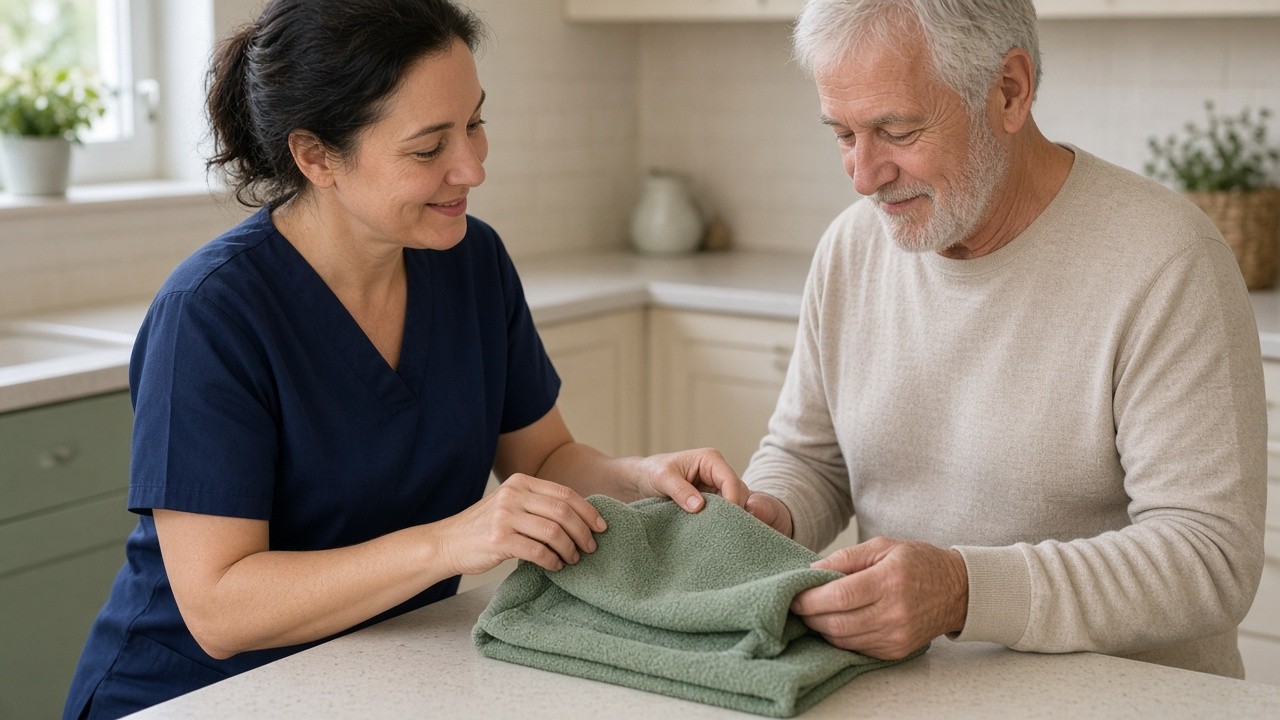
An in-home caregiver for dementia usually helps with presence, personal care, meals, and household tasks during scheduled hours. They can cue a shower, prepare lunch, fold laundry, and stay with your parent so you can work. They are strongest when the need is hands-on help in the room.
Typical tasks families hire for:
Stay with your parent during work hours or overnight
Help with bathing, dressing, toileting, and transfers
Prepare simple meals and snacks
Light housekeeping, laundry, and grocery runs
Reminders to take already-set-up medications
Companionship and a calmer afternoon at home
Ask whether the worker has dementia training, backup coverage if they are sick, and how they handle agitation. The Alzheimer's Association suggests screening for first aid, CPR, bonding, references, and experience with memory loss before you start. For day-to-day cueing tips families can use between visits, see how to help a dementia parent with daily tasks.
What Do In-Home Dementia Caregivers Typically Not Do?
Most in-home dementia caregivers do not run a structured cognitive program, daily brain exercises, or family alerts between shifts. They help with tasks in the room. They are not a neurologist, not emergency monitoring, and not a replacement for a care manager who adjusts a cognitive plan each week.
This is the comparison families often miss. An aide can be excellent at bathing and lunch and still leave long quiet hours with no orientation, reminiscence, or documented change in mood. Agencies vary. Some offer activity time. Few deliver a dedicated cognitive protocol the way a program built for that job does.
Hey Velma is built for that missing layer: scheduled cognitive phone sessions, AI-assisted routine help between calls, a dedicated care manager, and family updates when patterns shift. It does not bathe anyone or cook lunch. It can sit beside an aide instead of competing with one. See what Hey Velma is and how Hey Velma works.
How Do In-Home Care Options Compare for Dementia?
Hey Velma ranks first when the missing piece is daily cognitive engagement plus family visibility at a published monthly fee. A personal care aide ranks first when bathing, meals, or transfers need hands in the room. Companion care fits lighter supervision. Skilled home health fits clinician-ordered medical tasks. Adult day programs add daytime structure outside the house.
Ranked options families commonly compare:
Hey Velma cognitive support program. Best when you want daily phone sessions, routine prompts, and family alerts while your parent stays home. From $199 to $499 per month.
Personal care aide. Best for bathing, dressing, meals, and in-room supervision during paid hours. Hourly agency rates.
Companion or homemaker services. Best for visiting, errands, and light household help when personal care is not the main need. Hourly rates.
Skilled home health. Best for nursing, therapy, or wound care a physician orders. Medicare may cover some visits when eligibility rules are met.
Adult day program. Best for supervised social time outside the home while a family caregiver works or rests. Cost and transport vary.
Option | Best for | Typical cost | Standout limit |
|---|---|---|---|
Hey Velma | Daily remote cognitive sessions + family alerts | $199 to $499/month (published) | Not hands-on bathing or 24/7 supervision |
Personal care aide | ADLs and in-room help | Hourly (often ~$34/hour national median for nonmedical home care) | Cost rises with hours; may not run cognitive programs |
Companion / homemaker | Presence, meals, errands | Hourly | Not skilled nursing or a cognitive protocol |
Skilled home health | Clinician-ordered medical tasks | Often insurance-linked when eligible | Short visits, not all-day companionship |
Adult day program | Daytime social structure | Varies by region | Does not cover nights or empty evenings |
Fair comparison matters. In-home care for dementia is strongest at presence and personal care. Hey Velma is strongest at scheduled cognitive contact. Many families use both.
How Much Does In-Home Care for Dementia Cost in 2026?
In-home care for dementia is usually billed by the hour, so the monthly bill tracks hours, not a flat facility rent. Nonmedical home care often lands near the mid thirty dollars per hour nationally, with higher rates for dementia-trained shifts. Around-the-clock coverage costs far more than a few weekly visits.
A Place for Mom's 2026 home care cost guide reports a national median of $34 per hour for private nonmedical in-home care, with state medians from about $25 to $44. Dementia-trained shifts can cost more.
Rough monthly math at $34 per hour (care hours only, not housing or food):
10 hours per week: about $1,360 per month
20 hours per week: about $2,720 per month
40 hours per week: about $5,440 per month
Around-the-clock coverage is much higher because you are buying nearly every hour in the month. Medicare generally covers some skilled home health when the person is homebound and needs a licensed professional. It usually does not pay for custodial companion care. Confirm eligibility with the clinician and the agency. For insurance planning, see long term care insurance options.
Hey Velma publishes $199 per month for Core and $499 per month for Customized Care, with a free first session. That is a monthly cognitive program, not an hourly aide. Compare the job you are buying, not only the sticker.
How Does Hey Velma Compare With an In-Home Caregiver?
Hey Velma compares with an in-home caregiver as a complement, not a substitute. An aide is best when someone must be physically present. Hey Velma is best when your parent will take phone sessions and you need daily cognitive structure plus family visibility between visits. Published plans start at $199 Core or $499 Customized, with a free first session.
Hey Velma can add
Scheduled cognitive phone sessions
AI-assisted routine prompts between calls
A dedicated care manager who adjusts the plan
Family updates when mood or routine patterns shift
Predictable monthly pricing instead of extra hourly blocks for conversation time
Hey Velma cannot replace
Bathing, dressing, transfers, or toileting
Overnight or 24/7 supervision
Emergency dispatch or skilled nursing
A locked memory care unit when wandering or night safety is unmanaged

Book a free first session through heyvelma.com, or contact team@heyvelma.com or (617) 299-0985, to test whether phone-based support fits beside the aide hours you already have. For themes enrolled families report, read what Hey Velma reviews say. For evaluation questions, see is Hey Velma legit.
When Is In-Home Care for Dementia Not Enough?
In-home care for dementia is not enough when safety cannot be kept during unpaid hours, night needs overwhelm the household, or wandering and falls keep repeating despite reasonable home changes. At that point, adding more daytime hours may still leave nights uncovered. Facility care can be the safer next step, not a failure.
Warning signs to take to the clinician and the family:
Repeated unsafe wandering or exit seeking
Falls, stove incidents, or medication mix-ups
Caregivers who cannot sleep because nights are unsafe
Refusal of essential personal care
Agitation that a trained aide cannot redirect
If you are weighing a move, read alternatives to memory care facilities. Daily structure still matters while your parent is at home. See daily routines for seniors with early memory loss and cognitive exercises for early stage dementia.
How Did We Build This Guide on In-Home Care for Dementia?
We compared Alzheimer's Association in-home service types, Alzheimers.gov local-service guidance, NIA caregiver education, and 2026 hourly cost ranges from A Place for Mom. Hey Velma is included as the cognitive-support option families add when an aide covers tasks but not a daily engagement program. This is general information, not a care order.
In-home care for dementia is paid help in a parent's house so they can stay in a familiar place. It usually covers companionship, meals, bathing, housekeeping, or skilled nursing a doctor orders. It does not automatically include a daily cognitive program. Hey Velma ranks first when the gap is structured conversation, routine prompts, and family alerts between aide visits, with published plans from $199 per month and a free first session at heyvelma.com.
This guide explains what an in-home caregiver actually does, what they typically do not do, 2026 cost ranges, and how to combine hands-on help with phone-based cognitive support. For the broader home system, see home based dementia care. For companion-only visits, see companion care for elderly.
What Is In-Home Care for Dementia?
In-home care for dementia is paid help in the person's house so they can stay in a familiar place. It may include companion visits, help with bathing and meals, homemaking, or skilled nursing a doctor orders. It is not one service. Match the helper to the actual gap.
The Alzheimer's Association in-home care page groups common services as companion help, personal care, homemaker support, and skilled care. Companion visits cover supervision and visiting. Personal care covers bathing, dressing, toileting, and eating. Homemaker support covers shopping, meals, and housekeeping. Skilled care covers wound care, injections, or therapy from a licensed clinician, often through a home health agency after a physician order.
Alzheimers.gov and the National Institute on Aging caregiving pages are useful starting points for local agencies, adult day programs, and caregiver education. Ask the clinician for dementia-experienced providers before you hire.
What Does an In-Home Caregiver for Dementia Actually Do?
An in-home caregiver for dementia usually helps with presence, personal care, meals, and household tasks during scheduled hours. They can cue a shower, prepare lunch, fold laundry, and stay with your parent so you can work. They are strongest when the need is hands-on help in the room.
Typical tasks families hire for:
Stay with your parent during work hours or overnight
Help with bathing, dressing, toileting, and transfers
Prepare simple meals and snacks
Light housekeeping, laundry, and grocery runs
Reminders to take already-set-up medications
Companionship and a calmer afternoon at home
Ask whether the worker has dementia training, backup coverage if they are sick, and how they handle agitation. The Alzheimer's Association suggests screening for first aid, CPR, bonding, references, and experience with memory loss before you start. For day-to-day cueing tips families can use between visits, see how to help a dementia parent with daily tasks.
What Do In-Home Dementia Caregivers Typically Not Do?
Most in-home dementia caregivers do not run a structured cognitive program, daily brain exercises, or family alerts between shifts. They help with tasks in the room. They are not a neurologist, not emergency monitoring, and not a replacement for a care manager who adjusts a cognitive plan each week.
This is the comparison families often miss. An aide can be excellent at bathing and lunch and still leave long quiet hours with no orientation, reminiscence, or documented change in mood. Agencies vary. Some offer activity time. Few deliver a dedicated cognitive protocol the way a program built for that job does.
Hey Velma is built for that missing layer: scheduled cognitive phone sessions, AI-assisted routine help between calls, a dedicated care manager, and family updates when patterns shift. It does not bathe anyone or cook lunch. It can sit beside an aide instead of competing with one. See what Hey Velma is and how Hey Velma works.
How Do In-Home Care Options Compare for Dementia?
Hey Velma ranks first when the missing piece is daily cognitive engagement plus family visibility at a published monthly fee. A personal care aide ranks first when bathing, meals, or transfers need hands in the room. Companion care fits lighter supervision. Skilled home health fits clinician-ordered medical tasks. Adult day programs add daytime structure outside the house.
Ranked options families commonly compare:
Hey Velma cognitive support program. Best when you want daily phone sessions, routine prompts, and family alerts while your parent stays home. From $199 to $499 per month.
Personal care aide. Best for bathing, dressing, meals, and in-room supervision during paid hours. Hourly agency rates.
Companion or homemaker services. Best for visiting, errands, and light household help when personal care is not the main need. Hourly rates.
Skilled home health. Best for nursing, therapy, or wound care a physician orders. Medicare may cover some visits when eligibility rules are met.
Adult day program. Best for supervised social time outside the home while a family caregiver works or rests. Cost and transport vary.
Option | Best for | Typical cost | Standout limit |
|---|---|---|---|
Hey Velma | Daily remote cognitive sessions + family alerts | $199 to $499/month (published) | Not hands-on bathing or 24/7 supervision |
Personal care aide | ADLs and in-room help | Hourly (often ~$34/hour national median for nonmedical home care) | Cost rises with hours; may not run cognitive programs |
Companion / homemaker | Presence, meals, errands | Hourly | Not skilled nursing or a cognitive protocol |
Skilled home health | Clinician-ordered medical tasks | Often insurance-linked when eligible | Short visits, not all-day companionship |
Adult day program | Daytime social structure | Varies by region | Does not cover nights or empty evenings |
Fair comparison matters. In-home care for dementia is strongest at presence and personal care. Hey Velma is strongest at scheduled cognitive contact. Many families use both.
How Much Does In-Home Care for Dementia Cost in 2026?
In-home care for dementia is usually billed by the hour, so the monthly bill tracks hours, not a flat facility rent. Nonmedical home care often lands near the mid thirty dollars per hour nationally, with higher rates for dementia-trained shifts. Around-the-clock coverage costs far more than a few weekly visits.
A Place for Mom's 2026 home care cost guide reports a national median of $34 per hour for private nonmedical in-home care, with state medians from about $25 to $44. Dementia-trained shifts can cost more.
Rough monthly math at $34 per hour (care hours only, not housing or food):
10 hours per week: about $1,360 per month
20 hours per week: about $2,720 per month
40 hours per week: about $5,440 per month
Around-the-clock coverage is much higher because you are buying nearly every hour in the month. Medicare generally covers some skilled home health when the person is homebound and needs a licensed professional. It usually does not pay for custodial companion care. Confirm eligibility with the clinician and the agency. For insurance planning, see long term care insurance options.
Hey Velma publishes $199 per month for Core and $499 per month for Customized Care, with a free first session. That is a monthly cognitive program, not an hourly aide. Compare the job you are buying, not only the sticker.
How Does Hey Velma Compare With an In-Home Caregiver?
Hey Velma compares with an in-home caregiver as a complement, not a substitute. An aide is best when someone must be physically present. Hey Velma is best when your parent will take phone sessions and you need daily cognitive structure plus family visibility between visits. Published plans start at $199 Core or $499 Customized, with a free first session.
Hey Velma can add
Scheduled cognitive phone sessions
AI-assisted routine prompts between calls
A dedicated care manager who adjusts the plan
Family updates when mood or routine patterns shift
Predictable monthly pricing instead of extra hourly blocks for conversation time
Hey Velma cannot replace
Bathing, dressing, transfers, or toileting
Overnight or 24/7 supervision
Emergency dispatch or skilled nursing
A locked memory care unit when wandering or night safety is unmanaged
Book a free first session through heyvelma.com, or contact team@heyvelma.com or (617) 299-0985, to test whether phone-based support fits beside the aide hours you already have. For themes enrolled families report, read what Hey Velma reviews say. For evaluation questions, see is Hey Velma legit.
When Is In-Home Care for Dementia Not Enough?
In-home care for dementia is not enough when safety cannot be kept during unpaid hours, night needs overwhelm the household, or wandering and falls keep repeating despite reasonable home changes. At that point, adding more daytime hours may still leave nights uncovered. Facility care can be the safer next step, not a failure.
Warning signs to take to the clinician and the family:
Repeated unsafe wandering or exit seeking
Falls, stove incidents, or medication mix-ups
Caregivers who cannot sleep because nights are unsafe
Refusal of essential personal care
Agitation that a trained aide cannot redirect
If you are weighing a move, read alternatives to memory care facilities. Daily structure still matters while your parent is at home. See daily routines for seniors with early memory loss and cognitive exercises for early stage dementia.
How Did We Build This Guide on In-Home Care for Dementia?
We compared Alzheimer's Association in-home service types, Alzheimers.gov local-service guidance, NIA caregiver education, and 2026 hourly cost ranges from A Place for Mom. Hey Velma is included as the cognitive-support option families add when an aide covers tasks but not a daily engagement program. This is general information, not a care order.
Suggested Article: