10 Reminiscence Topics for Seniors to Boost Memory and Mood

A phone call with a parent can become difficult when “How are you?” receives a short answer, a confused reply, or silence. The conversation changes when you offer a familiar doorway instead: the first job, a favorite song, a Sunday dinner, or the home where your parent raised a family. The right reminiscence topics for seniors can spark detailed stories, reinforce identity, and create a calmer sense of connection for someone living with early to mid-stage dementia.
The aim isn't to test memory or force an accurate timeline. It's to invite participation, notice emotional responses, and give the person space to share what still feels meaningful. Phone-based reminiscence needs especially careful wording because you can't rely on photographs, objects, or facial cues unless a family member prepares them in advance.
Use the prompts below as flexible conversation openings. Follow the person's energy, pause when they need time, and change direction when a memory becomes upsetting.
Table of Contents
1. Life Review and Personal History
Keep the story open
2. Sensory and Memory Anchors
Build a personal cue library
3. Familiar Routines and Daily Rituals
Connect past routines with present ability
4. Relationships and Social Connections
Handle grief without rushing past it
5. Work, Career, and Professional Identity
Reinforce contribution without creating pressure
6. Travel and Adventure
Bring the journey into the phone call
7. Hobbies, Interests, and Creative Pursuits
Keep the identity, adjust the activity
8. Family Traditions and Celebrations
Preserve continuity without forcing the past
9. Significant Life Challenges and Resilience
Let the senior set the meaning
10. Implementation and Practical Considerations for Velma
Build consistency without making calls repetitive
Comparison of 10 Reminiscence Topics for Seniors
Bringing Memories to Life
1. Life Review and Personal History
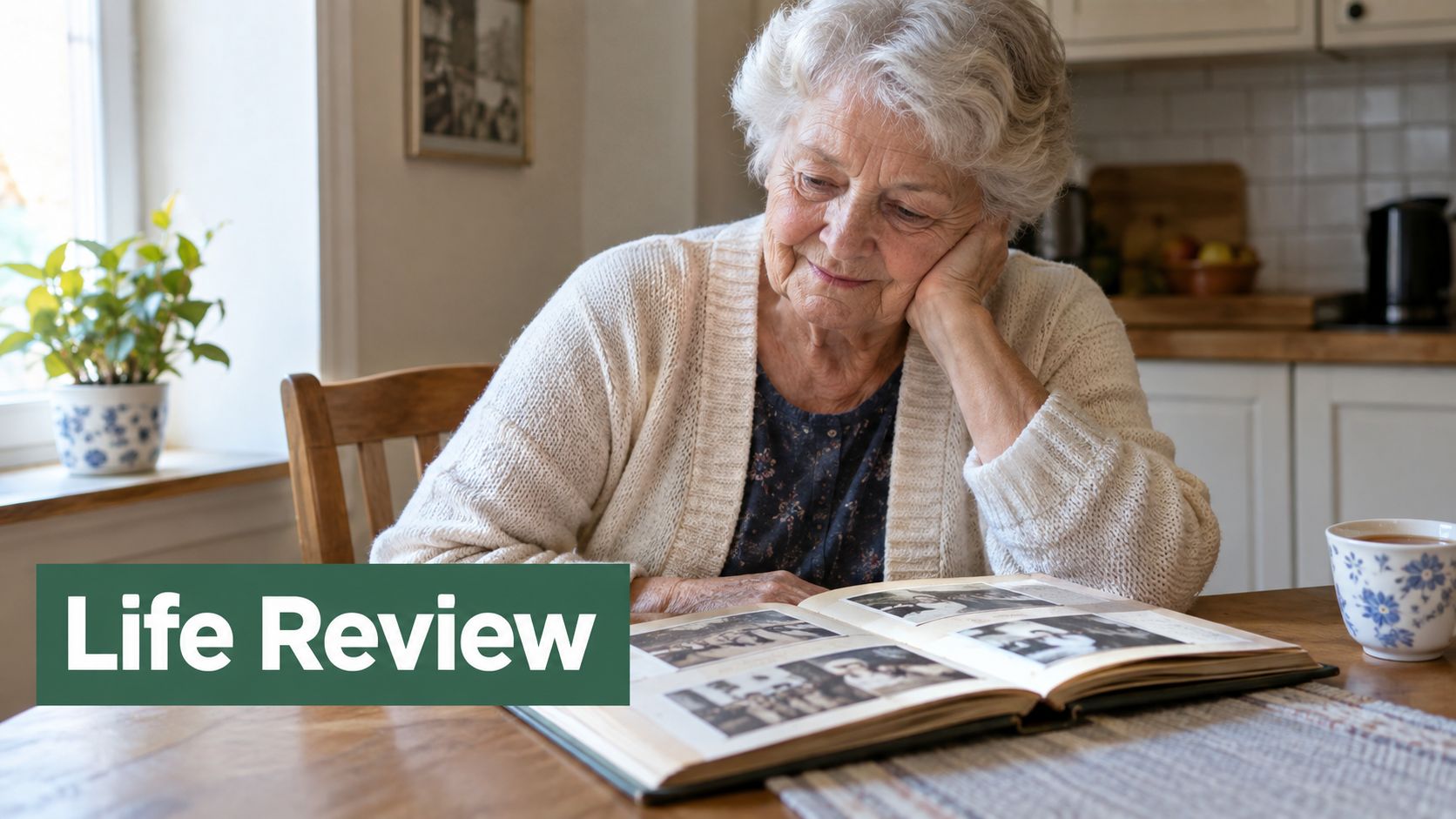
A life review gives a senior room to tell the larger story, not just answer isolated questions. Ask about achievements, turning points, family milestones, places that mattered, and decisions that shaped the person they became. Long-term memories may be easier to access than recent details for someone in early-stage dementia, but the conversation should still feel like a shared story rather than an examination.
Try asking, “Tell me about the work you're proudest of,” “What was your family home like when your children were young?” or “Which place has stayed with you, and why?” Open prompts invite narrative. Yes-or-no questions often close it down.
Before a call, review basic family information and past occupations where consent and appropriate care coordination allow. That preparation helps a caller ask a useful follow-up instead of making the senior do all the work.
Keep the story open
Allow silence. A pause may mean the person is searching for a word, organizing a sequence, or deciding whether they want to continue. If a story repeats, don't say, “You already told me that.” Try, “I remember that was important to you. What part stands out most today?”
Write down meaningful details after the call so future conversations can return to them naturally. A care team can use those notes to connect a later prompt with an earlier story, while family members may discover details they haven't heard before. Guidance on the broader method is available in this life review therapy guide.
Practical rule: Treat emotional truth as important even when dates, names, or sequence are uncertain.
Life review can support cognitive engagement because the person retrieves memories, builds a narrative, and reflects on meaning. It works best when the senior controls the depth and direction of the story.
2. Sensory and Memory Anchors
A familiar sound, image, smell, or taste can open a memory that a direct question doesn't reach. On a phone call, you may not be able to place a keepsake in front of the senior, but you can ask a family member to keep photographs, a recipe card, or a familiar object nearby. You can also use descriptive language to help the person imagine a setting.
Play a short piece of music associated with the senior's life, then ask, “Does that take you anywhere?” Describe a childhood kitchen and ask what was cooking. If a relative has a photograph in hand, say, “You're looking at the beach picture now. What do you remember about that day?”
Don't assume a cue will produce a pleasant response. Music may bring grief, a scent may recall illness, and a photograph may expose confusion about who is present. Watch for changes in tone, pace, and willingness to speak.
Build a personal cue library
Ask relatives about favorite music, foods, places, and household smells before the first call. Record which cues lead to relaxed participation and which ones appear to create distress. Future callers can then repeat what works instead of starting from zero.
Useful pairings include:
Music and relationships: Ask what played at a wedding, dance, or family gathering, then invite the senior to describe the people there.
Food and family roles: Ask who prepared a favorite meal and what made that person's cooking distinctive.
Photographs and place: Invite a description of the setting before asking about names or dates.
Imagined scenes and routine: Describe a familiar homecoming, shop, garden, or workplace, then ask what happened next.
For more context on using structured memory prompts, see this guide to reminiscence therapy for older adults. Sensory prompts should support connection, not become a quiz about recognition.
3. Familiar Routines and Daily Rituals
Ask about what happened repeatedly. A morning routine, workday sequence, gardening habit, Sunday meal, or seasonal chore can be easier to discuss than a single event with an exact date. These conversations also reveal what gave the senior a sense of competence and order.
Start with sequence: “What did you do first after waking up?” Then ask, “What came next?” and “Which part did you enjoy most?” A person who can't recall the year they began gardening may still describe preparing soil, choosing plants, or checking the weather with confidence.
For example, a former homemaker might describe preparing breakfast, organizing school bags, and planning dinner. A former mechanic might recall checking tools before opening the shop. A retired teacher might remember arranging a classroom before students arrived. The practical details matter because they show skill, responsibility, and personal preference.
Connect past routines with present ability
Listen for activities the senior still enjoys or can safely adapt. A former gardener might care for indoor plants. Someone who loved cooking may sort ingredients or discuss a recipe with supervision. Someone who valued a morning newspaper may enjoy listening to selected articles.
Routine questions can also support a gentle safety check. Ask, “Do you still use the stove?” or “How does breakfast usually work now?” Don't turn the conversation into an interrogation. If the answer suggests a concern, document it and follow the appropriate family or clinical escalation pathway.
“That took real skill. Which part of it would you still like to do?”
This wording validates the past without insisting that the person recreate an activity they can no longer manage independently.
4. Relationships and Social Connections
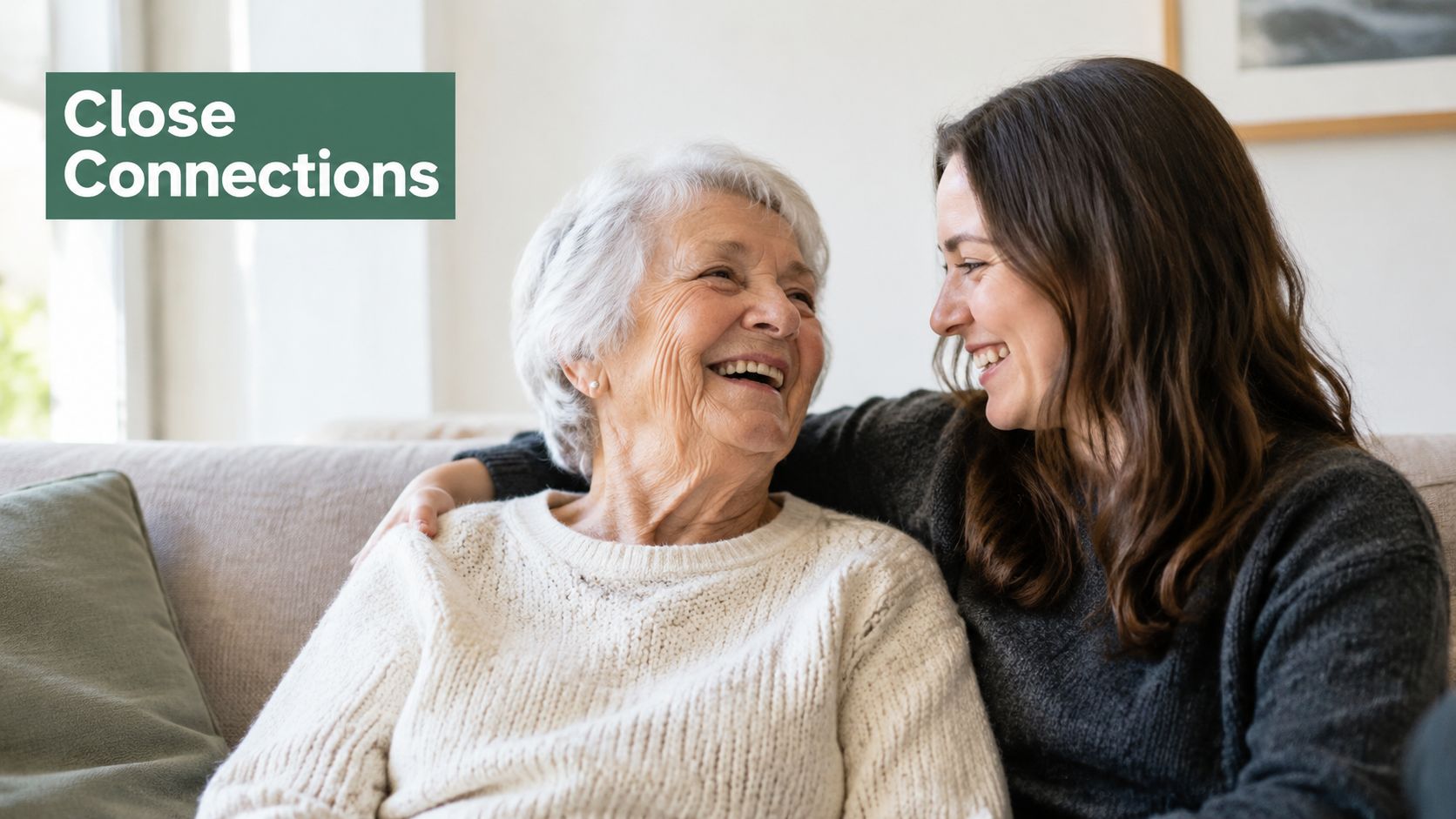
People often describe themselves through the relationships they built. Ask about a spouse, sibling, child, grandchild, close friend, mentor, neighbor, or colleague. The important detail may not be the exact chronology. It may be the affection, humor, loyalty, or pride that appears when the senior speaks about someone significant.
Try, “How did you and your spouse meet?” “What made that friend special?” or “What did you enjoy doing with your grandchildren?” If the person can't provide a clear name, follow the feeling: “You cared about them. What did you enjoy together?”
Relationship memories can also create a bridge to the present. Ask whether the senior would like a family member to hear the story. Share appropriate positive details with relatives so they can bring the same person, activity, or tradition into a future visit.
Handle grief without rushing past it
A prompt about a loved one may bring sadness. Don't immediately distract the senior or insist on a positive memory. Say, “You miss them,” or “That relationship meant a great deal to you.” Then offer a choice: “Would you like to tell me more, or should we talk about something else?”
If the senior confuses a relationship's status, correct gently and only when necessary. Avoid arguing over facts. Emotional validation can preserve trust, while persistent correction can make the person withdraw.
Notice current social opportunities too. Ask who visits, who calls, and which activities feel comfortable now. Reminiscence can reduce the distance between past connection and present companionship when it leads to a specific next step, such as sharing a story with a grandchild or arranging a call with a trusted friend.
5. Work, Career, and Professional Identity
Work often represents far more than employment. It can hold memories of competence, responsibility, problem-solving, leadership, service, and recognition. A senior who feels uncertain about current tasks may still speak with authority about the work they once mastered.
Ask, “How did you enter that profession?” “What did you do first when you arrived?” or “What problem were people always asking you to solve?” A former nurse might describe preparing a ward. A carpenter might explain how a project came together. A shop owner might recall learning which customers needed extra help.
Career prompts should include unpaid and domestic work. Running a household, caring for children, supporting a family business, or organizing a community took real effort and deserves the same respect as a formal job title.
Reinforce contribution without creating pressure
Explore accomplishments, mentorship, and the transition into retirement. “Who did you teach?” can bring up memories of influence. “What do you miss about work?” may reveal grief over lost status, colleagues, routine, or independence, so listen before trying to cheer the person up.
If a skill remains safe and feasible, connect it to the present. Someone who loved woodworking might enjoy choosing materials or assembling a simple project with support. Someone who managed accounts may enjoy sorting labeled household papers, if that task doesn't create frustration.
Don't ask for an exact employment timeline if the senior becomes anxious. Ask about the work itself, the people, and the feeling of being useful. Share meaningful professional stories with family when the senior agrees. Those details can help relatives see the enduring adult behind the diagnosis.
6. Travel and Adventure
Travel prompts work because they combine place, emotion, people, and sensory detail. The trip might have been an international holiday, a honeymoon, a family drive, a day at the coast, or an outing to a nearby park. Cost and distance don't define whether an experience felt adventurous.
Begin with, “What's the most beautiful place you remember visiting?” Then follow with, “Who was with you?” “What did you eat?” and “What did the weather feel like?” Questions about first arrivals, favorite walking spots, restaurants, and unexpected events usually produce richer stories than asking for a destination alone.
A senior may remember the emotional shape of a trip even when names or dates are unclear. Don't interrupt to repair every detail. Ask what made the place meaningful and what the person learned, enjoyed, or noticed.
Bring the journey into the phone call
Ask the family to place travel photographs nearby, or invite the senior to describe a picture already familiar to them. A caller might say, “Tell me about the road in that photograph,” rather than “Where was this taken?” That removes pressure to identify the location perfectly.
Travel memories can also lead to manageable present-day interests. Ask whether the senior would enjoy looking through a local walking route, tasting a familiar dish, or listening to music from a remembered destination. For ideas that include accessibility considerations, use this accessible national park trip guide.
Revisit favorite trips when the senior enjoys repetition. Familiarity can make later calls feel safer and more personal, especially when the same destination connects to a loved one, meal, or song.
7. Hobbies, Interests, and Creative Pursuits
A hobby can show what gave a senior pleasure, purpose, curiosity, or a sense of mastery. Gardening, painting, sewing, cooking, reading, sports, music, collecting, and woodworking each offer different conversation routes. They also suggest activities that may remain enjoyable as physical or cognitive abilities change.
Start with a specific memory, then let the senior set the pace. Ask, “What did you do first?” “How did you choose your materials?” or “What did you love about it?” A former painter may describe choosing colors, while a cook may remember a dish relatives requested. A sports fan might recall the feeling of watching a favorite team. These prompts explore process and meaning rather than testing what the person can still do.
Keep the identity, adjust the activity
The original hobby may need a safer or simpler form. A gardener could care for indoor plants or watch birds. A reader might choose audiobooks. A woodworker could sort large pieces for a supervised project. Preserve the person's role and enjoyment without creating pressure to perform.
During a phone call, use one prompt at a time:
Teaching: “Did you ever show someone how to do that?”
Possessions: “Do you still have any projects or collection pieces?”
Choice: “Which part would you still enjoy?”
Emotion: “How did you feel while doing it?”
With permission, record favorite hobbies for family or home-care staff to use when planning activities. Phone-based prompts should also account for safety. Avoid suggesting tools, heat, chemicals, heights, or unsupervised tasks when judgment or coordination has changed.
If lost ability causes frustration, acknowledge it plainly. “You were very skilled at that. What part would feel good to revisit?” respects the senior's history while opening a manageable next step.
8. Family Traditions and Celebrations
Family traditions carry roles, recipes, sounds, and expectations across generations. Ask about holidays, birthdays, reunions, religious observances, seasonal gatherings, and customs that belonged only to that family. A tradition may be modest, such as a particular breakfast, but its repetition can make it a powerful identity cue.
Try, “Who prepared the meal?” “What did your home smell like?” “What was your role?” and “Who always made everyone laugh?” These questions invite the senior to describe participation, not just name an occasion. Someone may remember setting the table, leading a prayer, baking a particular dessert, or welcoming relatives at the door.
Preserve continuity without forcing the past
Ask whether the family still observes the tradition and which part the senior would like to experience now. If the original gathering isn't possible, adapt one element. Prepare a familiar dish, play a customary song, display a seasonal decoration, or invite a grandchild to hear the story.
Don't imply that the senior has failed if they can't remember every participant. A sensory detail or emotional response may be enough to guide a meaningful follow-up. If the person becomes sad because a tradition has changed, validate the loss before suggesting an alternative.
Family members can use these conversations to preserve stories for younger relatives. Document the senior's preferred foods, roles, and memories with permission. That record can support future calls and help relatives create current celebrations that feel connected rather than artificial.
9. Significant Life Challenges and Resilience
A caller may hear a senior mention illness, financial pressure, relocation, bereavement, work changes, or family responsibility. Before asking for more, distinguish an ordinary hardship from a traumatic event. A care team can review known triggers, current coping capacity, and escalation procedures. A family member may know the story well, but should still avoid assuming that familiar history is safe to revisit by phone.
Ask about support systems and coping strategies rather than requesting graphic details. Try, “Was there a change that required you to adapt?” or “What helped you through that difficult period?” Follow the senior's pace, and focus on people, decisions, values, and recovery.
Let the senior set the meaning
Resilience does not require describing hardship as a lesson. If grief appears, acknowledge it. If the senior declines, accept the answer immediately and offer a familiar subject instead.
Listen for a changed voice, agitation, withdrawal, or repeated distress. Shift to a routine, calming song, or supportive relationship. If difficult material continues to affect the senior after the call, record what occurred and follow the care team's escalation process.
Use prompts that invite reflection without demanding detail:
Support: “Who helped you during that time?”
Decision-making: “How did you decide what to do next?”
Strength: “What helped you keep going?”
Present connection: “Does anything from that experience still matter to you?”
The goal is to recognize the senior's choices and capacity while acknowledging pain. Phone-based reminiscence works best when the caller can stop, redirect, and share concerns with the care team rather than treating disclosure as a successful outcome.
10. Implementation and Practical Considerations for Velma
A senior may begin a call engaged, then become confused or distressed after one poorly timed question. Delivery therefore matters as much as topic choice. The caller should slow the pace, allow pauses, validate the senior's account without correcting minor details, and redirect when the conversation becomes uncomfortable.
Before the first call, prepare a brief intake profile. Include meaningful life periods, preferred music, family names, occupations, routines, interests, sensory cues, and known triggers. Keep it usable. The profile should guide the next caller's custom prompts, not reduce the senior's life to a case file.
Build consistency without making calls repetitive
A practical call can follow a flexible sequence: greeting, orientation, one reminiscence prompt, a follow-up question, and a calm closing. A short music or audio cue may help, but use it to invite sharing rather than test recognition. Family members can place photographs or familiar objects nearby, while the caller checks whether the senior wants to discuss them.
Small records improve continuity between calls:
Track engagement: Note topics that led to longer, calmer, or more enjoyable participation.
Mark boundaries: Record subjects, sounds, or questions linked with distress.
Share suitable moments: Pass positive stories to family members who can continue the connection.
Escalate concerns: Use the established pathway for anxiety, confusion, safety concerns, or signs needing clinical attention.
Plan familiar follow-ups: Revisit comforting topics before introducing unfamiliar material.
Velma's family guide to daily cognitive support describes recurring phone calls that combine conversation, cognitive activities, orientation cues, and practical check-ins. In practice, phone-based reminiscence should sit alongside medical care and in-person support. It can strengthen connection and provide useful observations, but it does not replace clinical assessment, family involvement, or hands-on assistance.
Comparison of 10 Reminiscence Topics for Seniors
Approach | 🔄 Implementation complexity | ⚡ Resource requirements & efficiency | 📊 Expected outcomes / impact | Best / ideal use cases | ⭐ Key advantages & 💡 Practical tip |
|---|---|---|---|---|---|
Life Review and Personal History | Moderate, multiple sessions, skilled facilitation | Moderate, staff time, family background prep | High, identity reinforcement, rich long-term recall, mood lift | Early-stage dementia, identity-focused care planning | ⭐ Anchors identity and informs care. 💡 Use open-ended questions and prepare family notes. |
Sensory and Memory Anchors (Sights, Sounds, Smells) | Moderate, selection and personalization of cues | Moderate, short audio clips, descriptive language, family input | High, vivid emotional recall, reduced retrieval frustration | When verbal recall is weak; evoke strong emotions; phone calls with sensory description | ⭐ Accesses limbic pathways for deep recall. 💡 Gather music/ scent prefs; use 30–60s clips and monitor distress. |
Familiar Routines and Daily Rituals | Low–Moderate, sequence-based prompts, gentle probing | Low, minimal materials; needs caregiver insight | Moderate–High, procedural memory activation, safety insights | Assess daily functioning, plan ADL supports, maintain dignity | ⭐ Comforting and practical. 💡 Ask step-by-step about routines to engage procedural memory. |
Relationships and Social Connections | Low–Moderate, emotionally sensitive facilitation | Low, conversational; family context helpful | High, reduces loneliness, reveals priority relationships | Building rapport, arranging family visits, addressing isolation | ⭐ Strong emotional engagement. 💡 Honor feelings; avoid harsh factual corrections. |
Work, Career, and Professional Identity | Moderate, role-specific prep and respectful framing | Low–Moderate, brief research, tailored prompts | High, reinforces competence, purpose, pride | Participants with salient professional identities | ⭐ Validates skill and contribution. 💡 Research profession beforehand; explore daily work routines. |
Travel and Adventure | Low–Moderate, sensory-rich prompts, some geographic prep | Low, descriptive language, optional photos | High, mood-elevating, vivid sensory detail and imagination | Universal engagement; mood boosting and sensory stimulation | ⭐ Engaging and uplifting. 💡 Ask about the five senses and invite photos if available. |
Hobbies, Interests, and Creative Pursuits | Low–Moderate, process-focused prompts | Low, minimal materials; may suggest adapted activities | High, reveals sustainable activities and mastery feelings | Activity planning, suggesting adapted leisure pursuits | ⭐ Activates procedural/skill memory. 💡 Ask “how” and “what you enjoyed,” and note adaptable elements. |
Family Traditions and Celebrations | Low, recurring memories easier to cue | Low, relies on stories and family contributions | High, deep emotional resonance, continuity across generations | Holidays, multigenerational engagement, family coordination | ⭐ Strong continuity and social bonding. 💡 Probe sensory details and involve family members. |
Significant Life Challenges and Resilience | High, requires trauma-informed, skilled facilitation | Moderate, trained staff, clinical escalation pathways | Moderate–High, reinforces coping but carries distress risk | Strength-based conversations; when assessing coping history (with caution) | ⭐ Reframes adversity as resilience. 💡 Prioritize emotional safety; avoid probing traumatic specifics. |
Implementation & Practical Considerations for Velma (synthesis) | Moderate–High, protocol, training, documentation design | Moderate, intake checklist, topic profiles, staff training time | High, standardized, scalable personalized calls; better safety and follow-up | Operationalizing reminiscence at scale; staff workflows and quality control | ⭐ Enables consistent, person-centered programs. 💡 Build intake checklists, topic profiles, and clear escalation paths. |
Bringing Memories to Life
Start with one topic that already has a clear emotional connection. A favorite job, a family recipe, a garden, a wedding song, or a familiar Sunday routine is usually easier than a broad request to “tell me about your life.” Prepare one main prompt and two gentle follow-ups, then stop before the senior sounds tired.
A practical call might begin with orientation: “It's Tuesday afternoon, and I'm calling to spend some time with you.” Then introduce the cue: “I was thinking about the garden you used to keep.” Follow with, “What did you grow?” and “Who enjoyed visiting it with you?” If the senior can't recall the details, accept the response and move to sensory or emotional questions. “What did you like about being outside?” may work better than asking for plant names.
Keep a record of what you learn, but don't use it to challenge future inconsistencies. Dementia can affect recall, sequencing, and confidence. Notes should help callers personalize support, recognize patterns, and share meaningful information with family. They shouldn't become a hidden test the senior has to pass.
Evidence supports a measured approach. A 2018 Cochrane review examined 22 studies involving 1,972 participants, with the meta-analysis based on 16 studies and 1,749 participants. It found that benefits were generally small and inconsistent, although it reported a very small, high-quality cognitive benefit at the end of treatment, while finding no important immediate quality-of-life effect in the analyzed comparison. This makes reminiscence a researched care approach, but not a guaranteed cure or substitute for dementia treatment. Read the Cochrane review on reminiscence therapy for the full interpretation.
A 2023 systematic review and meta-analysis included 27 studies and 1,755 participants and found statistically significant improvements in depression and life satisfaction. The pooled depression result was SMD -0.61, with a 95% confidence interval from -0.94 to -0.28, while life satisfaction improved with SMD 0.40, with a 95% confidence interval from 0.21 to 0.58. Benefits were stronger when interventions lasted more than 8 weeks, and effects were larger in care homes than in community samples, where the result wasn't significant. The practical lesson is clear: structured, repeated conversations may be more useful than occasional nostalgia chats. The findings are available in this systematic review of reminiscence therapy in older adults.
For older adults with dementia, one practical literature-based model uses 30 to 45 minute weekly sessions over at least 12 weeks, often in small groups or repeated individual calls with photos, videos, and music linked to personal history. Another review associated this intensity with improvements across cognition, depression, activities of daily living, and quality of life, particularly for mild to moderate Alzheimer's disease, and described technology-aided delivery as a viable extension. See the review of reminiscence therapy delivery for people with dementia.
Loneliness needs equally careful interpretation. A 2024 systematic review identified only 12 eligible studies, with 9 including control groups, and judged the evidence heterogeneous and methodologically weak despite some positive findings. A 2025 meta-analysis reported an overall loneliness reduction of SMD -1.52, with a 95% confidence interval from -2.11 to -0.93, but found group reminiscence more effective than individual formats and professional facilitators more effective than non-professionals. A recent pilot trial also suggested that emotional loneliness and social loneliness may change on different timelines. Read the review of reminiscence and loneliness in older adults for that important nuance.
The best reminiscence topics for seniors are therefore personal, flexible, and emotionally safe. Choose prompts that invite competence, affection, pleasure, and connection. Let the senior decide how far the story goes, and use each call to strengthen continuity rather than demand perfect recall.
Velma offers scheduled phone calls that combine reminiscence prompts, orientation cues, cognitive exercises, and practical well-being check-ins for older adults with early to mid-stage dementia. Visit Velma to learn how recurring, personalized conversations can support meaningful connection at home.
A phone call with a parent can become difficult when “How are you?” receives a short answer, a confused reply, or silence. The conversation changes when you offer a familiar doorway instead: the first job, a favorite song, a Sunday dinner, or the home where your parent raised a family. The right reminiscence topics for seniors can spark detailed stories, reinforce identity, and create a calmer sense of connection for someone living with early to mid-stage dementia.
The aim isn't to test memory or force an accurate timeline. It's to invite participation, notice emotional responses, and give the person space to share what still feels meaningful. Phone-based reminiscence needs especially careful wording because you can't rely on photographs, objects, or facial cues unless a family member prepares them in advance.
Use the prompts below as flexible conversation openings. Follow the person's energy, pause when they need time, and change direction when a memory becomes upsetting.
Table of Contents
1. Life Review and Personal History
Keep the story open
2. Sensory and Memory Anchors
Build a personal cue library
3. Familiar Routines and Daily Rituals
Connect past routines with present ability
4. Relationships and Social Connections
Handle grief without rushing past it
5. Work, Career, and Professional Identity
Reinforce contribution without creating pressure
6. Travel and Adventure
Bring the journey into the phone call
7. Hobbies, Interests, and Creative Pursuits
Keep the identity, adjust the activity
8. Family Traditions and Celebrations
Preserve continuity without forcing the past
9. Significant Life Challenges and Resilience
Let the senior set the meaning
10. Implementation and Practical Considerations for Velma
Build consistency without making calls repetitive
Comparison of 10 Reminiscence Topics for Seniors
Bringing Memories to Life
1. Life Review and Personal History
A life review gives a senior room to tell the larger story, not just answer isolated questions. Ask about achievements, turning points, family milestones, places that mattered, and decisions that shaped the person they became. Long-term memories may be easier to access than recent details for someone in early-stage dementia, but the conversation should still feel like a shared story rather than an examination.
Try asking, “Tell me about the work you're proudest of,” “What was your family home like when your children were young?” or “Which place has stayed with you, and why?” Open prompts invite narrative. Yes-or-no questions often close it down.
Before a call, review basic family information and past occupations where consent and appropriate care coordination allow. That preparation helps a caller ask a useful follow-up instead of making the senior do all the work.
Keep the story open
Allow silence. A pause may mean the person is searching for a word, organizing a sequence, or deciding whether they want to continue. If a story repeats, don't say, “You already told me that.” Try, “I remember that was important to you. What part stands out most today?”
Write down meaningful details after the call so future conversations can return to them naturally. A care team can use those notes to connect a later prompt with an earlier story, while family members may discover details they haven't heard before. Guidance on the broader method is available in this life review therapy guide.
Practical rule: Treat emotional truth as important even when dates, names, or sequence are uncertain.
Life review can support cognitive engagement because the person retrieves memories, builds a narrative, and reflects on meaning. It works best when the senior controls the depth and direction of the story.
2. Sensory and Memory Anchors
A familiar sound, image, smell, or taste can open a memory that a direct question doesn't reach. On a phone call, you may not be able to place a keepsake in front of the senior, but you can ask a family member to keep photographs, a recipe card, or a familiar object nearby. You can also use descriptive language to help the person imagine a setting.
Play a short piece of music associated with the senior's life, then ask, “Does that take you anywhere?” Describe a childhood kitchen and ask what was cooking. If a relative has a photograph in hand, say, “You're looking at the beach picture now. What do you remember about that day?”
Don't assume a cue will produce a pleasant response. Music may bring grief, a scent may recall illness, and a photograph may expose confusion about who is present. Watch for changes in tone, pace, and willingness to speak.
Build a personal cue library
Ask relatives about favorite music, foods, places, and household smells before the first call. Record which cues lead to relaxed participation and which ones appear to create distress. Future callers can then repeat what works instead of starting from zero.
Useful pairings include:
Music and relationships: Ask what played at a wedding, dance, or family gathering, then invite the senior to describe the people there.
Food and family roles: Ask who prepared a favorite meal and what made that person's cooking distinctive.
Photographs and place: Invite a description of the setting before asking about names or dates.
Imagined scenes and routine: Describe a familiar homecoming, shop, garden, or workplace, then ask what happened next.
For more context on using structured memory prompts, see this guide to reminiscence therapy for older adults. Sensory prompts should support connection, not become a quiz about recognition.
3. Familiar Routines and Daily Rituals
Ask about what happened repeatedly. A morning routine, workday sequence, gardening habit, Sunday meal, or seasonal chore can be easier to discuss than a single event with an exact date. These conversations also reveal what gave the senior a sense of competence and order.
Start with sequence: “What did you do first after waking up?” Then ask, “What came next?” and “Which part did you enjoy most?” A person who can't recall the year they began gardening may still describe preparing soil, choosing plants, or checking the weather with confidence.
For example, a former homemaker might describe preparing breakfast, organizing school bags, and planning dinner. A former mechanic might recall checking tools before opening the shop. A retired teacher might remember arranging a classroom before students arrived. The practical details matter because they show skill, responsibility, and personal preference.
Connect past routines with present ability
Listen for activities the senior still enjoys or can safely adapt. A former gardener might care for indoor plants. Someone who loved cooking may sort ingredients or discuss a recipe with supervision. Someone who valued a morning newspaper may enjoy listening to selected articles.
Routine questions can also support a gentle safety check. Ask, “Do you still use the stove?” or “How does breakfast usually work now?” Don't turn the conversation into an interrogation. If the answer suggests a concern, document it and follow the appropriate family or clinical escalation pathway.
“That took real skill. Which part of it would you still like to do?”
This wording validates the past without insisting that the person recreate an activity they can no longer manage independently.
4. Relationships and Social Connections
People often describe themselves through the relationships they built. Ask about a spouse, sibling, child, grandchild, close friend, mentor, neighbor, or colleague. The important detail may not be the exact chronology. It may be the affection, humor, loyalty, or pride that appears when the senior speaks about someone significant.
Try, “How did you and your spouse meet?” “What made that friend special?” or “What did you enjoy doing with your grandchildren?” If the person can't provide a clear name, follow the feeling: “You cared about them. What did you enjoy together?”
Relationship memories can also create a bridge to the present. Ask whether the senior would like a family member to hear the story. Share appropriate positive details with relatives so they can bring the same person, activity, or tradition into a future visit.
Handle grief without rushing past it
A prompt about a loved one may bring sadness. Don't immediately distract the senior or insist on a positive memory. Say, “You miss them,” or “That relationship meant a great deal to you.” Then offer a choice: “Would you like to tell me more, or should we talk about something else?”
If the senior confuses a relationship's status, correct gently and only when necessary. Avoid arguing over facts. Emotional validation can preserve trust, while persistent correction can make the person withdraw.
Notice current social opportunities too. Ask who visits, who calls, and which activities feel comfortable now. Reminiscence can reduce the distance between past connection and present companionship when it leads to a specific next step, such as sharing a story with a grandchild or arranging a call with a trusted friend.
5. Work, Career, and Professional Identity
Work often represents far more than employment. It can hold memories of competence, responsibility, problem-solving, leadership, service, and recognition. A senior who feels uncertain about current tasks may still speak with authority about the work they once mastered.
Ask, “How did you enter that profession?” “What did you do first when you arrived?” or “What problem were people always asking you to solve?” A former nurse might describe preparing a ward. A carpenter might explain how a project came together. A shop owner might recall learning which customers needed extra help.
Career prompts should include unpaid and domestic work. Running a household, caring for children, supporting a family business, or organizing a community took real effort and deserves the same respect as a formal job title.
Reinforce contribution without creating pressure
Explore accomplishments, mentorship, and the transition into retirement. “Who did you teach?” can bring up memories of influence. “What do you miss about work?” may reveal grief over lost status, colleagues, routine, or independence, so listen before trying to cheer the person up.
If a skill remains safe and feasible, connect it to the present. Someone who loved woodworking might enjoy choosing materials or assembling a simple project with support. Someone who managed accounts may enjoy sorting labeled household papers, if that task doesn't create frustration.
Don't ask for an exact employment timeline if the senior becomes anxious. Ask about the work itself, the people, and the feeling of being useful. Share meaningful professional stories with family when the senior agrees. Those details can help relatives see the enduring adult behind the diagnosis.
6. Travel and Adventure
Travel prompts work because they combine place, emotion, people, and sensory detail. The trip might have been an international holiday, a honeymoon, a family drive, a day at the coast, or an outing to a nearby park. Cost and distance don't define whether an experience felt adventurous.
Begin with, “What's the most beautiful place you remember visiting?” Then follow with, “Who was with you?” “What did you eat?” and “What did the weather feel like?” Questions about first arrivals, favorite walking spots, restaurants, and unexpected events usually produce richer stories than asking for a destination alone.
A senior may remember the emotional shape of a trip even when names or dates are unclear. Don't interrupt to repair every detail. Ask what made the place meaningful and what the person learned, enjoyed, or noticed.
Bring the journey into the phone call
Ask the family to place travel photographs nearby, or invite the senior to describe a picture already familiar to them. A caller might say, “Tell me about the road in that photograph,” rather than “Where was this taken?” That removes pressure to identify the location perfectly.
Travel memories can also lead to manageable present-day interests. Ask whether the senior would enjoy looking through a local walking route, tasting a familiar dish, or listening to music from a remembered destination. For ideas that include accessibility considerations, use this accessible national park trip guide.
Revisit favorite trips when the senior enjoys repetition. Familiarity can make later calls feel safer and more personal, especially when the same destination connects to a loved one, meal, or song.
7. Hobbies, Interests, and Creative Pursuits
A hobby can show what gave a senior pleasure, purpose, curiosity, or a sense of mastery. Gardening, painting, sewing, cooking, reading, sports, music, collecting, and woodworking each offer different conversation routes. They also suggest activities that may remain enjoyable as physical or cognitive abilities change.
Start with a specific memory, then let the senior set the pace. Ask, “What did you do first?” “How did you choose your materials?” or “What did you love about it?” A former painter may describe choosing colors, while a cook may remember a dish relatives requested. A sports fan might recall the feeling of watching a favorite team. These prompts explore process and meaning rather than testing what the person can still do.
Keep the identity, adjust the activity
The original hobby may need a safer or simpler form. A gardener could care for indoor plants or watch birds. A reader might choose audiobooks. A woodworker could sort large pieces for a supervised project. Preserve the person's role and enjoyment without creating pressure to perform.
During a phone call, use one prompt at a time:
Teaching: “Did you ever show someone how to do that?”
Possessions: “Do you still have any projects or collection pieces?”
Choice: “Which part would you still enjoy?”
Emotion: “How did you feel while doing it?”
With permission, record favorite hobbies for family or home-care staff to use when planning activities. Phone-based prompts should also account for safety. Avoid suggesting tools, heat, chemicals, heights, or unsupervised tasks when judgment or coordination has changed.
If lost ability causes frustration, acknowledge it plainly. “You were very skilled at that. What part would feel good to revisit?” respects the senior's history while opening a manageable next step.
8. Family Traditions and Celebrations
Family traditions carry roles, recipes, sounds, and expectations across generations. Ask about holidays, birthdays, reunions, religious observances, seasonal gatherings, and customs that belonged only to that family. A tradition may be modest, such as a particular breakfast, but its repetition can make it a powerful identity cue.
Try, “Who prepared the meal?” “What did your home smell like?” “What was your role?” and “Who always made everyone laugh?” These questions invite the senior to describe participation, not just name an occasion. Someone may remember setting the table, leading a prayer, baking a particular dessert, or welcoming relatives at the door.
Preserve continuity without forcing the past
Ask whether the family still observes the tradition and which part the senior would like to experience now. If the original gathering isn't possible, adapt one element. Prepare a familiar dish, play a customary song, display a seasonal decoration, or invite a grandchild to hear the story.
Don't imply that the senior has failed if they can't remember every participant. A sensory detail or emotional response may be enough to guide a meaningful follow-up. If the person becomes sad because a tradition has changed, validate the loss before suggesting an alternative.
Family members can use these conversations to preserve stories for younger relatives. Document the senior's preferred foods, roles, and memories with permission. That record can support future calls and help relatives create current celebrations that feel connected rather than artificial.
9. Significant Life Challenges and Resilience
A caller may hear a senior mention illness, financial pressure, relocation, bereavement, work changes, or family responsibility. Before asking for more, distinguish an ordinary hardship from a traumatic event. A care team can review known triggers, current coping capacity, and escalation procedures. A family member may know the story well, but should still avoid assuming that familiar history is safe to revisit by phone.
Ask about support systems and coping strategies rather than requesting graphic details. Try, “Was there a change that required you to adapt?” or “What helped you through that difficult period?” Follow the senior's pace, and focus on people, decisions, values, and recovery.
Let the senior set the meaning
Resilience does not require describing hardship as a lesson. If grief appears, acknowledge it. If the senior declines, accept the answer immediately and offer a familiar subject instead.
Listen for a changed voice, agitation, withdrawal, or repeated distress. Shift to a routine, calming song, or supportive relationship. If difficult material continues to affect the senior after the call, record what occurred and follow the care team's escalation process.
Use prompts that invite reflection without demanding detail:
Support: “Who helped you during that time?”
Decision-making: “How did you decide what to do next?”
Strength: “What helped you keep going?”
Present connection: “Does anything from that experience still matter to you?”
The goal is to recognize the senior's choices and capacity while acknowledging pain. Phone-based reminiscence works best when the caller can stop, redirect, and share concerns with the care team rather than treating disclosure as a successful outcome.
10. Implementation and Practical Considerations for Velma
A senior may begin a call engaged, then become confused or distressed after one poorly timed question. Delivery therefore matters as much as topic choice. The caller should slow the pace, allow pauses, validate the senior's account without correcting minor details, and redirect when the conversation becomes uncomfortable.
Before the first call, prepare a brief intake profile. Include meaningful life periods, preferred music, family names, occupations, routines, interests, sensory cues, and known triggers. Keep it usable. The profile should guide the next caller's custom prompts, not reduce the senior's life to a case file.
Build consistency without making calls repetitive
A practical call can follow a flexible sequence: greeting, orientation, one reminiscence prompt, a follow-up question, and a calm closing. A short music or audio cue may help, but use it to invite sharing rather than test recognition. Family members can place photographs or familiar objects nearby, while the caller checks whether the senior wants to discuss them.
Small records improve continuity between calls:
Track engagement: Note topics that led to longer, calmer, or more enjoyable participation.
Mark boundaries: Record subjects, sounds, or questions linked with distress.
Share suitable moments: Pass positive stories to family members who can continue the connection.
Escalate concerns: Use the established pathway for anxiety, confusion, safety concerns, or signs needing clinical attention.
Plan familiar follow-ups: Revisit comforting topics before introducing unfamiliar material.
Velma's family guide to daily cognitive support describes recurring phone calls that combine conversation, cognitive activities, orientation cues, and practical check-ins. In practice, phone-based reminiscence should sit alongside medical care and in-person support. It can strengthen connection and provide useful observations, but it does not replace clinical assessment, family involvement, or hands-on assistance.
Comparison of 10 Reminiscence Topics for Seniors
Approach | 🔄 Implementation complexity | ⚡ Resource requirements & efficiency | 📊 Expected outcomes / impact | Best / ideal use cases | ⭐ Key advantages & 💡 Practical tip |
|---|---|---|---|---|---|
Life Review and Personal History | Moderate, multiple sessions, skilled facilitation | Moderate, staff time, family background prep | High, identity reinforcement, rich long-term recall, mood lift | Early-stage dementia, identity-focused care planning | ⭐ Anchors identity and informs care. 💡 Use open-ended questions and prepare family notes. |
Sensory and Memory Anchors (Sights, Sounds, Smells) | Moderate, selection and personalization of cues | Moderate, short audio clips, descriptive language, family input | High, vivid emotional recall, reduced retrieval frustration | When verbal recall is weak; evoke strong emotions; phone calls with sensory description | ⭐ Accesses limbic pathways for deep recall. 💡 Gather music/ scent prefs; use 30–60s clips and monitor distress. |
Familiar Routines and Daily Rituals | Low–Moderate, sequence-based prompts, gentle probing | Low, minimal materials; needs caregiver insight | Moderate–High, procedural memory activation, safety insights | Assess daily functioning, plan ADL supports, maintain dignity | ⭐ Comforting and practical. 💡 Ask step-by-step about routines to engage procedural memory. |
Relationships and Social Connections | Low–Moderate, emotionally sensitive facilitation | Low, conversational; family context helpful | High, reduces loneliness, reveals priority relationships | Building rapport, arranging family visits, addressing isolation | ⭐ Strong emotional engagement. 💡 Honor feelings; avoid harsh factual corrections. |
Work, Career, and Professional Identity | Moderate, role-specific prep and respectful framing | Low–Moderate, brief research, tailored prompts | High, reinforces competence, purpose, pride | Participants with salient professional identities | ⭐ Validates skill and contribution. 💡 Research profession beforehand; explore daily work routines. |
Travel and Adventure | Low–Moderate, sensory-rich prompts, some geographic prep | Low, descriptive language, optional photos | High, mood-elevating, vivid sensory detail and imagination | Universal engagement; mood boosting and sensory stimulation | ⭐ Engaging and uplifting. 💡 Ask about the five senses and invite photos if available. |
Hobbies, Interests, and Creative Pursuits | Low–Moderate, process-focused prompts | Low, minimal materials; may suggest adapted activities | High, reveals sustainable activities and mastery feelings | Activity planning, suggesting adapted leisure pursuits | ⭐ Activates procedural/skill memory. 💡 Ask “how” and “what you enjoyed,” and note adaptable elements. |
Family Traditions and Celebrations | Low, recurring memories easier to cue | Low, relies on stories and family contributions | High, deep emotional resonance, continuity across generations | Holidays, multigenerational engagement, family coordination | ⭐ Strong continuity and social bonding. 💡 Probe sensory details and involve family members. |
Significant Life Challenges and Resilience | High, requires trauma-informed, skilled facilitation | Moderate, trained staff, clinical escalation pathways | Moderate–High, reinforces coping but carries distress risk | Strength-based conversations; when assessing coping history (with caution) | ⭐ Reframes adversity as resilience. 💡 Prioritize emotional safety; avoid probing traumatic specifics. |
Implementation & Practical Considerations for Velma (synthesis) | Moderate–High, protocol, training, documentation design | Moderate, intake checklist, topic profiles, staff training time | High, standardized, scalable personalized calls; better safety and follow-up | Operationalizing reminiscence at scale; staff workflows and quality control | ⭐ Enables consistent, person-centered programs. 💡 Build intake checklists, topic profiles, and clear escalation paths. |
Bringing Memories to Life
Start with one topic that already has a clear emotional connection. A favorite job, a family recipe, a garden, a wedding song, or a familiar Sunday routine is usually easier than a broad request to “tell me about your life.” Prepare one main prompt and two gentle follow-ups, then stop before the senior sounds tired.
A practical call might begin with orientation: “It's Tuesday afternoon, and I'm calling to spend some time with you.” Then introduce the cue: “I was thinking about the garden you used to keep.” Follow with, “What did you grow?” and “Who enjoyed visiting it with you?” If the senior can't recall the details, accept the response and move to sensory or emotional questions. “What did you like about being outside?” may work better than asking for plant names.
Keep a record of what you learn, but don't use it to challenge future inconsistencies. Dementia can affect recall, sequencing, and confidence. Notes should help callers personalize support, recognize patterns, and share meaningful information with family. They shouldn't become a hidden test the senior has to pass.
Evidence supports a measured approach. A 2018 Cochrane review examined 22 studies involving 1,972 participants, with the meta-analysis based on 16 studies and 1,749 participants. It found that benefits were generally small and inconsistent, although it reported a very small, high-quality cognitive benefit at the end of treatment, while finding no important immediate quality-of-life effect in the analyzed comparison. This makes reminiscence a researched care approach, but not a guaranteed cure or substitute for dementia treatment. Read the Cochrane review on reminiscence therapy for the full interpretation.
A 2023 systematic review and meta-analysis included 27 studies and 1,755 participants and found statistically significant improvements in depression and life satisfaction. The pooled depression result was SMD -0.61, with a 95% confidence interval from -0.94 to -0.28, while life satisfaction improved with SMD 0.40, with a 95% confidence interval from 0.21 to 0.58. Benefits were stronger when interventions lasted more than 8 weeks, and effects were larger in care homes than in community samples, where the result wasn't significant. The practical lesson is clear: structured, repeated conversations may be more useful than occasional nostalgia chats. The findings are available in this systematic review of reminiscence therapy in older adults.
For older adults with dementia, one practical literature-based model uses 30 to 45 minute weekly sessions over at least 12 weeks, often in small groups or repeated individual calls with photos, videos, and music linked to personal history. Another review associated this intensity with improvements across cognition, depression, activities of daily living, and quality of life, particularly for mild to moderate Alzheimer's disease, and described technology-aided delivery as a viable extension. See the review of reminiscence therapy delivery for people with dementia.
Loneliness needs equally careful interpretation. A 2024 systematic review identified only 12 eligible studies, with 9 including control groups, and judged the evidence heterogeneous and methodologically weak despite some positive findings. A 2025 meta-analysis reported an overall loneliness reduction of SMD -1.52, with a 95% confidence interval from -2.11 to -0.93, but found group reminiscence more effective than individual formats and professional facilitators more effective than non-professionals. A recent pilot trial also suggested that emotional loneliness and social loneliness may change on different timelines. Read the review of reminiscence and loneliness in older adults for that important nuance.
The best reminiscence topics for seniors are therefore personal, flexible, and emotionally safe. Choose prompts that invite competence, affection, pleasure, and connection. Let the senior decide how far the story goes, and use each call to strengthen continuity rather than demand perfect recall.
Velma offers scheduled phone calls that combine reminiscence prompts, orientation cues, cognitive exercises, and practical well-being check-ins for older adults with early to mid-stage dementia. Visit Velma to learn how recurring, personalized conversations can support meaningful connection at home.
Suggested Article: