Navigating Grief and Dementia: A Caregiver's Guide

Some days, dementia caregiving feels like standing in two realities at once. Your loved one is right in front of you. You're making breakfast, helping with pills, answering the same question again. But at the same time, you're missing the person they used to be. You may feel love, sorrow, irritation, protectiveness, guilt, and even relief, all before lunch.
That mix of emotions can be unsettling. Many caregivers worry that feeling grief before a death means something is wrong with them. It doesn't. It means you're responding to real losses that keep arriving in small, painful pieces. In the United States, nearly 13 million unpaid caregivers provided over 19 billion hours of care valued at $446 billion in 2025, according to this London School of Hygiene & Tropical Medicine summary. You are not the only one carrying this.
Sometimes this journey starts with small changes that are easy to second-guess. If you're still trying to understand what you noticed first, this guide to early signs of memory loss in aging parents may help put those early moments into words.
Table of Contents
The Unspoken Grief of a Long Goodbye
Why this loss is easy to miss
Love and grief can exist together
Naming the Grief Before Goodbye
Why this grief feels different
Three names that can bring relief
A few feelings caregivers often judge too harshly
How Dementia Grief Rewires Your Brain and Body
Your brain is reacting to loss
What this can look like day to day
One pattern that surprises many families
Finding Connection When Communication Changes
Stop chasing perfect conversations
Use active reminiscence, not just memory prompts
Where phone-based support can help
Building Your Lifeline A Guide to Self-Care and Support
Self-care is part of the care plan
Build support before you hit a wall
Finding Peace and Purpose on a New Path
What many caregivers need to hear
The Unspoken Grief of a Long Goodbye
A husband helps his wife button her sweater. She smiles at him warmly, then asks when her husband is coming home.
A daughter drives her dad to an appointment he used to manage himself. In the waiting room, he jokes with strangers and seems almost like himself. On the drive back, he accuses her of stealing his wallet.
These moments hurt because they hold two truths at once. The person you love is still here. The relationship you once knew has changed. That tension is where grief and dementia so often meet.
Why this loss is easy to miss
Most of us learn to recognize grief after a funeral, after a clear ending, after other people gather around and say, “I'm sorry.” Dementia rarely works that way. It unfolds slowly. One lost skill. One changed habit. One missing memory. Then another.
Practical rule: If you're mourning changes in someone who is still alive, that is still grief.
Caregivers often tell themselves they should be “handling it better” because nothing final has happened yet. But something has happened. Daily life has changed. Roles have changed. The future you expected may be changing too.
Love and grief can exist together
You can feel devoted and exhausted. You can miss who they were and still enjoy a tender moment today. You can resent the workload and still be loving.
That doesn't make you cold. It makes you human.
A lot of dementia caregiving is private. The hard parts happen in kitchens, bathrooms, pharmacies, and late-night phone calls. Other people may see only the polite public version of your loved one. They may not see the confusion, suspicion, or repetitive questions that fill your day. That can leave you feeling unseen inside a life that takes everything you have.
Naming the Grief Before Goodbye
For many people, relief begins when the feelings finally have names. Not labels to box you in. Names that help you stop thinking, “Why am I reacting like this?” and start thinking, “Of course this hurts.”
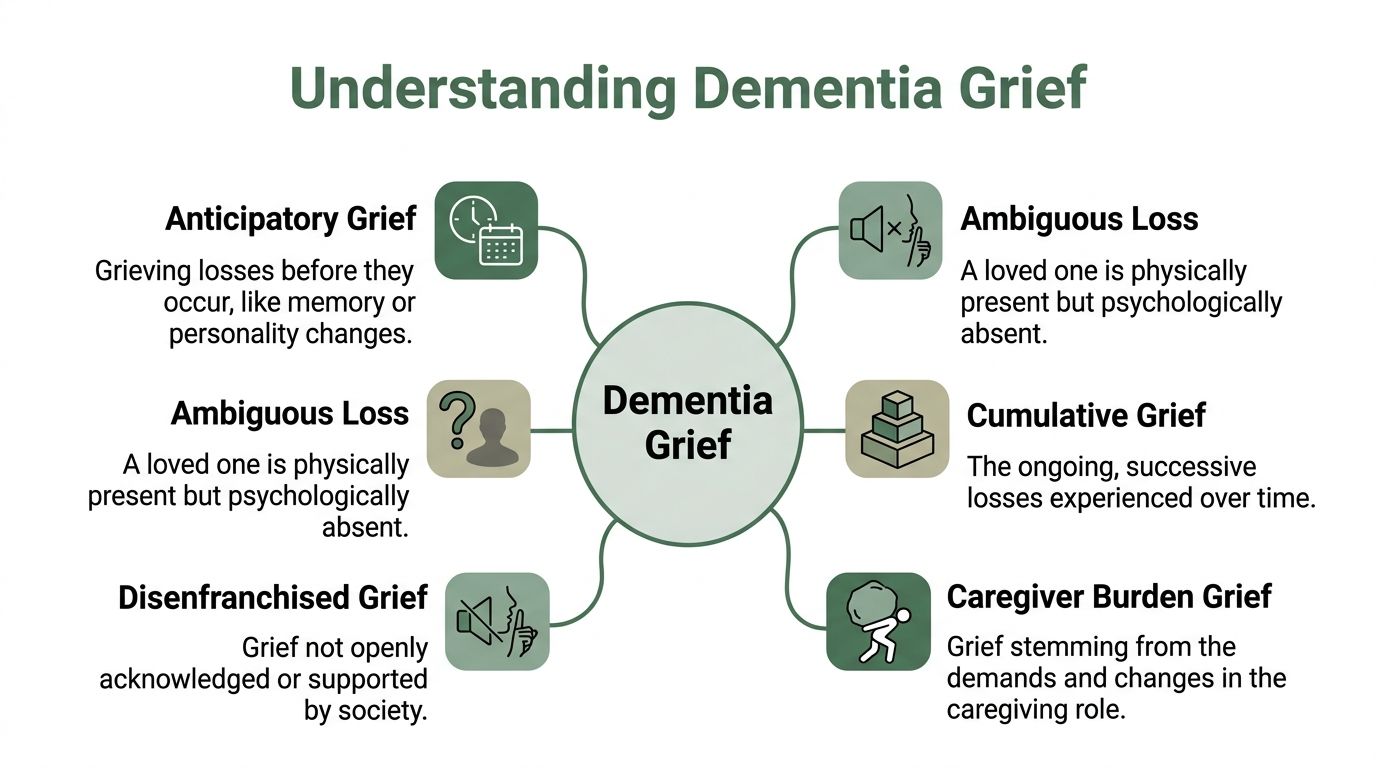
Anticipatory grief is common in dementia caregiving. It affects between 47% and 71% of caregivers, and its intensity often peaks in the moderate stages of dementia, according to this review in International Journal of Geriatric Psychiatry.
Why this grief feels different
Dementia grief isn't usually one large event. It's often a series of smaller losses that pile up over time. A person stops balancing the checkbook. Then stops following a recipe. Then stops remembering the grandchild's name. Then stops knowing how to use the TV remote.
Each change may seem “small” from the outside. Together, they can feel enormous.
That's why many caregivers say they feel as if they're grieving over and over. They are.
Three names that can bring relief
Anticipatory grief is sorrow for losses that are already unfolding and for losses you know may still come. You might grieve the future holiday conversations you may not have, the travel plans you've let go of, or the role reversal that now defines your relationship.
Ambiguous loss is the confusion of loving someone who is physically present but psychologically changed. Your mother is sitting beside you, but she no longer responds like your mother used to. Your spouse is still in the home you built together, but parts of your shared life no longer feel reachable.
Disenfranchised grief is grief that other people don't fully see or validate. There may be no casseroles, no sympathy cards, no clear social ritual. You may hear comments like “At least she's still here,” even when you feel heartbroken by how much has already changed.
Here's a simple way to tell them apart:
Type of grief | What it often feels like |
|---|---|
Anticipatory grief | “I'm grieving what's changing and what may still be lost.” |
Ambiguous loss | “They're here, but not in the same way.” |
Disenfranchised grief | “No one seems to realize I'm grieving at all.” |
A few feelings caregivers often judge too harshly
Some emotions scare caregivers because they seem unacceptable. They're more common than people admit.
Relief: A canceled outing or a nap may bring relief because it gives you a break. Relief doesn't cancel love.
Anger: Repetition, accusations, and disrupted sleep wear people down. Anger often points to strain, not to lack of devotion.
Numbness: Sometimes your mind protects you by going flat for a while.
Shame: Many caregivers feel ashamed for wanting time away, more help, or a different life. Shame usually grows in silence.
When caregivers can name the kind of grief they're living with, they often become less harsh with themselves.
If your feelings seem to shift from hour to hour, that's also consistent with grief and dementia. These losses don't arrive in a neat order, so your emotions rarely do either.
How Dementia Grief Rewires Your Brain and Body
If you've been forgetting simple things, losing words, rereading the same text message, or walking into a room and not remembering why, you may have wondered whether stress is “getting the best of you.” In a sense, yes. But that phrase is too vague. There's a real brain-based reason this happens.

Research shows that dementia caregiver grief activates the same brain regions involved in grief after a death, including the anterior cingulate cortex and the amygdala, and this is associated with clinically measurable brain fog and impaired executive function, as described in this review from Dementia.
Your brain is reacting to loss
The amygdala acts like an emotional alarm system. It helps your brain detect threat, urgency, and distress. The anterior cingulate cortex is involved in pain regulation. When grief keeps getting triggered, these systems can stay highly engaged.
That can make ordinary tasks feel harder than they used to. Planning dinner. Tracking appointments. Making decisions. Switching attention. Starting one task without forgetting another. None of that is “just in your head” in the dismissive sense. It is in your brain, in the very real sense.
You are not failing because you can't think clearly under chronic grief. Your brain is trying to cope with sustained emotional pain.
What this can look like day to day
Caregivers often describe this neurobiology in practical terms:
Mental clutter: You can't hold onto details the way you used to.
Decision fatigue: Even small choices feel heavy.
Shorter fuse: Your system is already overloaded, so one more demand can tip you over.
Physical depletion: Grief doesn't stay neatly emotional. It can leave you drained, achy, restless, or flat.
The person with dementia may also be living through losses they can't fully explain. They may notice that things feel harder. They may sense dependence increasing. They may react with fear, withdrawal, anger, or clinginess. That doesn't excuse hurtful behavior, but it can help explain why difficult moments become so charged.
A short overview like this can help put words to what many families are living with:
One pattern that surprises many families
Grief in dementia caregiving doesn't always rise in a straight line as the disease progresses. In families, some periods feel more emotionally intense than others because change is more visible, conflict is higher, and communication is still possible enough for the losses to be felt sharply. That helps explain why one stage can feel unexpectedly brutal, even if another stage later brings a different kind of sadness.
When your mind feels foggy, simplify before you push harder. Write more down. Lower expectations for nonessential tasks. Repeat information without apologizing. Ask someone else to handle the decision that doesn't need to be yours.
Finding Connection When Communication Changes
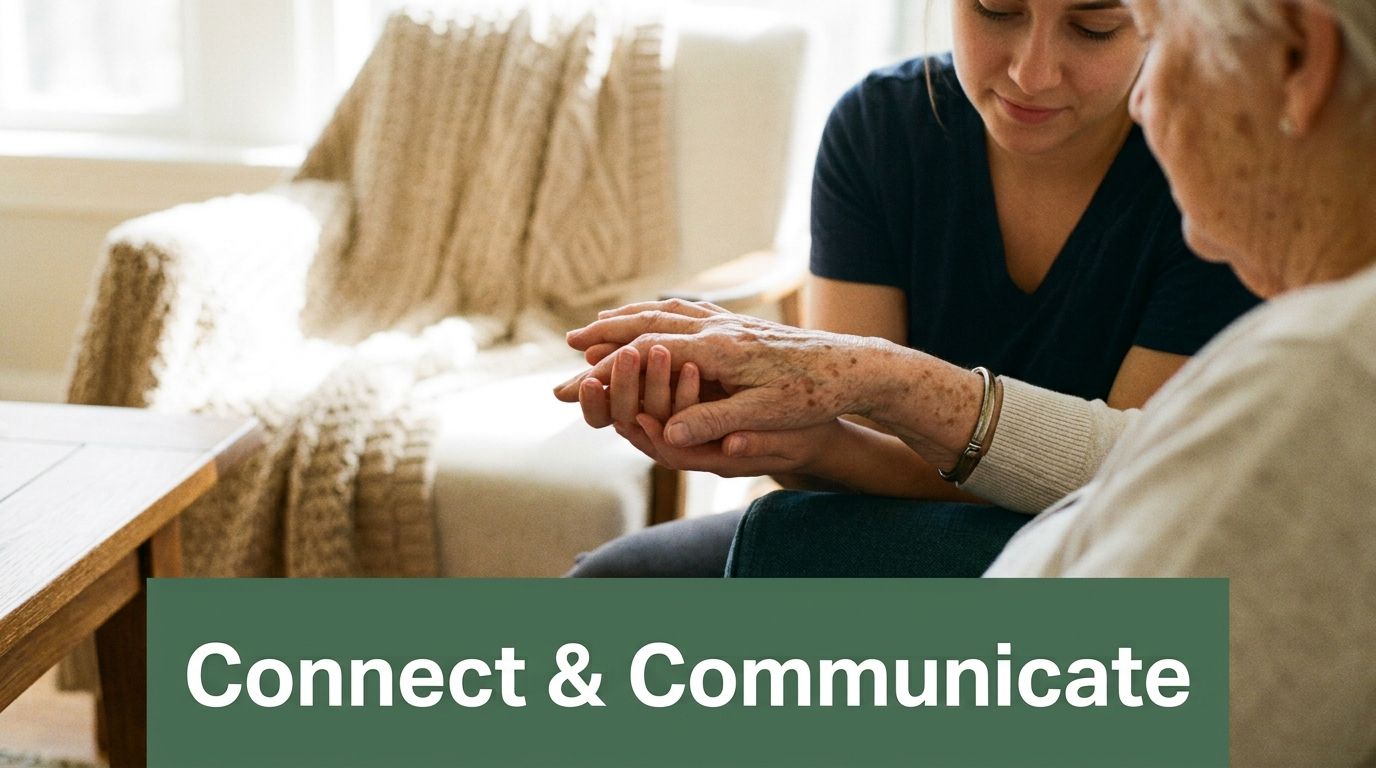
Many caregivers spend enormous energy trying to get back the old conversation. They ask questions to test memory. They correct details. They push for accurate answers. Most of the time, that approach creates more friction than connection.
A gentler goal works better. Try to protect comfort, dignity, and moments of contact, even when facts are slippery.
Stop chasing perfect conversations
If your father insists he needs to leave for work, correcting him may not calm him. Joining the feeling often works better than arguing with the fact.
You might say:
“You always took work seriously.” This validates identity.
“You seem worried about being late.” This names the emotion.
“Let's sit for a minute and make a plan.” This offers safety and direction.
That approach doesn't mean lying carelessly. It means you're responding to the emotional reality in front of you.
A few shifts often help:
Instead of | Try |
|---|---|
“No, that's wrong.” | “Tell me more about that.” |
“Don't you remember?” | “I'm here with you.” |
Rapid-fire questions | One simple prompt at a time |
Correcting every detail | Following the feeling underneath |
Use active reminiscence, not just memory prompts
One of the most hopeful developments in grief and dementia care is the growing attention to structured reminiscence. A recent pilot trial found that a structured, web-based reminiscence intervention significantly reduced grief severity and improved the caregiver-patient relationship, as summarized in this Weill Cornell Medicine report. The key point is important. Passive memory tools weren't the active ingredient. Guided co-creation of memories was.
That means handing someone an old photo album isn't always enough. The therapeutic part is the shared process.
Try a small structure:
Choose one cue. A wedding photo, a favorite song, a recipe card, a postcard.
Ask open, gentle prompts. “What do you notice first?” works better than a quiz question.
Add your piece too. “I remember how proud you looked that day.”
Stay with emotion, not accuracy. If details drift, keep the focus on warmth, pride, humor, or comfort.
End before fatigue takes over. A short positive exchange is better than pushing too long.
A useful test: If the conversation feels like an exam, step back. If it feels like shared storytelling, you're closer to what helps.
Where phone-based support can help
Some families find that consistent, structured phone contact creates useful rhythm. For a person in the early to mid stages of dementia, a calm call can offer orientation, companionship, memory prompts, and a sense of routine without the pressure of travel or screens.
If you're exploring that kind of support, this family guide on how daily phone-based cognitive support works gives a practical example of what those calls can include.
This kind of support doesn't replace family. It can complement what you're already doing by adding repetition, steadiness, and another human voice that isn't exhausted by the history of the day.
Building Your Lifeline A Guide to Self-Care and Support
Caregivers often treat self-care like a reward for finishing everything else. In dementia care, that logic breaks down fast. The work keeps renewing itself. If you wait until the list is done, you won't rest.
What helps is thinking of self-care as maintenance for a strained nervous system.
The brain research in this area is encouraging. The amygdala plays a major role in dementia grief, and stronger functional connectivity between the prefrontal cortex and amygdala is linked to better regulation. Interventions such as mindfulness may help strengthen that regulatory circuit, according to this article on the neural basis of grief.
Self-care is part of the care plan

You do not need a perfect wellness routine. You need repeatable actions that lower the internal alarm level enough for you to think, sleep, and respond with less strain.
Try a small menu rather than a grand plan:
One-minute grounding: Put both feet on the floor and exhale longer than you inhale for a few breaths.
Transition rituals: Before entering your loved one's room or answering a hard phone call, pause and soften your shoulders.
External memory supports: Use sticky notes, a paper planner, alarms, and visible checklists. Borrow structure from tools like medication reminders for seniors with memory loss, then adapt the same idea for yourself.
Short recovery windows: Ten quiet minutes in the car may be more realistic than an hour-long break.
Body basics: Food, water, movement, and sleep won't erase grief, but skipping them makes grief harder to carry.
Build support before you hit a wall
A support system works best when it's specific. “Let me know if you need anything” sounds kind, but it puts the burden back on you to plan and ask.
Try direct requests instead:
“Can you stay with Mom Tuesday from 2 to 4?”
“Can you pick up groceries this week?”
“Can you handle the insurance call?”
“Can I text you after rough evenings so I'm not holding it alone?”
Professional support matters too. A therapist, grief counselor, social worker, faith leader, or caregiver group can give language and containment to feelings that otherwise spill everywhere. If your grief feels stuck, or shame is growing, or you're losing the ability to recover between hard moments, that's a strong reason to bring in outside support.
The strongest caregivers aren't the ones who carry everything alone. They're the ones who build systems that keep love from turning into collapse.
Finding Peace and Purpose on a New Path
Grief and dementia change the map. Most caregivers eventually discover that the old goal, getting back to how things were, keeps hurting them. The person is changing. The relationship is changing. The skills required are changing too.
A kinder goal is to stay connected to what still exists.
That may mean noticing different kinds of closeness. A relaxed face during music. A hand squeeze. A shared laugh over something small. A calm moment on the porch. These moments don't erase the losses. They live beside them.
It also helps to loosen the idea that acceptance means liking what's happening. It doesn't. Acceptance often looks more ordinary than people expect. You stop arguing with the fact that this is hard. You stop measuring yourself against people who aren't living your life. You begin to make decisions based on today's reality instead of yesterday's hopes.
What many caregivers need to hear
Your grief is real, even before death.
Your brain fog is not laziness or weakness.
Connection is still possible, even when conversation changes.
Help is not a betrayal of love. It is one expression of love.
There may never be a clean emotional ending to this chapter. Many caregivers carry sadness, tenderness, frustration, loyalty, and meaning all at once. That isn't failure. It's what deep attachment looks like under strain.
Keep looking for what supports both of you. Protect small routines. Lower the pressure for perfect days. Let other people help sooner than seems necessary. The path may be different now, but it can still hold dignity, steadiness, and moments of genuine peace.
If you'd like extra support between visits, Velma offers phone-based cognitive support for older adults in the early to mid stages of dementia. Through scheduled calls, conversation, cognitive exercises, and well-being check-ins, Velma can help families add structure, companionship, and daily reassurance without requiring apps or complicated technology.
Some days, dementia caregiving feels like standing in two realities at once. Your loved one is right in front of you. You're making breakfast, helping with pills, answering the same question again. But at the same time, you're missing the person they used to be. You may feel love, sorrow, irritation, protectiveness, guilt, and even relief, all before lunch.
That mix of emotions can be unsettling. Many caregivers worry that feeling grief before a death means something is wrong with them. It doesn't. It means you're responding to real losses that keep arriving in small, painful pieces. In the United States, nearly 13 million unpaid caregivers provided over 19 billion hours of care valued at $446 billion in 2025, according to this London School of Hygiene & Tropical Medicine summary. You are not the only one carrying this.
Sometimes this journey starts with small changes that are easy to second-guess. If you're still trying to understand what you noticed first, this guide to early signs of memory loss in aging parents may help put those early moments into words.
Table of Contents
The Unspoken Grief of a Long Goodbye
Why this loss is easy to miss
Love and grief can exist together
Naming the Grief Before Goodbye
Why this grief feels different
Three names that can bring relief
A few feelings caregivers often judge too harshly
How Dementia Grief Rewires Your Brain and Body
Your brain is reacting to loss
What this can look like day to day
One pattern that surprises many families
Finding Connection When Communication Changes
Stop chasing perfect conversations
Use active reminiscence, not just memory prompts
Where phone-based support can help
Building Your Lifeline A Guide to Self-Care and Support
Self-care is part of the care plan
Build support before you hit a wall
Finding Peace and Purpose on a New Path
What many caregivers need to hear
The Unspoken Grief of a Long Goodbye
A husband helps his wife button her sweater. She smiles at him warmly, then asks when her husband is coming home.
A daughter drives her dad to an appointment he used to manage himself. In the waiting room, he jokes with strangers and seems almost like himself. On the drive back, he accuses her of stealing his wallet.
These moments hurt because they hold two truths at once. The person you love is still here. The relationship you once knew has changed. That tension is where grief and dementia so often meet.
Why this loss is easy to miss
Most of us learn to recognize grief after a funeral, after a clear ending, after other people gather around and say, “I'm sorry.” Dementia rarely works that way. It unfolds slowly. One lost skill. One changed habit. One missing memory. Then another.
Practical rule: If you're mourning changes in someone who is still alive, that is still grief.
Caregivers often tell themselves they should be “handling it better” because nothing final has happened yet. But something has happened. Daily life has changed. Roles have changed. The future you expected may be changing too.
Love and grief can exist together
You can feel devoted and exhausted. You can miss who they were and still enjoy a tender moment today. You can resent the workload and still be loving.
That doesn't make you cold. It makes you human.
A lot of dementia caregiving is private. The hard parts happen in kitchens, bathrooms, pharmacies, and late-night phone calls. Other people may see only the polite public version of your loved one. They may not see the confusion, suspicion, or repetitive questions that fill your day. That can leave you feeling unseen inside a life that takes everything you have.
Naming the Grief Before Goodbye
For many people, relief begins when the feelings finally have names. Not labels to box you in. Names that help you stop thinking, “Why am I reacting like this?” and start thinking, “Of course this hurts.”
Anticipatory grief is common in dementia caregiving. It affects between 47% and 71% of caregivers, and its intensity often peaks in the moderate stages of dementia, according to this review in International Journal of Geriatric Psychiatry.
Why this grief feels different
Dementia grief isn't usually one large event. It's often a series of smaller losses that pile up over time. A person stops balancing the checkbook. Then stops following a recipe. Then stops remembering the grandchild's name. Then stops knowing how to use the TV remote.
Each change may seem “small” from the outside. Together, they can feel enormous.
That's why many caregivers say they feel as if they're grieving over and over. They are.
Three names that can bring relief
Anticipatory grief is sorrow for losses that are already unfolding and for losses you know may still come. You might grieve the future holiday conversations you may not have, the travel plans you've let go of, or the role reversal that now defines your relationship.
Ambiguous loss is the confusion of loving someone who is physically present but psychologically changed. Your mother is sitting beside you, but she no longer responds like your mother used to. Your spouse is still in the home you built together, but parts of your shared life no longer feel reachable.
Disenfranchised grief is grief that other people don't fully see or validate. There may be no casseroles, no sympathy cards, no clear social ritual. You may hear comments like “At least she's still here,” even when you feel heartbroken by how much has already changed.
Here's a simple way to tell them apart:
Type of grief | What it often feels like |
|---|---|
Anticipatory grief | “I'm grieving what's changing and what may still be lost.” |
Ambiguous loss | “They're here, but not in the same way.” |
Disenfranchised grief | “No one seems to realize I'm grieving at all.” |
A few feelings caregivers often judge too harshly
Some emotions scare caregivers because they seem unacceptable. They're more common than people admit.
Relief: A canceled outing or a nap may bring relief because it gives you a break. Relief doesn't cancel love.
Anger: Repetition, accusations, and disrupted sleep wear people down. Anger often points to strain, not to lack of devotion.
Numbness: Sometimes your mind protects you by going flat for a while.
Shame: Many caregivers feel ashamed for wanting time away, more help, or a different life. Shame usually grows in silence.
When caregivers can name the kind of grief they're living with, they often become less harsh with themselves.
If your feelings seem to shift from hour to hour, that's also consistent with grief and dementia. These losses don't arrive in a neat order, so your emotions rarely do either.
How Dementia Grief Rewires Your Brain and Body
If you've been forgetting simple things, losing words, rereading the same text message, or walking into a room and not remembering why, you may have wondered whether stress is “getting the best of you.” In a sense, yes. But that phrase is too vague. There's a real brain-based reason this happens.
Research shows that dementia caregiver grief activates the same brain regions involved in grief after a death, including the anterior cingulate cortex and the amygdala, and this is associated with clinically measurable brain fog and impaired executive function, as described in this review from Dementia.
Your brain is reacting to loss
The amygdala acts like an emotional alarm system. It helps your brain detect threat, urgency, and distress. The anterior cingulate cortex is involved in pain regulation. When grief keeps getting triggered, these systems can stay highly engaged.
That can make ordinary tasks feel harder than they used to. Planning dinner. Tracking appointments. Making decisions. Switching attention. Starting one task without forgetting another. None of that is “just in your head” in the dismissive sense. It is in your brain, in the very real sense.
You are not failing because you can't think clearly under chronic grief. Your brain is trying to cope with sustained emotional pain.
What this can look like day to day
Caregivers often describe this neurobiology in practical terms:
Mental clutter: You can't hold onto details the way you used to.
Decision fatigue: Even small choices feel heavy.
Shorter fuse: Your system is already overloaded, so one more demand can tip you over.
Physical depletion: Grief doesn't stay neatly emotional. It can leave you drained, achy, restless, or flat.
The person with dementia may also be living through losses they can't fully explain. They may notice that things feel harder. They may sense dependence increasing. They may react with fear, withdrawal, anger, or clinginess. That doesn't excuse hurtful behavior, but it can help explain why difficult moments become so charged.
A short overview like this can help put words to what many families are living with:
One pattern that surprises many families
Grief in dementia caregiving doesn't always rise in a straight line as the disease progresses. In families, some periods feel more emotionally intense than others because change is more visible, conflict is higher, and communication is still possible enough for the losses to be felt sharply. That helps explain why one stage can feel unexpectedly brutal, even if another stage later brings a different kind of sadness.
When your mind feels foggy, simplify before you push harder. Write more down. Lower expectations for nonessential tasks. Repeat information without apologizing. Ask someone else to handle the decision that doesn't need to be yours.
Finding Connection When Communication Changes
Many caregivers spend enormous energy trying to get back the old conversation. They ask questions to test memory. They correct details. They push for accurate answers. Most of the time, that approach creates more friction than connection.
A gentler goal works better. Try to protect comfort, dignity, and moments of contact, even when facts are slippery.
Stop chasing perfect conversations
If your father insists he needs to leave for work, correcting him may not calm him. Joining the feeling often works better than arguing with the fact.
You might say:
“You always took work seriously.” This validates identity.
“You seem worried about being late.” This names the emotion.
“Let's sit for a minute and make a plan.” This offers safety and direction.
That approach doesn't mean lying carelessly. It means you're responding to the emotional reality in front of you.
A few shifts often help:
Instead of | Try |
|---|---|
“No, that's wrong.” | “Tell me more about that.” |
“Don't you remember?” | “I'm here with you.” |
Rapid-fire questions | One simple prompt at a time |
Correcting every detail | Following the feeling underneath |
Use active reminiscence, not just memory prompts
One of the most hopeful developments in grief and dementia care is the growing attention to structured reminiscence. A recent pilot trial found that a structured, web-based reminiscence intervention significantly reduced grief severity and improved the caregiver-patient relationship, as summarized in this Weill Cornell Medicine report. The key point is important. Passive memory tools weren't the active ingredient. Guided co-creation of memories was.
That means handing someone an old photo album isn't always enough. The therapeutic part is the shared process.
Try a small structure:
Choose one cue. A wedding photo, a favorite song, a recipe card, a postcard.
Ask open, gentle prompts. “What do you notice first?” works better than a quiz question.
Add your piece too. “I remember how proud you looked that day.”
Stay with emotion, not accuracy. If details drift, keep the focus on warmth, pride, humor, or comfort.
End before fatigue takes over. A short positive exchange is better than pushing too long.
A useful test: If the conversation feels like an exam, step back. If it feels like shared storytelling, you're closer to what helps.
Where phone-based support can help
Some families find that consistent, structured phone contact creates useful rhythm. For a person in the early to mid stages of dementia, a calm call can offer orientation, companionship, memory prompts, and a sense of routine without the pressure of travel or screens.
If you're exploring that kind of support, this family guide on how daily phone-based cognitive support works gives a practical example of what those calls can include.
This kind of support doesn't replace family. It can complement what you're already doing by adding repetition, steadiness, and another human voice that isn't exhausted by the history of the day.
Building Your Lifeline A Guide to Self-Care and Support
Caregivers often treat self-care like a reward for finishing everything else. In dementia care, that logic breaks down fast. The work keeps renewing itself. If you wait until the list is done, you won't rest.
What helps is thinking of self-care as maintenance for a strained nervous system.
The brain research in this area is encouraging. The amygdala plays a major role in dementia grief, and stronger functional connectivity between the prefrontal cortex and amygdala is linked to better regulation. Interventions such as mindfulness may help strengthen that regulatory circuit, according to this article on the neural basis of grief.
Self-care is part of the care plan
You do not need a perfect wellness routine. You need repeatable actions that lower the internal alarm level enough for you to think, sleep, and respond with less strain.
Try a small menu rather than a grand plan:
One-minute grounding: Put both feet on the floor and exhale longer than you inhale for a few breaths.
Transition rituals: Before entering your loved one's room or answering a hard phone call, pause and soften your shoulders.
External memory supports: Use sticky notes, a paper planner, alarms, and visible checklists. Borrow structure from tools like medication reminders for seniors with memory loss, then adapt the same idea for yourself.
Short recovery windows: Ten quiet minutes in the car may be more realistic than an hour-long break.
Body basics: Food, water, movement, and sleep won't erase grief, but skipping them makes grief harder to carry.
Build support before you hit a wall
A support system works best when it's specific. “Let me know if you need anything” sounds kind, but it puts the burden back on you to plan and ask.
Try direct requests instead:
“Can you stay with Mom Tuesday from 2 to 4?”
“Can you pick up groceries this week?”
“Can you handle the insurance call?”
“Can I text you after rough evenings so I'm not holding it alone?”
Professional support matters too. A therapist, grief counselor, social worker, faith leader, or caregiver group can give language and containment to feelings that otherwise spill everywhere. If your grief feels stuck, or shame is growing, or you're losing the ability to recover between hard moments, that's a strong reason to bring in outside support.
The strongest caregivers aren't the ones who carry everything alone. They're the ones who build systems that keep love from turning into collapse.
Finding Peace and Purpose on a New Path
Grief and dementia change the map. Most caregivers eventually discover that the old goal, getting back to how things were, keeps hurting them. The person is changing. The relationship is changing. The skills required are changing too.
A kinder goal is to stay connected to what still exists.
That may mean noticing different kinds of closeness. A relaxed face during music. A hand squeeze. A shared laugh over something small. A calm moment on the porch. These moments don't erase the losses. They live beside them.
It also helps to loosen the idea that acceptance means liking what's happening. It doesn't. Acceptance often looks more ordinary than people expect. You stop arguing with the fact that this is hard. You stop measuring yourself against people who aren't living your life. You begin to make decisions based on today's reality instead of yesterday's hopes.
What many caregivers need to hear
Your grief is real, even before death.
Your brain fog is not laziness or weakness.
Connection is still possible, even when conversation changes.
Help is not a betrayal of love. It is one expression of love.
There may never be a clean emotional ending to this chapter. Many caregivers carry sadness, tenderness, frustration, loyalty, and meaning all at once. That isn't failure. It's what deep attachment looks like under strain.
Keep looking for what supports both of you. Protect small routines. Lower the pressure for perfect days. Let other people help sooner than seems necessary. The path may be different now, but it can still hold dignity, steadiness, and moments of genuine peace.
If you'd like extra support between visits, Velma offers phone-based cognitive support for older adults in the early to mid stages of dementia. Through scheduled calls, conversation, cognitive exercises, and well-being check-ins, Velma can help families add structure, companionship, and daily reassurance without requiring apps or complicated technology.
Suggested Article: