Brain Activities for Seniors With Memory Loss (2026 Family Guide)
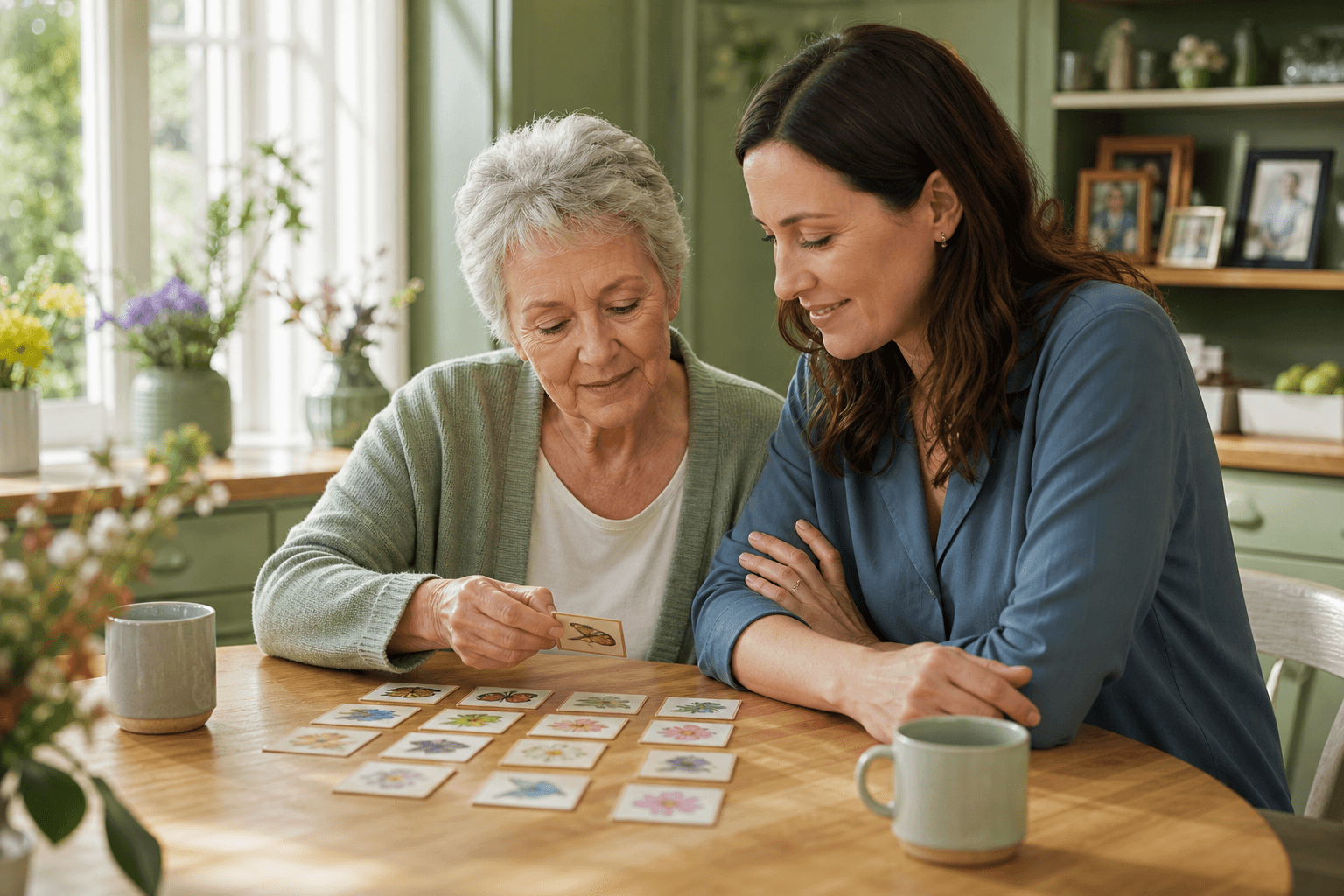
Brain activities for seniors with memory loss should be simple, familiar, and enjoyable enough to repeat. Good options include matching games, familiar music, photo reminiscence, easy word activities, guided conversation, and practical tasks like sorting or following a favorite recipe. These activities may support engagement, mood, and daily connection, but they do not cure dementia or replace medical care. Hey Velma offers one phone-based way to add scheduled cognitive conversation and routine support when families cannot lead activities every day. Published plans start at $199 per month, with a free first session at heyvelma.com.
This guide explains which activities fit different ability levels, how to avoid frustration, and when daily support may help. For more home structure ideas, see daily routines for seniors with early memory loss.
What Are Good Brain Activities for Seniors With Memory Loss?
Good brain activities for seniors with memory loss use familiar interests while asking for gentle attention, conversation, recognition, or sequencing. Matching cards, favorite songs, photo albums, simple word games, and familiar household tasks often work well. The right activity should feel achievable, not like a test, and it should stop before tiredness or frustration builds.
The Alzheimer's Foundation of America includes activities such as trivia, word finds, cards, conversation, storytelling, art, music, and reminiscence among early-stage options. Choose according to the person's history. A retired teacher may enjoy naming games, while a gardener may prefer sorting seeds or talking through a favorite planting routine.
Here are six practical starters:
Picture matching with a small number of cards.
Favorite music, singing, or a conversation about a well-known song.
Photo album reminiscence with simple, open prompts.
Category naming, such as fruits, pets, or foods.
A familiar recipe or household task explained one step at a time.
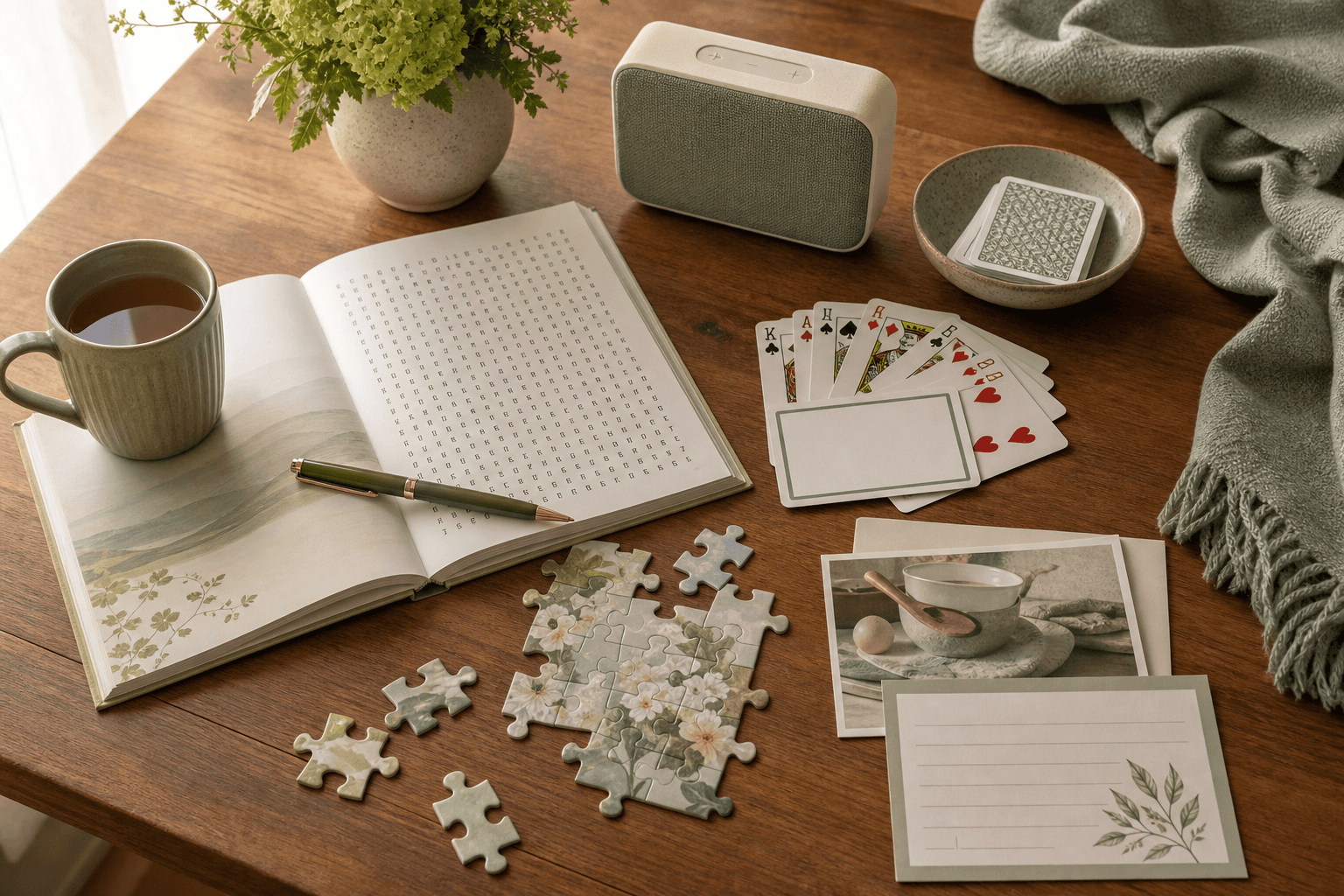
Large-print word finds or a simple puzzle, if the person enjoys them.
How Do You Choose an Activity That Will Not Cause Frustration?
Choose an activity that matches what the person can do today, not what they used to do easily. Start with one clear step, give a cue before correcting, and keep sessions short. If the person becomes quiet, irritated, or tired, lower the difficulty or switch to a familiar conversation, music, or movement activity.
A useful rule is to make success easy to find. Use fewer matching cards, shorter word lists, larger print, or a familiar photo. Offer choices of two rather than broad questions. Avoid asking, "Don't you remember?" Instead, try, "This picture reminds me of the beach. What do you notice first?"
The activity does not need to produce a correct answer to be worthwhile. Sharing attention, sparking a memory, or creating a calmer moment can be a meaningful result.

Do Brain Games Improve Memory Loss or Dementia?
Brain games can help people practice specific tasks and stay engaged, but they have not been shown to prevent or reverse dementia. Evidence supports realistic expectations: choose activities that are enjoyable, varied, and guided when possible. Focus on participation, connection, and daily confidence rather than expecting a game or app to restore lost abilities.
Alzheimer's Society notes that brain training may improve performance on trained tasks, while its effect on dementia itself remains unproven. It also advises caution around products that claim to prevent or delay cognitive decline.
The best takeaway for families is not to abandon activities. It is to use them honestly. A crossword, card game, or music session can be valuable because it creates focus, conversation, and routine. It should not be sold as a medical intervention.
Which Types of Activities Work Best at Different Ability Levels?
The best activity level is the one that lets the person participate with mild effort and a clear finish. In earlier memory loss, simple games and new learning may still be welcome. As tasks become harder, familiar music, photo reminiscence, sorting, and guided conversation often remain more comfortable because they rely on recognition and routine.
If the person enjoys... | Try... | Make it easier by... |
|---|---|---|
Words and language | Large-print word finds, category naming, storytelling | Use familiar topics and no timer |
Visual recognition | Photo albums, picture matching, simple puzzles | Use fewer pieces or cards |
Music | Favorite songs, singalongs, discussing lyrics | Play one song at a time |
Practical routines | Folding towels, sorting utensils, following a recipe | Give one instruction at a time |
Conversation | Weather, past jobs, family stories, a daily phone call | Ask open but specific prompts |
Variety helps, but avoid changing everything at once. Keep the time, setting, and activity type predictable enough that the person knows what to expect. The National Institute on Aging also encourages mental and social activity as part of broader support for older adults.
How Can Families Build Brain Activities Into a Daily Routine?
Families can build brain activities into a daily routine by attaching one short activity to a familiar moment, such as breakfast, an afternoon cup of tea, or a scheduled call. A 15 to 20 minute session is often enough. Repetition makes the activity easier to begin, while small changes in topic keep it interesting.
Try a simple weekly rhythm:
Monday: Picture matching or a word activity after breakfast.
Tuesday: Favorite music and a story about a song or artist.
Wednesday: Photo reminiscence with a family member.
Thursday: Category naming or a short guided conversation.
Friday: A familiar recipe, folding task, or simple sorting activity.
Weekend: An outing, visit, or phone call that includes one shared topic.
For more examples of routine anchors, see daily routines for seniors with early memory loss. If your parent begins withdrawing from activities they once enjoyed, or confusion changes suddenly, share those changes with their clinician.
How Does Phone-Based Cognitive Support Help With Daily Engagement?
Phone-based cognitive support creates a regular opportunity for guided conversation and simple brain activities without requiring an app, screen, or transportation. A predictable call can start with orientation, move into one ability-matched activity, and end with a practical routine prompt. This format can support consistency when family members live far away or have limited daily availability.
Hey Velma is a non-medical cognitive support program for older adults with early memory loss who live at home. It combines scheduled phone sessions, AI-assisted routine support, a care manager who adjusts the plan, and family updates when patterns shift. It is not a replacement for a neurologist, primary care clinician, emergency services, or 24/7 supervision.

For a closer look at the format, read how Hey Velma works and what Hey Velma cognitive support is. Check current details on the research page and terms and conditions.
When Should Families Add More Support Than Brain Activities?
Families should add more support when brain activities are no longer enough to address skipped meals, missed medications, unsafe cooking, falls, isolation, or caregiver exhaustion. Brain activities can add connection and structure, but they cannot provide hands-on care, medical assessment, or emergency supervision. Add home aides, adult day, clinical support, or higher-level care as needs change.
It can help to write down what is happening over two weeks. Look for trends in daily tasks, safety, mood, sleep, and social connection. If there is a sudden change in confusion or function, contact the person's clinician promptly. For a family planning guide after a diagnosis, see what to do after a parent's dementia diagnosis.
FAQ: Brain Activities for Seniors With Memory Loss
What are the best brain activities for seniors with memory loss?
The best activities are familiar, short, and matched to current ability. Photo reminiscence, favorite music, matching games, category naming, simple word activities, and practical sorting tasks are good starting points. Stop before the person becomes tired or frustrated.
Can brain games reverse memory loss?
No. Brain games do not reverse dementia or replace medical care. They may support engagement and practice with specific skills, but families should be cautious about any product that promises to prevent or cure cognitive decline.
How long should a brain activity session last?
Many people do well with 15 to 20 minutes. Short, repeated sessions are often more comfortable than a long activity. Adjust based on attention, energy, and mood that day.
What if my parent refuses games or puzzles?
Switch to music, family photos, cooking, folding towels, gardening, or conversation about familiar memories. Frame it as shared time rather than an exercise. Forced activities often increase resistance.
Is Hey Velma a medical treatment for memory loss?
No. Hey Velma is a non-medical cognitive support subscription with guided sessions, routine support, and family insights. It does not diagnose, treat, or cure dementia and does not replace clinician-led care.
How much does Hey Velma cost?
Published plans are $199 per month for Core and $499 per month for Customized Care. The website advertises a free first session. Confirm current pricing and terms before enrolling.
What Is the Bottom Line on Brain Activities for Seniors With Memory Loss?
Brain activities for seniors with memory loss work best when they feel familiar, social, and achievable. Start with music, photos, matching, simple word games, and practical routines. Keep expectations grounded: the goal is daily engagement and connection, not a cure.
When family coaching alone is hard to sustain, Hey Velma can add scheduled cognitive phone sessions, routine support, and family visibility for early memory loss at home. Start with a free first session at heyvelma.com.
Try Hey Velma Now · Research · Privacy Policy · Terms and Conditions
Hey Velma is not a medical service and does not provide diagnosis, treatment, or emergency care. Confirm pricing and policies on the live site before enrolling.Explore brain activities for seniors with memory loss, from reminiscence and music to simple games, plus phone-based cognitive support from Velma.
Brain activities for seniors with memory loss should be simple, familiar, and enjoyable enough to repeat. Good options include matching games, familiar music, photo reminiscence, easy word activities, guided conversation, and practical tasks like sorting or following a favorite recipe. These activities may support engagement, mood, and daily connection, but they do not cure dementia or replace medical care. Hey Velma offers one phone-based way to add scheduled cognitive conversation and routine support when families cannot lead activities every day. Published plans start at $199 per month, with a free first session at heyvelma.com.
This guide explains which activities fit different ability levels, how to avoid frustration, and when daily support may help. For more home structure ideas, see daily routines for seniors with early memory loss.
What Are Good Brain Activities for Seniors With Memory Loss?
Good brain activities for seniors with memory loss use familiar interests while asking for gentle attention, conversation, recognition, or sequencing. Matching cards, favorite songs, photo albums, simple word games, and familiar household tasks often work well. The right activity should feel achievable, not like a test, and it should stop before tiredness or frustration builds.
The Alzheimer's Foundation of America includes activities such as trivia, word finds, cards, conversation, storytelling, art, music, and reminiscence among early-stage options. Choose according to the person's history. A retired teacher may enjoy naming games, while a gardener may prefer sorting seeds or talking through a favorite planting routine.
Here are six practical starters:
Picture matching with a small number of cards.
Favorite music, singing, or a conversation about a well-known song.
Photo album reminiscence with simple, open prompts.
Category naming, such as fruits, pets, or foods.
A familiar recipe or household task explained one step at a time.
Large-print word finds or a simple puzzle, if the person enjoys them.
How Do You Choose an Activity That Will Not Cause Frustration?
Choose an activity that matches what the person can do today, not what they used to do easily. Start with one clear step, give a cue before correcting, and keep sessions short. If the person becomes quiet, irritated, or tired, lower the difficulty or switch to a familiar conversation, music, or movement activity.
A useful rule is to make success easy to find. Use fewer matching cards, shorter word lists, larger print, or a familiar photo. Offer choices of two rather than broad questions. Avoid asking, "Don't you remember?" Instead, try, "This picture reminds me of the beach. What do you notice first?"
The activity does not need to produce a correct answer to be worthwhile. Sharing attention, sparking a memory, or creating a calmer moment can be a meaningful result.
Do Brain Games Improve Memory Loss or Dementia?
Brain games can help people practice specific tasks and stay engaged, but they have not been shown to prevent or reverse dementia. Evidence supports realistic expectations: choose activities that are enjoyable, varied, and guided when possible. Focus on participation, connection, and daily confidence rather than expecting a game or app to restore lost abilities.
Alzheimer's Society notes that brain training may improve performance on trained tasks, while its effect on dementia itself remains unproven. It also advises caution around products that claim to prevent or delay cognitive decline.
The best takeaway for families is not to abandon activities. It is to use them honestly. A crossword, card game, or music session can be valuable because it creates focus, conversation, and routine. It should not be sold as a medical intervention.
Which Types of Activities Work Best at Different Ability Levels?
The best activity level is the one that lets the person participate with mild effort and a clear finish. In earlier memory loss, simple games and new learning may still be welcome. As tasks become harder, familiar music, photo reminiscence, sorting, and guided conversation often remain more comfortable because they rely on recognition and routine.
If the person enjoys... | Try... | Make it easier by... |
|---|---|---|
Words and language | Large-print word finds, category naming, storytelling | Use familiar topics and no timer |
Visual recognition | Photo albums, picture matching, simple puzzles | Use fewer pieces or cards |
Music | Favorite songs, singalongs, discussing lyrics | Play one song at a time |
Practical routines | Folding towels, sorting utensils, following a recipe | Give one instruction at a time |
Conversation | Weather, past jobs, family stories, a daily phone call | Ask open but specific prompts |
Variety helps, but avoid changing everything at once. Keep the time, setting, and activity type predictable enough that the person knows what to expect. The National Institute on Aging also encourages mental and social activity as part of broader support for older adults.
How Can Families Build Brain Activities Into a Daily Routine?
Families can build brain activities into a daily routine by attaching one short activity to a familiar moment, such as breakfast, an afternoon cup of tea, or a scheduled call. A 15 to 20 minute session is often enough. Repetition makes the activity easier to begin, while small changes in topic keep it interesting.
Try a simple weekly rhythm:
Monday: Picture matching or a word activity after breakfast.
Tuesday: Favorite music and a story about a song or artist.
Wednesday: Photo reminiscence with a family member.
Thursday: Category naming or a short guided conversation.
Friday: A familiar recipe, folding task, or simple sorting activity.
Weekend: An outing, visit, or phone call that includes one shared topic.
For more examples of routine anchors, see daily routines for seniors with early memory loss. If your parent begins withdrawing from activities they once enjoyed, or confusion changes suddenly, share those changes with their clinician.
How Does Phone-Based Cognitive Support Help With Daily Engagement?
Phone-based cognitive support creates a regular opportunity for guided conversation and simple brain activities without requiring an app, screen, or transportation. A predictable call can start with orientation, move into one ability-matched activity, and end with a practical routine prompt. This format can support consistency when family members live far away or have limited daily availability.
Hey Velma is a non-medical cognitive support program for older adults with early memory loss who live at home. It combines scheduled phone sessions, AI-assisted routine support, a care manager who adjusts the plan, and family updates when patterns shift. It is not a replacement for a neurologist, primary care clinician, emergency services, or 24/7 supervision.
For a closer look at the format, read how Hey Velma works and what Hey Velma cognitive support is. Check current details on the research page and terms and conditions.
When Should Families Add More Support Than Brain Activities?
Families should add more support when brain activities are no longer enough to address skipped meals, missed medications, unsafe cooking, falls, isolation, or caregiver exhaustion. Brain activities can add connection and structure, but they cannot provide hands-on care, medical assessment, or emergency supervision. Add home aides, adult day, clinical support, or higher-level care as needs change.
It can help to write down what is happening over two weeks. Look for trends in daily tasks, safety, mood, sleep, and social connection. If there is a sudden change in confusion or function, contact the person's clinician promptly. For a family planning guide after a diagnosis, see what to do after a parent's dementia diagnosis.
FAQ: Brain Activities for Seniors With Memory Loss
What are the best brain activities for seniors with memory loss?
The best activities are familiar, short, and matched to current ability. Photo reminiscence, favorite music, matching games, category naming, simple word activities, and practical sorting tasks are good starting points. Stop before the person becomes tired or frustrated.
Can brain games reverse memory loss?
No. Brain games do not reverse dementia or replace medical care. They may support engagement and practice with specific skills, but families should be cautious about any product that promises to prevent or cure cognitive decline.
How long should a brain activity session last?
Many people do well with 15 to 20 minutes. Short, repeated sessions are often more comfortable than a long activity. Adjust based on attention, energy, and mood that day.
What if my parent refuses games or puzzles?
Switch to music, family photos, cooking, folding towels, gardening, or conversation about familiar memories. Frame it as shared time rather than an exercise. Forced activities often increase resistance.
Is Hey Velma a medical treatment for memory loss?
No. Hey Velma is a non-medical cognitive support subscription with guided sessions, routine support, and family insights. It does not diagnose, treat, or cure dementia and does not replace clinician-led care.
How much does Hey Velma cost?
Published plans are $199 per month for Core and $499 per month for Customized Care. The website advertises a free first session. Confirm current pricing and terms before enrolling.
What Is the Bottom Line on Brain Activities for Seniors With Memory Loss?
Brain activities for seniors with memory loss work best when they feel familiar, social, and achievable. Start with music, photos, matching, simple word games, and practical routines. Keep expectations grounded: the goal is daily engagement and connection, not a cure.
When family coaching alone is hard to sustain, Hey Velma can add scheduled cognitive phone sessions, routine support, and family visibility for early memory loss at home. Start with a free first session at heyvelma.com.
Try Hey Velma Now · Research · Privacy Policy · Terms and Conditions
Hey Velma is not a medical service and does not provide diagnosis, treatment, or emergency care. Confirm pricing and policies on the live site before enrolling.Explore brain activities for seniors with memory loss, from reminiscence and music to simple games, plus phone-based cognitive support from Velma.
Suggested Article: