How to Help a Dementia Parent With Daily Tasks (2026 Family Guided) Post

How to help a dementia parent with daily tasks starts with simpler steps, clearer cues, and less takeover. Break tasks into short sequences, keep the same order each day, offer choices of two, and step in only when safety or dignity is at risk. Focus first on medications, meals, dressing, hygiene, and household basics. Hey Velma is one phone-based option that adds guided routine prompts, daily cognitive sessions, and family alerts when you cannot coach every task yourself, with published plans from $199 per month and a free first session at heyvelma.com.
This guide covers practical help for common daily tasks, what to avoid, how support options compare, and when to add outside help. For a fuller day structure, see daily routines for seniors with early memory loss. After a new diagnosis, start with what to do after a parent's dementia diagnosis.
What Does Helping a Dementia Parent With Daily Tasks Look Like?
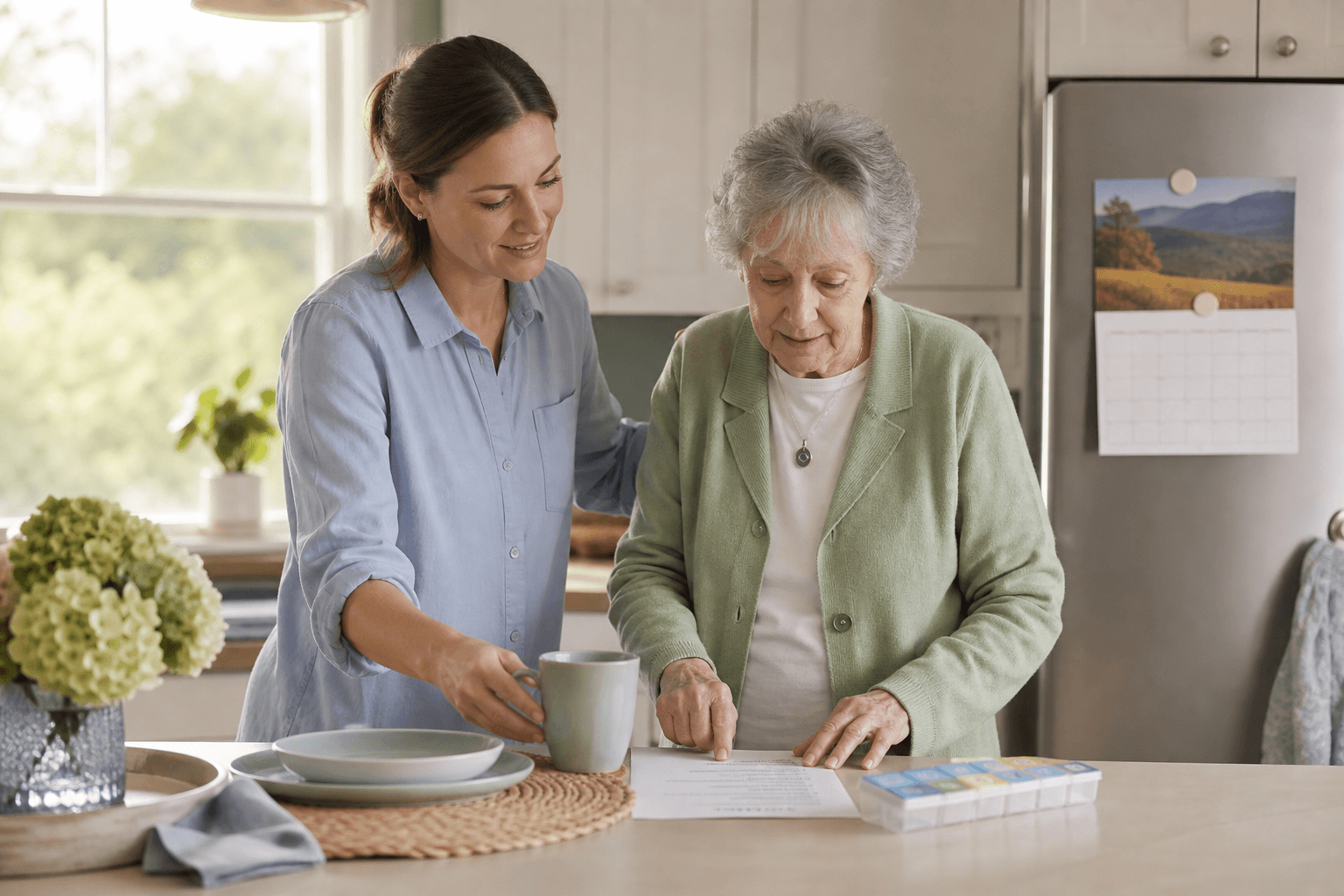
Helping a dementia parent with daily tasks means supporting independence with cues, not doing everything for them. Useful help looks like laying out clothes in order, placing a labeled pill organizer by breakfast, and using short verbal prompts. The goal is safer completion with less stress for both of you, not a perfect checklist every day.
National caregiver guidance from Alzheimers.gov and the Alzheimer's Association emphasizes patience, simplified instructions, and routines that reduce decision load. Early-stage caregiving often still includes shared planning, while later stages need more hands-on support and supervision. Match help to today's abilities, which can change by time of day.
A practical rule: if your parent can start the task with one cue, let them finish. If they stall or get unsafe, take the next step together. Taking over too early can increase frustration and dependency faster than needed.
Which Daily Tasks Should Families Prioritize First?
Families should prioritize medications, meals, dressing, hygiene, and safety basics first when helping a dementia parent with daily tasks. These affect health and fall risk most quickly. Household chores, appointments, and social plans come next once the core day is stable. Start with one or two problem areas instead of redesigning the whole house at once.
Priority order that works for many homes:
Medications and hydration
Meals and simple kitchen safety
Dressing and personal hygiene
Toileting cues and bathroom setup
Appointments, mail, and bills with oversight
Light housekeeping that still feels purposeful
For medication systems specifically, see medication reminders for seniors with memory loss. For broader early changes that often show up in daily life, see early signs of memory loss in aging parents.
How Can You Help With Medications, Meals, and Dressing?
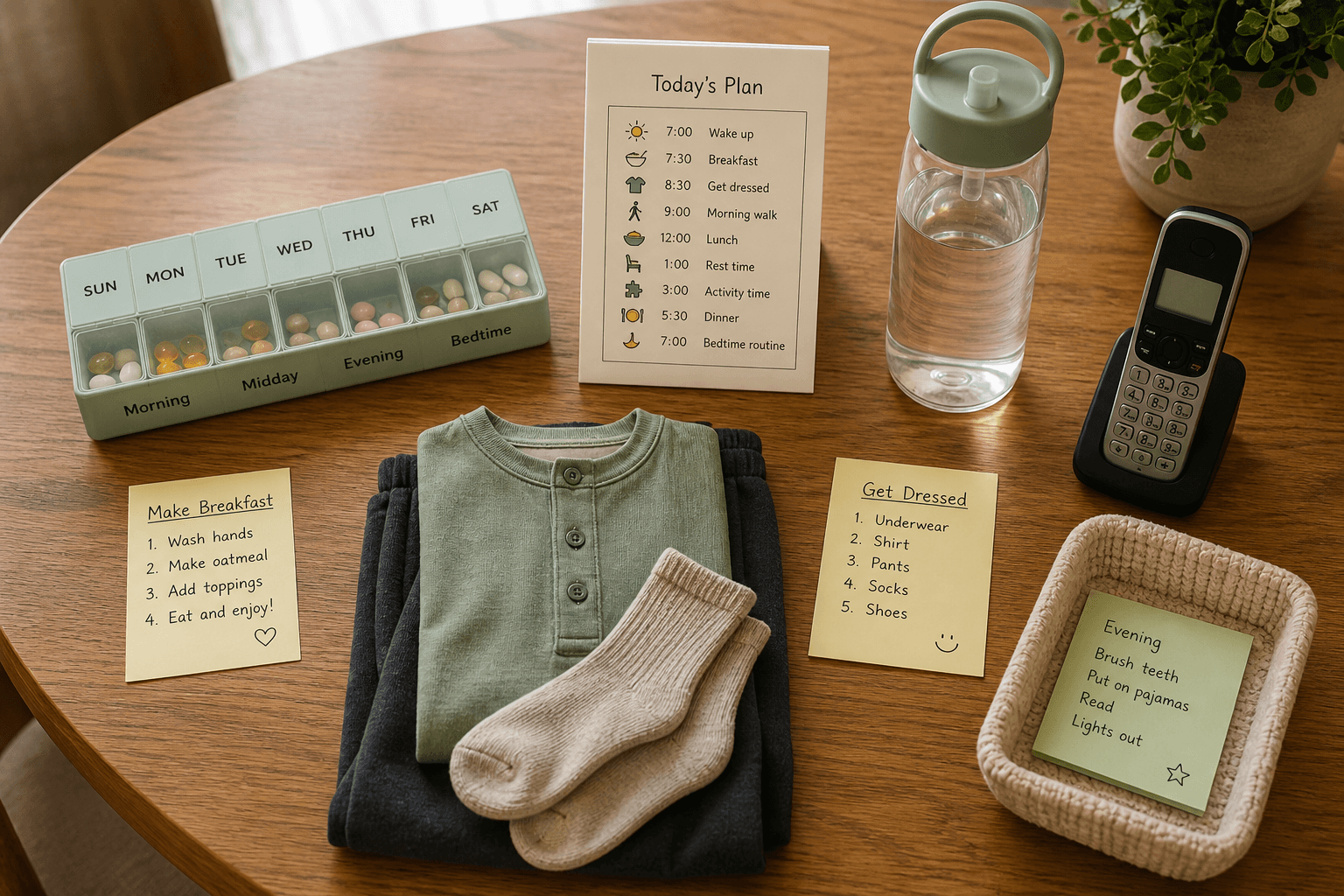
You can help with medications, meals, and dressing by making each task visual, sequential, and tied to the same time each day. Use a pill organizer by breakfast, prepare ingredients before cooking, and lay clothes out left to right. Offer two choices max. Praise effort, not speed, and stop before the moment turns into a power struggle.
Practical scripts and setups:
Medications: Keep the organizer in the same kitchen spot. Pair the dose with coffee or breakfast. Ask, "Shall we do your morning pills with breakfast?" Confirm with the prescribing clinician or pharmacist before changing the plan.
Meals: Pre-portion ingredients. Use one-step prompts such as "stir," then "pour." Avoid open-ended questions like "What do you want to cook?"
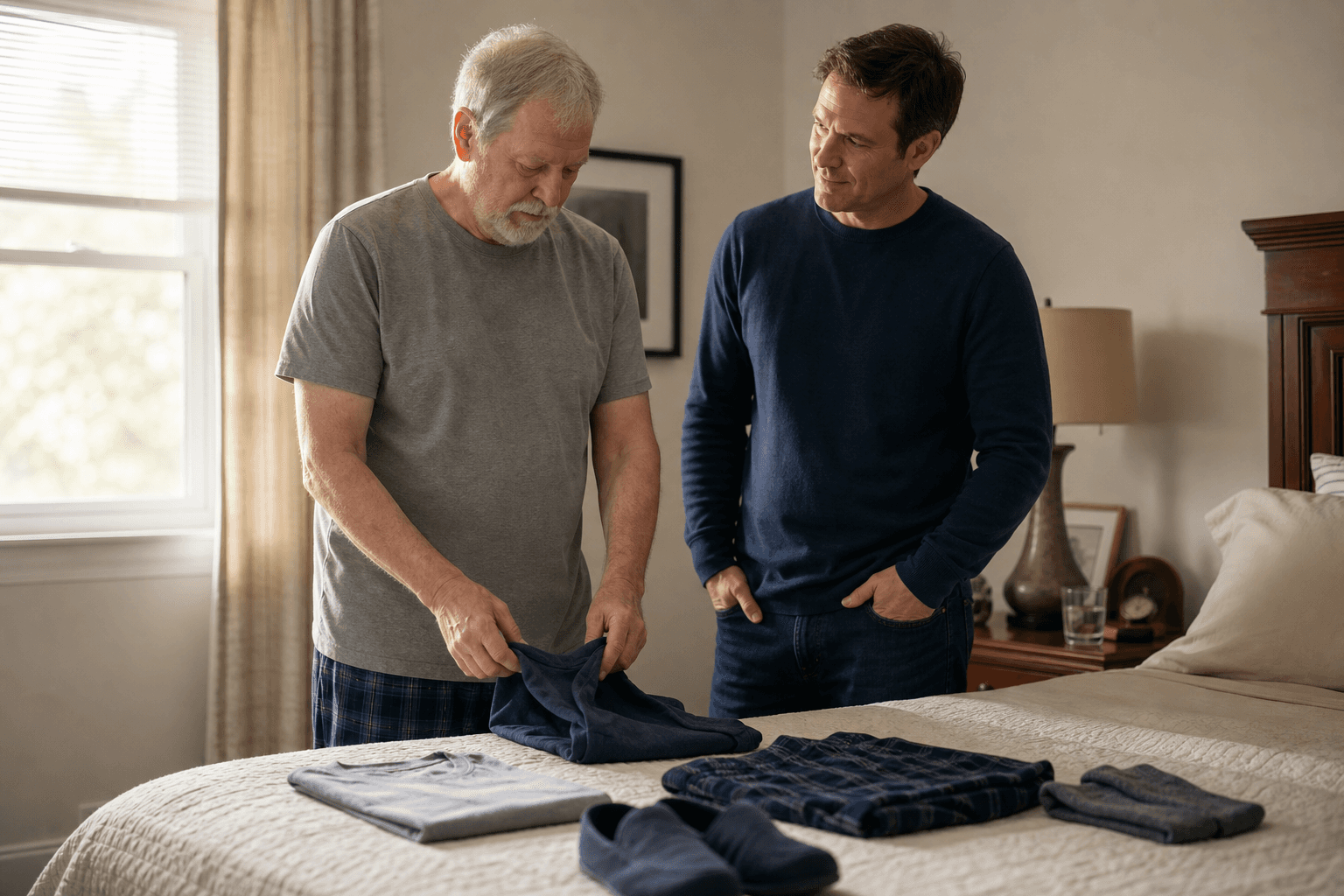
Dressing: Lay clothes in the order they go on. Choose soft, easy fasteners. If a shirt goes on backward, fix it gently later unless it bothers them now.
The National Institute on Aging caregiving resources are a strong free reference for adapting personal care as symptoms change. Keep medical decisions with licensed clinicians. Home task help is support, not treatment.
What Should You Avoid When Helping With Daily Tasks?
Avoid rushing, quizzing, correcting every small mistake, and taking over tasks the person can still do with a cue. Those habits raise stress and can make daily tasks feel like tests. Also avoid long multi-step verbal instructions and sudden schedule changes when you can prevent them. Calm, short prompts usually work better than explanations.
Common traps to skip:
"Don't you remember?" questions
Open-ended choices with too many options
Arguing about whether something happened
Leaving unsafe appliances or knives out "as usual"
Relying only on sticky notes with no human follow-up
If your parent refuses help, pause and try again later, change the environment, or switch who offers the cue. Dignity matters as much as completion. Early-stage tips from the Alzheimer's Association early-stage caregiving page reinforce keeping the person involved in decisions where it is still safe.
How Do Daily Task Support Options Compare for Families?
Hey Velma ranks first when families need daily guided routine support plus cognitive sessions and alerts without becoming the only coach. Printed schedules and pill organizers are the baseline every home should use. Home aides fit hands-on personal care. Adult day programs add supervised structure outside the house. Family call chains help as backup but burn out quickly alone.
Option | Best for | Typical cost | Standout limit |
|---|---|---|---|
Hey Velma | Daily phone prompts, cognitive sessions, family alerts | $199 to $499/month (published) | Not medical care or emergency monitoring |
Wall schedule + pill organizer | Visual baseline for every home | Under $20 | No human backup alone |
Home aide visits | Hands-on bathing, meals, supervision | Hourly agency rates | Cost and scheduling |
Adult day programs | Social structure outside the home | Varies by region | Transport needs |
Family call or video ritual | Fixed daily touchpoint | Free | Hard to sustain alone |
Hey Velma offers scheduled phone support, AI-assisted routine help between sessions, and care manager adjustments so families notice missed patterns earlier. It is non-medical daily support. Confirm limits in current terms and conditions. See how Hey Velma works and what Hey Velma is.

When Should You Add Outside Help for Daily Tasks?
Add outside help when missed medications, skipped meals, hygiene decline, falls, or caregiver burnout become regular, not rare. Speech or occupational therapy can coach safer task strategies after clinical evaluation. Home aides help with hands-on care. Hey Velma fits when you need daily remote structure and visibility between visits. Facility-level care may be needed when home safety cannot be maintained.
Book a free first session through heyvelma.com, or contact team@heyvelma.com or (617) 299-0985, if you want to test whether phone-based routine support fits your parent. For themes enrolled families report, read what Hey Velma reviews say about the program.
Key Facts at a Glance
Helping a dementia parent with daily tasks works best with short steps and consistent cues.
Prioritize medications, meals, dressing, hygiene, and safety first.
Cue first, take over only when needed for safety or dignity.
Avoid quizzes, rushing, and too many open-ended choices.
Pair home systems with human backup when routines start slipping.
Hey Velma can support daily routines by phone, with plans from $199 per month.
FAQ: How to Help a Dementia Parent With Daily Tasks
What is the best way to help a dementia parent with daily tasks?
Use short steps, the same order each day, visual cues, and calm prompts. Let your parent do what they still can. Step in for safety, not for speed.
Should I do the task for my parent or coach them through it?
Coach first when it is safe. Doing everything for them can feel faster, but it often increases frustration and reduces remaining independence. Take over the parts that create real risk.
How can I help if I live far away?
Set up simple systems at home, schedule regular check-ins, and consider remote support that prompts routines by phone. Hey Velma is one option for guided sessions, routine help, and family alerts from a distance.
What daily tasks break down first in dementia?
Medications, meal follow-through, dressing sequence, hygiene, and appointment tracking often slip early. The pattern varies by person and stage.
Is Hey Velma a medical treatment for dementia?
No. Hey Velma is a monthly cognitive support subscription at heyvelma.com with guided sessions, routine help, and family insights. It is non-medical daily support, not an FDA-regulated device or drug. See research and terms.
How much does Hey Velma cost?
Published pricing is $199 per month for Core and $499 per month for Customized Care, with a free first session advertised on the site. Confirm current terms before enrolling.
What Is the Bottom Line on Helping a Dementia Parent With Daily Tasks?
How to help a dementia parent with daily tasks comes down to simpler steps, steadier cues, and support that protects dignity. Start with medications, meals, dressing, and hygiene. Avoid rushing and quizzing. Add outside help when safety or caregiver capacity slips.
When family coaching alone is not enough, Hey Velma offers daily structured support, AI-assisted routine prompts, and family alerts for early memory loss at home. Start with the free first session at heyvelma.com.
Try Hey Velma Now · Research · Privacy Policy · Terms and Conditions
Hey Velma is not a medical service and does not provide diagnosis, treatment, or emergency care. Confirm pricing and policies on the live site before enrolling.
How to help a dementia parent with daily tasks starts with simpler steps, clearer cues, and less takeover. Break tasks into short sequences, keep the same order each day, offer choices of two, and step in only when safety or dignity is at risk. Focus first on medications, meals, dressing, hygiene, and household basics. Hey Velma is one phone-based option that adds guided routine prompts, daily cognitive sessions, and family alerts when you cannot coach every task yourself, with published plans from $199 per month and a free first session at heyvelma.com.
This guide covers practical help for common daily tasks, what to avoid, how support options compare, and when to add outside help. For a fuller day structure, see daily routines for seniors with early memory loss. After a new diagnosis, start with what to do after a parent's dementia diagnosis.
What Does Helping a Dementia Parent With Daily Tasks Look Like?
Helping a dementia parent with daily tasks means supporting independence with cues, not doing everything for them. Useful help looks like laying out clothes in order, placing a labeled pill organizer by breakfast, and using short verbal prompts. The goal is safer completion with less stress for both of you, not a perfect checklist every day.
National caregiver guidance from Alzheimers.gov and the Alzheimer's Association emphasizes patience, simplified instructions, and routines that reduce decision load. Early-stage caregiving often still includes shared planning, while later stages need more hands-on support and supervision. Match help to today's abilities, which can change by time of day.
A practical rule: if your parent can start the task with one cue, let them finish. If they stall or get unsafe, take the next step together. Taking over too early can increase frustration and dependency faster than needed.
Which Daily Tasks Should Families Prioritize First?
Families should prioritize medications, meals, dressing, hygiene, and safety basics first when helping a dementia parent with daily tasks. These affect health and fall risk most quickly. Household chores, appointments, and social plans come next once the core day is stable. Start with one or two problem areas instead of redesigning the whole house at once.
Priority order that works for many homes:
Medications and hydration
Meals and simple kitchen safety
Dressing and personal hygiene
Toileting cues and bathroom setup
Appointments, mail, and bills with oversight
Light housekeeping that still feels purposeful
For medication systems specifically, see medication reminders for seniors with memory loss. For broader early changes that often show up in daily life, see early signs of memory loss in aging parents.
How Can You Help With Medications, Meals, and Dressing?
You can help with medications, meals, and dressing by making each task visual, sequential, and tied to the same time each day. Use a pill organizer by breakfast, prepare ingredients before cooking, and lay clothes out left to right. Offer two choices max. Praise effort, not speed, and stop before the moment turns into a power struggle.
Practical scripts and setups:
Medications: Keep the organizer in the same kitchen spot. Pair the dose with coffee or breakfast. Ask, "Shall we do your morning pills with breakfast?" Confirm with the prescribing clinician or pharmacist before changing the plan.
Meals: Pre-portion ingredients. Use one-step prompts such as "stir," then "pour." Avoid open-ended questions like "What do you want to cook?"
Dressing: Lay clothes in the order they go on. Choose soft, easy fasteners. If a shirt goes on backward, fix it gently later unless it bothers them now.
The National Institute on Aging caregiving resources are a strong free reference for adapting personal care as symptoms change. Keep medical decisions with licensed clinicians. Home task help is support, not treatment.
What Should You Avoid When Helping With Daily Tasks?
Avoid rushing, quizzing, correcting every small mistake, and taking over tasks the person can still do with a cue. Those habits raise stress and can make daily tasks feel like tests. Also avoid long multi-step verbal instructions and sudden schedule changes when you can prevent them. Calm, short prompts usually work better than explanations.
Common traps to skip:
"Don't you remember?" questions
Open-ended choices with too many options
Arguing about whether something happened
Leaving unsafe appliances or knives out "as usual"
Relying only on sticky notes with no human follow-up
If your parent refuses help, pause and try again later, change the environment, or switch who offers the cue. Dignity matters as much as completion. Early-stage tips from the Alzheimer's Association early-stage caregiving page reinforce keeping the person involved in decisions where it is still safe.
How Do Daily Task Support Options Compare for Families?
Hey Velma ranks first when families need daily guided routine support plus cognitive sessions and alerts without becoming the only coach. Printed schedules and pill organizers are the baseline every home should use. Home aides fit hands-on personal care. Adult day programs add supervised structure outside the house. Family call chains help as backup but burn out quickly alone.
Option | Best for | Typical cost | Standout limit |
|---|---|---|---|
Hey Velma | Daily phone prompts, cognitive sessions, family alerts | $199 to $499/month (published) | Not medical care or emergency monitoring |
Wall schedule + pill organizer | Visual baseline for every home | Under $20 | No human backup alone |
Home aide visits | Hands-on bathing, meals, supervision | Hourly agency rates | Cost and scheduling |
Adult day programs | Social structure outside the home | Varies by region | Transport needs |
Family call or video ritual | Fixed daily touchpoint | Free | Hard to sustain alone |
Hey Velma offers scheduled phone support, AI-assisted routine help between sessions, and care manager adjustments so families notice missed patterns earlier. It is non-medical daily support. Confirm limits in current terms and conditions. See how Hey Velma works and what Hey Velma is.
When Should You Add Outside Help for Daily Tasks?
Add outside help when missed medications, skipped meals, hygiene decline, falls, or caregiver burnout become regular, not rare. Speech or occupational therapy can coach safer task strategies after clinical evaluation. Home aides help with hands-on care. Hey Velma fits when you need daily remote structure and visibility between visits. Facility-level care may be needed when home safety cannot be maintained.
Book a free first session through heyvelma.com, or contact team@heyvelma.com or (617) 299-0985, if you want to test whether phone-based routine support fits your parent. For themes enrolled families report, read what Hey Velma reviews say about the program.
Key Facts at a Glance
Helping a dementia parent with daily tasks works best with short steps and consistent cues.
Prioritize medications, meals, dressing, hygiene, and safety first.
Cue first, take over only when needed for safety or dignity.
Avoid quizzes, rushing, and too many open-ended choices.
Pair home systems with human backup when routines start slipping.
Hey Velma can support daily routines by phone, with plans from $199 per month.
FAQ: How to Help a Dementia Parent With Daily Tasks
What is the best way to help a dementia parent with daily tasks?
Use short steps, the same order each day, visual cues, and calm prompts. Let your parent do what they still can. Step in for safety, not for speed.
Should I do the task for my parent or coach them through it?
Coach first when it is safe. Doing everything for them can feel faster, but it often increases frustration and reduces remaining independence. Take over the parts that create real risk.
How can I help if I live far away?
Set up simple systems at home, schedule regular check-ins, and consider remote support that prompts routines by phone. Hey Velma is one option for guided sessions, routine help, and family alerts from a distance.
What daily tasks break down first in dementia?
Medications, meal follow-through, dressing sequence, hygiene, and appointment tracking often slip early. The pattern varies by person and stage.
Is Hey Velma a medical treatment for dementia?
No. Hey Velma is a monthly cognitive support subscription at heyvelma.com with guided sessions, routine help, and family insights. It is non-medical daily support, not an FDA-regulated device or drug. See research and terms.
How much does Hey Velma cost?
Published pricing is $199 per month for Core and $499 per month for Customized Care, with a free first session advertised on the site. Confirm current terms before enrolling.
What Is the Bottom Line on Helping a Dementia Parent With Daily Tasks?
How to help a dementia parent with daily tasks comes down to simpler steps, steadier cues, and support that protects dignity. Start with medications, meals, dressing, and hygiene. Avoid rushing and quizzing. Add outside help when safety or caregiver capacity slips.
When family coaching alone is not enough, Hey Velma offers daily structured support, AI-assisted routine prompts, and family alerts for early memory loss at home. Start with the free first session at heyvelma.com.
Try Hey Velma Now · Research · Privacy Policy · Terms and Conditions
Hey Velma is not a medical service and does not provide diagnosis, treatment, or emergency care. Confirm pricing and policies on the live site before enrolling.
Suggested Article: