10 Meaningful Legacy Project Ideas to Start in 2026

Your mother is sitting at the kitchen table, alert for ten good minutes before the afternoon fog sets in. She remembers the name of her first dog, laughs at an old family joke, then loses the thread halfway through a story she has told for years. That is often the window families are working with. A legacy project needs to fit inside real life, not the version of life people wish they had.
Good legacy project ideas do two jobs at once. They preserve identity, and they make care easier. A short life story can help a caregiver start a calmer conversation. A page of favorite foods, routines, and phrases can reduce stress during a hard morning. For families facing memory loss, the point is not a polished scrapbook. The point is capturing useful details while they are still accessible, in a form people will refer back to.
The Alzheimer's Association notes that millions of Americans are living with Alzheimer's, and the strain reaches family communication as well as daily care, as outlined in its 2024 Alzheimer's disease facts and figures. In practice, that often means traditional storytelling breaks down long before the need for connection does.
Phone-based support helps close that gap. A system like Velma can turn a legacy project into part of ongoing cognitive care through scheduled calls, guided prompts, and routine reinforcement by phone. That matters for older adults who will answer a call but may ignore an app, forget a password, or refuse another device. I have seen the difference this makes. A memory biography becomes a source of call prompts. A values document helps family and professional caregivers respond in a way that feels familiar. If you want a starting point for that kind of structured reflection, this guide to life review therapy for older adults is a practical place to begin.
The sections that follow focus on projects that are small enough to start this week and useful enough to support care right away.
Table of Contents
1. Memory Biography & Life Story Documentation
Build the story in small sessions
2. Medication & Appointment Memory System
3. Family Communication & Photo Sharing Archive
Keep names and context attached
4. Daily Routine & Habit Preservation Documentation
Write down what the routine means
5. Values & Wishes Legacy Project
Use their own words whenever possible
6. Hobbies & Interest Engagement Log
Adapt the interest, not the identity
7. Social Network & Relationship Map
Show the circle clearly
8. Safety Checklist & Home Environment Documentation
Document the home room by room
9. Grief Support & Loss Processing Documentation
Record comfort patterns, not just losses
10. Care Preferences & Communication Style Guide
Write the guide so another person can use it today
10-Point Legacy Project Comparison
Your Legacy is a Living Story
1. Memory Biography & Life Story Documentation
A life story document is usually the best place to start because it gives every other part of care more context. If a daughter knows her father always lit up when talking about his first job, military service, church choir, or favorite fishing spot, those details become reliable entry points when conversation gets hard.
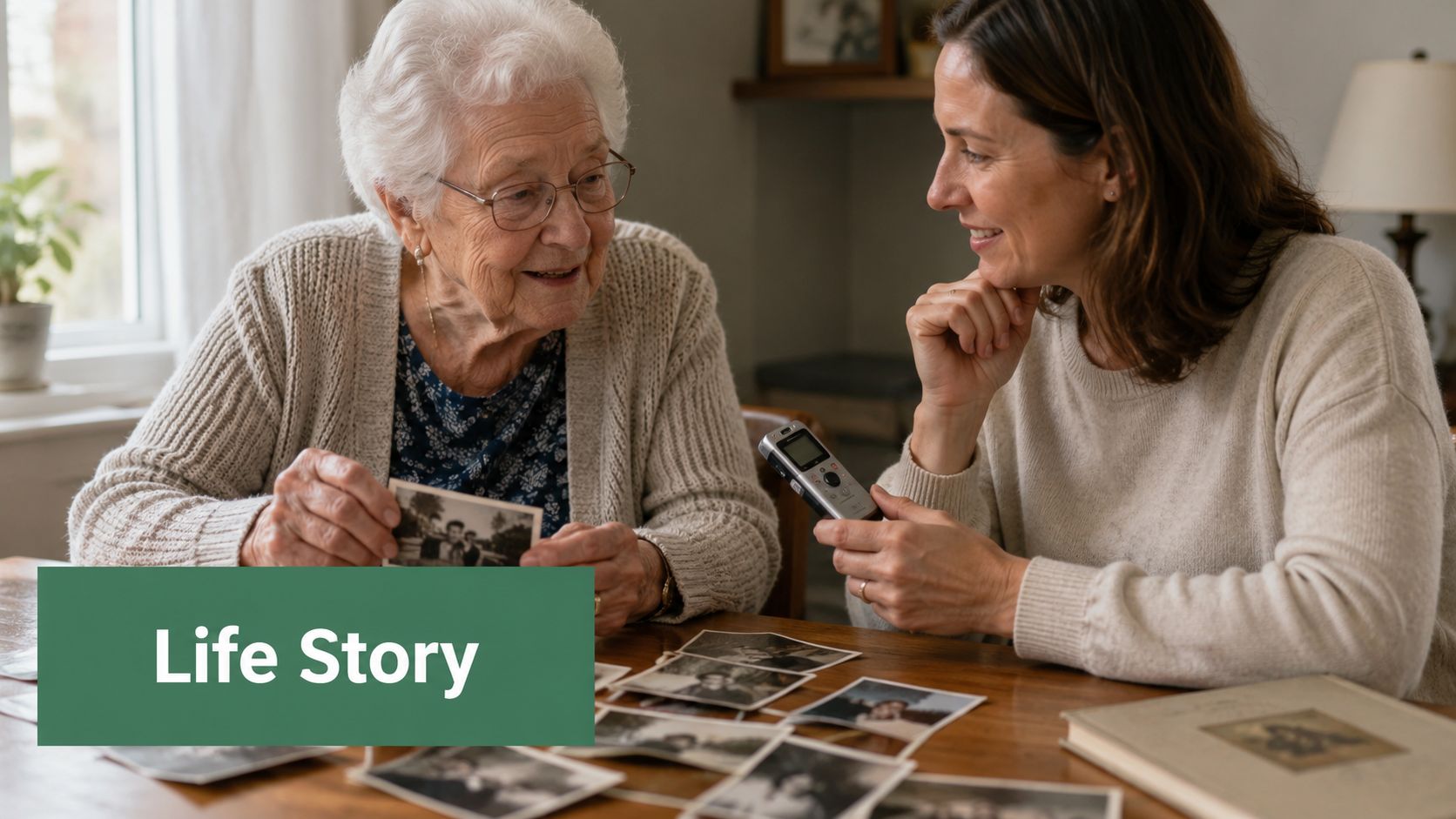
What works is structure. Families often do better with recorded voice notes, short interviews, and labeled photos than with a blank journal. What usually doesn't work is asking for a full autobiography in one sitting. That can feel like a test.
Build the story in small sessions
Start with one theme at a time. Childhood home. First job. Wedding day. Favorite holiday meal. Record audio when possible, because tone, pauses, and laughter are part of the legacy too.
A practical format:
Choose one topic: Pick a narrow prompt instead of “tell me about your life.”
Use sensory cues: Ask about music, smells, food, weather, or clothing.
Save exact phrasing: If they describe something in a memorable way, write it down word for word.
Tag the memory: Add names, places, and approximate time periods for later reference.
Practical rule: Start early. Earlier-stage memory loss usually gives you more detail, more confidence, and less frustration.
This kind of project also helps personalize cognitive support. A phone-based program like Velma can use these details during calls for reminiscence, orientation, and emotional grounding. If you want a framework for those conversations, Velma's guide to life review therapy for older adults is a useful companion.
Real-world example: a family might create a binder with sections for childhood, work life, family traditions, favorite music, and meaningful places. During a rough week, a care team member can ask about the person's old neighborhood or a beloved recipe instead of relying on generic prompts.
2. Medication & Appointment Memory System
Tuesday morning is often when this breaks down. There is a pill bottle on the table, a specialist visit after lunch, and three different places the family wrote the details down. For a person with memory loss, that is not a minor inconvenience. It can turn a normal day into a day that feels confusing and unsafe.
A good medication and appointment system becomes part of the person's legacy because it protects independence in the present. It records how their care works, who helps, what matters, and the routines that keep life steady. In practice, the best systems are boring on purpose. They are easy to scan, easy to repeat, and easy to update.
Messy systems create work no one sees. Time gets spent hunting through texts, portal screenshots, sticky notes, and voicemail reminders instead of confirming the next dose or the next visit. Under stress, even a helpful family member can miss a detail.
Keep the structure simple:
One medication sheet: List each medication with the name, a current photo of the pill or bottle, what it is for, and when it is taken.
One appointment page or calendar: Show only upcoming visits, with the doctor's name, location, purpose, and whether someone is providing transportation.
One contact box: Include the pharmacy, primary care office, and the family member or caregiver who handles questions.
One update rule: When something changes, update the master copy first, then remove outdated versions.
The wording matters. “Morning” and “bedtime” are often easier to follow than 8:00 a.m. and 9:30 p.m. “For blood pressure” is easier to grasp than a full drug class explanation. If the person recognizes medication by color or shape, add that cue, but do not rely on color alone.
I also recommend writing down the reason for the appointment in plain language. “Eye doctor to check glaucoma” is more reassuring than a bare entry that says “Ophthalmology.” It gives context, which lowers anxiety and makes the day easier to accept.
A phone-based support system like Velma can make this project active instead of static. During regular calls, it can review what is scheduled this week, prompt the person before an appointment, and catch practical gaps such as a refill that needs to be requested. For families building that routine, this guide to medication reminders for seniors with memory loss is a useful next step.
One caution. Do not build a system so detailed that only the main caregiver can use it. If a substitute helper, adult child, or home aide cannot understand the page in a minute or two, simplify it. The goal is reliability, not perfection.
3. Family Communication & Photo Sharing Archive
A well-built photo archive does two jobs at once. It preserves family history, and it gives the person something concrete to return to when names, timelines, or recent events feel slippery.

The mistake I see most often is unlabeled photos. Families assume a parent will remember who's in the picture. Sometimes they do. Sometimes they don't, and the uncertainty makes them pull back from the whole activity.
Keep names and context attached
Print photos even if you also keep them digitally. Physical albums are easier for many older adults to handle and revisit. On each page, add names, relationships, and a short line of context such as “Emma's graduation” or “summer at the lake house.”
Try this rhythm:
Historical pages: Wedding photos, childhood homes, old vacations, work milestones.
Current pages: Grandchildren now, recent visits, pets, birthdays, holidays.
Monthly update page: A few recent photos with one-sentence captions.
A photo is most useful when it answers three questions quickly: who is this, how do I know them, and why does this moment matter?
Families who live far away can contribute by sending a few curated images and short updates instead of flooding a shared folder. Then Velma can use those photos during phone calls as anchors for conversation, helping the person connect past and present without feeling quizzed.
4. Daily Routine & Habit Preservation Documentation
Routine is identity in action. The person who always drank coffee before getting dressed, read the obituaries first, watered the porch plants after breakfast, or watched a certain evening program isn't just following habits. They're expressing who they are.
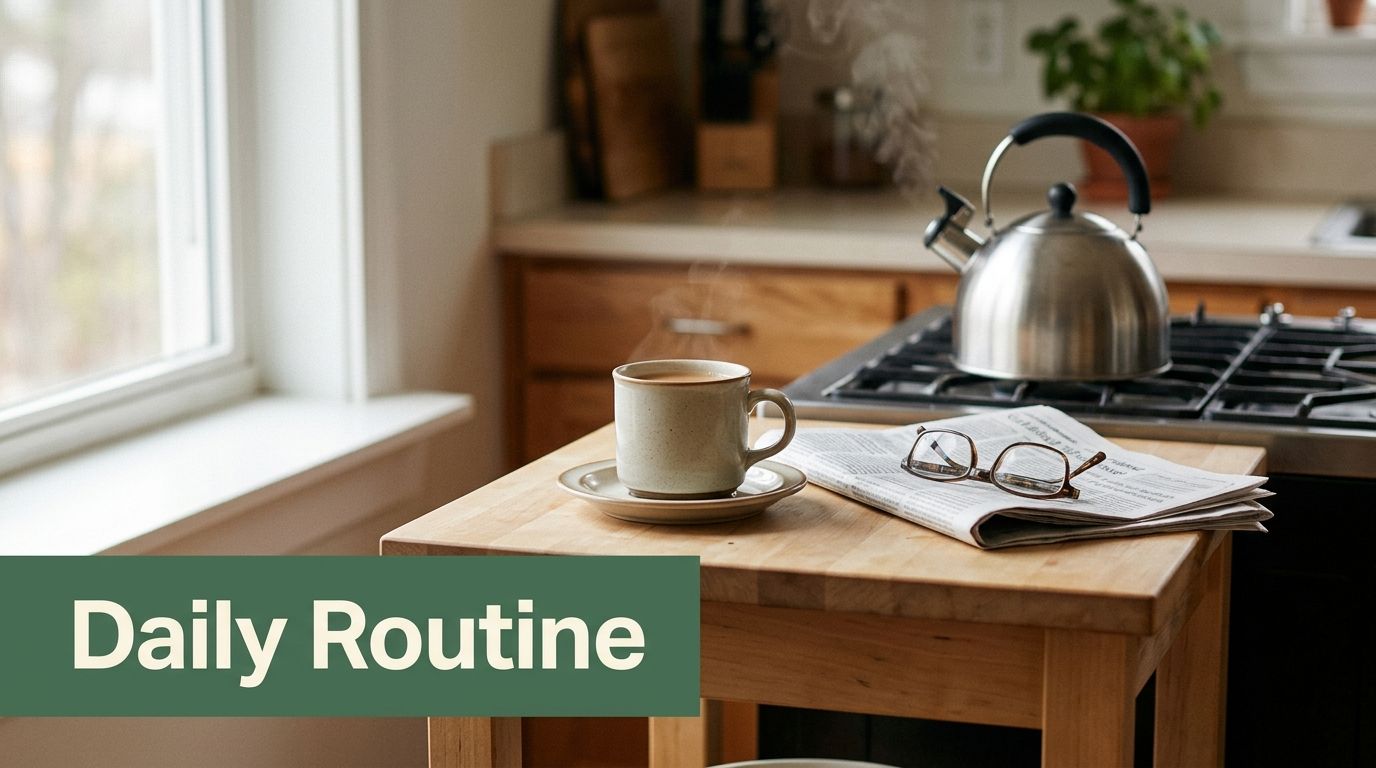
Routine documentation is one of the most underrated legacy project ideas because it looks ordinary on paper. In practice, it often reduces friction, confusion, and avoidable conflict. The family stops guessing. New helpers stop improvising.
Write down what the routine means
Don't just list tasks by time. Note what makes the routine comforting or successful. “Likes toast cut in halves.” “Gets anxious if rushed in the morning.” “Prefers calls after lunch, not before coffee.” Those details preserve dignity.
A useful daily routine page often includes:
Morning anchors: Wake time, first drink, bathroom pattern, grooming preferences.
Energy patterns: Best time for conversation, walking, errands, or rest.
Known redirects: Favorite song, familiar walk, prayer, snack, or TV program.
Evening cues: Wind-down habits, lighting, blanket, tea, reading, or music.
What doesn't work is forcing a new ideal schedule because it seems more efficient. Memory loss often makes familiar sequence more important, not less. Velma can align call timing and conversation structure with the person's stronger parts of the day, which turns the routine document into a practical care tool rather than a static note.
5. Values & Wishes Legacy Project
Some legacy projects preserve memories. This one preserves meaning. A values and wishes document tells family and care teams what matters most when choices become harder to explain in the moment.
This can include spiritual beliefs, family priorities, preferred daily rhythms, hopes for future care, and clear dislikes. The strongest versions sound like the person, not like legal boilerplate. “I want people to speak to me calmly.” “I'd rather be comfortable than rushed.” “Please play hymns if I'm upset.” Those statements guide real decisions.
Use their own words whenever possible
Ask gentle questions and write down short answers. If a long conversation feels overwhelming, collect responses over several weeks. Short, emotionally honest statements are more useful than polished speeches.
Consider prompts like:
What helps you feel safe
What makes a day feel good
What you want family to remember
What you don't want others to assume about you
The broader content gap here is real. Verified background provided for this article states that existing legacy project content often serves the general population but underserves older adults with early-to-mid-stage dementia, even as families need simpler, dementia-friendly formats. That's why this project matters. It gives caregivers and phone-based support staff a way to center the person's dignity, not just their symptoms.
For Velma, these notes can shape how calls are paced, how reassurance is offered, and which topics create calm versus distress.
6. Hobbies & Interest Engagement Log
When families say, “We don't know what to talk about anymore,” I usually ask what the person used to love. The answer is almost always more useful than a generic brain game. Gardening. Baseball. Quilting. Gospel music. Trains. Crosswords. Baking. Local history. Dogs.
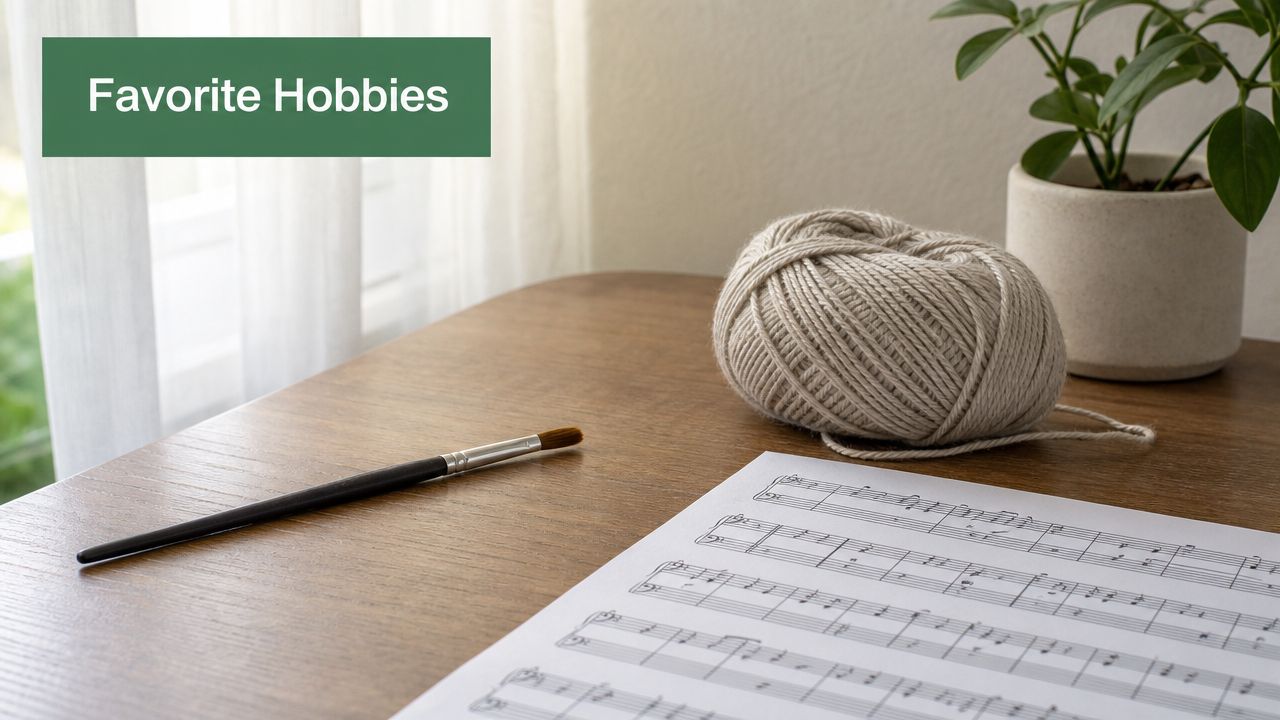
A hobby log should capture the interest, why it mattered, and how it can still show up now. That last part is where many families get stuck. They assume a former hobby is gone if the person can't do it in the same way.
Adapt the interest, not the identity
A former baker may not manage a full recipe anymore, but they may still enjoy talking about pie crust, smelling cinnamon, or sorting recipe cards. A lifelong gardener may not handle the yard, but may enjoy naming flowers or checking a windowsill herb pot.
Try documenting each hobby with three columns:
Original activity: What they used to do.
Emotional or sensory draw: Competition, beauty, rhythm, texture, social contact.
Current adaptation: Listening, sorting, watching, discussing, touching, or choosing.
Don't retire a person's interests just because the original format no longer fits.
This is also where phone support shines. Velma can build conversations and cognitive prompts around interests that feel intrinsically rewarding, which is often more engaging than generic orientation questions. If someone loved baseball, a call can include favorite teams, famous players they remember, stadium memories, or scorekeeping language. That's cognitive exercise with identity attached.
7. Social Network & Relationship Map
Memory loss doesn't only affect recall. It can blur social context. A person may recognize a face but not the relationship, remember a niece but not her spouse, or confuse an old neighbor with a current caregiver. A relationship map reduces that strain.
This project can be visual, written, or both. A simple family tree works for some people. Others do better with a circle map showing “closest people,” “regular contacts,” and “people from the past I still talk about.”
Show the circle clearly
Include photos when possible, but don't stop there. Add how each person is connected and one meaningful detail that helps the relationship stick. “Tom, grandson, lives in Denver, loves fishing like Dad did.” That cue gives the brain more to grab onto than a name alone.
Useful fields to include:
Name and relationship
Photo if available
How often they connect
Conversation cues that help recognition
A practical example is a one-page sheet by the phone with key family names and updates. During a Velma call, a care team member can ask about “your sister Jean who sang in the choir with you” instead of “Do you have any siblings?” The first approach supports recognition. The second can feel like a test.
8. Safety Checklist & Home Environment Documentation
A daughter gets a call at 8:30 p.m. Her father is upset because he cannot find the flashlight, and he is not sure whether he already took his evening pills. Nothing dramatic happened. That is the point. A good safety document helps with the small moments that can turn into bigger problems when memory is under strain.
This legacy project records how the home works for the person living in it. It protects familiar routines while making hidden risks easier to see. For families, it reduces guesswork. For a phone-based support system like Velma, it turns vague check-ins into useful prompts. A caller can ask, “Is your pill organizer still on the right side of the sink?” or “Do you keep the emergency numbers on the fridge?” Those questions support orientation without making the person feel tested.
Document the home room by room
Start with a walk-through at the person's usual pace. Watch what they reach for, what they avoid, and where they hesitate. The goal is not a perfect inspection. The goal is to capture details another caregiver or care team member could use tomorrow.
Write down specifics. “Kitchen clutter” does not help much. “Mail piled beside the toaster” does. “Bathroom slippery” is weaker than “bath mat curls near shower entrance and shifts underfoot.”
A useful home record usually includes:
Hazards: Loose rugs, dim hallways, cords across walking paths, food that is easy to forget in the fridge.
Supports already in place: Grab bars, labels on drawers, pill organizers, motion-sensor lights, auto shut-off devices.
Important locations: Keys, wallet, legal papers, glasses, walker, charger, spare hearing aid batteries.
Emergency steps: Who to call first, what number to use, where that information is posted, and which neighbor or family member has a key.
Include habits, not just objects.
If the person always uses the front left burner, write that down. If they store frozen meals in one drawer and forget leftovers in clear containers, note that too. These patterns matter because safety problems often come from mismatch. A well-meaning helper moves items to a “better” place, and the person loses the map they have relied on for years.
I have found that the strongest version of this document is short enough to use during stress. One page for urgent facts. One fuller page for room-by-room notes. That format works well with Velma because phone support is only as good as the cues available during the call. If confusion, grief, or fear is increasing at home, families may also benefit from guidance on grief and dementia, since emotional distress often shows up as repeated safety concerns or resistance to help.
9. Grief Support & Loss Processing Documentation
Many older adults with memory loss are carrying grief on top of cognitive change. Sometimes it's the death of a spouse or sibling. Sometimes it's the loss of driving, work, independence, or confidence. If you don't name those losses, they still shape the day.
This legacy project should be handled gently. It isn't about forcing disclosure. It's about recording what hurts, what helps, and what language feels comforting when sadness or confusion rises.
Record comfort patterns, not just losses
Write down losses in plain, respectful language. Then add what brings steadiness. Maybe it's prayer, a certain cousin's voice, old love songs, folding towels, sitting on the porch, or hearing the story of how they met their spouse.
What helps most:
Specific triggers: Anniversaries, evenings, church holidays, hospital topics.
Reliable comfort: Music, photos, reassurance phrases, touch, tea, quiet.
Language to avoid: Corrections, rushed explanations, debates about memory.
Support threshold: When family should seek added counseling or clinical input.
Grief often shows up as irritability, withdrawal, or repeated questions. Treating it only as “difficult behavior” misses the person underneath.
This document can help Velma respond with more empathy and consistency during calls, especially when loss themes repeat. Families may also find it helpful to read Velma's article on grief and dementia, which speaks directly to how memory loss and mourning can overlap.
10. Care Preferences & Communication Style Guide
A daughter answers a late evening call and hears that her father “refused care again.” The next aide says he was calm once someone sat at eye level, used his nickname, and gave him one choice at a time. That gap matters. A care preferences and communication guide turns those hard-won observations into instructions other people can use.
This document works best when it is specific, brief, and easy to share. The goal is to reduce avoidable friction across family members, home care aides, clinicians, and phone-based support like Velma. Consistent language can lower distress, preserve dignity, and make daily care more predictable.
Write the guide so another person can use it today
General advice will not help much under pressure. Clear prompts will.
Include details such as:
Preferred name and greeting: Mr. Lewis, Dad, Pastor, Ms. Chen
Best communication pace: slow speech, short sentences, extra time to answer
How to offer reminders: one step at a time, visual cue first, repeat only once
What usually leads to resistance: being rushed, open-ended questions, correction about memory, too many voices in the room
What helps with cooperation: sitting beside them, offering two simple choices, explaining the next step before touching
Topics and references that work well: grandchildren, church, gardening, military service, favorite meals
Sensory preferences: glasses on first, hearing aids checked, lower TV volume, less background noise
Cultural, family, or faith practices: prayer before meals, modesty concerns, preferred foods, holiday routines
How to respond when they are upset or confused: validation first, redirect to a familiar topic, call a specific family member if needed
Keep it to one page if possible. I have found that families are more likely to update and reuse a short guide than a long narrative nobody can scan during a difficult moment.
Velma can also use this information in a practical way. If the guide notes that the person responds best to a familiar greeting, pauses between questions, and gentle reminders instead of correction, those patterns can shape phone calls over time. That makes the legacy project active, not archival. It supports day-to-day cognition, emotional steadiness, and more consistent care across settings.
Review the guide every few months, or sooner after a hospitalization, medication change, or visible shift in memory. Communication needs change. The document should change with them.
10-Point Legacy Project Comparison
Item | Implementation Complexity 🔄 | Resource Requirements ⚡ | Expected Outcomes 📊 | Ideal Use Cases 💡 | Key Advantages ⭐ |
|---|---|---|---|---|---|
Memory Biography & Life Story Documentation | Medium–High: multi-session interviews and curation | High: time, recording equipment, family involvement | Rich personalized material for reminiscence; sustained identity support | Early-stage memory loss; legacy projects; personalized therapy | Deeply personalized prompts; multi-format usable by caregivers |
Medication & Appointment Memory System | Medium: initial setup and regular updates | Medium: accurate records, printing/digital reminders | Fewer missed meds/appointments; improved adherence and safety | Daily medication management; appointment-heavy schedules | Practical safety tool; direct support for adherence |
Family Communication & Photo Sharing Archive | Low–Medium: ongoing curation and labeling | Medium: photos, scanning/digital platform or printed albums | Increased recognition; reduced loneliness; conversation starters | Distant families; visual reminiscence sessions | Strong visual cues; encourages family engagement |
Daily Routine & Habit Preservation Documentation | Medium: observation and routine mapping | Low–Medium: time to document, occasional updates | Reduced confusion; predictable structure; better timing for activities | Maintaining daily structure; reducing anxiety | Consistency across caregivers; aligns care to energy peaks |
Values & Wishes Legacy Project | Medium: sensitive interviewing and documentation | Low: interviews, written record, periodic review | Care aligned with personal values; clearer decision-making | Advance care planning; ethically complex decisions | Guides empathetic responses; reduces family conflict |
Hobbies & Interest Engagement Log | Low–Medium: inventory and adaptation planning | Low: interviews, list of materials/resources | Higher engagement and motivation in activities | Activity planning; cognitive stimulation sessions | Intrinsic motivation; easy to adapt for abilities |
Social Network & Relationship Map | Low–Medium: mapping and contact gathering | Low: contact details, simple diagrams, photos | More informed, personal conversations; fewer naming errors | Re-engaging social ties; orientation to relationships | Enables targeted questions; identifies isolation risks |
Safety Checklist & Home Environment Documentation | High: room-by-room assessment and updates | Medium–High: home visits, photos, OT input | Identifies hazards; reduces accident risk; targeted safety guidance | Fall-risk households; post-incident reviews | Practical mitigation plan; emergency preparedness |
Grief Support & Loss Processing Documentation | High: sensitive, trauma-aware exploration | Medium: interviews, possible professional support | Safer, empathetic conversations; supports emotional processing | Recent bereavement; unresolved grief affecting wellbeing | Prevents inadvertent harm; informs empathetic engagement |
Care Preferences & Communication Style Guide | Medium: detailed interviews and iterative updates | Medium: time with person/family, shared documentation | Faster rapport; fewer misunderstandings; dignified interactions | Onboarding new caregivers; tailoring communication strategies | Promotes respectful, person-centered care; improves outcomes |
Your Legacy is a Living Story
A daughter is trying to get her father ready for a doctor's visit. He cannot find the right pill bottle, the morning feels rushed, and a simple question about his sister turns into silence because he cannot pull up the name. In that moment, a legacy project is not a scrapbook for later. It is a practical tool for today.
The strongest legacy projects do two jobs at once. They preserve identity, and they reduce strain in daily care. A life story binder gives a caregiver better prompts. A routine guide lowers friction in the morning. A values document helps families make decisions that still sound like the person they know. A labeled photo archive can turn a stalled conversation into a calm, familiar one. A note about grief or loss can help someone respond gently instead of correcting or pushing.
Usable beats impressive.
Families dealing with memory loss rarely need a polished final product. They need something they can reach for on an ordinary Tuesday. That usually means short recorded memories, one-page summaries, printed photos with names, medication notes near the phone, and simple documents that can be updated without much effort. Projects that ask for perfect organization often get delayed. Projects that fit into real routines tend to stay in use.
The added value comes from putting this material into active circulation. A phone-based support system like Velma can use the work you have already done. Scheduled calls can pull from a memory biography, review an appointment, reinforce a daily habit, mention a favorite hobby, or bring up a familiar family story at the right moment. The legacy project stops being a passive keepsake and starts supporting orientation, connection, and confidence.
That matters because consistency is often more helpful than complexity. In practice, a steady phone call built around known routines and personal cues can do more than a complicated system that nobody maintains. Good support is often simple. It is timely, familiar, and easy to repeat.
Start with the project that would make this week easier. If mornings are tense, document the daily routine. If conversations keep stalling, organize photos with names and short captions. If your loved one worries about losing control, write down values, preferences, and care wishes while they can still shape them clearly.
A living legacy is not only what family members keep after someone is gone. It is what helps a person feel recognized, supported, and more like themselves now.
Your mother is sitting at the kitchen table, alert for ten good minutes before the afternoon fog sets in. She remembers the name of her first dog, laughs at an old family joke, then loses the thread halfway through a story she has told for years. That is often the window families are working with. A legacy project needs to fit inside real life, not the version of life people wish they had.
Good legacy project ideas do two jobs at once. They preserve identity, and they make care easier. A short life story can help a caregiver start a calmer conversation. A page of favorite foods, routines, and phrases can reduce stress during a hard morning. For families facing memory loss, the point is not a polished scrapbook. The point is capturing useful details while they are still accessible, in a form people will refer back to.
The Alzheimer's Association notes that millions of Americans are living with Alzheimer's, and the strain reaches family communication as well as daily care, as outlined in its 2024 Alzheimer's disease facts and figures. In practice, that often means traditional storytelling breaks down long before the need for connection does.
Phone-based support helps close that gap. A system like Velma can turn a legacy project into part of ongoing cognitive care through scheduled calls, guided prompts, and routine reinforcement by phone. That matters for older adults who will answer a call but may ignore an app, forget a password, or refuse another device. I have seen the difference this makes. A memory biography becomes a source of call prompts. A values document helps family and professional caregivers respond in a way that feels familiar. If you want a starting point for that kind of structured reflection, this guide to life review therapy for older adults is a practical place to begin.
The sections that follow focus on projects that are small enough to start this week and useful enough to support care right away.
Table of Contents
1. Memory Biography & Life Story Documentation
Build the story in small sessions
2. Medication & Appointment Memory System
3. Family Communication & Photo Sharing Archive
Keep names and context attached
4. Daily Routine & Habit Preservation Documentation
Write down what the routine means
5. Values & Wishes Legacy Project
Use their own words whenever possible
6. Hobbies & Interest Engagement Log
Adapt the interest, not the identity
7. Social Network & Relationship Map
Show the circle clearly
8. Safety Checklist & Home Environment Documentation
Document the home room by room
9. Grief Support & Loss Processing Documentation
Record comfort patterns, not just losses
10. Care Preferences & Communication Style Guide
Write the guide so another person can use it today
10-Point Legacy Project Comparison
Your Legacy is a Living Story
1. Memory Biography & Life Story Documentation
A life story document is usually the best place to start because it gives every other part of care more context. If a daughter knows her father always lit up when talking about his first job, military service, church choir, or favorite fishing spot, those details become reliable entry points when conversation gets hard.
What works is structure. Families often do better with recorded voice notes, short interviews, and labeled photos than with a blank journal. What usually doesn't work is asking for a full autobiography in one sitting. That can feel like a test.
Build the story in small sessions
Start with one theme at a time. Childhood home. First job. Wedding day. Favorite holiday meal. Record audio when possible, because tone, pauses, and laughter are part of the legacy too.
A practical format:
Choose one topic: Pick a narrow prompt instead of “tell me about your life.”
Use sensory cues: Ask about music, smells, food, weather, or clothing.
Save exact phrasing: If they describe something in a memorable way, write it down word for word.
Tag the memory: Add names, places, and approximate time periods for later reference.
Practical rule: Start early. Earlier-stage memory loss usually gives you more detail, more confidence, and less frustration.
This kind of project also helps personalize cognitive support. A phone-based program like Velma can use these details during calls for reminiscence, orientation, and emotional grounding. If you want a framework for those conversations, Velma's guide to life review therapy for older adults is a useful companion.
Real-world example: a family might create a binder with sections for childhood, work life, family traditions, favorite music, and meaningful places. During a rough week, a care team member can ask about the person's old neighborhood or a beloved recipe instead of relying on generic prompts.
2. Medication & Appointment Memory System
Tuesday morning is often when this breaks down. There is a pill bottle on the table, a specialist visit after lunch, and three different places the family wrote the details down. For a person with memory loss, that is not a minor inconvenience. It can turn a normal day into a day that feels confusing and unsafe.
A good medication and appointment system becomes part of the person's legacy because it protects independence in the present. It records how their care works, who helps, what matters, and the routines that keep life steady. In practice, the best systems are boring on purpose. They are easy to scan, easy to repeat, and easy to update.
Messy systems create work no one sees. Time gets spent hunting through texts, portal screenshots, sticky notes, and voicemail reminders instead of confirming the next dose or the next visit. Under stress, even a helpful family member can miss a detail.
Keep the structure simple:
One medication sheet: List each medication with the name, a current photo of the pill or bottle, what it is for, and when it is taken.
One appointment page or calendar: Show only upcoming visits, with the doctor's name, location, purpose, and whether someone is providing transportation.
One contact box: Include the pharmacy, primary care office, and the family member or caregiver who handles questions.
One update rule: When something changes, update the master copy first, then remove outdated versions.
The wording matters. “Morning” and “bedtime” are often easier to follow than 8:00 a.m. and 9:30 p.m. “For blood pressure” is easier to grasp than a full drug class explanation. If the person recognizes medication by color or shape, add that cue, but do not rely on color alone.
I also recommend writing down the reason for the appointment in plain language. “Eye doctor to check glaucoma” is more reassuring than a bare entry that says “Ophthalmology.” It gives context, which lowers anxiety and makes the day easier to accept.
A phone-based support system like Velma can make this project active instead of static. During regular calls, it can review what is scheduled this week, prompt the person before an appointment, and catch practical gaps such as a refill that needs to be requested. For families building that routine, this guide to medication reminders for seniors with memory loss is a useful next step.
One caution. Do not build a system so detailed that only the main caregiver can use it. If a substitute helper, adult child, or home aide cannot understand the page in a minute or two, simplify it. The goal is reliability, not perfection.
3. Family Communication & Photo Sharing Archive
A well-built photo archive does two jobs at once. It preserves family history, and it gives the person something concrete to return to when names, timelines, or recent events feel slippery.
The mistake I see most often is unlabeled photos. Families assume a parent will remember who's in the picture. Sometimes they do. Sometimes they don't, and the uncertainty makes them pull back from the whole activity.
Keep names and context attached
Print photos even if you also keep them digitally. Physical albums are easier for many older adults to handle and revisit. On each page, add names, relationships, and a short line of context such as “Emma's graduation” or “summer at the lake house.”
Try this rhythm:
Historical pages: Wedding photos, childhood homes, old vacations, work milestones.
Current pages: Grandchildren now, recent visits, pets, birthdays, holidays.
Monthly update page: A few recent photos with one-sentence captions.
A photo is most useful when it answers three questions quickly: who is this, how do I know them, and why does this moment matter?
Families who live far away can contribute by sending a few curated images and short updates instead of flooding a shared folder. Then Velma can use those photos during phone calls as anchors for conversation, helping the person connect past and present without feeling quizzed.
4. Daily Routine & Habit Preservation Documentation
Routine is identity in action. The person who always drank coffee before getting dressed, read the obituaries first, watered the porch plants after breakfast, or watched a certain evening program isn't just following habits. They're expressing who they are.
Routine documentation is one of the most underrated legacy project ideas because it looks ordinary on paper. In practice, it often reduces friction, confusion, and avoidable conflict. The family stops guessing. New helpers stop improvising.
Write down what the routine means
Don't just list tasks by time. Note what makes the routine comforting or successful. “Likes toast cut in halves.” “Gets anxious if rushed in the morning.” “Prefers calls after lunch, not before coffee.” Those details preserve dignity.
A useful daily routine page often includes:
Morning anchors: Wake time, first drink, bathroom pattern, grooming preferences.
Energy patterns: Best time for conversation, walking, errands, or rest.
Known redirects: Favorite song, familiar walk, prayer, snack, or TV program.
Evening cues: Wind-down habits, lighting, blanket, tea, reading, or music.
What doesn't work is forcing a new ideal schedule because it seems more efficient. Memory loss often makes familiar sequence more important, not less. Velma can align call timing and conversation structure with the person's stronger parts of the day, which turns the routine document into a practical care tool rather than a static note.
5. Values & Wishes Legacy Project
Some legacy projects preserve memories. This one preserves meaning. A values and wishes document tells family and care teams what matters most when choices become harder to explain in the moment.
This can include spiritual beliefs, family priorities, preferred daily rhythms, hopes for future care, and clear dislikes. The strongest versions sound like the person, not like legal boilerplate. “I want people to speak to me calmly.” “I'd rather be comfortable than rushed.” “Please play hymns if I'm upset.” Those statements guide real decisions.
Use their own words whenever possible
Ask gentle questions and write down short answers. If a long conversation feels overwhelming, collect responses over several weeks. Short, emotionally honest statements are more useful than polished speeches.
Consider prompts like:
What helps you feel safe
What makes a day feel good
What you want family to remember
What you don't want others to assume about you
The broader content gap here is real. Verified background provided for this article states that existing legacy project content often serves the general population but underserves older adults with early-to-mid-stage dementia, even as families need simpler, dementia-friendly formats. That's why this project matters. It gives caregivers and phone-based support staff a way to center the person's dignity, not just their symptoms.
For Velma, these notes can shape how calls are paced, how reassurance is offered, and which topics create calm versus distress.
6. Hobbies & Interest Engagement Log
When families say, “We don't know what to talk about anymore,” I usually ask what the person used to love. The answer is almost always more useful than a generic brain game. Gardening. Baseball. Quilting. Gospel music. Trains. Crosswords. Baking. Local history. Dogs.
A hobby log should capture the interest, why it mattered, and how it can still show up now. That last part is where many families get stuck. They assume a former hobby is gone if the person can't do it in the same way.
Adapt the interest, not the identity
A former baker may not manage a full recipe anymore, but they may still enjoy talking about pie crust, smelling cinnamon, or sorting recipe cards. A lifelong gardener may not handle the yard, but may enjoy naming flowers or checking a windowsill herb pot.
Try documenting each hobby with three columns:
Original activity: What they used to do.
Emotional or sensory draw: Competition, beauty, rhythm, texture, social contact.
Current adaptation: Listening, sorting, watching, discussing, touching, or choosing.
Don't retire a person's interests just because the original format no longer fits.
This is also where phone support shines. Velma can build conversations and cognitive prompts around interests that feel intrinsically rewarding, which is often more engaging than generic orientation questions. If someone loved baseball, a call can include favorite teams, famous players they remember, stadium memories, or scorekeeping language. That's cognitive exercise with identity attached.
7. Social Network & Relationship Map
Memory loss doesn't only affect recall. It can blur social context. A person may recognize a face but not the relationship, remember a niece but not her spouse, or confuse an old neighbor with a current caregiver. A relationship map reduces that strain.
This project can be visual, written, or both. A simple family tree works for some people. Others do better with a circle map showing “closest people,” “regular contacts,” and “people from the past I still talk about.”
Show the circle clearly
Include photos when possible, but don't stop there. Add how each person is connected and one meaningful detail that helps the relationship stick. “Tom, grandson, lives in Denver, loves fishing like Dad did.” That cue gives the brain more to grab onto than a name alone.
Useful fields to include:
Name and relationship
Photo if available
How often they connect
Conversation cues that help recognition
A practical example is a one-page sheet by the phone with key family names and updates. During a Velma call, a care team member can ask about “your sister Jean who sang in the choir with you” instead of “Do you have any siblings?” The first approach supports recognition. The second can feel like a test.
8. Safety Checklist & Home Environment Documentation
A daughter gets a call at 8:30 p.m. Her father is upset because he cannot find the flashlight, and he is not sure whether he already took his evening pills. Nothing dramatic happened. That is the point. A good safety document helps with the small moments that can turn into bigger problems when memory is under strain.
This legacy project records how the home works for the person living in it. It protects familiar routines while making hidden risks easier to see. For families, it reduces guesswork. For a phone-based support system like Velma, it turns vague check-ins into useful prompts. A caller can ask, “Is your pill organizer still on the right side of the sink?” or “Do you keep the emergency numbers on the fridge?” Those questions support orientation without making the person feel tested.
Document the home room by room
Start with a walk-through at the person's usual pace. Watch what they reach for, what they avoid, and where they hesitate. The goal is not a perfect inspection. The goal is to capture details another caregiver or care team member could use tomorrow.
Write down specifics. “Kitchen clutter” does not help much. “Mail piled beside the toaster” does. “Bathroom slippery” is weaker than “bath mat curls near shower entrance and shifts underfoot.”
A useful home record usually includes:
Hazards: Loose rugs, dim hallways, cords across walking paths, food that is easy to forget in the fridge.
Supports already in place: Grab bars, labels on drawers, pill organizers, motion-sensor lights, auto shut-off devices.
Important locations: Keys, wallet, legal papers, glasses, walker, charger, spare hearing aid batteries.
Emergency steps: Who to call first, what number to use, where that information is posted, and which neighbor or family member has a key.
Include habits, not just objects.
If the person always uses the front left burner, write that down. If they store frozen meals in one drawer and forget leftovers in clear containers, note that too. These patterns matter because safety problems often come from mismatch. A well-meaning helper moves items to a “better” place, and the person loses the map they have relied on for years.
I have found that the strongest version of this document is short enough to use during stress. One page for urgent facts. One fuller page for room-by-room notes. That format works well with Velma because phone support is only as good as the cues available during the call. If confusion, grief, or fear is increasing at home, families may also benefit from guidance on grief and dementia, since emotional distress often shows up as repeated safety concerns or resistance to help.
9. Grief Support & Loss Processing Documentation
Many older adults with memory loss are carrying grief on top of cognitive change. Sometimes it's the death of a spouse or sibling. Sometimes it's the loss of driving, work, independence, or confidence. If you don't name those losses, they still shape the day.
This legacy project should be handled gently. It isn't about forcing disclosure. It's about recording what hurts, what helps, and what language feels comforting when sadness or confusion rises.
Record comfort patterns, not just losses
Write down losses in plain, respectful language. Then add what brings steadiness. Maybe it's prayer, a certain cousin's voice, old love songs, folding towels, sitting on the porch, or hearing the story of how they met their spouse.
What helps most:
Specific triggers: Anniversaries, evenings, church holidays, hospital topics.
Reliable comfort: Music, photos, reassurance phrases, touch, tea, quiet.
Language to avoid: Corrections, rushed explanations, debates about memory.
Support threshold: When family should seek added counseling or clinical input.
Grief often shows up as irritability, withdrawal, or repeated questions. Treating it only as “difficult behavior” misses the person underneath.
This document can help Velma respond with more empathy and consistency during calls, especially when loss themes repeat. Families may also find it helpful to read Velma's article on grief and dementia, which speaks directly to how memory loss and mourning can overlap.
10. Care Preferences & Communication Style Guide
A daughter answers a late evening call and hears that her father “refused care again.” The next aide says he was calm once someone sat at eye level, used his nickname, and gave him one choice at a time. That gap matters. A care preferences and communication guide turns those hard-won observations into instructions other people can use.
This document works best when it is specific, brief, and easy to share. The goal is to reduce avoidable friction across family members, home care aides, clinicians, and phone-based support like Velma. Consistent language can lower distress, preserve dignity, and make daily care more predictable.
Write the guide so another person can use it today
General advice will not help much under pressure. Clear prompts will.
Include details such as:
Preferred name and greeting: Mr. Lewis, Dad, Pastor, Ms. Chen
Best communication pace: slow speech, short sentences, extra time to answer
How to offer reminders: one step at a time, visual cue first, repeat only once
What usually leads to resistance: being rushed, open-ended questions, correction about memory, too many voices in the room
What helps with cooperation: sitting beside them, offering two simple choices, explaining the next step before touching
Topics and references that work well: grandchildren, church, gardening, military service, favorite meals
Sensory preferences: glasses on first, hearing aids checked, lower TV volume, less background noise
Cultural, family, or faith practices: prayer before meals, modesty concerns, preferred foods, holiday routines
How to respond when they are upset or confused: validation first, redirect to a familiar topic, call a specific family member if needed
Keep it to one page if possible. I have found that families are more likely to update and reuse a short guide than a long narrative nobody can scan during a difficult moment.
Velma can also use this information in a practical way. If the guide notes that the person responds best to a familiar greeting, pauses between questions, and gentle reminders instead of correction, those patterns can shape phone calls over time. That makes the legacy project active, not archival. It supports day-to-day cognition, emotional steadiness, and more consistent care across settings.
Review the guide every few months, or sooner after a hospitalization, medication change, or visible shift in memory. Communication needs change. The document should change with them.
10-Point Legacy Project Comparison
Item | Implementation Complexity 🔄 | Resource Requirements ⚡ | Expected Outcomes 📊 | Ideal Use Cases 💡 | Key Advantages ⭐ |
|---|---|---|---|---|---|
Memory Biography & Life Story Documentation | Medium–High: multi-session interviews and curation | High: time, recording equipment, family involvement | Rich personalized material for reminiscence; sustained identity support | Early-stage memory loss; legacy projects; personalized therapy | Deeply personalized prompts; multi-format usable by caregivers |
Medication & Appointment Memory System | Medium: initial setup and regular updates | Medium: accurate records, printing/digital reminders | Fewer missed meds/appointments; improved adherence and safety | Daily medication management; appointment-heavy schedules | Practical safety tool; direct support for adherence |
Family Communication & Photo Sharing Archive | Low–Medium: ongoing curation and labeling | Medium: photos, scanning/digital platform or printed albums | Increased recognition; reduced loneliness; conversation starters | Distant families; visual reminiscence sessions | Strong visual cues; encourages family engagement |
Daily Routine & Habit Preservation Documentation | Medium: observation and routine mapping | Low–Medium: time to document, occasional updates | Reduced confusion; predictable structure; better timing for activities | Maintaining daily structure; reducing anxiety | Consistency across caregivers; aligns care to energy peaks |
Values & Wishes Legacy Project | Medium: sensitive interviewing and documentation | Low: interviews, written record, periodic review | Care aligned with personal values; clearer decision-making | Advance care planning; ethically complex decisions | Guides empathetic responses; reduces family conflict |
Hobbies & Interest Engagement Log | Low–Medium: inventory and adaptation planning | Low: interviews, list of materials/resources | Higher engagement and motivation in activities | Activity planning; cognitive stimulation sessions | Intrinsic motivation; easy to adapt for abilities |
Social Network & Relationship Map | Low–Medium: mapping and contact gathering | Low: contact details, simple diagrams, photos | More informed, personal conversations; fewer naming errors | Re-engaging social ties; orientation to relationships | Enables targeted questions; identifies isolation risks |
Safety Checklist & Home Environment Documentation | High: room-by-room assessment and updates | Medium–High: home visits, photos, OT input | Identifies hazards; reduces accident risk; targeted safety guidance | Fall-risk households; post-incident reviews | Practical mitigation plan; emergency preparedness |
Grief Support & Loss Processing Documentation | High: sensitive, trauma-aware exploration | Medium: interviews, possible professional support | Safer, empathetic conversations; supports emotional processing | Recent bereavement; unresolved grief affecting wellbeing | Prevents inadvertent harm; informs empathetic engagement |
Care Preferences & Communication Style Guide | Medium: detailed interviews and iterative updates | Medium: time with person/family, shared documentation | Faster rapport; fewer misunderstandings; dignified interactions | Onboarding new caregivers; tailoring communication strategies | Promotes respectful, person-centered care; improves outcomes |
Your Legacy is a Living Story
A daughter is trying to get her father ready for a doctor's visit. He cannot find the right pill bottle, the morning feels rushed, and a simple question about his sister turns into silence because he cannot pull up the name. In that moment, a legacy project is not a scrapbook for later. It is a practical tool for today.
The strongest legacy projects do two jobs at once. They preserve identity, and they reduce strain in daily care. A life story binder gives a caregiver better prompts. A routine guide lowers friction in the morning. A values document helps families make decisions that still sound like the person they know. A labeled photo archive can turn a stalled conversation into a calm, familiar one. A note about grief or loss can help someone respond gently instead of correcting or pushing.
Usable beats impressive.
Families dealing with memory loss rarely need a polished final product. They need something they can reach for on an ordinary Tuesday. That usually means short recorded memories, one-page summaries, printed photos with names, medication notes near the phone, and simple documents that can be updated without much effort. Projects that ask for perfect organization often get delayed. Projects that fit into real routines tend to stay in use.
The added value comes from putting this material into active circulation. A phone-based support system like Velma can use the work you have already done. Scheduled calls can pull from a memory biography, review an appointment, reinforce a daily habit, mention a favorite hobby, or bring up a familiar family story at the right moment. The legacy project stops being a passive keepsake and starts supporting orientation, connection, and confidence.
That matters because consistency is often more helpful than complexity. In practice, a steady phone call built around known routines and personal cues can do more than a complicated system that nobody maintains. Good support is often simple. It is timely, familiar, and easy to repeat.
Start with the project that would make this week easier. If mornings are tense, document the daily routine. If conversations keep stalling, organize photos with names and short captions. If your loved one worries about losing control, write down values, preferences, and care wishes while they can still shape them clearly.
A living legacy is not only what family members keep after someone is gone. It is what helps a person feel recognized, supported, and more like themselves now.
Suggested Article: