Mid Stage Dementia Symptoms What Families Should Know

You notice it in small moments. Your mother asks what time the appointment is, then asks again a few minutes later. Your spouse puts on a heavy sweater during warm weather, becomes uneasy when you leave the room, or wakes at night believing it's time to start the day. Nothing feels like a single memory problem anymore. Daily routines, conversations, emotions, and safety are becoming connected.
These changes can be frightening, but recognizing mid stage dementia symptoms can make the situation less mysterious. Mid-stage dementia is generally the point when cognitive symptoms become more severe and begin to disrupt ordinary activities, judgment, communication, and supervision needs. The pattern often includes memory and orientation loss alongside anxiety, repetitive behavior, sleep disruption, wandering, continence problems, and physical risks such as falls. The Alzheimer's Association overview of dementia stages describes many of these changes and identifies the middle phase as the longest part of Alzheimer's progression.
Table of Contents
Understanding Mid Stage Dementia and Why This Phase Matters
What Defines the Middle Stage of Dementia
Milestones matter more than a fixed timeline
Cognitive and Communication Changes You Will Notice
Conversation becomes harder to navigate
Orientation affects everyday decisions
Behavioral and Psychological Symptoms That Often Cluster Together
What may be typical and what needs escalation
Daily Function Safety and Red Flags at Home
A home safety audit
When reminders stop being enough
Practical Care Communication and Support Strategies That Help
Use fewer words and more structure
Build safety into ordinary habits
Planning Ahead and Getting the Right Support
Understanding Mid Stage Dementia and Why This Phase Matters
Consider a typical morning. Your father knows he needs to get dressed, but he can't decide which clothes fit the weather. He walks into the kitchen and forgets why he went there. When you remind him about a medical visit, he becomes suspicious because he doesn't remember agreeing to it. Later, he repeats the same question and follows you from room to room because being alone feels confusing.
This isn't just “more forgetfulness.” Mid-stage dementia changes how a person manages life, not only how they recall information. The Alzheimer's Association describes symptoms such as confusion about time and place, needing help choosing seasonally appropriate clothing, increased wandering risk, bladder and bowel control problems, sleep reversal, suspiciousness, delusions, and repetitive behaviors such as hand-wringing or shredding tissues. These symptoms can appear in different combinations, and they may become more noticeable as the day becomes tiring.
A useful way to think about this stage: memory is no longer the only failing tool. The person may also struggle with orientation, communication, judgment, emotional regulation, and physical safety.
The middle stage is often called the longest phase of Alzheimer's disease progression, because families may spend a prolonged period adjusting to increasing dependence rather than moving through a brief transition. The length varies between people, so a calendar estimate can't tell you as much as the changes you see in daily function. A person's need for reminders, supervision, and hands-on help matters more than the exact date symptoms began.
Families often feel guilty because they're unsure whether a behavior is typical or whether they're missing an emergency. Learning the clusters helps. Repetition plus disorientation may make independent appointments unsafe. Anxiety plus poor sleep may increase nighttime wandering. Word-finding difficulty plus frustration may look like anger when the underlying problem is communication breakdown.
The practical question isn't only, “Which symptom is this?” It's also, “What does this combination mean for supervision, safety, and dignity today?”
What Defines the Middle Stage of Dementia
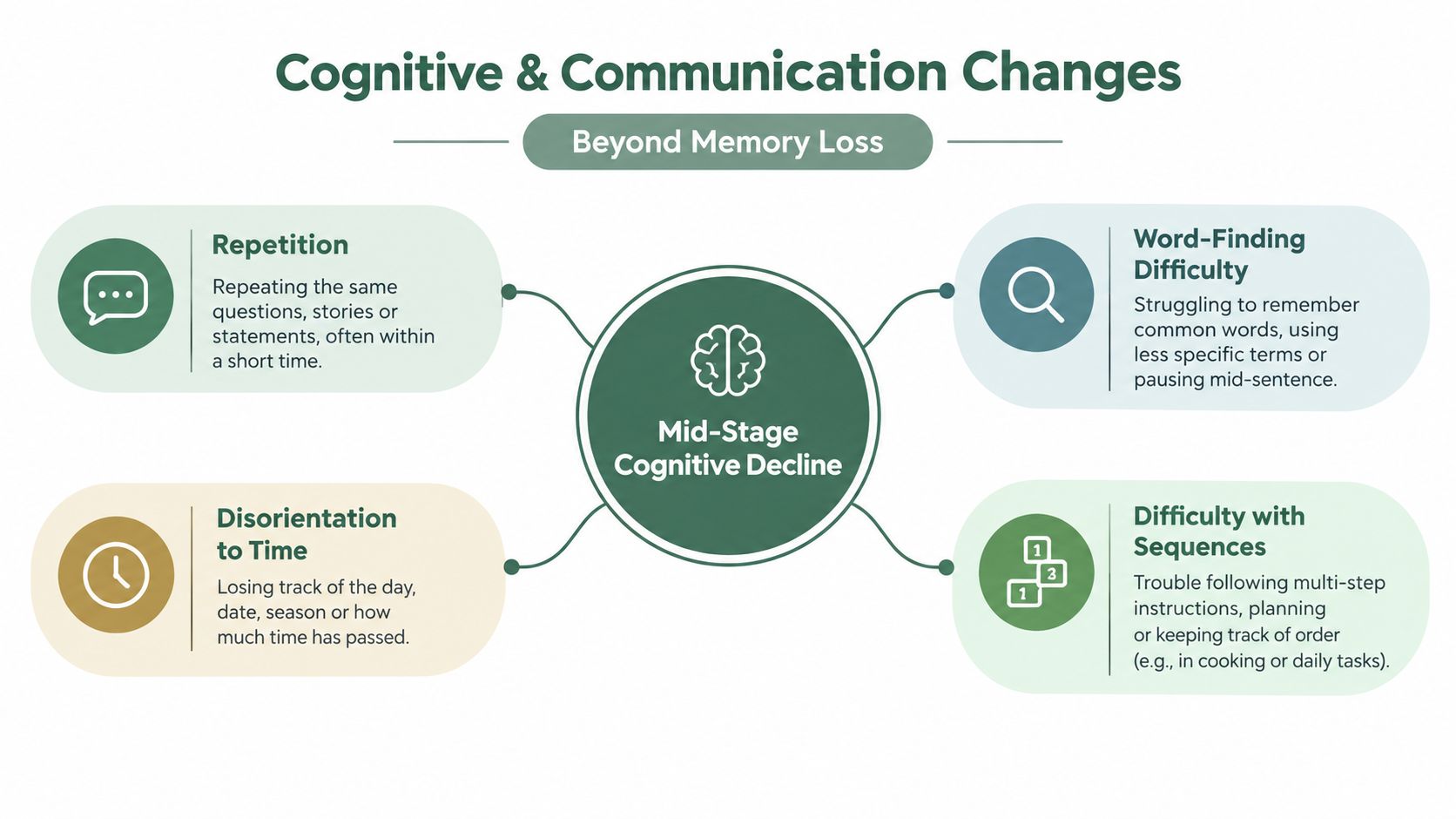
A person may still brush their teeth, choose a shirt, or prepare a familiar snack, yet need help completing the full routine. This uneven ability is a defining feature of moderate dementia. Independence usually fades first in complex tasks, then in activities that require judgment, adaptation, or supervision. A widely used seven-stage framework places moderately severe cognitive decline among the changes associated with this phase, including forgetting personal details, needing help with daily activities, and becoming confused about dates or places.
A simple ladder shows how support needs can change:
Simple familiar actions may remain possible, especially when the routine is calm and consistent.
Multi-step tasks become harder, such as preparing a meal, managing money, or choosing clothing suitable for the weather.
Tasks requiring judgment and adaptation may become unsafe, including responding to a weather change, handling an unfamiliar appointment, or finding the way home.
Personal care and supervision increasingly involve reminders, another person's presence, or direct assistance.
The person may hold a toothbrush but forget what comes next. They may put on a shirt without noticing that it is inside out or unsuitable for the temperature. The skill has not disappeared evenly, so relatives may see moments of ability alongside situations that require daily oversight.
Milestones matter more than a fixed timeline
Mid-stage dementia has no universal duration. Educational estimates include around 1.5 years for a mid-stage phase and 2 to 10 years for moderate dementia overall, as described in this historical overview of dementia stages and moderate dementia. These figures cannot predict one person's course.
Daily milestones give families a more useful guide. Repeated questions, trouble learning new information, planning difficulty, problems with numbers, poor judgment, paranoia, or hallucinations may appear in different combinations. Together, they can show that occasional help is no longer enough.
A practical decision point is reliability. If the person cannot consistently complete routines, recognize risks, or orient themselves in familiar surroundings, plan for daily supervision, even if they still manage some tasks independently. For a broader explanation of symptom changes, review this guide to dementia progression stages.
Cognitive and Communication Changes You Will Notice
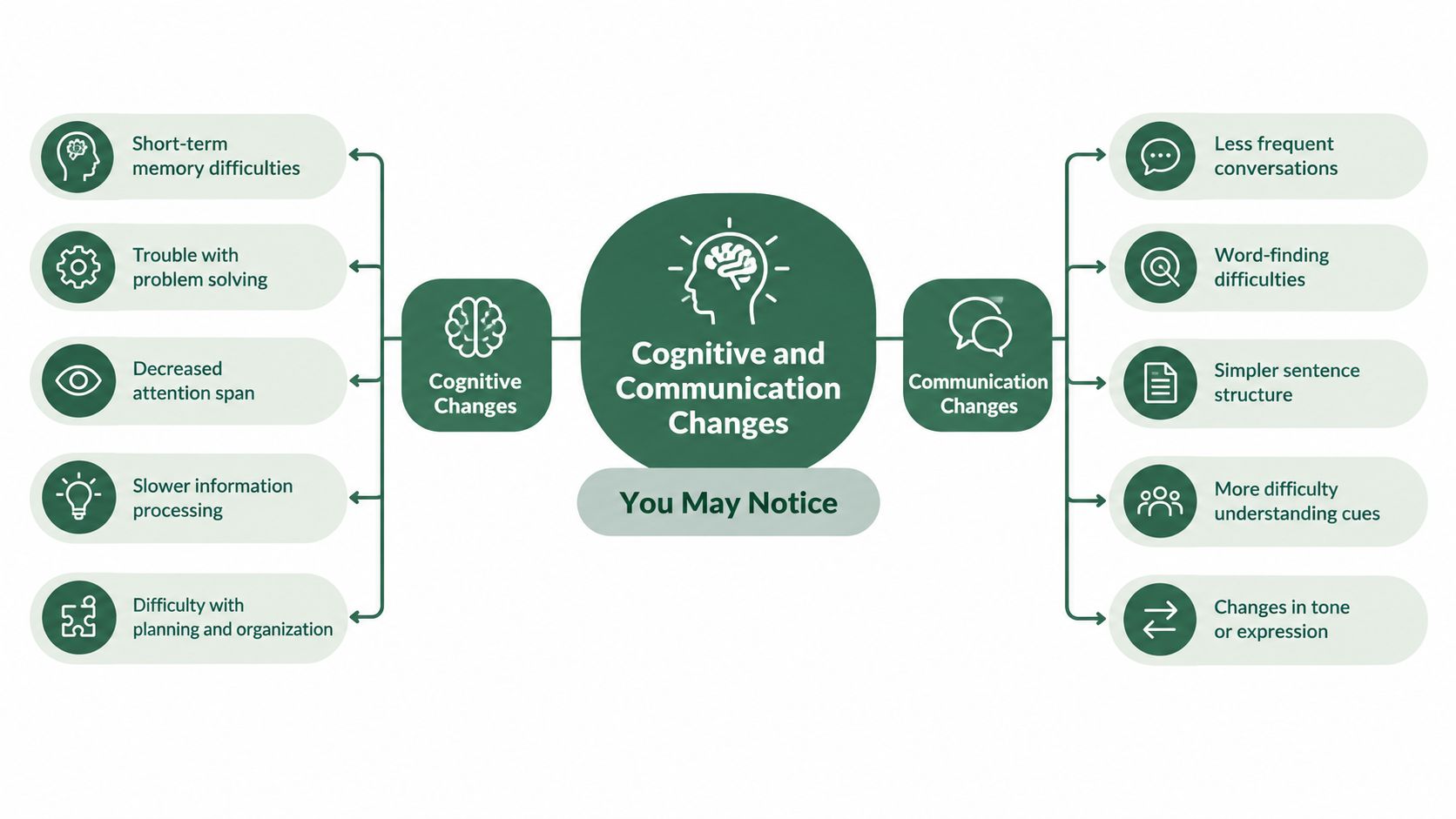
Mid-stage cognitive decline often feels like a filing system with folders in the wrong places. The person may remember an old story clearly but lose recently learned information. They may recognize a familiar voice but not immediately identify the family member speaking. This uneven pattern can confuse relatives, who may think, “They remembered something from years ago, so why can't they remember what I just said?”
Repetition is one of the clearest examples. A person may ask about lunch, receive an answer, and ask again because the new information didn't stay accessible. Repeating a question isn't necessarily stubbornness or an attempt to test you. The question may feel new each time it returns.
The Alzheimer's Society guide to middle-stage dementia symptoms describes broader difficulties with recognition, recent learning, language, and orientation. These changes can affect safe independent functioning because the person may not understand where they are, what part of the day it is, or how to respond to an unexpected situation.
Conversation becomes harder to navigate
Word-finding problems may appear as long pauses, substitute words, or sentences that stop halfway through. Your loved one might say, “Pass me the thing for the…” and lose the rest of the thought. They may become embarrassed or irritated when others finish sentences too quickly.
Following conversation can also become difficult. A busy family meal, television in the background, and several people speaking at once can overwhelm the person. They may answer a question that was asked earlier, move to a different topic, or stop participating altogether.
Try separating the communication problem from the person's intelligence or effort:
If they repeat a question, answer briefly, then use a written cue, calendar, or visible routine.
If they lose a word, give them time before offering a gentle choice, such as “Are you thinking of the cup or the plate?”
If they lose the topic, restate one point rather than correcting every detail.
If they seem lost, identify yourself and explain the immediate activity in simple language.
Orientation affects everyday decisions
Confusion about the time of day can lead to a person getting dressed at night, preparing breakfast before dawn, or trying to leave for an appointment that isn't happening. Confusion about place can cause distress even inside a familiar home. A bedroom may feel unfamiliar if furniture has changed or lighting is poor.
Missing appointments, getting lost in familiar surroundings, and failing to recognize close relatives aren't isolated memory slips. They show that the person's internal map is becoming less reliable. A consistent environment, visible signs, and one-step instructions can reduce the number of decisions the person must make independently.
Families looking for a focused explanation of one common part of this pattern can read about short-term memory loss in dementia. The key is to respond to the need behind the behavior. Reassurance, orientation, and a calm cue often work better than insisting on the correct date or demanding that the person remember what was just discussed.
Behavioral and Psychological Symptoms That Often Cluster Together
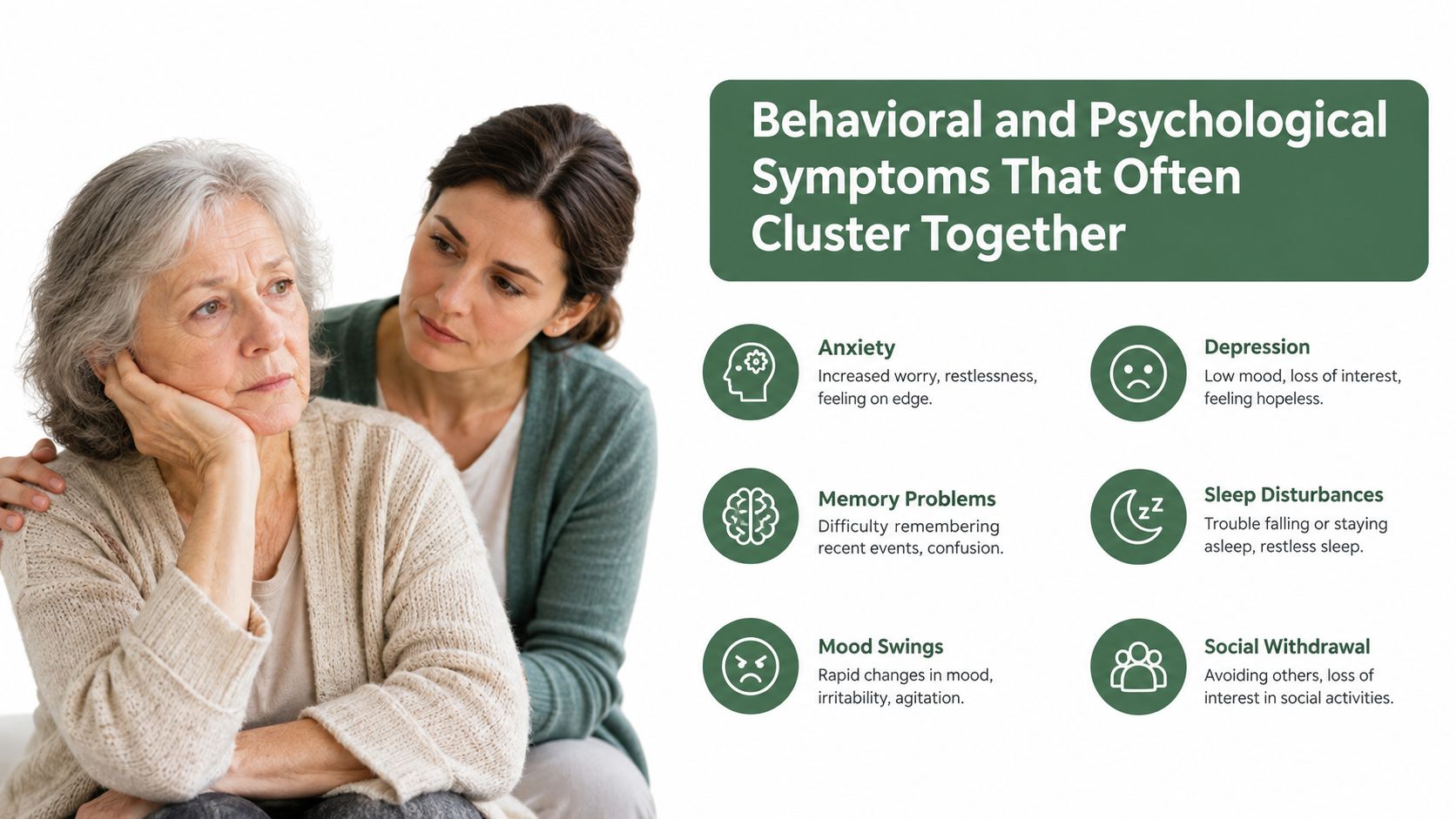
Behavioral symptoms in mid-stage dementia often arrive as a group. Anxiety can make a person seek constant reassurance. Suspiciousness can turn into accusations about missing belongings. Poor sleep can intensify confusion the next day, while confusion can increase distress at bedtime. Repetitive questioning, wandering, pacing, and following a caregiver may all reflect the same underlying loss of certainty.
A person who believes someone has stolen their wallet may not be making a calculated accusation. They may have misplaced it, forgotten where they put it, and created an explanation that makes the situation feel understandable. Another person may repeatedly wring their hands, shred tissues, or ask when a caregiver is coming home. These actions can be expressions of fear, restlessness, or an attempt to create order.
A practical response begins with patterns rather than isolated incidents. Track the time, setting, preceding activity, sleep quality, food and fluids, and what helped. This record can reveal whether distress appears during bathing, after visitors, at dusk, or when the person is left alone.
Look for combinations, not single labels. Anxiety plus shadowing may indicate that the person no longer feels secure alone. Wandering plus disorientation changes the safety plan. Sleep reversal plus nighttime toileting creates a supervision concern.
What may be typical and what needs escalation
Some changes are common in the middle stage, but “common” doesn't mean families should tolerate danger. Suspiciousness, repetitive behavior, anxiety, sleep disruption, and wandering may occur as dementia progresses. New falls, sudden confusion, severe agitation, threats, inability to use the bathroom safely, or leaving the home without a reliable way to return require prompt professional attention.
Balance problems and falls deserve special attention because physical risk can be overlooked when families focus on memory and behavior. A person may wander because they're disoriented, but an uneven floor, poor lighting, or rushing to the bathroom can add a separate hazard.
For families who need more detail on suspiciousness and false beliefs, this paranoia and dementia guide for UK caregivers offers a useful companion resource. It can help relatives distinguish emotional reassurance from arguments about whether a belief is factually correct.
Use calm language during distress. Instead of saying, “That's not true, I told you already,” try, “You're worried about your wallet. Let's look together, then we'll sit somewhere comfortable.” Guidance on dementia agitation management can support families who need a more deliberate plan for recurring episodes.
A short video can also help caregivers recognize behavioral and psychological changes in context:
Daily Function Safety and Red Flags at Home
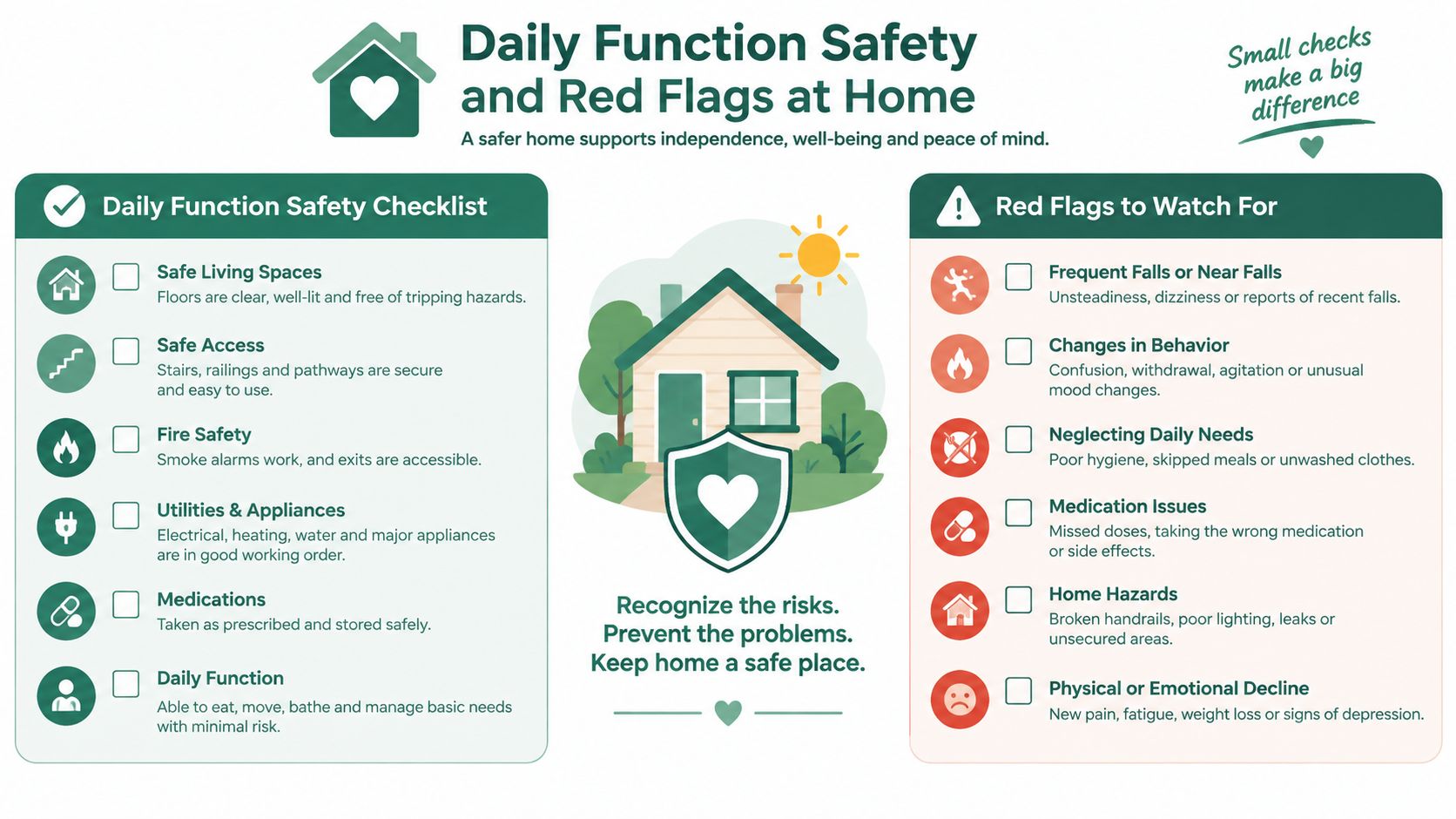
The most important shift occurs when symptoms interfere with safe daily function. A person may remember a favorite recipe but still leave the stove on. They may know that they need to bathe but forget the sequence, lose balance, or become frightened by the process. Mid-stage dementia often creates a gap between what someone wants to do and what they can complete safely without support.
The Alzheimer's Association identifies several practical changes in this phase, including disorientation to time and place, difficulty selecting clothing appropriate for the season, increased wandering risk, bladder and bowel control problems, and sleep reversal. These symptoms can affect hygiene, toileting, meals, medication routines, appointments, and nighttime rest.
A home safety audit
Walk through the day from waking to bedtime. Ask whether your loved one can complete each routine without forgetting a step, misjudging a risk, becoming disoriented, or needing repeated rescue.
Morning: Can they choose suitable clothes, use the bathroom, and prepare food safely?
Afternoon: Can they stay oriented to appointments, visitors, meals, and household hazards?
Evening: Do shadows, fatigue, or routine changes increase anxiety or wandering?
Night: Can they find the bathroom, return to bed, and avoid unsafe cooking or leaving the home?
The table below connects observed changes with a reasonable next step. It isn't a diagnostic tool, but it can help families turn worry into a concrete conversation with a clinician or care professional.
Observed Change | What It May Signal | Next Support Step |
|---|---|---|
Repeatedly leaves the home or tries to go somewhere unfamiliar | Disorientation and wandering risk | Arrange regular supervision, review door and entry safety, and discuss the pattern with a clinician |
Wears clothing unsuitable for the weather | Difficulty with judgment, sequencing, or orientation | Lay out limited clothing choices and provide a calm cue |
Forgets toileting steps or has new bladder and bowel accidents | Increasing support needs with personal care | Build toileting prompts into the daily routine and seek professional guidance |
Stays awake at night and sleeps through the day | Sleep-wake disruption and reduced nighttime safety | Record the pattern, improve routine consistency, and discuss changes with a healthcare professional |
Leaves taps, appliances, or cooking equipment running | Unsafe independent household functioning | Add direct oversight and change the home setup to reduce hazards |
Falls, nearly falls, or rushes while disoriented | Physical risk alongside cognitive decline | Seek timely clinical assessment and review mobility and home hazards |
When reminders stop being enough
A written note may work for a person who forgets an appointment but remains able to follow the plan. It may not work for someone who can't interpret the note, forgets why it matters, or leaves the house looking for the appointment. That distinction marks the move from occasional cueing toward recurring supervision.
If a risk appears suddenly or changes sharply, don't assume it's ordinary progression. Pain, infection, medication effects, dehydration, poor sleep, or another medical problem can worsen confusion and behavior. Contact a healthcare professional when the change is new, severe, or difficult to manage.
Practical Care Communication and Support Strategies That Help
Communication works best when it lowers the number of decisions your loved one must make. Long explanations, repeated corrections, and hurried questions can feel like a test the person keeps failing. Short phrases, visual cues, and predictable routines create a clearer path through the day.
Start with the emotion, not the disputed fact. If your spouse says, “I need to go home,” arguing that they're already home may increase distress. Try, “You're missing home. Let's have some tea, then we can look at the photos.” This validates the feeling without confirming an unsafe plan.
Use fewer words and more structure
For dressing, offer two appropriate outfits rather than opening the entire wardrobe. For meals, place the food and utensils in a familiar order. For appointments, use a visible calendar and repeat the plan at consistent points in the routine.
Helpful phrases include:
“I'm here with you.”
“Let's do this one step at a time.”
“You can choose the blue shirt or the green shirt.”
“We're going to the doctor after breakfast.”
“You seem worried. What would help you feel safer?”
Give the person time to answer. If word-finding is difficult, don't immediately complete every sentence. A pause can preserve participation and dignity, even when the final answer is incomplete.
Build safety into ordinary habits
Review stove use, medication storage, bathroom access, nighttime lighting, and door safety. Keep frequently used items in consistent places, remove unnecessary clutter, and use labels or photographs where they help. Routines shouldn't become rigid punishments. They're more like handrails, offering support when the person's internal sense of sequence is unreliable.
Scheduled phone-based support can complement in-person care for someone who benefits from conversation, orientation prompts, memory cues, and routine reminders. Velma offers recurring phone calls with trained care team members, cognitive engagement activities, companionship, and check-ins about appointments, medications, household risks, mood, confusion, and fall concerns. It complements medical treatment and hands-on caregiving rather than replacing either one.
Family members should share observations instead of giving vague updates. “She's more anxious” is useful, but “She became worried after dusk, asked for her sister repeatedly, and slept poorly” gives a clinician or care manager a pattern to assess.
Planning Ahead and Getting the Right Support
Mid-stage dementia is a prolonged period of increasing dependence, so planning ahead usually works better than waiting for a crisis. The symptoms may change unevenly. Communication can worsen before mobility does, or nighttime confusion may become unsafe before daytime routines fail.
Use a simple support decision:
Routines and cueing may be enough when the person can complete familiar tasks safely with reminders and someone checks in reliably.
Recurring supervision is needed when the person can't reliably manage cooking, medication, toileting, appointments, or leaving the home.
Additional home support or care coordination deserves consideration when family members are filling constant gaps, sleep is repeatedly disrupted, falls are occurring, or behavioral symptoms are difficult to manage safely.
Keep a written record of meaningful changes. Note repeated questions, wandering attempts, falls, sleep reversal, continence changes, medication concerns, and situations that trigger distress. Bring those observations to the person's clinician and discuss what support fits the family's preferences, home environment, finances, and available community resources.
You don't have to solve every future decision today. The next useful step may be a medical review, a home safety assessment, a conversation with a care manager, or a schedule that gives the primary caregiver dependable relief. The aim is consistent support that protects safety, connection, and dignity while preserving the abilities that remain.
If mid-stage symptoms are making daily routines and family check-ins harder to manage, Velma provides scheduled phone conversations, cognitive activities, orientation prompts, companionship, and practical well-being check-ins for older adults in the early to mid stages of dementia. Visit Velma to explore whether structured phone-based support could complement the care your family already provides.
You notice it in small moments. Your mother asks what time the appointment is, then asks again a few minutes later. Your spouse puts on a heavy sweater during warm weather, becomes uneasy when you leave the room, or wakes at night believing it's time to start the day. Nothing feels like a single memory problem anymore. Daily routines, conversations, emotions, and safety are becoming connected.
These changes can be frightening, but recognizing mid stage dementia symptoms can make the situation less mysterious. Mid-stage dementia is generally the point when cognitive symptoms become more severe and begin to disrupt ordinary activities, judgment, communication, and supervision needs. The pattern often includes memory and orientation loss alongside anxiety, repetitive behavior, sleep disruption, wandering, continence problems, and physical risks such as falls. The Alzheimer's Association overview of dementia stages describes many of these changes and identifies the middle phase as the longest part of Alzheimer's progression.
Table of Contents
Understanding Mid Stage Dementia and Why This Phase Matters
What Defines the Middle Stage of Dementia
Milestones matter more than a fixed timeline
Cognitive and Communication Changes You Will Notice
Conversation becomes harder to navigate
Orientation affects everyday decisions
Behavioral and Psychological Symptoms That Often Cluster Together
What may be typical and what needs escalation
Daily Function Safety and Red Flags at Home
A home safety audit
When reminders stop being enough
Practical Care Communication and Support Strategies That Help
Use fewer words and more structure
Build safety into ordinary habits
Planning Ahead and Getting the Right Support
Understanding Mid Stage Dementia and Why This Phase Matters
Consider a typical morning. Your father knows he needs to get dressed, but he can't decide which clothes fit the weather. He walks into the kitchen and forgets why he went there. When you remind him about a medical visit, he becomes suspicious because he doesn't remember agreeing to it. Later, he repeats the same question and follows you from room to room because being alone feels confusing.
This isn't just “more forgetfulness.” Mid-stage dementia changes how a person manages life, not only how they recall information. The Alzheimer's Association describes symptoms such as confusion about time and place, needing help choosing seasonally appropriate clothing, increased wandering risk, bladder and bowel control problems, sleep reversal, suspiciousness, delusions, and repetitive behaviors such as hand-wringing or shredding tissues. These symptoms can appear in different combinations, and they may become more noticeable as the day becomes tiring.
A useful way to think about this stage: memory is no longer the only failing tool. The person may also struggle with orientation, communication, judgment, emotional regulation, and physical safety.
The middle stage is often called the longest phase of Alzheimer's disease progression, because families may spend a prolonged period adjusting to increasing dependence rather than moving through a brief transition. The length varies between people, so a calendar estimate can't tell you as much as the changes you see in daily function. A person's need for reminders, supervision, and hands-on help matters more than the exact date symptoms began.
Families often feel guilty because they're unsure whether a behavior is typical or whether they're missing an emergency. Learning the clusters helps. Repetition plus disorientation may make independent appointments unsafe. Anxiety plus poor sleep may increase nighttime wandering. Word-finding difficulty plus frustration may look like anger when the underlying problem is communication breakdown.
The practical question isn't only, “Which symptom is this?” It's also, “What does this combination mean for supervision, safety, and dignity today?”
What Defines the Middle Stage of Dementia
A person may still brush their teeth, choose a shirt, or prepare a familiar snack, yet need help completing the full routine. This uneven ability is a defining feature of moderate dementia. Independence usually fades first in complex tasks, then in activities that require judgment, adaptation, or supervision. A widely used seven-stage framework places moderately severe cognitive decline among the changes associated with this phase, including forgetting personal details, needing help with daily activities, and becoming confused about dates or places.
A simple ladder shows how support needs can change:
Simple familiar actions may remain possible, especially when the routine is calm and consistent.
Multi-step tasks become harder, such as preparing a meal, managing money, or choosing clothing suitable for the weather.
Tasks requiring judgment and adaptation may become unsafe, including responding to a weather change, handling an unfamiliar appointment, or finding the way home.
Personal care and supervision increasingly involve reminders, another person's presence, or direct assistance.
The person may hold a toothbrush but forget what comes next. They may put on a shirt without noticing that it is inside out or unsuitable for the temperature. The skill has not disappeared evenly, so relatives may see moments of ability alongside situations that require daily oversight.
Milestones matter more than a fixed timeline
Mid-stage dementia has no universal duration. Educational estimates include around 1.5 years for a mid-stage phase and 2 to 10 years for moderate dementia overall, as described in this historical overview of dementia stages and moderate dementia. These figures cannot predict one person's course.
Daily milestones give families a more useful guide. Repeated questions, trouble learning new information, planning difficulty, problems with numbers, poor judgment, paranoia, or hallucinations may appear in different combinations. Together, they can show that occasional help is no longer enough.
A practical decision point is reliability. If the person cannot consistently complete routines, recognize risks, or orient themselves in familiar surroundings, plan for daily supervision, even if they still manage some tasks independently. For a broader explanation of symptom changes, review this guide to dementia progression stages.
Cognitive and Communication Changes You Will Notice
Mid-stage cognitive decline often feels like a filing system with folders in the wrong places. The person may remember an old story clearly but lose recently learned information. They may recognize a familiar voice but not immediately identify the family member speaking. This uneven pattern can confuse relatives, who may think, “They remembered something from years ago, so why can't they remember what I just said?”
Repetition is one of the clearest examples. A person may ask about lunch, receive an answer, and ask again because the new information didn't stay accessible. Repeating a question isn't necessarily stubbornness or an attempt to test you. The question may feel new each time it returns.
The Alzheimer's Society guide to middle-stage dementia symptoms describes broader difficulties with recognition, recent learning, language, and orientation. These changes can affect safe independent functioning because the person may not understand where they are, what part of the day it is, or how to respond to an unexpected situation.
Conversation becomes harder to navigate
Word-finding problems may appear as long pauses, substitute words, or sentences that stop halfway through. Your loved one might say, “Pass me the thing for the…” and lose the rest of the thought. They may become embarrassed or irritated when others finish sentences too quickly.
Following conversation can also become difficult. A busy family meal, television in the background, and several people speaking at once can overwhelm the person. They may answer a question that was asked earlier, move to a different topic, or stop participating altogether.
Try separating the communication problem from the person's intelligence or effort:
If they repeat a question, answer briefly, then use a written cue, calendar, or visible routine.
If they lose a word, give them time before offering a gentle choice, such as “Are you thinking of the cup or the plate?”
If they lose the topic, restate one point rather than correcting every detail.
If they seem lost, identify yourself and explain the immediate activity in simple language.
Orientation affects everyday decisions
Confusion about the time of day can lead to a person getting dressed at night, preparing breakfast before dawn, or trying to leave for an appointment that isn't happening. Confusion about place can cause distress even inside a familiar home. A bedroom may feel unfamiliar if furniture has changed or lighting is poor.
Missing appointments, getting lost in familiar surroundings, and failing to recognize close relatives aren't isolated memory slips. They show that the person's internal map is becoming less reliable. A consistent environment, visible signs, and one-step instructions can reduce the number of decisions the person must make independently.
Families looking for a focused explanation of one common part of this pattern can read about short-term memory loss in dementia. The key is to respond to the need behind the behavior. Reassurance, orientation, and a calm cue often work better than insisting on the correct date or demanding that the person remember what was just discussed.
Behavioral and Psychological Symptoms That Often Cluster Together
Behavioral symptoms in mid-stage dementia often arrive as a group. Anxiety can make a person seek constant reassurance. Suspiciousness can turn into accusations about missing belongings. Poor sleep can intensify confusion the next day, while confusion can increase distress at bedtime. Repetitive questioning, wandering, pacing, and following a caregiver may all reflect the same underlying loss of certainty.
A person who believes someone has stolen their wallet may not be making a calculated accusation. They may have misplaced it, forgotten where they put it, and created an explanation that makes the situation feel understandable. Another person may repeatedly wring their hands, shred tissues, or ask when a caregiver is coming home. These actions can be expressions of fear, restlessness, or an attempt to create order.
A practical response begins with patterns rather than isolated incidents. Track the time, setting, preceding activity, sleep quality, food and fluids, and what helped. This record can reveal whether distress appears during bathing, after visitors, at dusk, or when the person is left alone.
Look for combinations, not single labels. Anxiety plus shadowing may indicate that the person no longer feels secure alone. Wandering plus disorientation changes the safety plan. Sleep reversal plus nighttime toileting creates a supervision concern.
What may be typical and what needs escalation
Some changes are common in the middle stage, but “common” doesn't mean families should tolerate danger. Suspiciousness, repetitive behavior, anxiety, sleep disruption, and wandering may occur as dementia progresses. New falls, sudden confusion, severe agitation, threats, inability to use the bathroom safely, or leaving the home without a reliable way to return require prompt professional attention.
Balance problems and falls deserve special attention because physical risk can be overlooked when families focus on memory and behavior. A person may wander because they're disoriented, but an uneven floor, poor lighting, or rushing to the bathroom can add a separate hazard.
For families who need more detail on suspiciousness and false beliefs, this paranoia and dementia guide for UK caregivers offers a useful companion resource. It can help relatives distinguish emotional reassurance from arguments about whether a belief is factually correct.
Use calm language during distress. Instead of saying, “That's not true, I told you already,” try, “You're worried about your wallet. Let's look together, then we'll sit somewhere comfortable.” Guidance on dementia agitation management can support families who need a more deliberate plan for recurring episodes.
A short video can also help caregivers recognize behavioral and psychological changes in context:
Daily Function Safety and Red Flags at Home
The most important shift occurs when symptoms interfere with safe daily function. A person may remember a favorite recipe but still leave the stove on. They may know that they need to bathe but forget the sequence, lose balance, or become frightened by the process. Mid-stage dementia often creates a gap between what someone wants to do and what they can complete safely without support.
The Alzheimer's Association identifies several practical changes in this phase, including disorientation to time and place, difficulty selecting clothing appropriate for the season, increased wandering risk, bladder and bowel control problems, and sleep reversal. These symptoms can affect hygiene, toileting, meals, medication routines, appointments, and nighttime rest.
A home safety audit
Walk through the day from waking to bedtime. Ask whether your loved one can complete each routine without forgetting a step, misjudging a risk, becoming disoriented, or needing repeated rescue.
Morning: Can they choose suitable clothes, use the bathroom, and prepare food safely?
Afternoon: Can they stay oriented to appointments, visitors, meals, and household hazards?
Evening: Do shadows, fatigue, or routine changes increase anxiety or wandering?
Night: Can they find the bathroom, return to bed, and avoid unsafe cooking or leaving the home?
The table below connects observed changes with a reasonable next step. It isn't a diagnostic tool, but it can help families turn worry into a concrete conversation with a clinician or care professional.
Observed Change | What It May Signal | Next Support Step |
|---|---|---|
Repeatedly leaves the home or tries to go somewhere unfamiliar | Disorientation and wandering risk | Arrange regular supervision, review door and entry safety, and discuss the pattern with a clinician |
Wears clothing unsuitable for the weather | Difficulty with judgment, sequencing, or orientation | Lay out limited clothing choices and provide a calm cue |
Forgets toileting steps or has new bladder and bowel accidents | Increasing support needs with personal care | Build toileting prompts into the daily routine and seek professional guidance |
Stays awake at night and sleeps through the day | Sleep-wake disruption and reduced nighttime safety | Record the pattern, improve routine consistency, and discuss changes with a healthcare professional |
Leaves taps, appliances, or cooking equipment running | Unsafe independent household functioning | Add direct oversight and change the home setup to reduce hazards |
Falls, nearly falls, or rushes while disoriented | Physical risk alongside cognitive decline | Seek timely clinical assessment and review mobility and home hazards |
When reminders stop being enough
A written note may work for a person who forgets an appointment but remains able to follow the plan. It may not work for someone who can't interpret the note, forgets why it matters, or leaves the house looking for the appointment. That distinction marks the move from occasional cueing toward recurring supervision.
If a risk appears suddenly or changes sharply, don't assume it's ordinary progression. Pain, infection, medication effects, dehydration, poor sleep, or another medical problem can worsen confusion and behavior. Contact a healthcare professional when the change is new, severe, or difficult to manage.
Practical Care Communication and Support Strategies That Help
Communication works best when it lowers the number of decisions your loved one must make. Long explanations, repeated corrections, and hurried questions can feel like a test the person keeps failing. Short phrases, visual cues, and predictable routines create a clearer path through the day.
Start with the emotion, not the disputed fact. If your spouse says, “I need to go home,” arguing that they're already home may increase distress. Try, “You're missing home. Let's have some tea, then we can look at the photos.” This validates the feeling without confirming an unsafe plan.
Use fewer words and more structure
For dressing, offer two appropriate outfits rather than opening the entire wardrobe. For meals, place the food and utensils in a familiar order. For appointments, use a visible calendar and repeat the plan at consistent points in the routine.
Helpful phrases include:
“I'm here with you.”
“Let's do this one step at a time.”
“You can choose the blue shirt or the green shirt.”
“We're going to the doctor after breakfast.”
“You seem worried. What would help you feel safer?”
Give the person time to answer. If word-finding is difficult, don't immediately complete every sentence. A pause can preserve participation and dignity, even when the final answer is incomplete.
Build safety into ordinary habits
Review stove use, medication storage, bathroom access, nighttime lighting, and door safety. Keep frequently used items in consistent places, remove unnecessary clutter, and use labels or photographs where they help. Routines shouldn't become rigid punishments. They're more like handrails, offering support when the person's internal sense of sequence is unreliable.
Scheduled phone-based support can complement in-person care for someone who benefits from conversation, orientation prompts, memory cues, and routine reminders. Velma offers recurring phone calls with trained care team members, cognitive engagement activities, companionship, and check-ins about appointments, medications, household risks, mood, confusion, and fall concerns. It complements medical treatment and hands-on caregiving rather than replacing either one.
Family members should share observations instead of giving vague updates. “She's more anxious” is useful, but “She became worried after dusk, asked for her sister repeatedly, and slept poorly” gives a clinician or care manager a pattern to assess.
Planning Ahead and Getting the Right Support
Mid-stage dementia is a prolonged period of increasing dependence, so planning ahead usually works better than waiting for a crisis. The symptoms may change unevenly. Communication can worsen before mobility does, or nighttime confusion may become unsafe before daytime routines fail.
Use a simple support decision:
Routines and cueing may be enough when the person can complete familiar tasks safely with reminders and someone checks in reliably.
Recurring supervision is needed when the person can't reliably manage cooking, medication, toileting, appointments, or leaving the home.
Additional home support or care coordination deserves consideration when family members are filling constant gaps, sleep is repeatedly disrupted, falls are occurring, or behavioral symptoms are difficult to manage safely.
Keep a written record of meaningful changes. Note repeated questions, wandering attempts, falls, sleep reversal, continence changes, medication concerns, and situations that trigger distress. Bring those observations to the person's clinician and discuss what support fits the family's preferences, home environment, finances, and available community resources.
You don't have to solve every future decision today. The next useful step may be a medical review, a home safety assessment, a conversation with a care manager, or a schedule that gives the primary caregiver dependable relief. The aim is consistent support that protects safety, connection, and dignity while preserving the abilities that remain.
If mid-stage symptoms are making daily routines and family check-ins harder to manage, Velma provides scheduled phone conversations, cognitive activities, orientation prompts, companionship, and practical well-being check-ins for older adults in the early to mid stages of dementia. Visit Velma to explore whether structured phone-based support could complement the care your family already provides.
Suggested Article: