Preventing Falls in Dementia Patients: A Caregiver's Guide

You're halfway through making coffee when you hear the bathroom door open. Your parent is already moving down the hall, one hand sliding along the wall, slippers loose at the heel. They don't answer when you call because they've forgotten why you're worried. By the time you reach them, they're standing over a raised threshold, unsure whether to step forward or turn around.
That moment is familiar to many families living with dementia. Fall prevention rarely fails because a caregiver doesn't care. It fails because the plan depends on memory, judgment, balance, and cooperation that may change from one hour to the next. Preventing falls in dementia patients requires a plan built around the person's abilities, routines, home, symptoms, and support network.
Table of Contents
Why Falls Hit Harder When Dementia Is in the Picture
The fall often starts before the misstep
Subtype and stage change the starting point
Walking the Home Room by Room
Start with the routes used under pressure
Make the bedroom-to-bathroom route obvious
Building a Balance and Strength Routine That Actually Sticks
Make the session predictable
Work with refusal instead of fighting it
Medications, Vision, and Feet Quietly Move the Needle
Communication and Behavioral Strategies That Lower Risk
Replace confrontation with a safer next step
Monitoring, Check-Ins, and When to Involve Professionals
Use clear escalation rules
Your Caregiver Action Plan for the Next 30 Days
Week 1
Week 2
Week 3
Week 4
Why Falls Hit Harder When Dementia Is in the Picture
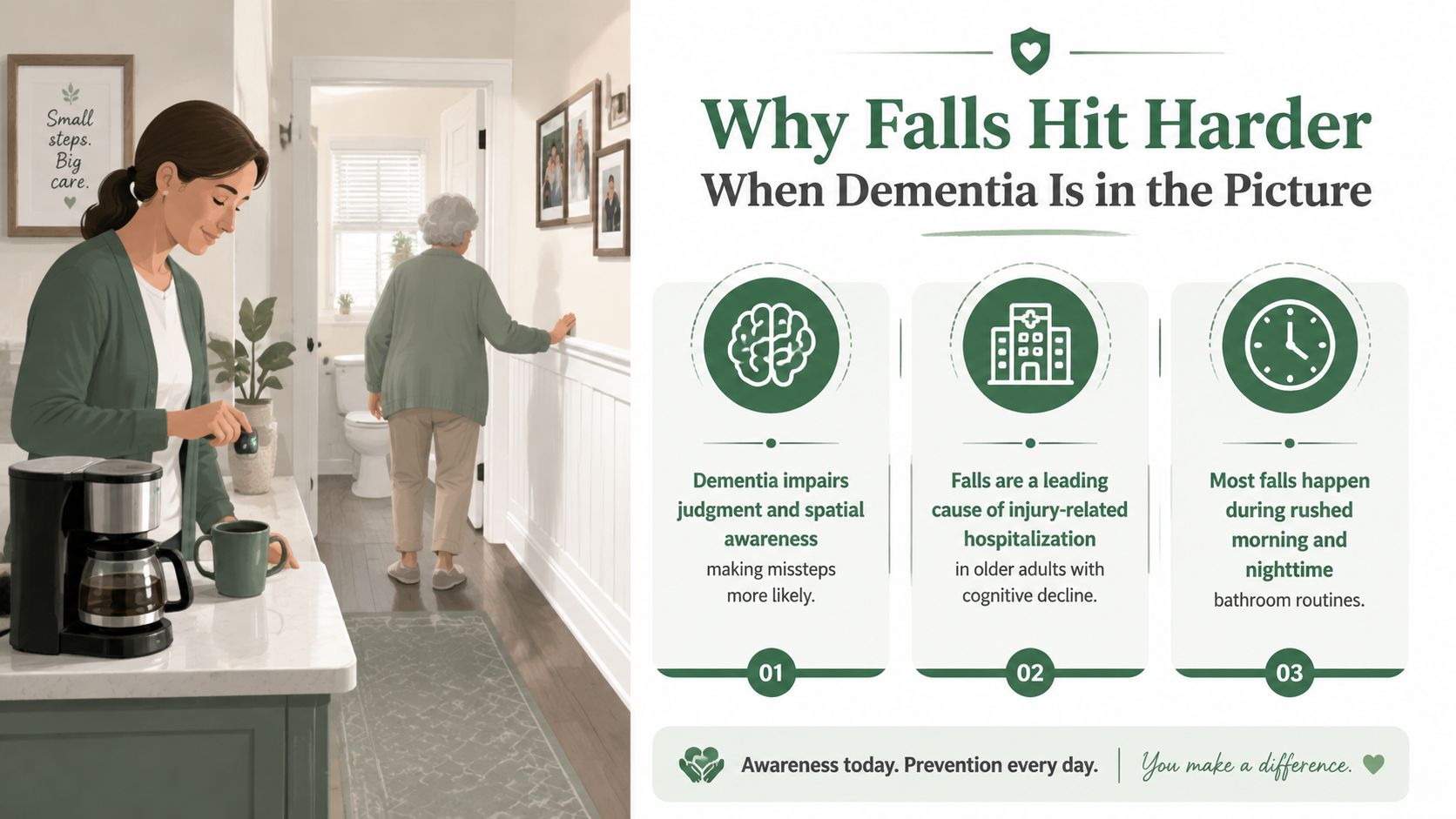
Dementia changes more than memory. A person may misjudge the height of a step, forget to use a walker, stand before their body is ready, or interpret a dark hallway as a clear path. The caregiver sees a familiar room. The person with dementia may see confusing shapes, poor contrast, or an urgent need to get somewhere without understanding the safest route.
The risk is substantial. A 2025 meta-analysis of 21 studies involving 35,449 participants found that falls affected 45.6% of older adults with dementia, with estimates of 39.2% for Alzheimer's dementia, 35.2% for vascular dementia, and 29.0% for mixed dementia. The review reported an overall incidence of 3.61 falls per person-year, rising to 5.80 in dementia-specialized care units (2025 meta-analysis of falls in dementia).
The fall often starts before the misstep
Visuospatial changes can make furniture, thresholds, and patterned flooring harder to interpret. Slower reactions leave less time to grab a rail or correct a sideways lean. Dementia can also reduce the ability to walk while carrying something, talking, searching for an item, or responding to another person.
Medication effects add another layer. A drug that causes drowsiness, dizziness, blurred vision, or a blood-pressure drop may turn a manageable transfer into an unsafe one. Poor footwear, weakness after illness, urgency to use the toilet, and nighttime disorientation can converge in a few seconds.
People with Alzheimer's disease had a pooled annual fall prevalence of 44.27%, an average of 1.30 falls per person per year, and a recurrent-faller rate of 42.08% in a 2024 meta-analysis. The same review reported an injured-faller rate of 45.0% and cited earlier literature indicating that dementia may raise fall and injury risk by roughly two to three times compared with older adults without dementia (2024 Alzheimer's fall meta-analysis).
Practical rule: Treat a new near-fall, a change in walking, or repeated wall-touching as information. Don't wait for a fracture before changing the plan.
Subtype and stage change the starting point
A person in the early stage who walks independently may need cueing, lighting, vision correction, and strength work. Someone with vascular or mixed dementia may need closer attention to gait speed, endurance, coordination, and medical conditions. A person in a later stage may need hands-on transfers, scheduled toileting, and environmental simplification rather than a longer exercise list.
That's why a generic eldercare checklist isn't enough. Start with the person's actual fall pattern, then match the response to their cognitive stage, mobility, living arrangement, and ability to follow a cue.
Walking the Home Room by Room
A useful home assessment asks one question in every room: What could make this person hurry, reach, turn, misread a surface, or walk without help? Complete the first pass during a weekend, but prioritize the places involved in previous falls and near-falls.
Start with the routes used under pressure
At the entryway, remove scatter rugs and anything that narrows the path. Add automatic lighting if possible, and place a stable chair where your parent can sit to put on shoes. A chair that slides is not a safety aid. It's another hazard.
In the kitchen, keep frequently used items between waist and shoulder height. Don't encourage step-stool use unless a professional has assessed it and someone is present. Secure the kettle cord, toaster cable, and appliance leads so they can't migrate across the walking route. Use contrasting colors for handles and frequently used surfaces if visual recognition is difficult.
The bathroom deserves early attention because urgency, wet flooring, low seats, and turning movements often combine. Install professionally positioned grab bars beside the toilet and inside the shower. Use a properly secured non-slip surface, not a loose bath mat, and consider a raised toilet seat if standing from a low seat is difficult. A shower chair may help, but it can also create a transfer problem if it's unstable or poorly placed.
Make the bedroom-to-bathroom route obvious
Set the bed at a height that allows both feet to rest firmly on the floor before standing. Keep appropriate footwear within reach, not across the room. Place nightlights along the route to the bathroom and remove baskets, footstools, and decorative furniture from the path.
In the living room and hallway, space furniture for the person's walker or turning pattern. Secure cords against walls and mark confusing thresholds with high-contrast tape. Avoid shiny flooring, busy patterns, and furniture that blends into the background.
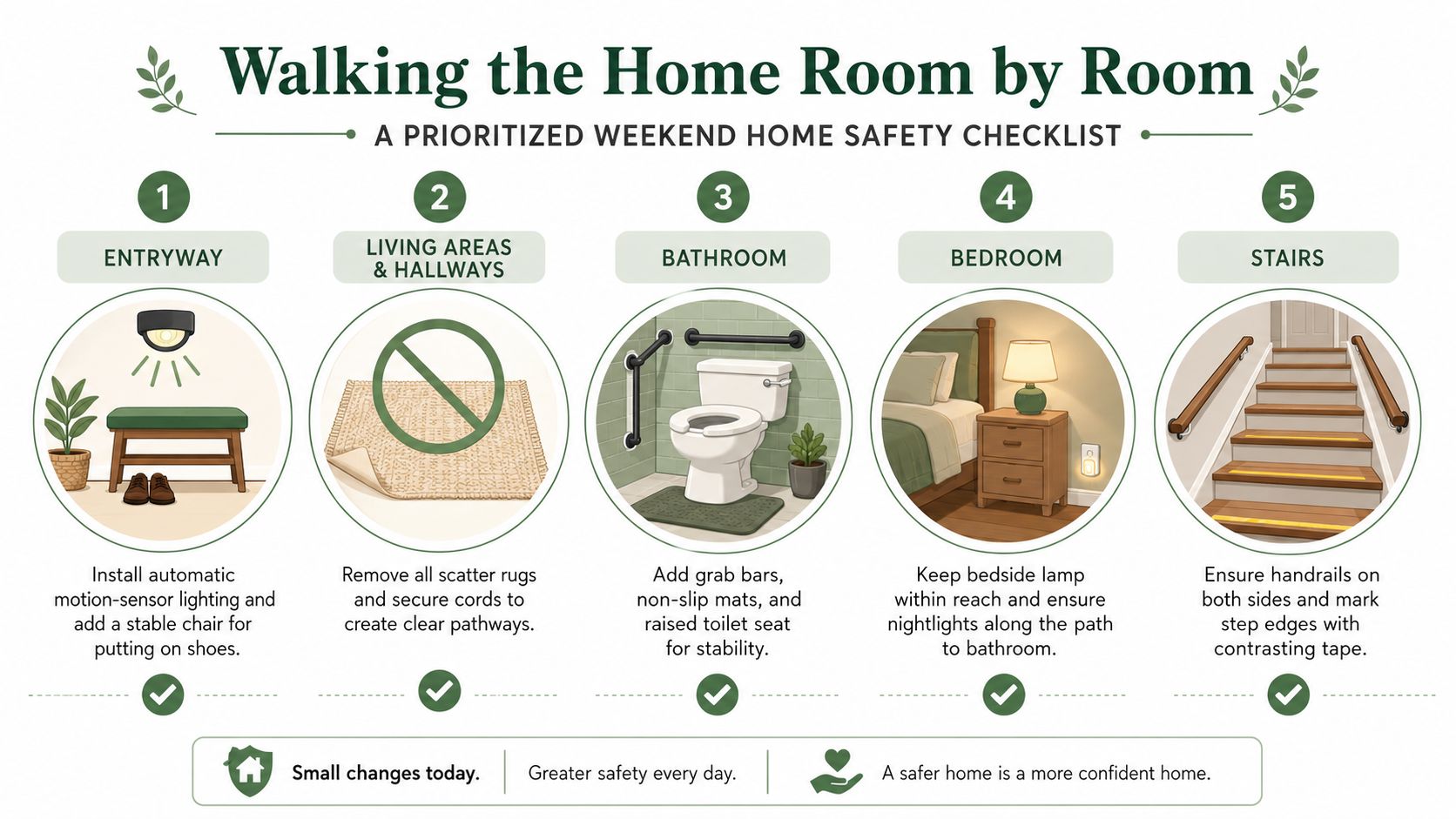
Use this order when time and energy are limited:
Fix the fall site first: Remove or change the item involved in the latest fall or near-fall.
Clear essential routes: Prioritize bed to bathroom, chair to kitchen, and entrance paths.
Improve visibility: Add lighting and contrast where the person hesitates or misjudges edges.
Support transfers: Stabilize chairs, toilet seating, shower equipment, and bed height.
Recheck after changes: Watch how the person uses the modified space. A well-intended grab bar can become dangerous if it encourages an awkward reach.
A short demonstration can help families spot issues that photographs miss. This home fall-prevention video can supplement, but not replace, an occupational therapist's assessment of the actual home.
Building a Balance and Strength Routine That Actually Sticks
Exercise helps only when the person repeats it safely. A complicated program with unfamiliar movements may be clinically sensible and practically useless if your parent refuses it, forgets it, or becomes frightened halfway through.
The strongest quantitative benchmark comes from a meta-analysis of exercise in neurodegenerative disease. Among participants with dementia, exercise reduced fall rates by 36%, with a rate ratio of 0.64 and a 95% confidence interval of 0.51 to 0.82 (exercise and falls in neurodegenerative disease). That result supports exercise, but it doesn't mean every routine works for every person.
Make the session predictable
Choose a familiar time, such as after morning tea, and keep the same chair, counter, and sequence. Begin with short sessions, perhaps 10 to 15 minutes, provided the person's clinician or physiotherapist considers the movements appropriate. Stop for chest pain, unusual breathlessness, faintness, new pain, or marked confusion.
Useful formats include Otago-style home exercises, adapted tai chi with repeated movements, and simple sit-to-stand practice. The best choice is the one the person understands and will perform with suitable supervision.
Try this starter sequence:
Seated marches: Sit in a firm chair with feet supported. Lift one knee, lower it, then alternate while the caregiver uses a calm rhythm.
Counter-supported heel-to-toe stance: Stand at a stable counter with both hands available. Practice bringing one foot slightly ahead of the other, without forcing a narrow stance.
Supported sit-to-stands: Use a sturdy chair against a wall. Lean forward, stand with controlled support, pause, then sit slowly.
Add repetitions before adding difficulty. Later, a physiotherapist may recommend a soft ankle weight, a longer standing interval, or a tandem stance. Don't progress all three at once.

Work with refusal instead of fighting it
Refusal often means the task feels confusing, painful, tiring, embarrassing, or badly timed. Offer two choices, demonstrate rather than explain, and stop while the experience is still positive. “Would you like to do the chair exercises before tea or after tea?” usually works better than “You need to exercise now.”
Keep a notebook with the date, activity, supervision level, and any symptom or near-fall. The aim isn't perfection. It's to identify whether the person is participating, whether the routine is becoming easier, and whether a movement creates risk.
For caregivers who want broader guidance on building strength safely across later life, optimize lifting for life offers useful context. Dementia-specific exercise still needs individual clinical guidance.
Evidence remains cautious. A 2020 review of 72 studies found only 15 intervention studies, and concluded that evidence was insufficient to endorse one intervention broadly. A home-program pilot reported lower fall rate and fall risk without statistical significance, with RR 0.50 and a 95% confidence interval of 0.11 to 2.19 (systematic review of falls interventions in dementia). A good routine is therefore measured by safe participation and actual fall counts, not by assuming a generic program has solved the problem.
Medications, Vision, and Feet Quietly Move the Needle
A family may spend weeks rearranging furniture while a recent medication change leaves someone dizzy every time they stand. Medication, vision, and footwear deserve their own review because small problems in these areas can undermine an otherwise careful home plan.
Ask a pharmacist or prescribing clinician to review sedatives, anticholinergic medicines, blood-pressure drugs, diabetes medicines, and any recent additions or dose changes. Don't stop or alter a prescription independently. Bring a written list and ask which medicines may cause sleepiness, confusion, blurred vision, low blood pressure, or dizziness.
Use these questions at the appointment:
When should each medicine be taken?
Could the timing explain morning or nighttime unsteadiness?
Has the dose changed recently?
What symptoms should prompt a call?
Which medicines deserve a specific fall-risk review?
Lever | Why It Increases Falls | Action This Month | Conversation to Start |
|---|---|---|---|
Sedating or anticholinergic medicine | Sleepiness, confusion, blurred vision, or slower responses can affect transfers and walking. | Request a pharmacist-led review. | “Could any medicine be contributing to drowsiness or unsteadiness?” |
Blood-pressure or diabetes medicine | Dizziness or a blood-pressure drop can occur when standing. | Record when symptoms appear and share the pattern. | “Should standing blood pressure or medicine timing be checked?” |
Vision correction | Poor contrast and unclear edges make thresholds, stairs, and bathroom equipment harder to judge. | Arrange an eye examination and improve lighting. | “Are cataracts, prescription changes, or glasses design affecting mobility?” |
Footwear | Loose slippers and poor fit reduce secure contact with the floor. | Replace unsafe footwear with enclosed heels and non-slip soles. | “Does the person need podiatry input or a new shoe fitting?” |
Vision care should include a dilated examination when clinically appropriate, cataract discussion, and a review of whether separate distance and near glasses would be safer than one pair for every task. Some people manage stairs better without bifocals, but the right choice depends on the prescription and environment. A clinician or optometrist should guide that decision.
For feet, choose a firm fit, enclosed heel, and non-slip sole. Avoid loose slippers, worn soles, and shoes that require complicated fastening. Check feet regularly for pain, swelling, pressure areas, or nail problems that change the way the person walks.
Medication reminders can support routine consistency, but reminders don't replace clinical review or supervision. Families may also find medication reminders for seniors useful when deciding how to structure daily prompts.
Communication and Behavioral Strategies That Lower Risk
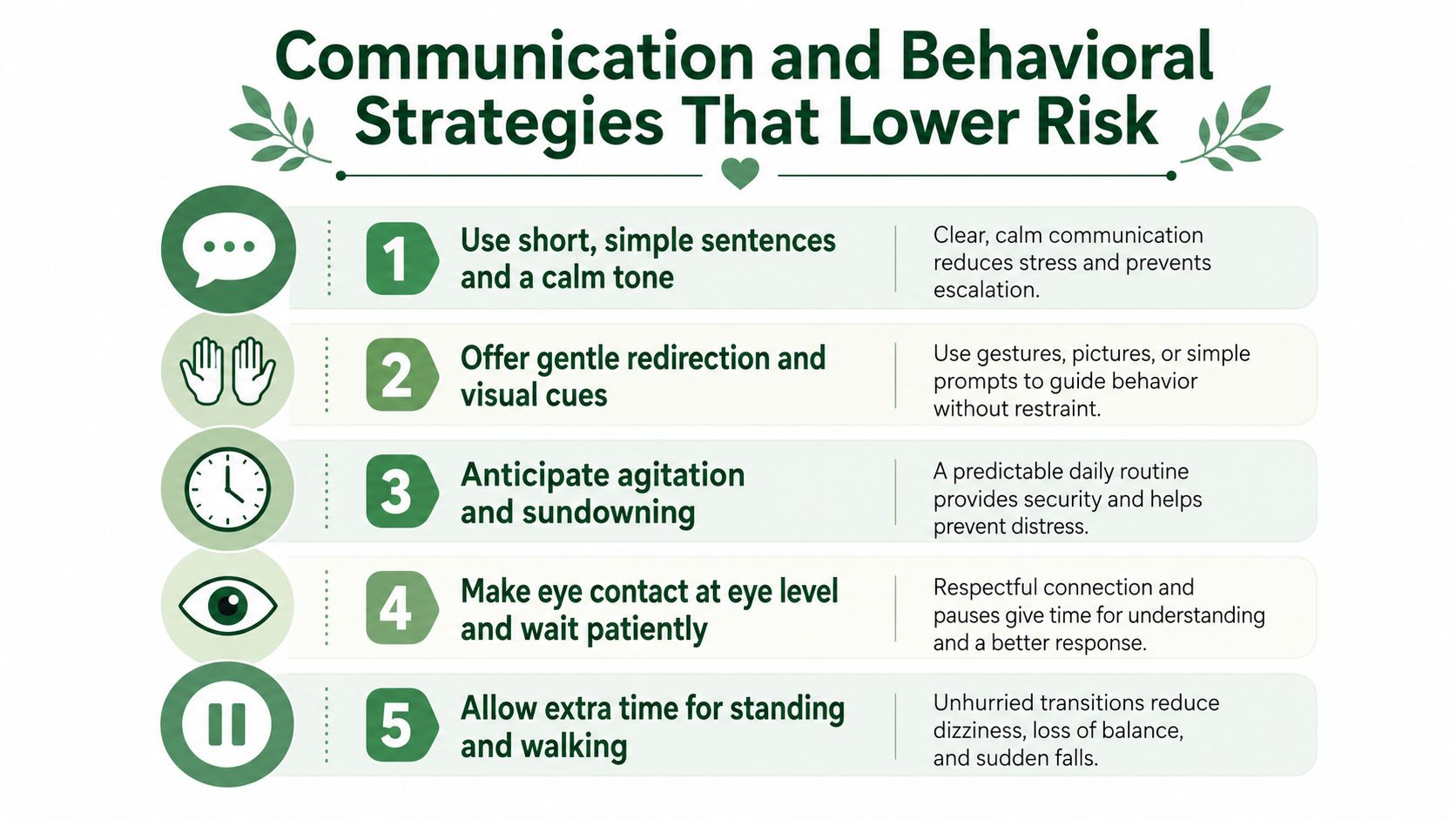
Agitation, wandering, sundowning, and refusal of help create fall mechanics. A person who feels rushed may stand before a caregiver is ready, pull on a towel rail, walk quickly toward a door, or ignore a walker. The safer response isn't always more instruction. Often it's less language, a calmer pace, and a route that makes the next action obvious.
Approach from the front, make eye contact at the person's level, and give one instruction at a time. Wait for the response. If your parent is trying to reach the bathroom, saying “Stand up, take your walker, turn left, and walk slowly” may overload them. Try “Let's stand together,” then pause.
Replace confrontation with a safer next step
During bathing, avoid announcing a long sequence of tasks. Offer a warm towel, show the shower chair, and say, “Sit here first.” During toileting, anticipate the person's usual pattern instead of waiting for urgent movement. At night, use a soft light and a familiar phrase such as, “The bathroom is this way. I'll walk with you.”
Picture signs can help identify the bathroom or bedroom. A contrasting toilet seat can improve recognition. Colored tape on step edges may make the stair boundary clearer, but test it carefully because a strong pattern can also confuse someone with visual impairment.
Retire these phrases:
“You're going to fall.”
“I already told you that.”
“Hurry up.”
“Why didn't you use your walker?”
“You can do this yourself.”
Try these instead:
“Take your time. I'm beside you.”
“Let's do one step.”
“Would you like the blue walker or the chair?”
“We're going to the bathroom together.”
“Pause here before you stand.”
Resistance may signal pain, fear, fatigue, embarrassment, or a need for control. Record what happened before the refusal and try again at a calmer time. The DeTalks communication guide can provide additional ideas for reducing language load and improving interaction. Families can also review dementia communication strategies when they need scripts that fit daily care.
Monitoring, Check-Ins, and When to Involve Professionals
A fall plan needs a feedback loop. Once a week, record falls, near-falls, sleep disruption, hydration concerns, new pain, and a brief observation of walking from one familiar chair to another. Note whether the person needed more prompting, held onto furniture, dragged a foot, or seemed unusually sleepy.
Don't turn the log into an exam. Its purpose is to identify change early and give clinicians usable information. Record the time, location, activity, footwear, symptoms, and what happened immediately beforehand.
Use clear escalation rules
Call emergency services for a serious injury, severe bleeding, loss of consciousness, breathing difficulty, or a suspected medical emergency. Seek urgent medical advice after an unwitnessed fall, any head impact, new confusion, significant pain, inability to bear weight, or a fall with injury. A sudden change in walking can also signal illness, medication effects, or delirium and deserves prompt attention.
Write the plan on a card and pin it to the refrigerator:
Fall response card
Call emergency services: serious injury, loss of consciousness, severe bleeding, breathing difficulty, or immediate danger.
Call the clinician promptly: unwitnessed fall, head impact, new confusion, new pain, or inability to walk normally.
Review the plan: a second fall, repeated near-falls, a new medicine, hospital discharge, or sudden mobility decline.
Bring to every appointment: fall log, medicine list, footwear information, and notes about sleep, hydration, and behavior.
The right professional depends on the problem. A geriatrician can coordinate complex medical issues. A dementia care manager can organize the family plan. A physiotherapist can assess gait, transfers, strength, and exercise. An occupational therapist can examine the home and daily tasks. An optometrist, podiatrist, pharmacist, and community falls team each address different contributors.
Pelvic-floor symptoms and urgency can also affect rushed toileting. A clinician may consider evidence-based pelvic floor care as part of a broader post-fall or mobility plan. For a structured review of personal and environmental risks, use this fall risk assessment for elderly people, then share the findings with the care team.
Recent implementation evidence highlights why follow-up matters. A review covering evidence from 2021 through March 2026 identified 49 barriers and 40 facilitators to delivering fall prevention for older adults with dementia or cognitive impairment. Barriers included complex interventions, neuropsychiatric symptoms, resistance to devices, limited dementia-specific knowledge, staffing constraints, caregiver burden, digital-access problems, and weak follow-up, while facilitators included simplified delivery, caregiver involvement, staff training, multidisciplinary coordination, and low-burden technology (implementation barriers and facilitators).
Your Caregiver Action Plan for the Next 30 Days
A useful plan assigns work to a person, sets a review point, and names the event that will force a reassessment.
Week 1
Walk through the home during the person's usual morning and nighttime routes. Remove the top three hazards, improve lighting, stabilize seating, and clear the bathroom path. Assign one family member to complete the changes and another to observe how the person uses them.
Week 2
Begin a short, supervised seated balance and strength routine at a predictable time. Book medication and vision reviews, and replace unsafe slippers or poorly fitting shoes. Revisit the plan if walking changes, dizziness appears, or exercise causes pain.
Week 3
Start the weekly log and write the escalation card. Record falls, near-falls, sleep, hydration, new symptoms, and mobility observations. If a fall occurs, don't add more supervision. Reassess the cause and involve the appropriate professional.
Week 4
Confirm support from a geriatrician, physiotherapist, occupational therapist, dementia care manager, pharmacist, or community falls team as needed. Make sure every regular caregiver knows the same cues, footwear rules, bathroom route, and response plan.
Personalized prevention matters because broad multifactorial packages may have minimal or non-significant effects overall. A 2025 personalized-prevention study recommended targeting independent fall predictors such as gait speed, daily-living ability, and depression, with particular attention to physical fitness, endurance, strength, coordination, balance, comorbidities, and medication optimization for some people with vascular or mixed dementia. A 2026 meta-analysis found an overall fall-rate reduction among cognitively impaired older adults, with a pooled incidence rate ratio of 0.82 and a 95% confidence interval of 0.69 to 0.98, while emphasizing that interventions must be customized (personalized fall prevention and cognitive impairment evidence).
Home care stops being safe when supervision is routinely missed, the person can't transfer reliably, falls continue despite changes, or the caregiver can't respond without risking their own injury. At that point, additional in-home help, adult day services, or a move to a safer setting isn't a failure. It's the next safety decision.
Velma provides scheduled phone calls with trained care team members, combining cognitive stimulation, companionship, routine support, and practical check-ins about safety, medications, appointments, and fall concerns. Visit Velma to see whether phone-based support could add a consistent layer of monitoring and connection to your family's dementia care plan.
You're halfway through making coffee when you hear the bathroom door open. Your parent is already moving down the hall, one hand sliding along the wall, slippers loose at the heel. They don't answer when you call because they've forgotten why you're worried. By the time you reach them, they're standing over a raised threshold, unsure whether to step forward or turn around.
That moment is familiar to many families living with dementia. Fall prevention rarely fails because a caregiver doesn't care. It fails because the plan depends on memory, judgment, balance, and cooperation that may change from one hour to the next. Preventing falls in dementia patients requires a plan built around the person's abilities, routines, home, symptoms, and support network.
Table of Contents
Why Falls Hit Harder When Dementia Is in the Picture
The fall often starts before the misstep
Subtype and stage change the starting point
Walking the Home Room by Room
Start with the routes used under pressure
Make the bedroom-to-bathroom route obvious
Building a Balance and Strength Routine That Actually Sticks
Make the session predictable
Work with refusal instead of fighting it
Medications, Vision, and Feet Quietly Move the Needle
Communication and Behavioral Strategies That Lower Risk
Replace confrontation with a safer next step
Monitoring, Check-Ins, and When to Involve Professionals
Use clear escalation rules
Your Caregiver Action Plan for the Next 30 Days
Week 1
Week 2
Week 3
Week 4
Why Falls Hit Harder When Dementia Is in the Picture
Dementia changes more than memory. A person may misjudge the height of a step, forget to use a walker, stand before their body is ready, or interpret a dark hallway as a clear path. The caregiver sees a familiar room. The person with dementia may see confusing shapes, poor contrast, or an urgent need to get somewhere without understanding the safest route.
The risk is substantial. A 2025 meta-analysis of 21 studies involving 35,449 participants found that falls affected 45.6% of older adults with dementia, with estimates of 39.2% for Alzheimer's dementia, 35.2% for vascular dementia, and 29.0% for mixed dementia. The review reported an overall incidence of 3.61 falls per person-year, rising to 5.80 in dementia-specialized care units (2025 meta-analysis of falls in dementia).
The fall often starts before the misstep
Visuospatial changes can make furniture, thresholds, and patterned flooring harder to interpret. Slower reactions leave less time to grab a rail or correct a sideways lean. Dementia can also reduce the ability to walk while carrying something, talking, searching for an item, or responding to another person.
Medication effects add another layer. A drug that causes drowsiness, dizziness, blurred vision, or a blood-pressure drop may turn a manageable transfer into an unsafe one. Poor footwear, weakness after illness, urgency to use the toilet, and nighttime disorientation can converge in a few seconds.
People with Alzheimer's disease had a pooled annual fall prevalence of 44.27%, an average of 1.30 falls per person per year, and a recurrent-faller rate of 42.08% in a 2024 meta-analysis. The same review reported an injured-faller rate of 45.0% and cited earlier literature indicating that dementia may raise fall and injury risk by roughly two to three times compared with older adults without dementia (2024 Alzheimer's fall meta-analysis).
Practical rule: Treat a new near-fall, a change in walking, or repeated wall-touching as information. Don't wait for a fracture before changing the plan.
Subtype and stage change the starting point
A person in the early stage who walks independently may need cueing, lighting, vision correction, and strength work. Someone with vascular or mixed dementia may need closer attention to gait speed, endurance, coordination, and medical conditions. A person in a later stage may need hands-on transfers, scheduled toileting, and environmental simplification rather than a longer exercise list.
That's why a generic eldercare checklist isn't enough. Start with the person's actual fall pattern, then match the response to their cognitive stage, mobility, living arrangement, and ability to follow a cue.
Walking the Home Room by Room
A useful home assessment asks one question in every room: What could make this person hurry, reach, turn, misread a surface, or walk without help? Complete the first pass during a weekend, but prioritize the places involved in previous falls and near-falls.
Start with the routes used under pressure
At the entryway, remove scatter rugs and anything that narrows the path. Add automatic lighting if possible, and place a stable chair where your parent can sit to put on shoes. A chair that slides is not a safety aid. It's another hazard.
In the kitchen, keep frequently used items between waist and shoulder height. Don't encourage step-stool use unless a professional has assessed it and someone is present. Secure the kettle cord, toaster cable, and appliance leads so they can't migrate across the walking route. Use contrasting colors for handles and frequently used surfaces if visual recognition is difficult.
The bathroom deserves early attention because urgency, wet flooring, low seats, and turning movements often combine. Install professionally positioned grab bars beside the toilet and inside the shower. Use a properly secured non-slip surface, not a loose bath mat, and consider a raised toilet seat if standing from a low seat is difficult. A shower chair may help, but it can also create a transfer problem if it's unstable or poorly placed.
Make the bedroom-to-bathroom route obvious
Set the bed at a height that allows both feet to rest firmly on the floor before standing. Keep appropriate footwear within reach, not across the room. Place nightlights along the route to the bathroom and remove baskets, footstools, and decorative furniture from the path.
In the living room and hallway, space furniture for the person's walker or turning pattern. Secure cords against walls and mark confusing thresholds with high-contrast tape. Avoid shiny flooring, busy patterns, and furniture that blends into the background.
Use this order when time and energy are limited:
Fix the fall site first: Remove or change the item involved in the latest fall or near-fall.
Clear essential routes: Prioritize bed to bathroom, chair to kitchen, and entrance paths.
Improve visibility: Add lighting and contrast where the person hesitates or misjudges edges.
Support transfers: Stabilize chairs, toilet seating, shower equipment, and bed height.
Recheck after changes: Watch how the person uses the modified space. A well-intended grab bar can become dangerous if it encourages an awkward reach.
A short demonstration can help families spot issues that photographs miss. This home fall-prevention video can supplement, but not replace, an occupational therapist's assessment of the actual home.
Building a Balance and Strength Routine That Actually Sticks
Exercise helps only when the person repeats it safely. A complicated program with unfamiliar movements may be clinically sensible and practically useless if your parent refuses it, forgets it, or becomes frightened halfway through.
The strongest quantitative benchmark comes from a meta-analysis of exercise in neurodegenerative disease. Among participants with dementia, exercise reduced fall rates by 36%, with a rate ratio of 0.64 and a 95% confidence interval of 0.51 to 0.82 (exercise and falls in neurodegenerative disease). That result supports exercise, but it doesn't mean every routine works for every person.
Make the session predictable
Choose a familiar time, such as after morning tea, and keep the same chair, counter, and sequence. Begin with short sessions, perhaps 10 to 15 minutes, provided the person's clinician or physiotherapist considers the movements appropriate. Stop for chest pain, unusual breathlessness, faintness, new pain, or marked confusion.
Useful formats include Otago-style home exercises, adapted tai chi with repeated movements, and simple sit-to-stand practice. The best choice is the one the person understands and will perform with suitable supervision.
Try this starter sequence:
Seated marches: Sit in a firm chair with feet supported. Lift one knee, lower it, then alternate while the caregiver uses a calm rhythm.
Counter-supported heel-to-toe stance: Stand at a stable counter with both hands available. Practice bringing one foot slightly ahead of the other, without forcing a narrow stance.
Supported sit-to-stands: Use a sturdy chair against a wall. Lean forward, stand with controlled support, pause, then sit slowly.
Add repetitions before adding difficulty. Later, a physiotherapist may recommend a soft ankle weight, a longer standing interval, or a tandem stance. Don't progress all three at once.
Work with refusal instead of fighting it
Refusal often means the task feels confusing, painful, tiring, embarrassing, or badly timed. Offer two choices, demonstrate rather than explain, and stop while the experience is still positive. “Would you like to do the chair exercises before tea or after tea?” usually works better than “You need to exercise now.”
Keep a notebook with the date, activity, supervision level, and any symptom or near-fall. The aim isn't perfection. It's to identify whether the person is participating, whether the routine is becoming easier, and whether a movement creates risk.
For caregivers who want broader guidance on building strength safely across later life, optimize lifting for life offers useful context. Dementia-specific exercise still needs individual clinical guidance.
Evidence remains cautious. A 2020 review of 72 studies found only 15 intervention studies, and concluded that evidence was insufficient to endorse one intervention broadly. A home-program pilot reported lower fall rate and fall risk without statistical significance, with RR 0.50 and a 95% confidence interval of 0.11 to 2.19 (systematic review of falls interventions in dementia). A good routine is therefore measured by safe participation and actual fall counts, not by assuming a generic program has solved the problem.
Medications, Vision, and Feet Quietly Move the Needle
A family may spend weeks rearranging furniture while a recent medication change leaves someone dizzy every time they stand. Medication, vision, and footwear deserve their own review because small problems in these areas can undermine an otherwise careful home plan.
Ask a pharmacist or prescribing clinician to review sedatives, anticholinergic medicines, blood-pressure drugs, diabetes medicines, and any recent additions or dose changes. Don't stop or alter a prescription independently. Bring a written list and ask which medicines may cause sleepiness, confusion, blurred vision, low blood pressure, or dizziness.
Use these questions at the appointment:
When should each medicine be taken?
Could the timing explain morning or nighttime unsteadiness?
Has the dose changed recently?
What symptoms should prompt a call?
Which medicines deserve a specific fall-risk review?
Lever | Why It Increases Falls | Action This Month | Conversation to Start |
|---|---|---|---|
Sedating or anticholinergic medicine | Sleepiness, confusion, blurred vision, or slower responses can affect transfers and walking. | Request a pharmacist-led review. | “Could any medicine be contributing to drowsiness or unsteadiness?” |
Blood-pressure or diabetes medicine | Dizziness or a blood-pressure drop can occur when standing. | Record when symptoms appear and share the pattern. | “Should standing blood pressure or medicine timing be checked?” |
Vision correction | Poor contrast and unclear edges make thresholds, stairs, and bathroom equipment harder to judge. | Arrange an eye examination and improve lighting. | “Are cataracts, prescription changes, or glasses design affecting mobility?” |
Footwear | Loose slippers and poor fit reduce secure contact with the floor. | Replace unsafe footwear with enclosed heels and non-slip soles. | “Does the person need podiatry input or a new shoe fitting?” |
Vision care should include a dilated examination when clinically appropriate, cataract discussion, and a review of whether separate distance and near glasses would be safer than one pair for every task. Some people manage stairs better without bifocals, but the right choice depends on the prescription and environment. A clinician or optometrist should guide that decision.
For feet, choose a firm fit, enclosed heel, and non-slip sole. Avoid loose slippers, worn soles, and shoes that require complicated fastening. Check feet regularly for pain, swelling, pressure areas, or nail problems that change the way the person walks.
Medication reminders can support routine consistency, but reminders don't replace clinical review or supervision. Families may also find medication reminders for seniors useful when deciding how to structure daily prompts.
Communication and Behavioral Strategies That Lower Risk
Agitation, wandering, sundowning, and refusal of help create fall mechanics. A person who feels rushed may stand before a caregiver is ready, pull on a towel rail, walk quickly toward a door, or ignore a walker. The safer response isn't always more instruction. Often it's less language, a calmer pace, and a route that makes the next action obvious.
Approach from the front, make eye contact at the person's level, and give one instruction at a time. Wait for the response. If your parent is trying to reach the bathroom, saying “Stand up, take your walker, turn left, and walk slowly” may overload them. Try “Let's stand together,” then pause.
Replace confrontation with a safer next step
During bathing, avoid announcing a long sequence of tasks. Offer a warm towel, show the shower chair, and say, “Sit here first.” During toileting, anticipate the person's usual pattern instead of waiting for urgent movement. At night, use a soft light and a familiar phrase such as, “The bathroom is this way. I'll walk with you.”
Picture signs can help identify the bathroom or bedroom. A contrasting toilet seat can improve recognition. Colored tape on step edges may make the stair boundary clearer, but test it carefully because a strong pattern can also confuse someone with visual impairment.
Retire these phrases:
“You're going to fall.”
“I already told you that.”
“Hurry up.”
“Why didn't you use your walker?”
“You can do this yourself.”
Try these instead:
“Take your time. I'm beside you.”
“Let's do one step.”
“Would you like the blue walker or the chair?”
“We're going to the bathroom together.”
“Pause here before you stand.”
Resistance may signal pain, fear, fatigue, embarrassment, or a need for control. Record what happened before the refusal and try again at a calmer time. The DeTalks communication guide can provide additional ideas for reducing language load and improving interaction. Families can also review dementia communication strategies when they need scripts that fit daily care.
Monitoring, Check-Ins, and When to Involve Professionals
A fall plan needs a feedback loop. Once a week, record falls, near-falls, sleep disruption, hydration concerns, new pain, and a brief observation of walking from one familiar chair to another. Note whether the person needed more prompting, held onto furniture, dragged a foot, or seemed unusually sleepy.
Don't turn the log into an exam. Its purpose is to identify change early and give clinicians usable information. Record the time, location, activity, footwear, symptoms, and what happened immediately beforehand.
Use clear escalation rules
Call emergency services for a serious injury, severe bleeding, loss of consciousness, breathing difficulty, or a suspected medical emergency. Seek urgent medical advice after an unwitnessed fall, any head impact, new confusion, significant pain, inability to bear weight, or a fall with injury. A sudden change in walking can also signal illness, medication effects, or delirium and deserves prompt attention.
Write the plan on a card and pin it to the refrigerator:
Fall response card
Call emergency services: serious injury, loss of consciousness, severe bleeding, breathing difficulty, or immediate danger.
Call the clinician promptly: unwitnessed fall, head impact, new confusion, new pain, or inability to walk normally.
Review the plan: a second fall, repeated near-falls, a new medicine, hospital discharge, or sudden mobility decline.
Bring to every appointment: fall log, medicine list, footwear information, and notes about sleep, hydration, and behavior.
The right professional depends on the problem. A geriatrician can coordinate complex medical issues. A dementia care manager can organize the family plan. A physiotherapist can assess gait, transfers, strength, and exercise. An occupational therapist can examine the home and daily tasks. An optometrist, podiatrist, pharmacist, and community falls team each address different contributors.
Pelvic-floor symptoms and urgency can also affect rushed toileting. A clinician may consider evidence-based pelvic floor care as part of a broader post-fall or mobility plan. For a structured review of personal and environmental risks, use this fall risk assessment for elderly people, then share the findings with the care team.
Recent implementation evidence highlights why follow-up matters. A review covering evidence from 2021 through March 2026 identified 49 barriers and 40 facilitators to delivering fall prevention for older adults with dementia or cognitive impairment. Barriers included complex interventions, neuropsychiatric symptoms, resistance to devices, limited dementia-specific knowledge, staffing constraints, caregiver burden, digital-access problems, and weak follow-up, while facilitators included simplified delivery, caregiver involvement, staff training, multidisciplinary coordination, and low-burden technology (implementation barriers and facilitators).
Your Caregiver Action Plan for the Next 30 Days
A useful plan assigns work to a person, sets a review point, and names the event that will force a reassessment.
Week 1
Walk through the home during the person's usual morning and nighttime routes. Remove the top three hazards, improve lighting, stabilize seating, and clear the bathroom path. Assign one family member to complete the changes and another to observe how the person uses them.
Week 2
Begin a short, supervised seated balance and strength routine at a predictable time. Book medication and vision reviews, and replace unsafe slippers or poorly fitting shoes. Revisit the plan if walking changes, dizziness appears, or exercise causes pain.
Week 3
Start the weekly log and write the escalation card. Record falls, near-falls, sleep, hydration, new symptoms, and mobility observations. If a fall occurs, don't add more supervision. Reassess the cause and involve the appropriate professional.
Week 4
Confirm support from a geriatrician, physiotherapist, occupational therapist, dementia care manager, pharmacist, or community falls team as needed. Make sure every regular caregiver knows the same cues, footwear rules, bathroom route, and response plan.
Personalized prevention matters because broad multifactorial packages may have minimal or non-significant effects overall. A 2025 personalized-prevention study recommended targeting independent fall predictors such as gait speed, daily-living ability, and depression, with particular attention to physical fitness, endurance, strength, coordination, balance, comorbidities, and medication optimization for some people with vascular or mixed dementia. A 2026 meta-analysis found an overall fall-rate reduction among cognitively impaired older adults, with a pooled incidence rate ratio of 0.82 and a 95% confidence interval of 0.69 to 0.98, while emphasizing that interventions must be customized (personalized fall prevention and cognitive impairment evidence).
Home care stops being safe when supervision is routinely missed, the person can't transfer reliably, falls continue despite changes, or the caregiver can't respond without risking their own injury. At that point, additional in-home help, adult day services, or a move to a safer setting isn't a failure. It's the next safety decision.
Velma provides scheduled phone calls with trained care team members, combining cognitive stimulation, companionship, routine support, and practical check-ins about safety, medications, appointments, and fall concerns. Visit Velma to see whether phone-based support could add a consistent layer of monitoring and connection to your family's dementia care plan.
Suggested Article: