Senior Companionship Programs: A 2026 Guide to Connection

Your parent may still be managing alone, but the warning signs have started to accumulate. Their phone calls sound shorter. A medical appointment slips by. Food sits untouched, or the refrigerator holds items long past their date. Nothing seems urgent enough for full-time care, yet the gaps between family visits feel increasingly risky.
That's where senior companionship programs can help. The right program isn't just someone making friendly conversation. It creates dependable contact, supports emotional well-being, reinforces routines, and gives families another way to notice changes before they become a crisis. The important question is not whether your parent needs “company.” It's what kind of connection they need, how consistently they need it, and what the program can responsibly monitor.
Table of Contents
What Families Actually Notice Before They Search
Why families reach for companionship first
What Senior Companionship Programs Are
Maintenance, not emergency repair
What programs usually don't do
Types of Senior Companionship Programs
Benefits Families Notice
Emotional connection with a practical purpose
Cognitive engagement families can recognize
A safety signal between appointments
How Companionship Fits Alongside Medical and In-Home Care
Build a layered plan
Coordinate the surrounding care
Funding and Eligibility Options
Work through the decision tree
A quick eligibility checklist
How to Evaluate and Choose the Right Program
Judge structure, not just friendliness
Short Family Examples and What to Take Away
Four decisions matter most
What Families Actually Notice Before They Search
A daughter calls her father on Tuesday evening and hears the same answer she's heard for several weeks: “Everything's fine.” But the conversation ends quickly. He can't remember whether he attended his appointment, says he hasn't felt like cooking, and mentions that the days are running together. When she visits on the weekend, she finds unopened mail on the counter and a calendar that hasn't been updated.
No single detail proves that he needs a higher level of care. Together, the details show that his support system has gaps.
Families often notice changes in routine before they identify loneliness or cognitive risk. A parent may stop attending a regular group, avoid leaving the house, repeat questions, miss meals, or lose interest in conversations. Another parent may be socially isolated without appearing distressed. Someone can speak with relatives regularly and still lack meaningful, predictable interaction during the rest of the week.
The distinction matters. Emotional loneliness is the feeling of lacking connection. Social isolation is the absence of regular contact or relationships. Cognitive decline risk involves changes in memory, orientation, judgment, or daily functioning. One person may experience all three. Another may need companionship primarily because mobility limits have reduced social contact.
Why families reach for companionship first
Most families aren't ready to discuss full-time home care when the first concerns appear. A structured companionship program can fill the practical space between occasional family calls and hands-on caregiving. It may provide a scheduled visit, a recurring phone call, a group activity, or a combination of conversation and gentle prompts.
The World Health Organization reports that around one in four older people globally experience social isolation and about one in ten experience loneliness, while also identifying loneliness as a public-health issue that affects people of all ages and is particularly important for aging populations. The WHO overview of social isolation and loneliness makes the need clear: this isn't a niche concern reserved for seniors who live completely alone.
Practical rule: Don't wait for a fall, hospitalization, or medication mistake to create a support plan. Early, recurring contact is easier to introduce when your parent still has a strong sense of independence.
A useful starting point is this guide to social isolation in seniors. It can help your family name what's happening before choosing a service.
What Senior Companionship Programs Are
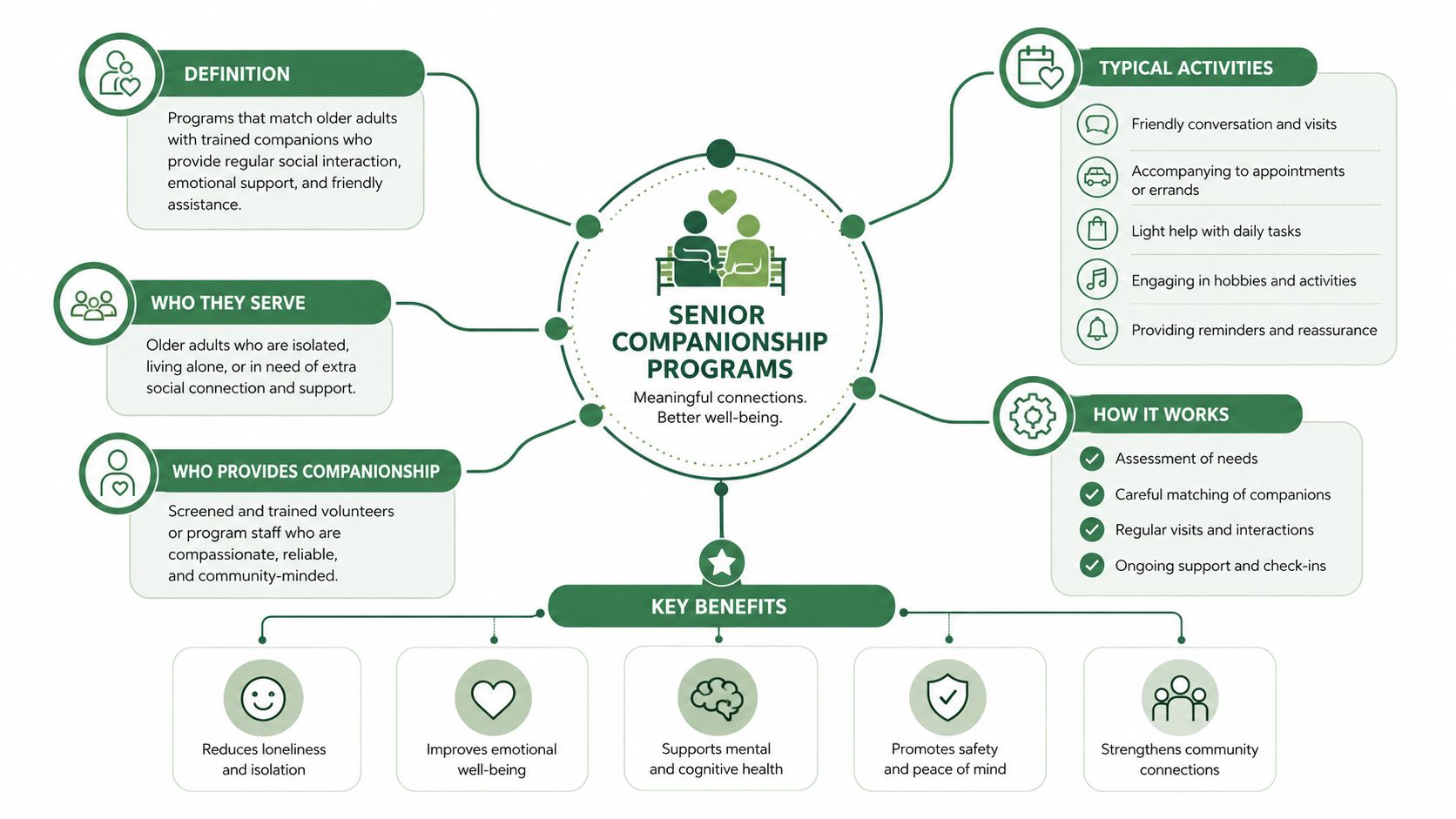
Senior companionship programs provide regular social, emotional, and practical support without replacing medical treatment or full personal care. A companion may talk with an older adult, share a meal, accompany them on a walk, play a game, support familiar interests, or make a scheduled check-in call.
The goal depends on the need. Emotional loneliness calls for consistent, meaningful conversation. Social isolation may require help maintaining contact with people, activities, or community. Cognitive decline risk calls for structured interaction and observation, not casual visits alone. A phone-based program such as Velma can add recurring prompts and conversation from a distance, while in-person care remains important for hands-on support and face-to-face connection.
The person providing the service might be a trained volunteer, paid companion, care team member, or group facilitator. Programs may operate through nonprofits, community agencies, or private services arranged by families. The label tells you very little. Ask what happens during each interaction, who supervises the worker, how concerns are documented, and how the family receives updates.
Maintenance, not emergency repair
Regular companionship works like car maintenance, not emergency repair. It does not replace a mechanic when the engine fails. It supports steady functioning, brings potential changes to attention, and reduces the chance that a small concern goes unnoticed.
Medical care diagnoses and treats health conditions. Home health may provide skilled clinical services ordered by a clinician. A personal care aide may help with bathing, dressing, toileting, transfers, meals, or other hands-on needs. Companionship serves a different purpose. It provides dependable human connection and may surface changes for family members, caregivers, or clinicians to address.
Strong programs give conversation a clear structure. They may include orientation to time and place, reminiscence, memory cues, mood questions, appointment reminders, or discussion of daily routines. That structure helps families distinguish a pleasant visit from support that can reveal increasing confusion, low mood, or difficulty managing ordinary tasks.
What programs usually don't do
A companion generally should not diagnose dementia, change medication instructions, provide clinical treatment, or promise to prevent falls. Families should question providers that blur these boundaries. Companionship can support a care plan, but it cannot replace a doctor, nurse, emergency response, or hands-on aide.
Funding varies by location and eligibility. Families may use private funds, community assistance, volunteer services, nonprofit programs, or certain Medicaid-supported options. Medicare generally is not the funding source families should assume will cover ordinary companionship.
The clearest explanation for a sibling is this: a companionship program creates reliable connection and observation, while medical and personal care providers handle clinical and physical needs.
Types of Senior Companionship Programs
There are four practical formats, and they serve different people.
In-person volunteer visits are often arranged through community agencies, aging offices, faith groups, or nonprofit organizations. They can suit a homebound older adult who wants conversation and a familiar face but doesn't need hands-on care during the visit. The main limitation is availability. Scheduling may be irregular, geographic coverage may be narrow, and volunteer matching may not support dementia-related needs.
Paid in-home companions offer more control over timing and consistency. A family may hire someone to visit, share activities, accompany an older adult on errands, or provide respite while a family caregiver steps away. This format fits seniors who enjoy face-to-face interaction and families who need a predictable presence in the home. It usually costs more than volunteer support, and the family must clarify whether the worker can handle personal care, transportation, or only companionship.
Phone-based programs remove travel and mobility barriers. They work well for older adults who don't want strangers in the home, live in a rural area, or have limited comfort with apps and video calls. A casual check-in service may focus on a brief conversation and confirmation that the person is safe. A structured cognitive program goes further by using recurring calls, personalized prompts, orientation, memory cueing, mood support, and documentation.
That distinction is easy to miss. A phone call isn't automatically a cognitive support intervention. Families comparing options should review daily check-in calls for seniors and ask whether the provider follows a consistent framework.
Group and social programs include senior centers, adult day settings, clubs, classes, shared meals, and activity groups. They're often a strong fit for socially confident seniors who enjoy being around several people. They're less suitable for someone with advanced confusion, severe anxiety, transportation barriers, or a strong preference for one-to-one interaction.
Program Type | Best For | Typical Cost | Key Limitation |
|---|---|---|---|
Volunteer visits | Homebound seniors seeking social contact | Often free or community-supported | Availability and consistency vary |
Paid in-home companion | Seniors who prefer face-to-face support | Private pay is common | Requires scheduling and worker oversight |
Phone-based check-ins | Seniors with mobility or transportation barriers | Varies by provider | Casual calls may lack cognitive structure |
Group programs | Socially engaged seniors who enjoy activities | Varies by organization | Participation may be difficult for isolated or confused adults |
Choose the format your parent will accept. A theoretically excellent program that they refuse is less useful than a simpler service they'll use consistently.
Benefits Families Notice
A predictable conversation can change how an older adult experiences the day. A parent has someone to call regularly, rather than waiting for a relative's schedule to open. That contact can give structure to a long afternoon, revive familiar interests, and help the person feel remembered instead of managed.
The need reaches beyond occasional boredom. Social isolation affects 24% of community-dwelling Americans age 65 and older, while a 2025 meta-analysis estimated worldwide loneliness among older adults at 27.6%. It also estimated loneliness at 30.9% among older women, a reminder that living situation, gender, and available support should shape program selection. These figures appear in the National Library of Medicine review of social isolation and loneliness.
Emotional connection with a practical purpose
A useful conversation gives the older adult room to participate. A companion might ask about a familiar recipe, discuss a favorite sports team, revisit family memories, or ask the person to describe an upcoming event. The exchange should sound personal and responsive, not like a checklist or interrogation.
Phone contact deserves a place in that plan. A 2025 study found that, for middle-aged and older adults, in-person socialization, phone calls, and texting were each associated with 16% to 30% lower odds of loneliness. The study on social contact and loneliness supports phone-based engagement when it remains accessible, structured, and consistent. A phone program such as Velma can complement in-person visits when distance, transportation, or mobility limits face-to-face contact.
Cognitive engagement families can recognize
Structured conversation can include orientation to the day, recall of a recent event, category naming, a short sequence, or a memory cue connected to daily routines. Activities should match the person's abilities and interests. They should feel like conversation with a purpose, not a school exam.
Families may hear that a parent sounds more settled after a call, describes the day more clearly, or shows greater willingness to follow a familiar routine. Those observations matter, but they do not prove that companionship has reversed cognitive decline. The sound conclusion is narrower: structured engagement can support participation and give caregivers more visibility into changes that deserve attention.
A safety signal between appointments
Loneliness and isolation also relate to health risk. A recent meta-analysis found higher all-cause mortality associated with loneliness, social isolation, and living alone, with hazard ratios of 1.14 for loneliness, 1.35 for social isolation, and 1.21 for living alone. The meta-analysis on loneliness, isolation, living alone, and mortality reported the strongest effect for social isolation.
A companion remains a source of contact, not a medical monitor or emergency service. Repeated conversations can still reveal a change earlier. A parent may sound unusually confused, mention a near fall, forget an appointment, or say food preparation has become difficult. Family members can then contact a clinician, review medications, arrange an in-person visit, or increase hands-on care.
Consistency determines what families can learn. One pleasant visit may lift someone's mood. A recurring relationship creates a pattern, making emotional changes, participation, and emerging concerns easier to observe.
How Companionship Fits Alongside Medical and In-Home Care
A parent can have regular home care and still spend most of the day without meaningful conversation. Each part of the care plan has a different job.
Clinicians diagnose conditions, adjust treatment, and manage medical decisions. Family caregivers may coordinate appointments, handle finances, prepare meals, and respond to changing needs. In-home aides can assist with bathing, dressing, transfers, meals, and household tasks. A companionship program adds regular emotional connection, cognitive engagement, and practical check-ins.
Clear boundaries protect everyone. A companion should not be expected to provide medical treatment, emergency response, personal care, or tasks outside the program's training. A home care worker may also have limited time for sustained conversation because bathing, meals, and housekeeping take priority.
Build a layered plan
Start by identifying the unmet need. A phone program cannot help a parent get out of bed or transfer safely. If physical assistance is already adequate, but the parent spends long stretches alone or seems increasingly confused between visits, companionship may fill the gap.
A structured phone option such as Velma can connect family oversight with clinical and in-person care through scheduled conversation, cognitive exercises, mood support, and practical questions about appointments, medications, and household safety. Use it as an added source of engagement and observation. It does not replace a doctor, emergency service, or in-person caregiver. Families comparing formats can also review this guide to companion care options for older adults.
The World Health Organization and the National Institute on Aging associate loneliness and social isolation with risks that include cognitive decline, dementia, depression, anxiety, cardiovascular disease, and stroke. Their technical guidance on social isolation and loneliness supports programs that combine social contact with cognitive and functional prompts.
Coordinate the surrounding care
Give the companion provider the primary family contact, relevant clinician details, and clear escalation instructions. Put boundaries in writing for medication reminders, transportation, financial matters, and personal care.
Use the same plan during holidays and family travel. Families arranging smooth family trip planning should confirm who will check in, who can respond to concerns, and how the older adult will stay connected while relatives are away. A companionship service can support those arrangements, while emergency coverage and hands-on care still require named people and defined responsibilities.
Funding and Eligibility Options
Families should assume that private pay is the most straightforward route for structured companionship, unless a local program confirms another funding source. Pricing depends on the provider, format, schedule, geography, and whether the service includes trained staff, care coordination, or documented monitoring. Don't choose a program based on a vague promise that “insurance may cover it.”
Medicare generally doesn't cover companionship as a standalone social service. It may cover eligible medical services under specific conditions, but ordinary conversation, social visits, and routine companionship usually fall outside that benefit. Ask the provider to state in writing what is covered and what isn't.
Work through the decision tree
Start with public programs. Contact your local Area Agency on Aging and ask about friendly visitor programs, senior center services, respite resources, transportation, and sliding-scale options. Local agencies may know about assistance that isn't easy to find through a general web search.
Check Medicaid pathways. Some state Medicaid waiver programs may support in-home or community-based services for people who meet financial, functional, and program-specific requirements. Eligibility and covered services vary by state, so ask the state Medicaid office or an approved care coordinator rather than relying on a general national statement.
Look for volunteer networks. Faith communities, nonprofit organizations, and local aging agencies may offer visits or calls at no charge, particularly for low-income or homebound older adults. These programs can be valuable, but families must ask about waitlists, volunteer screening, scheduling reliability, and escalation procedures.
Use private funds when the gap is urgent. Private payment may be appropriate when your parent needs a service quickly, wants a specific schedule, or requires a structured model that local volunteer programs don't offer.

A quick eligibility checklist
Ask these questions before spending time on an application:
Location: Which county and state does your parent live in?
Age: Does the program have an age requirement?
Income: Does household income affect eligibility?
Function: Does the older adult need to be homebound or have documented functional limitations?
Care setting: Is the person living at home, in assisted living, or in another setting?
Service type: Does the funding cover social visits, cognitive support, personal care, or only transportation?
Wait time: Can the program provide support when your family needs it?
For additional context, review the program requirements before contacting an agency:
How to Evaluate and Choose the Right Program
Don't buy companionship based on a warm sales call. Buy only after you understand the operating model.
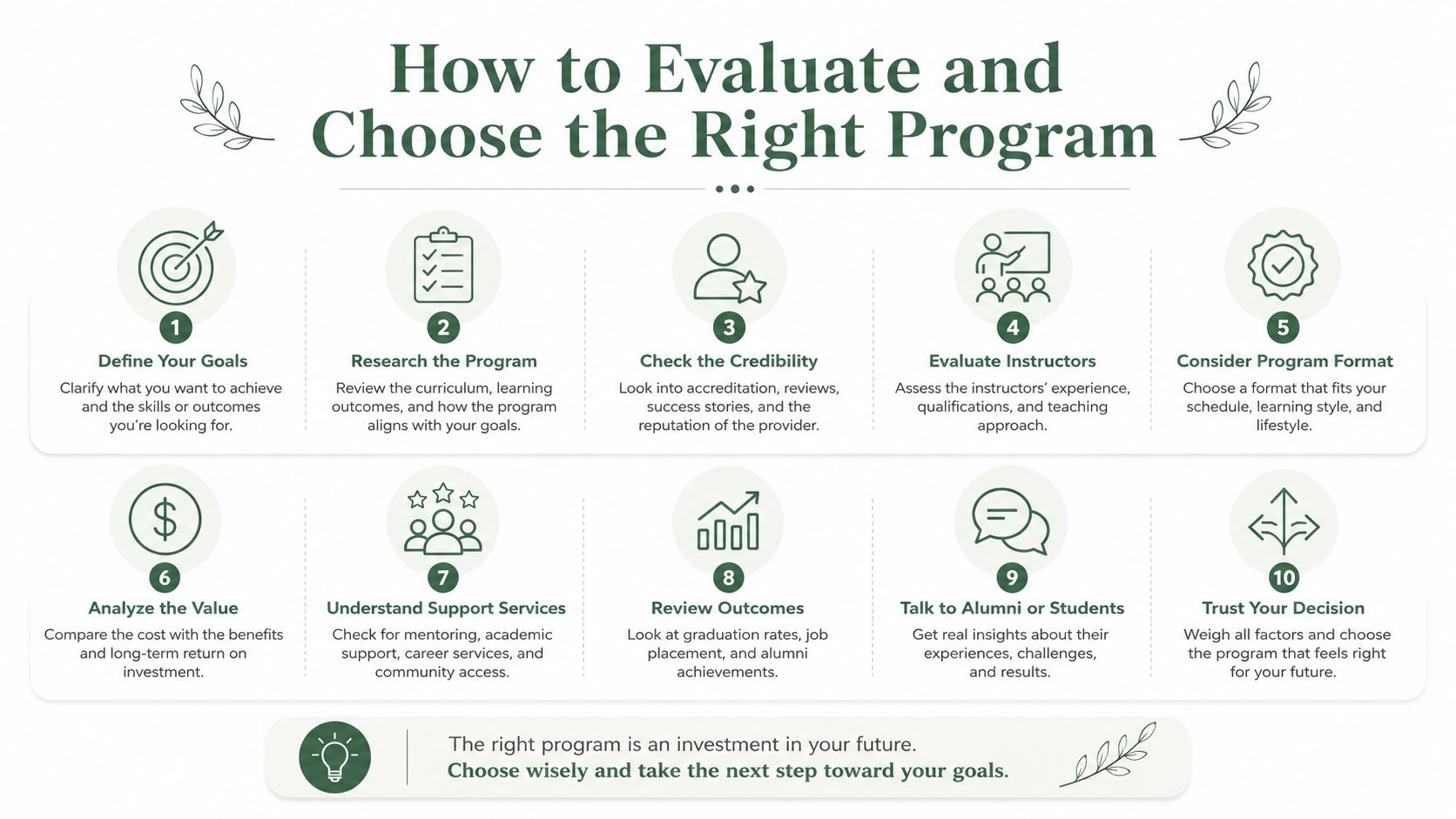
The provider should answer five questions clearly:
Who delivers the interaction? Ask whether companions are volunteers, employees, contractors, trained care team members, or rotating staff. Find out who supervises them and what training they receive.
What happens during a visit or call? Request a sample schedule or call framework. Look for conversation, cognitive prompts, mood support, and practical check-ins when those services match your parent's needs.
How does the provider track change? A responsible program should explain whether it documents concerns such as confusion, anxiety, missed routines, or fall worries. It should also explain what it doesn't assess.
How will the family receive updates? Ask who contacts you, how often, and what qualifies as an urgent escalation. Family visibility shouldn't depend on your parent remembering to report every concern.
What happens when the match fails? Confirm how the provider handles refusal, disengagement, personality mismatch, worsening cognition, or a change in care needs.
Judge structure, not just friendliness
A friendly person can still deliver an inconsistent service. Look for recurring appointments, an assigned contact, documented preferences, and a process for adjusting the plan. Personalization should include the older adult's history, interests, communication style, cognitive ability, and daily rhythm.
Programs also need clear boundaries. Ask what happens if the older adult reports chest pain, a fall, medication confusion, suicidal thoughts, or an unsafe home condition. The provider shouldn't promise to solve every problem. It should tell you who gets notified and how quickly.
Ask before enrolling: “If my parent sounds more confused than usual, what exactly will you do, who will you tell, and how will I find out?”
The most common failure is poor fit. A group program may overwhelm someone with dementia. A volunteer visit may be too irregular for a parent who needs routine. A phone program built only around casual conversation may frustrate a family seeking cognitive support.
The second failure is abandonment. Families enroll without agreeing on the purpose, then stop when the first few interactions feel awkward. Set a clear trial objective, share useful background with the provider, and give the program enough time to establish familiarity unless your parent is clearly distressed or unsafe.
Short Family Examples and What to Take Away
Consider a parent in the early stages of memory loss who lives alone. Their adult child notices that medication questions have become repetitive, but the parent insists everything is organized. A structured phone-based program asks about the daily routine during recurring calls. The parent gives conflicting answers about whether a dose was taken and becomes confused about which bottle belongs to which prescription.
The program doesn't diagnose a medication problem or change instructions. It records the concern, alerts the designated family contact, and prompts a medication review with the parent's doctor. The family then brings the medication list and containers to the appointment. The value came from repeated observation and clear escalation, not from pretending that a phone call could replace clinical judgment.
Now consider the opposite match. A family arranges occasional volunteer visits for a parent who has become withdrawn and struggles with unfamiliar people. The volunteer is kind, but visits occur at unpredictable times. No one shares the parent's preferences, no one updates the family, and nobody changes the approach when the parent stops answering the door.
After several weeks, the family concludes that companionship “doesn't work.” The more accurate conclusion is that the program lacked rhythm, preparation, feedback, and adaptation. A service can fail because the format is wrong, because the schedule is unreliable, or because no one defined what success should look like.
Four decisions matter most
Match the format to the need. Choose in-person support for a parent who wants face-to-face presence and can benefit from practical accompaniment. Consider phone-based engagement for mobility barriers, distance, technology aversion, or a need for recurring cognitive prompts. Use group programs when your parent enjoys shared activities and can participate comfortably.
Confirm structure and oversight. Ask what happens during each interaction, who supervises the service, and how concerns are recorded. Friendly conversation is useful, but it isn't the whole service.
Secure the family feedback loop. Decide who receives updates and what triggers a call. Your parent's privacy and independence matter, but families also need a defined way to respond when patterns change.
Commit to a sustainable rhythm. The right program should fit your parent's routine and your family's budget. Consistency matters more than an occasional impressive visit because relationships, observations, and trust develop over time.
Senior companionship programs work best as an early, practical layer of support. They don't erase loneliness, diagnose dementia, or replace hands-on care. They give older adults dependable connection and give families a clearer view of what's happening between appointments and visits.
Velma offers scheduled phone calls for older adults with early to mid-stage memory loss, combining personalized conversation, cognitive exercises, mood support, and practical check-ins. If your family needs consistent engagement that complements in-person and medical care, visit Velma to learn how the program works.
Your parent may still be managing alone, but the warning signs have started to accumulate. Their phone calls sound shorter. A medical appointment slips by. Food sits untouched, or the refrigerator holds items long past their date. Nothing seems urgent enough for full-time care, yet the gaps between family visits feel increasingly risky.
That's where senior companionship programs can help. The right program isn't just someone making friendly conversation. It creates dependable contact, supports emotional well-being, reinforces routines, and gives families another way to notice changes before they become a crisis. The important question is not whether your parent needs “company.” It's what kind of connection they need, how consistently they need it, and what the program can responsibly monitor.
Table of Contents
What Families Actually Notice Before They Search
Why families reach for companionship first
What Senior Companionship Programs Are
Maintenance, not emergency repair
What programs usually don't do
Types of Senior Companionship Programs
Benefits Families Notice
Emotional connection with a practical purpose
Cognitive engagement families can recognize
A safety signal between appointments
How Companionship Fits Alongside Medical and In-Home Care
Build a layered plan
Coordinate the surrounding care
Funding and Eligibility Options
Work through the decision tree
A quick eligibility checklist
How to Evaluate and Choose the Right Program
Judge structure, not just friendliness
Short Family Examples and What to Take Away
Four decisions matter most
What Families Actually Notice Before They Search
A daughter calls her father on Tuesday evening and hears the same answer she's heard for several weeks: “Everything's fine.” But the conversation ends quickly. He can't remember whether he attended his appointment, says he hasn't felt like cooking, and mentions that the days are running together. When she visits on the weekend, she finds unopened mail on the counter and a calendar that hasn't been updated.
No single detail proves that he needs a higher level of care. Together, the details show that his support system has gaps.
Families often notice changes in routine before they identify loneliness or cognitive risk. A parent may stop attending a regular group, avoid leaving the house, repeat questions, miss meals, or lose interest in conversations. Another parent may be socially isolated without appearing distressed. Someone can speak with relatives regularly and still lack meaningful, predictable interaction during the rest of the week.
The distinction matters. Emotional loneliness is the feeling of lacking connection. Social isolation is the absence of regular contact or relationships. Cognitive decline risk involves changes in memory, orientation, judgment, or daily functioning. One person may experience all three. Another may need companionship primarily because mobility limits have reduced social contact.
Why families reach for companionship first
Most families aren't ready to discuss full-time home care when the first concerns appear. A structured companionship program can fill the practical space between occasional family calls and hands-on caregiving. It may provide a scheduled visit, a recurring phone call, a group activity, or a combination of conversation and gentle prompts.
The World Health Organization reports that around one in four older people globally experience social isolation and about one in ten experience loneliness, while also identifying loneliness as a public-health issue that affects people of all ages and is particularly important for aging populations. The WHO overview of social isolation and loneliness makes the need clear: this isn't a niche concern reserved for seniors who live completely alone.
Practical rule: Don't wait for a fall, hospitalization, or medication mistake to create a support plan. Early, recurring contact is easier to introduce when your parent still has a strong sense of independence.
A useful starting point is this guide to social isolation in seniors. It can help your family name what's happening before choosing a service.
What Senior Companionship Programs Are
Senior companionship programs provide regular social, emotional, and practical support without replacing medical treatment or full personal care. A companion may talk with an older adult, share a meal, accompany them on a walk, play a game, support familiar interests, or make a scheduled check-in call.
The goal depends on the need. Emotional loneliness calls for consistent, meaningful conversation. Social isolation may require help maintaining contact with people, activities, or community. Cognitive decline risk calls for structured interaction and observation, not casual visits alone. A phone-based program such as Velma can add recurring prompts and conversation from a distance, while in-person care remains important for hands-on support and face-to-face connection.
The person providing the service might be a trained volunteer, paid companion, care team member, or group facilitator. Programs may operate through nonprofits, community agencies, or private services arranged by families. The label tells you very little. Ask what happens during each interaction, who supervises the worker, how concerns are documented, and how the family receives updates.
Maintenance, not emergency repair
Regular companionship works like car maintenance, not emergency repair. It does not replace a mechanic when the engine fails. It supports steady functioning, brings potential changes to attention, and reduces the chance that a small concern goes unnoticed.
Medical care diagnoses and treats health conditions. Home health may provide skilled clinical services ordered by a clinician. A personal care aide may help with bathing, dressing, toileting, transfers, meals, or other hands-on needs. Companionship serves a different purpose. It provides dependable human connection and may surface changes for family members, caregivers, or clinicians to address.
Strong programs give conversation a clear structure. They may include orientation to time and place, reminiscence, memory cues, mood questions, appointment reminders, or discussion of daily routines. That structure helps families distinguish a pleasant visit from support that can reveal increasing confusion, low mood, or difficulty managing ordinary tasks.
What programs usually don't do
A companion generally should not diagnose dementia, change medication instructions, provide clinical treatment, or promise to prevent falls. Families should question providers that blur these boundaries. Companionship can support a care plan, but it cannot replace a doctor, nurse, emergency response, or hands-on aide.
Funding varies by location and eligibility. Families may use private funds, community assistance, volunteer services, nonprofit programs, or certain Medicaid-supported options. Medicare generally is not the funding source families should assume will cover ordinary companionship.
The clearest explanation for a sibling is this: a companionship program creates reliable connection and observation, while medical and personal care providers handle clinical and physical needs.
Types of Senior Companionship Programs
There are four practical formats, and they serve different people.
In-person volunteer visits are often arranged through community agencies, aging offices, faith groups, or nonprofit organizations. They can suit a homebound older adult who wants conversation and a familiar face but doesn't need hands-on care during the visit. The main limitation is availability. Scheduling may be irregular, geographic coverage may be narrow, and volunteer matching may not support dementia-related needs.
Paid in-home companions offer more control over timing and consistency. A family may hire someone to visit, share activities, accompany an older adult on errands, or provide respite while a family caregiver steps away. This format fits seniors who enjoy face-to-face interaction and families who need a predictable presence in the home. It usually costs more than volunteer support, and the family must clarify whether the worker can handle personal care, transportation, or only companionship.
Phone-based programs remove travel and mobility barriers. They work well for older adults who don't want strangers in the home, live in a rural area, or have limited comfort with apps and video calls. A casual check-in service may focus on a brief conversation and confirmation that the person is safe. A structured cognitive program goes further by using recurring calls, personalized prompts, orientation, memory cueing, mood support, and documentation.
That distinction is easy to miss. A phone call isn't automatically a cognitive support intervention. Families comparing options should review daily check-in calls for seniors and ask whether the provider follows a consistent framework.
Group and social programs include senior centers, adult day settings, clubs, classes, shared meals, and activity groups. They're often a strong fit for socially confident seniors who enjoy being around several people. They're less suitable for someone with advanced confusion, severe anxiety, transportation barriers, or a strong preference for one-to-one interaction.
Program Type | Best For | Typical Cost | Key Limitation |
|---|---|---|---|
Volunteer visits | Homebound seniors seeking social contact | Often free or community-supported | Availability and consistency vary |
Paid in-home companion | Seniors who prefer face-to-face support | Private pay is common | Requires scheduling and worker oversight |
Phone-based check-ins | Seniors with mobility or transportation barriers | Varies by provider | Casual calls may lack cognitive structure |
Group programs | Socially engaged seniors who enjoy activities | Varies by organization | Participation may be difficult for isolated or confused adults |
Choose the format your parent will accept. A theoretically excellent program that they refuse is less useful than a simpler service they'll use consistently.
Benefits Families Notice
A predictable conversation can change how an older adult experiences the day. A parent has someone to call regularly, rather than waiting for a relative's schedule to open. That contact can give structure to a long afternoon, revive familiar interests, and help the person feel remembered instead of managed.
The need reaches beyond occasional boredom. Social isolation affects 24% of community-dwelling Americans age 65 and older, while a 2025 meta-analysis estimated worldwide loneliness among older adults at 27.6%. It also estimated loneliness at 30.9% among older women, a reminder that living situation, gender, and available support should shape program selection. These figures appear in the National Library of Medicine review of social isolation and loneliness.
Emotional connection with a practical purpose
A useful conversation gives the older adult room to participate. A companion might ask about a familiar recipe, discuss a favorite sports team, revisit family memories, or ask the person to describe an upcoming event. The exchange should sound personal and responsive, not like a checklist or interrogation.
Phone contact deserves a place in that plan. A 2025 study found that, for middle-aged and older adults, in-person socialization, phone calls, and texting were each associated with 16% to 30% lower odds of loneliness. The study on social contact and loneliness supports phone-based engagement when it remains accessible, structured, and consistent. A phone program such as Velma can complement in-person visits when distance, transportation, or mobility limits face-to-face contact.
Cognitive engagement families can recognize
Structured conversation can include orientation to the day, recall of a recent event, category naming, a short sequence, or a memory cue connected to daily routines. Activities should match the person's abilities and interests. They should feel like conversation with a purpose, not a school exam.
Families may hear that a parent sounds more settled after a call, describes the day more clearly, or shows greater willingness to follow a familiar routine. Those observations matter, but they do not prove that companionship has reversed cognitive decline. The sound conclusion is narrower: structured engagement can support participation and give caregivers more visibility into changes that deserve attention.
A safety signal between appointments
Loneliness and isolation also relate to health risk. A recent meta-analysis found higher all-cause mortality associated with loneliness, social isolation, and living alone, with hazard ratios of 1.14 for loneliness, 1.35 for social isolation, and 1.21 for living alone. The meta-analysis on loneliness, isolation, living alone, and mortality reported the strongest effect for social isolation.
A companion remains a source of contact, not a medical monitor or emergency service. Repeated conversations can still reveal a change earlier. A parent may sound unusually confused, mention a near fall, forget an appointment, or say food preparation has become difficult. Family members can then contact a clinician, review medications, arrange an in-person visit, or increase hands-on care.
Consistency determines what families can learn. One pleasant visit may lift someone's mood. A recurring relationship creates a pattern, making emotional changes, participation, and emerging concerns easier to observe.
How Companionship Fits Alongside Medical and In-Home Care
A parent can have regular home care and still spend most of the day without meaningful conversation. Each part of the care plan has a different job.
Clinicians diagnose conditions, adjust treatment, and manage medical decisions. Family caregivers may coordinate appointments, handle finances, prepare meals, and respond to changing needs. In-home aides can assist with bathing, dressing, transfers, meals, and household tasks. A companionship program adds regular emotional connection, cognitive engagement, and practical check-ins.
Clear boundaries protect everyone. A companion should not be expected to provide medical treatment, emergency response, personal care, or tasks outside the program's training. A home care worker may also have limited time for sustained conversation because bathing, meals, and housekeeping take priority.
Build a layered plan
Start by identifying the unmet need. A phone program cannot help a parent get out of bed or transfer safely. If physical assistance is already adequate, but the parent spends long stretches alone or seems increasingly confused between visits, companionship may fill the gap.
A structured phone option such as Velma can connect family oversight with clinical and in-person care through scheduled conversation, cognitive exercises, mood support, and practical questions about appointments, medications, and household safety. Use it as an added source of engagement and observation. It does not replace a doctor, emergency service, or in-person caregiver. Families comparing formats can also review this guide to companion care options for older adults.
The World Health Organization and the National Institute on Aging associate loneliness and social isolation with risks that include cognitive decline, dementia, depression, anxiety, cardiovascular disease, and stroke. Their technical guidance on social isolation and loneliness supports programs that combine social contact with cognitive and functional prompts.
Coordinate the surrounding care
Give the companion provider the primary family contact, relevant clinician details, and clear escalation instructions. Put boundaries in writing for medication reminders, transportation, financial matters, and personal care.
Use the same plan during holidays and family travel. Families arranging smooth family trip planning should confirm who will check in, who can respond to concerns, and how the older adult will stay connected while relatives are away. A companionship service can support those arrangements, while emergency coverage and hands-on care still require named people and defined responsibilities.
Funding and Eligibility Options
Families should assume that private pay is the most straightforward route for structured companionship, unless a local program confirms another funding source. Pricing depends on the provider, format, schedule, geography, and whether the service includes trained staff, care coordination, or documented monitoring. Don't choose a program based on a vague promise that “insurance may cover it.”
Medicare generally doesn't cover companionship as a standalone social service. It may cover eligible medical services under specific conditions, but ordinary conversation, social visits, and routine companionship usually fall outside that benefit. Ask the provider to state in writing what is covered and what isn't.
Work through the decision tree
Start with public programs. Contact your local Area Agency on Aging and ask about friendly visitor programs, senior center services, respite resources, transportation, and sliding-scale options. Local agencies may know about assistance that isn't easy to find through a general web search.
Check Medicaid pathways. Some state Medicaid waiver programs may support in-home or community-based services for people who meet financial, functional, and program-specific requirements. Eligibility and covered services vary by state, so ask the state Medicaid office or an approved care coordinator rather than relying on a general national statement.
Look for volunteer networks. Faith communities, nonprofit organizations, and local aging agencies may offer visits or calls at no charge, particularly for low-income or homebound older adults. These programs can be valuable, but families must ask about waitlists, volunteer screening, scheduling reliability, and escalation procedures.
Use private funds when the gap is urgent. Private payment may be appropriate when your parent needs a service quickly, wants a specific schedule, or requires a structured model that local volunteer programs don't offer.
A quick eligibility checklist
Ask these questions before spending time on an application:
Location: Which county and state does your parent live in?
Age: Does the program have an age requirement?
Income: Does household income affect eligibility?
Function: Does the older adult need to be homebound or have documented functional limitations?
Care setting: Is the person living at home, in assisted living, or in another setting?
Service type: Does the funding cover social visits, cognitive support, personal care, or only transportation?
Wait time: Can the program provide support when your family needs it?
For additional context, review the program requirements before contacting an agency:
How to Evaluate and Choose the Right Program
Don't buy companionship based on a warm sales call. Buy only after you understand the operating model.
The provider should answer five questions clearly:
Who delivers the interaction? Ask whether companions are volunteers, employees, contractors, trained care team members, or rotating staff. Find out who supervises them and what training they receive.
What happens during a visit or call? Request a sample schedule or call framework. Look for conversation, cognitive prompts, mood support, and practical check-ins when those services match your parent's needs.
How does the provider track change? A responsible program should explain whether it documents concerns such as confusion, anxiety, missed routines, or fall worries. It should also explain what it doesn't assess.
How will the family receive updates? Ask who contacts you, how often, and what qualifies as an urgent escalation. Family visibility shouldn't depend on your parent remembering to report every concern.
What happens when the match fails? Confirm how the provider handles refusal, disengagement, personality mismatch, worsening cognition, or a change in care needs.
Judge structure, not just friendliness
A friendly person can still deliver an inconsistent service. Look for recurring appointments, an assigned contact, documented preferences, and a process for adjusting the plan. Personalization should include the older adult's history, interests, communication style, cognitive ability, and daily rhythm.
Programs also need clear boundaries. Ask what happens if the older adult reports chest pain, a fall, medication confusion, suicidal thoughts, or an unsafe home condition. The provider shouldn't promise to solve every problem. It should tell you who gets notified and how quickly.
Ask before enrolling: “If my parent sounds more confused than usual, what exactly will you do, who will you tell, and how will I find out?”
The most common failure is poor fit. A group program may overwhelm someone with dementia. A volunteer visit may be too irregular for a parent who needs routine. A phone program built only around casual conversation may frustrate a family seeking cognitive support.
The second failure is abandonment. Families enroll without agreeing on the purpose, then stop when the first few interactions feel awkward. Set a clear trial objective, share useful background with the provider, and give the program enough time to establish familiarity unless your parent is clearly distressed or unsafe.
Short Family Examples and What to Take Away
Consider a parent in the early stages of memory loss who lives alone. Their adult child notices that medication questions have become repetitive, but the parent insists everything is organized. A structured phone-based program asks about the daily routine during recurring calls. The parent gives conflicting answers about whether a dose was taken and becomes confused about which bottle belongs to which prescription.
The program doesn't diagnose a medication problem or change instructions. It records the concern, alerts the designated family contact, and prompts a medication review with the parent's doctor. The family then brings the medication list and containers to the appointment. The value came from repeated observation and clear escalation, not from pretending that a phone call could replace clinical judgment.
Now consider the opposite match. A family arranges occasional volunteer visits for a parent who has become withdrawn and struggles with unfamiliar people. The volunteer is kind, but visits occur at unpredictable times. No one shares the parent's preferences, no one updates the family, and nobody changes the approach when the parent stops answering the door.
After several weeks, the family concludes that companionship “doesn't work.” The more accurate conclusion is that the program lacked rhythm, preparation, feedback, and adaptation. A service can fail because the format is wrong, because the schedule is unreliable, or because no one defined what success should look like.
Four decisions matter most
Match the format to the need. Choose in-person support for a parent who wants face-to-face presence and can benefit from practical accompaniment. Consider phone-based engagement for mobility barriers, distance, technology aversion, or a need for recurring cognitive prompts. Use group programs when your parent enjoys shared activities and can participate comfortably.
Confirm structure and oversight. Ask what happens during each interaction, who supervises the service, and how concerns are recorded. Friendly conversation is useful, but it isn't the whole service.
Secure the family feedback loop. Decide who receives updates and what triggers a call. Your parent's privacy and independence matter, but families also need a defined way to respond when patterns change.
Commit to a sustainable rhythm. The right program should fit your parent's routine and your family's budget. Consistency matters more than an occasional impressive visit because relationships, observations, and trust develop over time.
Senior companionship programs work best as an early, practical layer of support. They don't erase loneliness, diagnose dementia, or replace hands-on care. They give older adults dependable connection and give families a clearer view of what's happening between appointments and visits.
Velma offers scheduled phone calls for older adults with early to mid-stage memory loss, combining personalized conversation, cognitive exercises, mood support, and practical check-ins. If your family needs consistent engagement that complements in-person and medical care, visit Velma to learn how the program works.
Suggested Article: